Retinol Room.

Best Gentle Retinol

“Gentle” is sold as one property and is really four: a published low dose, encapsulated delivery, a buffered base, or a different molecule altogether. Seven picks, one per mechanism — so you can match the fix to the reason your last retinol hurt.

By Stephen V.Last updated How we pick

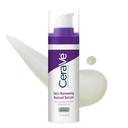
The best gentle retinol for most people is CeraVe’s Skin Renewing Retinol Serum. It is gentle in the way that works most reliably — the cushioning is inside the bottle rather than something you have to remember to layer on top. Retinol with niacinamide, hyaluronic acid and three ceramides, fragrance-free, for about the price of a sandwich and a coffee. The one thing it will not tell you is how much retinol is in it.

Budget pick: The Ordinary Granactive Retinoid 2% Emulsion — the cheapest product on this page and the one to buy if plain retinol has repeatedly been too much for you, because it is not plain retinol. It is hydroxypinacolone retinoate, a different synthetic retinoid ester, and the trade is honest: a thinner published evidence base in exchange for a formula that far fewer people react to.

Now the part that actually decides your purchase. “Gentle” is sold as one property and it is really four, and they are not interchangeable. A product can be gentle because the dose is low and published, because the retinol is encapsulated and released slowly, because the base around it is doing the soothing, or because the molecule is not retinol at all. People who have reacted to a retinoid usually reach for the wrong one of the four — they buy a soothing cream when the problem was the dose, or a lower dose when the problem was the bare oil base.

So the picks below are one per mechanism, and the write-up for each says which problem it fixes. If you want advice organised around who you are rather than how the product works, our sensitive-skin roundup and beginner roundup are the pages for that. And if your skin is reacting right now, stop first and read what to do about retinol burn before you buy anything.

How this is funded: we earn a commission if you buy through our links, at no extra cost to you. It never changes which product we recommend, and we’ll tell you when we’d skip one. Full disclosure.

Quick picks

Ranked on formulation, stated concentration and buyer fit. Select a row to jump to the full write-up. We have not tested these products — here is exactly what we do instead.

#ProductBest forPrice
1
CeraVe Retinol Serum with Niacinamide & Hyaluronic Acid

CeraVe Retinol Serum with Niacinamide & Hyaluronic Acid

CeraVe's other retinol serum, and the one people buy by accident when they meant the Resurfacing one. This is the anti-aging version — retinol with niacinamide, hyaluronic acid and ceramides in a fluid base, aimed at fine lines and dullness rather than post-acne marks.

Best overall — buffered base
$16.51 · View on Amazon

$24.9934% off

Price as of November 23, 2026. #ad How we’re funded

2
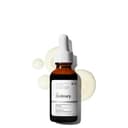
The Ordinary Granactive Retinoid 2% Emulsion

The Ordinary Granactive Retinoid 2% Emulsion

Not retinol at all, but a retinoid ester (hydroxypinacolone retinoate) marketed as gentler. A reasonable option for skin that flakes on plain retinol — with the honest caveat that its evidence base is thinner than retinol's.

Budget pick — a different molecule
$12.10 · View on Amazon

Price as of November 23, 2026. #ad How we’re funded

3
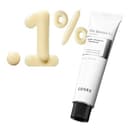
COSRX Retinol 0.1% Cream

COSRX Retinol 0.1% Cream

A stated 0.1% retinol in a cream base, sold in a two-rung range with a 0.3% above it. That is the K-beauty pattern this site likes: a real number on the box and a deliberate step to take next, at a price the US drugstore shelf charges for an unstated 'retinol complex'.

Best published low dose
$15.63 · View on Amazon

$27.0042% off

Price as of November 23, 2026. #ad How we’re funded

4
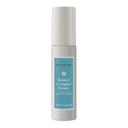
Naturium Retinol Complex Serum

Naturium Retinol Complex Serum

Blends encapsulated retinol with bakuchiol, a plant extract with retinol-adjacent research, to soften the ramp-up. A reasonable gentle middle option — with an unstated retinol dose you're taking on trust.

Best encapsulated
$16.79 · View on Amazon

$21.0020% off

Price as of November 23, 2026. #ad How we’re funded

5
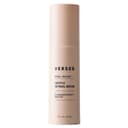
Versed Press Restart Gentle Encapsulated Retinol Serum

Versed Press Restart Gentle Encapsulated Retinol Serum

One of the few products that puts the delivery system in the product name rather than burying it: encapsulated retinol, with bakuchiol alongside, in a light face serum at a genuinely low price. A sensible gentle route in, provided you accept an unstated dose.

Best fully published formula
$15.99 · View on Amazon

$19.9920% off

Price as of November 23, 2026. #ad How we’re funded

6
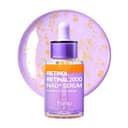
PURITO Retinol + Retinal Serum for Sensitive Skin

PURITO Retinol + Retinal Serum for Sensitive Skin

Built explicitly for reactive skin, from a brand whose entire positioning is minimal, low-irritation formulas. It pairs retinol with retinal rather than pushing one of them hard — a reasonable way to get a meaningful retinoid dose onto skin that flares easily.

Best for skin that stings on everything
$13.99 · View on Amazon

$25.0044% off

Price as of November 23, 2026. #ad How we’re funded

7
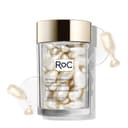
RoC Retinol Correxion Anti-Aging Wrinkle Night Serum Capsules (30 ct)

RoC Retinol Correxion Anti-Aging Wrinkle Night Serum Capsules (30 ct)

The affordable way to buy retinol in single-dose capsules. You get the same airtight, pre-measured logic as the luxury versions at drugstore money, from the brand with the longest retinol track record on the shelf — with the same undisclosed strength as the rest of RoC's range.

Best sealed single dose
$21.99 · View on Amazon

$32.9933% off

Price as of November 23, 2026. #ad How we’re funded

The picks in full

#1Best overall — buffered base

CeraVe Retinol Serum with Niacinamide & Hyaluronic Acid

CeraVe's other retinol serum, and the one people buy by accident when they meant the Resurfacing one. This is the anti-aging version — retinol with niacinamide, hyaluronic acid and ceramides in a fluid base, aimed at fine lines and dullness rather than post-acne marks.

Strengths

  • Niacinamide, hyaluronic acid and ceramides do real buffering work
  • Fluid, lightweight texture that layers under a moisturizer easily
  • Drugstore price from a brand with a strong barrier-formulation record

Trade-offs

  • Retinol concentration is not published
  • Easy to confuse with CeraVe's Resurfacing serum, which is a different product for a different job
Key activeRetinol + niacinamide + hyaluronic acid
Stated concentrationNot published
FormatFluid serum
Fragrance-freeYes
Best forNormal, Dry, Sensitive

Formulation note. Retinol paired with niacinamide, hyaluronic acid and CeraVe's ceramide complex. The supporting cast is the point: the barrier ingredients are what let a retinol sit comfortably on skin that reacts. CeraVe's own product page states "Free of Added Fragrance" and its published ingredient list carries none (read 2026-10-27). The retinol figure itself is undisclosed.

Ingredients and claims read from the product listing, on August 11, 2026. “Not published” means the brand does not state that figure.

#2Budget pick — a different molecule

The Ordinary Granactive Retinoid 2% Emulsion

Not retinol at all, but a retinoid ester (hydroxypinacolone retinoate) marketed as gentler. A reasonable option for skin that flakes on plain retinol — with the honest caveat that its evidence base is thinner than retinol's.

Strengths

  • Retinoid ester is widely reported as less irritating than pure retinol
  • Stated 2% of the Granactive Retinoid complex — a labeled figure
  • Light emulsion texture layers easily

Trade-offs

  • Hydroxypinacolone retinoate has far less published evidence than retinol
  • The '2%' is the complex, not 2% retinol — don't read it as high-strength
Key activeGranactive Retinoid (hydroxypinacolone retinoate)
Stated concentration2% Granactive Retinoid complex
FormatLight emulsion
Fragrance-freeYes
Best forSensitive, Retinol-reactive

Formulation note. The active is hydroxypinacolone retinoate, a retinoic-acid ester — not free retinol. The '2%' refers to the solubilized complex, not a retinol percentage. We present it as a gentler alternative with a smaller evidence base, not an equal to retinol.

Ingredients and claims read from the product listing, on July 18, 2026. “Not published” means the brand does not state that figure.

#3Best published low dose

COSRX Retinol 0.1% Cream

A stated 0.1% retinol in a cream base, sold in a two-rung range with a 0.3% above it. That is the K-beauty pattern this site likes: a real number on the box and a deliberate step to take next, at a price the US drugstore shelf charges for an unstated 'retinol complex'.

Strengths

  • States an exact 0.1% — one of the lowest labeled strengths you can buy
  • Sold alongside a 0.3%, so stepping up is a known quantity rather than a guess
  • Cream base and small size suit cautious use around the eye and neck area

Trade-offs

  • 0.1% is deliberately mild — experienced users will outgrow it quickly
  • 0.67 fl oz is a small tube for the money if you are treating the whole face
Key activeRetinol
Stated concentration0.1%
FormatLight cream
Fragrance-freeNot published
Best forBeginner, Sensitive, Normal

Formulation note. A stated 0.1% retinol in a cream, listed for the eye and neck area as well as the face. The published figure is what earns it a place: at this strength, knowing the number is the difference between a deliberate start and a guess.

Ingredients and claims read from the product listing, on August 13, 2026. “Not published” means the brand does not state that figure.

#4Best encapsulated

Naturium Retinol Complex Serum

Blends encapsulated retinol with bakuchiol, a plant extract with retinol-adjacent research, to soften the ramp-up. A reasonable gentle middle option — with an unstated retinol dose you're taking on trust.

Strengths

  • Bakuchiol pairing aims to reduce early irritation
  • Encapsulated retinols for a slower release
  • Inexpensive for the category

Trade-offs

  • Retinol percentage is not published
  • Bakuchiol's evidence base is smaller than retinol's — treat it as support, not a replacement
Key activeRetinol + bakuchiol
Stated concentrationNot published
FormatLightweight serum
Fragrance-freeYes
Best forNormal, Combination, Cautious beginners

Formulation note. Encapsulated retinols + bakuchiol. Bakuchiol has a few supportive studies but a fraction of retinol's evidence; we present it as an adjunct, not an equal.

Ingredients and claims read from the product listing, on July 18, 2026. “Not published” means the brand does not state that figure.

#5Best fully published formula

Versed Press Restart Gentle Encapsulated Retinol Serum

One of the few products that puts the delivery system in the product name rather than burying it: encapsulated retinol, with bakuchiol alongside, in a light face serum at a genuinely low price. A sensible gentle route in, provided you accept an unstated dose.

Strengths

  • Encapsulation is stated on the listing, not implied by marketing adjectives
  • Bakuchiol alongside the retinol for a softer on-ramp
  • Light texture and a low price for a face serum

Trade-offs

  • Retinol percentage is not published
  • Bakuchiol's evidence base is far thinner than retinol's — treat it as tolerability, not potency
Key activeEncapsulated retinol + bakuchiol
Stated concentrationNot published
FormatLight gel-cream serum
Fragrance-freeYes
Best forSensitive, Beginner, Normal

Formulation note. Encapsulated retinol paired with bakuchiol in an oil-containing gel-cream the brand calls a serum. From the brand's own complete 41-item published list (read 2026-10-31): water first, sunflower seed oil SECOND, aloe third, retinol SIXTH, tocopherol and tocopheryl acetate seventh and eighth, bakuchiol NINTH, then shea butter, rosehip and sea-buckthorn oils and a run of botanical extracts. No niacinamide and no squalane. Retinol sixth is high for the price bracket, but 21 CFR 701.3 orders ingredients by predominance only above 1%, so position proves presence rather than dose, and the amount is not stated. Encapsulation holds the retinol in a carrier that releases it more gradually, which tends to lower irritation for a given amount of active; the brand publishes no irritation figure.

Ingredients and claims read from the product listing, on August 11, 2026. “Not published” means the brand does not state that figure.

#6Best for skin that stings on everything

PURITO Retinol + Retinal Serum for Sensitive Skin

Built explicitly for reactive skin, from a brand whose entire positioning is minimal, low-irritation formulas. It pairs retinol with retinal rather than pushing one of them hard — a reasonable way to get a meaningful retinoid dose onto skin that flares easily.

Strengths

  • Positioned and formulated for sensitive skin rather than retrofitted to it
  • Pairs retinol with retinal instead of relying on a single high dose
  • Full 30 ml at a mid-budget price

Trade-offs

  • Neither the retinol nor the retinal percentage is published
  • 'For sensitive skin' is a positioning claim, not a guarantee — patch-test first
Key activeRetinol + retinal (retinaldehyde)
Stated concentrationNot published
FormatLight serum
Fragrance-freeNot published
Best forSensitive, Reactive, Normal

Formulation note. Retinol and retinaldehyde together in a serum listed for sensitive skin. Neither figure is stated, so we print 'Not published' — the sensitive-skin positioning tells you the intent, not the dose.

Ingredients and claims read from the product listing, on August 13, 2026. “Not published” means the brand does not state that figure.

#7Best sealed single dose

RoC Retinol Correxion Anti-Aging Wrinkle Night Serum Capsules (30 ct)

The affordable way to buy retinol in single-dose capsules. You get the same airtight, pre-measured logic as the luxury versions at drugstore money, from the brand with the longest retinol track record on the shelf — with the same undisclosed strength as the rest of RoC's range.

Strengths

  • Airtight single doses at a drugstore price
  • Pre-measured, which stops the most common beginner mistake of using too much
  • RoC has been formulating retinol longer than almost anyone on the shelf

Trade-offs

  • Retinol strength is not published
  • 30 capsules is a month at most, so the running cost adds up
Key activeRetinol
Stated concentrationNot published
FormatSingle-dose capsule serum
Fragrance-freeYes
Best forNormal, Mature

Formulation note. Retinol sealed in single-use capsules, so the product is not sitting in a part-used bottle oxidizing between uses. That is a packaging advantage, not a strength claim — the concentration is undisclosed. The published ingredient list is eight items with no water and no fragrance: a silicone-and-oil base, retinol, an antioxidant, ceramide NP and a preservative. 0.35 oz total across 30 capsules per the listing.

Ingredients and claims read from the product listing, on September 19, 2026. “Not published” means the brand does not state that figure.

The four mechanisms, and which problem each one fixes

1. A published low dose. The most honest kind of gentle, and the rarest. COSRX prints 0.1% on a small cream and sells a 0.3% directly above it in the same base. This is the fix if your problem was strength— if you jumped to a 0.5% or 1% and lost a fortnight to peeling. It is also the only mechanism that lets you escalate deliberately later, because you know where you started. The catch is that almost nobody publishes a figure: most of the products marketed as gentle tell you nothing about the dose at all.

2. Encapsulation.The retinol is held inside a carrier that releases it gradually rather than all at once on contact. CeraVe’s Resurfacing serum, Versed and Naturium all build on this. It is a real formulation answer to a real measured problem — retinoid irritation is dose-rate dependent, not just dose dependent — and it is the fix if your problem was the first few nights: stinging on application that settled down later. What encapsulation never does is tell you how much retinol is encapsulated. Our encapsulated roundup goes through the technology properly.

3. A buffered base. The soothing is in the bottle: niacinamide, ceramides, glycerin, hyaluronic acid, panthenol. This is the fix if your problem was dryness and flaking rather than stinging— the slow, cumulative kind that shows up in week two and makes makeup sit badly. Niacinamide has its own published record here, including work on retinoid tolerance specifically, and the broader literature on it in aging skin is one of the better-evidenced supporting-ingredient files in the category. It is also the mechanism with the strongest hidden cost: the brands that buffer best — CeraVe, La Roche-Posay, RoC, Neutrogena — are exactly the brands that publish no percentages.

4. A different molecule.If retinol itself is the problem, stop buying retinol. Hydroxypinacolone retinoate — sold as “granactive retinoid” — is a synthetic retinoid ester with a genuinely gentler reputation and a genuinely thinner file: its own evidence is a single open pilot of a fixed combination containing 0.1% HPR plus 1% encapsulated retinol, reporting a 41% mean reduction in acne grade and mild-to-moderate local side effects in 15.3% of users, with the authors themselves calling for a controlled trial. We report that as what it is. The other honest option in this family is bakuchiol, which is not a retinoid at all — that comparison is the page for it.

How we ranked these

Reliability of the mechanism first, then disclosure, then price. A buffered base is the mechanism that helps the widest range of people with the fewest surprises, which is why CeraVe leads. A published low dose is the mechanism we respect most and the one fewest products offer. Encapsulation is real and under-specified. A different molecule is the right answer for a minority and the wrong answer for anyone who has not actually tried retinol carefully first.

What we did not rank on: how a product “feels”. We own none of these units, we run no trials, and a page telling you that a serum felt soothing after four weeks of in-house use is telling you a story. What we can do is read every published ingredient list and every stated figure and say plainly where the information stops.

Two things sold as gentleness that are not

“For sensitive skin” on the front of the box.That is positioning, not a specification. It is not defined, not regulated and not tied to any test the brand has to publish. PURITO’s serum is on this page and carries exactly that phrase, and we have ranked it for a specific reason — it is a retinol-plus- retinal formula at a low price for skin that has reacted to single-molecule products — while stating that it publishes neither figure. The phrase itself earned it nothing.

“Fragrance-free” read as “gentle”.It is worth having and it is a different thing. Retinoid irritation and a genuine fragrance allergy look similar in the mirror and are different problems with different fixes; the AAD’s own guidance on reading fragrance-free labels and on what causes contact dermatitis is worth five minutes if your skin reacts to things generally. Five of these seven are fragrance-free on the published label, two publish nothing in either direction, and we record that rather than inferring it from a sibling product. Our fragrance-free roundup is the page if that is the actual requirement.

The gentlest thing you can do costs nothing

Before you buy a different product, change how you use the one you have — because in most cases the dose that reached your skin, not the formula, is what went wrong.

Use less. The fingertip-unit figures put the whole face and neck at about 2.5 units, which is considerably less product than most people apply. A cautious percentage used generously can irritate more than a higher one used correctly.

Use it less often. Two nights a week for a month, then three. The improvement curve on a retinoid rises for roughly ten months before it plateaus, so there is no race, and the only outcome that guarantees nothing happens is quitting.

Put something between it and your skin.Moisturizer first, retinol on top, moisturizer again — the approach our sandwich-method guide covers. It reduces how fast the retinoid arrives, which is the variable that drives irritation.

Sunscreen every morning, without exception. Not optional and not negotiable, and the step people skip precisely when their skin is already irritated.

Our beginner guide has the full on-ramp, our peeling guide covers what to do when it has already started, and the mistakes guide covers the errors that cost people months. If you have eczema or rosacea, read the eczema page and the rosacea pagefirst — both are blunter than this one about when the answer is not a retinoid.

What gentle cannot buy you

More evidence. The record this whole category leans on is prescription tretinoin: in photodamaged skin, collagen I formation rose by about 80% on ten to twelve months of daily 0.1% tretinoin against a 14% fall on vehicle, with the histology showing epidermal hyperplasia and a compacted stratum corneum. No cosmetic retinol inherits those numbers, and a gentler formula certainly does not. What gentleness buys is the thing that actually determines your outcome, which is whether you are still using it next spring.
Frequently asked questions

What is the gentlest retinol you can buy?

It depends on why the last one hurt, which is the whole point of this page. If strength was the problem, the gentlest option is a published low dose — COSRX's stated 0.1% cream. If the first few nights stung, it is an encapsulated formula. If you went dry and flaky in week two, it is a buffered base like CeraVe's. And if retinol itself keeps failing, the gentlest option is not retinol at all but a retinoid ester such as granactive retinoid.

Is encapsulated retinol actually gentler?

The mechanism is sound: the retinol is released gradually rather than arriving all at once, and retinoid irritation depends on rate as well as amount. It is a real formulation answer to a real problem. What it does not do is tell you the dose — no brand selling encapsulated retinol in our registry publishes a percentage for it, so you are trading one unknown for a gentler delivery of that unknown.

Does “for sensitive skin” on a retinol label mean anything?

Not as a specification. It is positioning rather than a defined, regulated or tested claim, and no brand has to publish anything to use it. We have ranked one product here that carries the phrase, but it earned its place on its formula and price rather than on the words. Treat a published ingredient list, a stated percentage and a fragrance-free claim as information; treat “for sensitive skin” as marketing.

Should I use a gentle retinol if I have rosacea or eczema?

Talk to a clinician first, and read our rosacea and eczema pages before you buy anything — both are blunter than this page about when the answer is not a retinoid at all. Active eczema and active rosacea flares are not the moment to introduce one, and a barrier that is already compromised reacts to things it would otherwise tolerate. Nothing on this page is a treatment for either condition.

Is a lower percentage always gentler?

Usually, but not reliably, because the dose that reaches your skin is the percentage multiplied by how much you apply. The fingertip-unit figures put the whole face and neck at roughly 2.5 units, far less than most people use — so a 0.1% applied generously can irritate more than a 0.3% applied correctly. Base matters too: a stated 0.2% in bare squalane can feel harsher than an unstated retinol in a ceramide cream.

Can I make a retinol I already own gentler?

Yes, and it is usually the right first move. Use less — about 2.5 fingertip units for the whole face and neck. Use it less often, two nights a week for a month before adding a third. Sandwich it between layers of plain moisturizer so it arrives more slowly. And wear sunscreen every morning, which is the step people skip exactly when their skin is already irritated. Change one of those at a time, not all four.

Is granactive retinoid gentler than retinol?

It has that reputation, and a thinner file to support it. Hydroxypinacolone retinoate is a synthetic retinoid ester rather than retinol, and its own published evidence is a single open pilot of a fixed combination containing 0.1% HPR plus 1% encapsulated retinol — a 41% mean reduction in acne grade with mild-to-moderate local side effects in 15.3% of users, and the authors asking for a controlled trial. It is a reasonable buy if retinol has repeatedly failed you. It is not an equal swap.

How long before a gentle retinol does anything?

Months, not weeks, and that is true of every strength. The published improvement curve for a retinoid rises for roughly ten months before it plateaus, so judging any of these at six weeks is judging it too early. The practical implication cuts in favour of gentleness: a product you use comfortably for ten months delivers more cumulative retinoid than a stronger one you abandon in three.

Sources

  • American Academy of Dermatology — Retinoid or retinol? — AAD on the difference between prescription retinoids and OTC retinol (accessed July 17, 2026)
  • U.S. FDA — 21 CFR 701.3, Designation of ingredients (eCFR) — The federal rule governing how a cosmetic ingredient list is ordered. Paragraph (a): 'The label on each package of a cosmetic shall bear a declaration of the name of each ingredient in descending order of predominance, except that fragrance or flavor may be listed as fragrance or flavor.' Paragraph (f) allows an alternative: ingredients 'present at a concentration greater than 1 percent, in descending order of predominance', followed by ingredients 'present at a concentration of not more than 1 percent, without respect to order of predominance', followed by color additives 'without respect to order of predominance'. Cited for the exact limit of what an ingredient's POSITION can tell a reader: late placement indicates the 1-percent-or-less group, but within that group the order carries no information about quantity (accessed September 26, 2026)
  • Human Skin Aging and the Anti-Aging Properties of Retinol (PubMed) — Review of topical retinol's effect on collagen and photoaging (accessed July 17, 2026)
  • The use of retinoids in the treatment of photoaging (PubMed) — Clinical-trial evidence for topical retinoids in photoaging (accessed July 17, 2026)
  • Tolerance profile of retinol, retinaldehyde and retinoic acid under maximized and long-term clinical conditions (PubMed) — Retinol and retinaldehyde share a low irritation potential; retinoic acid (tretinoin) is more irritating (accessed July 17, 2026)
  • Veraldi S et al. — Hydroxypinacolone retinoate with retinol glycospheres in mild to moderate acne (G Ital Dermatol Venereol, 2015) — Open pilot study of a fixed combination containing 0.1% hydroxypinacolone retinoate (a synthetic ester of 9-cis-retinoic acid) plus 1% encapsulated retinol: 41% mean reduction in acne grade, 15.3% mild-to-moderate local side effects, and the authors themselves call for a controlled trial (accessed August 19, 2026)
  • Prospective, randomized, double-blind assessment of topical bakuchiol and retinol for facial photoageing (PubMed) — Dhaliwal et al., Br J Dermatol 2019 — bakuchiol 0.5% vs retinol 0.5%: comparable wrinkle/pigment improvement, retinol caused more scaling and stinging (accessed July 17, 2026)
  • Mechanistic Basis and Clinical Evidence for Nicotinamide (Niacinamide) in Skin (PMC) — Review of niacinamide's barrier, ceramide and pigmentation effects (accessed July 17, 2026)
  • Lam ECS, Li R, Rodrigues MR, et al. — Enhanced retinoid response by a combination of the vitamin A ester retinyl propionate with niacinamide and a flavonoid containing Ceratonia siliqua extract in retinoid responsive in vitro models (Int J Cosmet Sci, 2021) — LABORATORY study, not a clinical trial: retinyl propionate was tested alone and with niacinamide in a RARalpha reporter cell line and in keratinocyte gene-expression profiling. Combining 0.5 microM or 2 microM retinyl propionate with 10 mM niacinamide produced a 56% and 95% signal increase over retinyl propionate alone; niacinamide on its own had very modest activity. The authors hypothesize niacinamide raises NAD levels and so modulates conversion to retinoic acid. Evidence that the pairing is not antagonistic in vitro — NOT evidence of a measured benefit on human skin (accessed August 31, 2026)
  • Christman JC, Fix DK, Lucus SC, et al. — Two randomized, controlled, comparative studies of the stratum corneum integrity benefits of two cosmetic niacinamide/glycerin body moisturizers vs. conventional body moisturizers (J Drugs Dermatol, 2012) — Two 35-day randomized studies (63 and 58 female subjects) comparing eight body moisturizers and a no-treatment control on visual dryness, Corneometer hydration and barrier integrity measured by transepidermal water loss. The two niacinamide/glycerin moisturizers improved stratum corneum barrier function faster and for longer than the no-treatment control and the other six moisturizers tested; the authors conclude that including niacinamide in a body moisturizer improves stratum corneum integrity over time (accessed August 31, 2026)
  • CeraVe — Skin Renewing Retinol Serum product page (label claims) — CeraVe's own US product page, fetched October 27, 2026, carrying the label claim 'Free of Added Fragrance' with the stated reason 'To avoid fragrance irritation'; the published ingredient list contains no fragrance, parfum or essential oil. Cited for the fragrance-free status of this serum, which the registry previously recorded as not published. The retinol concentration is still genuinely undisclosed and is unaffected (accessed October 27, 2026)
  • CeraVe — Skin Renewing Retinol Serum (brand product page) — The brand's own page for CeraVe's OTHER retinol serum — the anti-aging one, routinely confused with the Resurfacing serum. Publishes the full INCI, in which ceramides NP, AP and EOP are 11th to 13th, niacinamide 15th, RETINOL 23rd and hydrolyzed hyaluronic acid 32nd. States 'Free of Added Fragrance'. Marketed for the appearance of fine lines, wrinkles, texture and radiance across all skin types; directions are to apply in the evening after cleansing and 'gradually increase to daily use as skin adapts'. NO retinol percentage is stated, and no efficacy figure, sample size or study design is published. Cited for what the brand publishes about its own formula, never as evidence of efficacy (accessed October 10, 2026)
  • Versed — Press Restart Gentle Retinol Serum product page — The brand's own product page, fetched October 31, 2026, and its COMPLETE published ingredient list read in order and counted by hand: 41 items, with water first, Helianthus Annuus (sunflower) seed oil SECOND, aloe third, a sodium acrylate copolymer fourth, silica fifth, RETINOL SIXTH, tocopherol and tocopheryl acetate seventh and eighth, BAKUCHIOL NINTH, then a run of botanical extracts (Crithmum Maritimum, Chamomilla Recutita, Melia Azadirachta flower AND leaf, Paeonia Lactiflora root, Opuntia Streptacantha stem), a papaya ferment, shea butter, rosehip and sea-buckthorn seed oils, sodium hyaluronate, glycerin and lecithin, finishing on preservatives and citric acid. NO fragrance, parfum or individually declared fragrance material (no linalool, limonene, citronellol or geraniol) appears anywhere in it. Niacinamide and squalane are NOT in the formula. The page states NO retinol percentage. It describes the texture in the brand's own words as a "gel-cream formula" that "contains encapsulated retinol", and its free-from claim is "Free from parabens, silicones, sulfates, and 1,350+ ingredients that have questionable data" — a count of exclusions, not a fragrance-free claim. Directions, quoted: "Smooth 2 pumps onto clean, almost-dry skin in the evening. Let it sink in for 1 minute before your next step"; "Face and neck. Bonus points for chest"; "Every PM after cleansing." The page heading calls it Press Restart Gentle Retinol Serum while the Amazon listing says Press Restart Gentle Encapsulated Retinol Serum | Bakuchiol — the same naming drift this registry recorded for the brand's body lotion (accessed October 31, 2026)
  • RoC Skincare — RETINOL CORREXION Line Smoothing Night Serum Capsules (brand product page) — RoC's own page for the product Amazon lists as 'Retinol Correxion Anti-Aging Wrinkle Night Serum Capsules'. Publishes the full ingredient list — 'Cyclopentasiloxane, Ethylhexyl Cocoate, Dimethiconol, Glycine Soja (Soybean) Oil, Retinol, Dimethylmethoxy Chromanol, Ceramide NP, Phenoxyethanol' — and states 'FORMULATED WITHOUT FRAGRANCE' and 'EACH VEGETAL-BASED CAPSULE IS 100% BIODEGRADABLE'. Directions: 'Gently twist to open the capsule. Smooth serum over cleansed face and neck at night', 'Begin applying this product every other night and then gradually increase frequency of use to every night', 'Always apply a sunscreen of SPF 30 or higher in the AM while using this product', and store 'sealed in their container in a cool, dry place'. Its efficacy claims ('97% had visibly smoother skin in 1 night', '97% had visibly reduced lines & wrinkles' in 1 night, 'Skin was 64% more hydrated' in 1 week, '100% had visibly firmer skin' in 4 weeks, '100% of testers had 0% irritation') carry no sample size, study design or publication; the Amazon listing's bullet quotes the same study as '97% had smoother skin in 1 night', '63% more hydrated in 1 week' and 'visibly firmer by 30% after 4 weeks'. No retinol percentage is stated anywhere on the page. Cited for what the brand publishes about its own formula, not as evidence of efficacy (accessed September 19, 2026)
  • Long CC, Finlay AY — The finger-tip unit: a new practical measure (Clin Exp Dermatol, 1991) — The paper that defined the fingertip unit. Thirty adult patients treated various body regions; the number of FTUs required was face and neck 2.5, front of trunk 6.7, back of trunk 6.8, arm and forearm 3.3, hand 1.2, leg and thigh 5.8, foot 1.8. One FTU covers 286 cm2 (s.d. 80) — 312 cm2 in males, 257 cm2 in females. It is a dermatological DOSING measure for ointments, not a retinol instruction, and is cited here only as the published way to reason about how much topical product an area takes (accessed September 18, 2026)
  • Griffiths CE et al. — Restoration of collagen formation in photodamaged human skin by tretinoin (N Engl J Med, 1993) — Biopsies from 26 subjects plus 29 patients treated 10 to 12 months with daily 0.1% tretinoin cream (15 patients) or vehicle (14). Collagen I formation was 56% LOWER in photodamaged skin than in sun-protected buttock skin (P < 0.001); tretinoin produced an 80% INCREASE in collagen I formation against a 14% decrease on vehicle (P = 0.006). Prescription tretinoin, not cosmetic retinol — cited for the direction of the effect on dermal collagen (accessed September 18, 2026)
  • Voorhees JJ — Clinical effects of long-term therapy with topical tretinoin and cellular mode of action (J Int Med Res, 1990) — Double-blind, placebo-controlled study: 0.1% topical tretinoin reduced the effects of photoageing maximally after 10 months, with no further improvement between 10 and 22 months. Histologically it induced 'epidermal hyperplasia, compaction of the stratum corneum and the deposition of ultrastructurally visible collagen fibrils in the papillary dermis', reduced the number and activity of melanocytes, and significantly increased mitoses (accessed September 18, 2026)
  • American Academy of Dermatology — How can I find eczema friendly products? — AAD sets out the difference between the labels: unscented means a fragrance is masked so you cannot smell it, fragrance-free means the product contains no fragrance at all (accessed August 19, 2026)
  • American Academy of Dermatology — Eczema types: Contact dermatitis causes — AAD names fragrance among the most common causes of allergic contact dermatitis, and notes the rash can take hours or days to appear (accessed August 19, 2026)

Keep reading