CeraVe Retinol Serum (Niacinamide + HA) Review
CeraVe's other retinol serum — the anti-aging one, not the post-acne one. A genuinely well-supported formula at a drugstore price, sold in packaging close enough to its sibling that a lot of people buy the wrong bottle.
How this is funded: we earn a commission if you buy through our links, at no extra cost to you. It never changes which product we recommend, and we’ll tell you when we’d skip one. Full disclosure.
CeraVe's other retinol serum, and the one people buy by accident when they meant the Resurfacing one. This is the anti-aging version — retinol with niacinamide, hyaluronic acid and ceramides in a fluid base, aimed at fine lines and dullness rather than post-acne marks.
Strengths
- Niacinamide, hyaluronic acid and ceramides do real buffering work
- Fluid, lightweight texture that layers under a moisturizer easily
- Drugstore price from a brand with a strong barrier-formulation record
Trade-offs
- Retinol concentration is not published
- Easy to confuse with CeraVe's Resurfacing serum, which is a different product for a different job
| Key active | Retinol + niacinamide + hyaluronic acid |
|---|---|
| Stated concentration | Not published |
| Format | Fluid serum |
| Fragrance-free | Not published |
| Best for | Fine lines and dullness on skin that wants a cushioned formula |
Formulation note. Retinol paired with niacinamide, hyaluronic acid and CeraVe's ceramide complex. The supporting cast is the point: the barrier ingredients are what let a retinol sit comfortably on skin that reacts. The retinol figure itself is undisclosed.
Ingredients and claims read from the product listing, on August 11, 2026. “Not published” means the brand does not state that figure.
What it is
This is CeraVe’s anti-aging retinol serum: retinol paired with niacinamide, hyaluronic acid and the brand’s ceramide complex, in a light fluid base, at a drugstore price. It is aimed at fine lines, dullness and general skin quality rather than at acne.
The first thing to establish is which bottle you are holding, because CeraVe sells two retinol serums with similar names in similar packaging and they are built for different problems. The Resurfacing Retinol Serum uses encapsulated retinol with niacinamide and licorice root, and is aimed at post-acne marks and texture. This one is the anti-aging version. A genuinely large number of people end up with the wrong one, and since neither states a strength, it is not always obvious afterwards.
The formula, and why it works
The interesting thing here is that the supporting cast is arguably more consequential than the retinol. Niacinamide has a real published record of its own — work going back to Bissett and colleagues found 5% niacinamide improved the appearance of fine lines, hyperpigmented spots and texture, and review literature documents its effects on barrier function and ceramide production. Hyaluronic acid is a humectant that draws water into the upper layers. Ceramides are literally part of what the barrier is built from.
Put together, that is a formula designed so the retinol has somewhere hospitable to land. The barrier that a retinoid transiently stresses is being actively supported by three other ingredients in the same bottle. That is a coherent formulation strategy rather than an ingredient list assembled for the front of the box, and it is why this serum tends to be tolerated better than a bare retinol at a comparable dose.
The texture is a light fluid — thinner than the Resurfacing serum, closer to a watery lotion. It absorbs quickly and layers under a moisturizer without pilling, which matters more than it sounds when you are trying to build a habit.
The unstated strength
Same problem as almost everything else on the drugstore shelf: CeraVe does not publish a retinol concentration, so our spec table prints “Not published”.
The practical cost is not safety — a heavily buffered formula from a brand with this record is very unlikely to hurt you. It is progression. When this stops producing change and you want more, you will not know whether you are stepping from the equivalent of a 0.2% or a 0.5%, which makes the next purchase a guess. Our strength guide covers why that matters, and it is the single reason we still rank stated-strength serums above this one on our serum roundup.
Who it suits
It suits people who want an anti-aging retinol that will not fight them: dry or normal skin, mild reactivity, a barrier that has been through other actives and needs support. It suits anyone who has tried a bare retinol serum and found it too much — the difference a well-built base makes here is real.
It suits people already using CeraVe, because it layers cleanly into that routine at a price that does not require thinking about. And it suits people who want the reassurance of a mainstream brand with a genuine formulation record rather than a boutique with a good story.
Who should skip it
Skip it if your main problem is acne or post-acne marks — the Resurfacing serum is aimed more precisely, and our acne-prone pickscover the wider field. Skip it if you want a number: a stated 0.3% or 0.5% costs the same or less, and you can add your own buffering with a decent moisturizer. Skip it if you are already comfortable at a stated 0.5% and want to progress — you would be stepping sideways into an unknown, which is the wrong direction.
Skip it too if you want a richer texture. This is a fluid serum, and dry mature skin looking for a cushioning treatment cream will find our cream roundup more useful.
How to use it
At night, on clean and completely dry skin, a pea-sized amount for the whole face. Start at two nights a week and build over several weeks. Moisturize on top — even with ceramides in the serum, the first fortnight benefits from the extra layer. Avoid the immediate eye area.
Keep exfoliating acids and strong vitamin C out of the same routine while you build tolerance; the layering guidecovers what combines safely. And sunscreen every morning — a supportive formula changes the irritation risk, not the photosensitivity.
The verdict
A genuinely well-built drugstore retinol serum, and one of the easiest to recommend to someone who wants results without a fight. The niacinamide, hyaluronic acid and ceramides are doing real work, the texture is easy to live with, and the price makes it a low-stakes thing to try.
The catch is the one this whole shelf shares, plus one specific to CeraVe: you do not know the dose, and you may not have bought the bottle you intended. Check the front of the box against what you actually want to treat, then buy it with confidence — just do not expect it to tell you where you are on the ladder.
General guidance, not medical advice. Retinol Room is written by an enthusiast, not a dermatologist. For a diagnosis, a reaction, or a prescription active like tretinoin, see a qualified professional. Introduce any new active slowly and patch-test first.
If it’s not the one, consider these
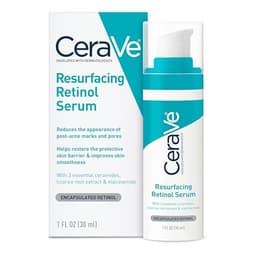
CeraVe Resurfacing Retinol Serum
The sibling product — encapsulated retinol aimed at post-acne marks and texture rather than fine lines.
Read the full review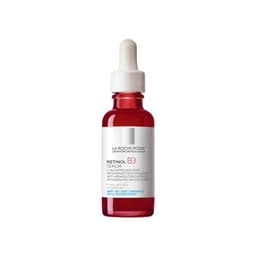
La Roche-Posay Pure Retinol Face Serum (B3 + HA)
The same niacinamide-buffered idea executed at pharmacy level, with a purer retinol and a higher price.
Read the full review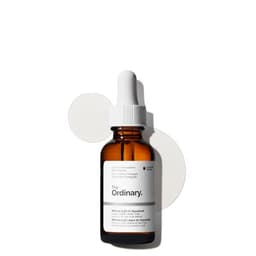
The Ordinary Retinol 0.5% in Squalane
If you'd rather have a stated 0.5% and add your own buffering, for a fraction of the price.
$9.30 · View on AmazonRead the full reviewPrice as of September 25, 2026. #ad How we’re funded
Frequently asked questions
What's the difference between CeraVe's two retinol serums?
One is aimed at post-acne marks and texture — encapsulated retinol with niacinamide and licorice root, in the Resurfacing serum. This one is the anti-aging version: retinol with niacinamide, hyaluronic acid and ceramides, aimed at fine lines and dullness. Same brand, same aisle, similar packaging, different jobs. Check the front of the box carefully.
What percentage of retinol is in it?
Not published. CeraVe doesn't state a concentration on this product, which is the norm across the drugstore shelf and the recurring frustration of this category. You can start it comfortably; you just can't place it on a strength ladder or judge the size of the step when you eventually move up.
Is it good for sensitive skin?
It's one of the better-suited drugstore options. Niacinamide, hyaluronic acid and ceramides together do genuine barrier work, and the fluid base is light enough not to feel heavy. Sensitive skin should still start at two nights a week and buffer with moisturizer — a supportive formula lowers the risk, it doesn't remove it.
Can I use it with my other CeraVe products?
Yes, and it layers cleanly under a CeraVe moisturizer, which is roughly how the range is designed to be used. What to avoid is stacking it with the brand's exfoliating treatments in the same routine — a retinoid plus a glycolic product is a barrier problem regardless of how gentle the brand's positioning is.
How long before I see results?
Give it three months, and six for fine lines specifically. Some of what you'll notice in the first few weeks is the hyaluronic acid and ceramides improving hydration rather than the retinol doing anything structural — a real improvement, just a faster and more superficial one than the retinoid effect.
Is it worth buying over the cheaper stated-strength serums?
It depends what you value. A stated 0.5% retinol costs less and tells you what you're using, but gives you a bare active you have to buffer yourself. This gives you the buffering built in from a brand with a strong barrier-formulation record, at the cost of never knowing the dose. Both are defensible; they're opposite trades.
Sources
- Mechanistic Basis and Clinical Evidence for Nicotinamide (Niacinamide) in Skin (PMC) — Review of niacinamide's barrier, ceramide and pigmentation effects (accessed July 17, 2026)
- Niacinamide: A B vitamin that improves aging facial skin appearance (PubMed) — Bissett et al. — 5% niacinamide improves wrinkles, spots and texture (accessed July 17, 2026)
- American Academy of Dermatology — Retinoid or retinol? — AAD on the difference between prescription retinoids and OTC retinol (accessed July 17, 2026)
- Moisturizers — StatPearls (NCBI Bookshelf) — Reference on humectants (hyaluronic acid), occlusives and emollients (accessed July 17, 2026)
Keep reading
The Ordinary vs CeraVe retinol
The budget head-to-head — a stated strength against a buffered formula.
Compare the twoCeraVe Resurfacing Retinol, reviewed
The other bottle, and the reason so many people end up with the wrong one.
Read the reviewBest retinol for sensitive skin
Where this serum sits against the wider field of gentle, well-buffered options.
See the picksRetinol vs niacinamide
Why the supporting ingredient in this bottle is doing more work than it gets credit for.
Compare the two