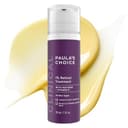
The only axis that honestly ranks these
Skin responds to retinoic acid. Everything else is a precursor that has to be converted inside the skin, and the number of conversion steps is the one thing that genuinely separates these molecules rather than being a marketing claim.
Zero steps: tretinoin, which is retinoic acid. And adapalene, which is a third-generation synthetic retinoid that binds the receptors directly.
One step:retinaldehyde, usually sold as “retinal”. One oxidation and it is retinoic acid.
Two steps: retinol. The molecule the cosmetic record is actually built on.
Three steps:retinyl esters — retinyl palmitate, retinyl propionate. They have to be cleaved to retinol first. Nothing on this page is one, and that is deliberate.
A different chain entirely:hydroxypinacolone retinoate, sold as “granactive retinoid”. A synthetic ester of 9-cis-retinoic acid rather than a retinol derivative.
Fewer steps is not automatically better for you— it predicts how much active arrives, not how your skin will take it. But as a ranking axis it is the only honest one available, because it is chemistry rather than claims. Our over-the-counter retinoid roundup walks the whole family molecule by molecule.
If you cannot get a prescription
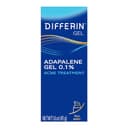
Buy adapalene. It is the genuine answer and it is sitting on a drugstore shelf.
The thing worth understanding is whyit is on that shelf when tretinoin is not. Adapalene was approved for over-the-counter sale for acne, at 0.1%, as a drug — so unlike every cosmetic on this page it carries a Drug Facts panel, a stated active concentration and defined directions. The reason it got there is tolerability: the five-trial meta-analysis found it similar in efficacy to tretinoin 0.025% with fewer local side effects, and the StatPearls monograph covers its receptor selectivity and its relative photostability, which is a practical advantage over tretinoin rather than a theoretical one.
Two honest limits. Adapalene is credited with the acne record and should not be credited with the tretinoin collagen record. There is published work on adapalene and atrophic acne scarring, and it is genuinely encouraging, but the ten-to-twelve-month photoaging histology is tretinoin’s file, not adapalene’s. And the purge is real: acne often worsens before it improves, and people quit in week four. Our retinol versus adapalene comparison has the detail and the purge guide covers what to expect.
If what you want is anti-aging rather than acne, adapalene is a defensible choice but not the obvious one — a stated retinaldehyde is the better-matched purchase, which is the next section.
If you want the closest thing for lines and tone
A stated retinaldehyde, one conversion step back. Two picks here cover the two ways to buy it.
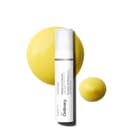
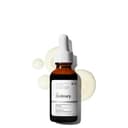
The Ordinary Retinal 0.2% Emulsion is the cheapest stated retinal anywhere and the most retinoid-per-dollar on this page. 15 ml, a thin emulsion, no rung above it.
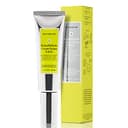
Naturium Retinaldehyde Cream Serum 0.10%is the one to buy if you think you will stay on it, because it is sold as a real ladder — 0.05%, 0.10% and 0.15% in the same cream-serum base — in a 50 ml bottle. Moving up changes the dose and nothing else, which is the single most useful property a range can have.
Either way, the published tolerance work groups retinaldehyde with retinol rather than with tretinoin, so the closer molecule does not automatically mean a harsher experience. Our retinal roundup ranks the category and the head-to-head is the page if you are choosing between the two molecules.
If tretinoin’s irritation is why you stopped
Then the conversion-step ranking is the wrong one to shop by, and you should go the other way down it deliberately.
The Ordinary Granactive Retinoid 2% Emulsionis the honest first try. Hydroxypinacolone retinoate is a different molecule on a different chain, with a genuinely gentler reputation and a genuinely thinner file: its own evidence is a single open pilot of a fixed combination containing 0.1% HPR plus 1% encapsulated retinol — a 41% mean reduction in acne grade, mild-to-moderate local side effects in 15.3% of users, and the authors themselves calling for a controlled trial. The “2%” is the complex, not 2% retinol. We report it as what it is.
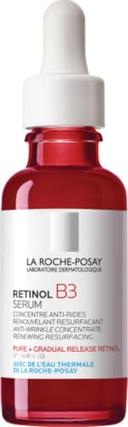
La Roche-Posay Pure Retinol Face Serumis the other route: keep the retinol, change what is carrying it. Retinol with niacinamide, glycerin and hyaluronic acid, fragrance-free, from a brand built around reactive skin — the buffering is in the bottle rather than something you layer on. The cost is information: it publishes no percentage, which almost no pharmacy brand does.
And before you buy either, consider that the dose may have been the problem rather than the molecule. The fingertip-unit figures put the whole face and neck at about 2.5 units, far less than most people apply, and a prescription used generously can irritate more than one used correctly. Our gentle roundup ranks the options by the mechanism that makes each one gentle, and the sandwich method is the free fix to try first.
If pregnancy is the reason, nothing on this page is the answer
This is the most-searched variant of the query and it needs a different answer from the rest of the page, so we are going to be unambiguous: do not treat any retinoid on this page as a pregnancy-safe substitute for tretinoin. Topical retinoids as a class are avoided in pregnancy, and the swap people reach for — an over-the-counter retinol because it is “weaker” — is still a retinoid. Our pregnancy guide carries no product links at all, by design, and it is the page to read. Talk to the clinician managing your pregnancy, who can tell you what is appropriate for you.
If you want to know about the non-retinoid options people ask about in that situation — bakuchiol, azelaic acid, vitamin C — our retinol alternatives page and the bakuchiol comparison cover what their evidence actually is, which is far thinner than the marketing suggests in every case. Neither page recommends one as a tretinoin replacement.
What none of these can match
The evidence base.No cosmetic retinoid, at any price, has a published record resembling tretinoin’s. The 80% collagen I figure, the ten-month plateau, the epidermal hyperplasia histology — all of that is prescription tretinoin at 0.1% daily, and no product on this page inherits it. The closest thing to a bridge is a twelve-week double-blind comparison in 45 photoaged women that escalated a retinol serum through 0.25%, 0.5% and 1.0% against tretinoin escalated through 0.025%, 0.05% and 0.1%: the arms finished at parity on investigator and subject assessment and on water loss, with the retinol arm improving visual smoothness faster at week four and showing newly formed collagen at week twelve. That is cosmetic-industry-adjacent research rather than an independent trial, and we cite it for the escalation method and the direction of the histology, not as proof of equivalence.
A stated dose, reliably. Five of these seven publish an exact figure for their retinoid. The granactive retinoid prints a complex percentage rather than a retinoid dose, and La Roche-Posay prints nothing at all. Nothing requires a cosmetic to state a concentration, and the federal rule that orders ingredient lists stops being useful exactly here, because everything at one percent or less may be listed without respect to order of predominance and every cosmetic retinoid sits in that group. Adapalene is the exception and it is an exception because it is regulated as a drug.
Clinical oversight. A prescription comes with someone watching. Nothing on this page does, which is an argument for starting lower and slower than you think you need to.
How to start, whichever one you pick
At night, on dry skin, two or three nights a week, moisturizer over the top, sunscreen every morning without exception. Hold that for four weeks before changing anything, and change one thing at a time. If you are coming off tretinoin rather than starting fresh, do not match the frequency you were on — these are different molecules at different doses, three of them unstated, so treat it as a new product and build back up. Retinoids also degrade: a validated study across twelve commercial cosmetic products measured losses of 0% to 80% after six months at 25 °C and 40% to 100% at 40 °C, with light worse than heat, so buy a size you will finish. Our routine guide has the order of operations and the mistakes guide covers the errors that cost people months.