How to choose retinol as a man
The decision comes down to four questions, and none of them is about which bottle looks least floral on a bathroom shelf.
Fragrance-free is the spec that matters most
If you shave your face regularly, you are dragging a blade across your skin barrier several times a week. That is a manageable, ordinary thing to do — but it does leave the barrier more reactive than it would otherwise be, and it is the reason fragrance-free matters more here than the marketing suggests. Added fragrance is one of the most common triggers for irritation and contact reactions. Stack it on top of a retinoid and regular shaving, and you have built yourself an entirely avoidable problem.
Four of the six picks below are fragrance-free, and that is deliberate. If you shave daily, treat it as a hard requirement rather than a preference.
Fewer steps beats better ingredients you won’t use
The retinol literature rewards consistency over months. A modest product used almost every night comfortably outperforms an excellent one used sporadically because the routine felt like a chore. If a two-bottle regimen is realistically not going to happen, buy a retinol that is also your moisturizer — two of our picks are exactly that, and it is the reason our top pick is a one-step formula rather than the technically better-formulated serum below it.
Work with your shaving schedule, not against it
Do not apply retinol immediately after shaving. The barrier is compromised, and stinging is close to guaranteed. The practical pattern that works for most people: shave in the morning, apply retinol at night, and in the early weeks, skip the retinol on nights following a particularly close or irritated shave. If you shave at night, leave at least a few hours, or move the retinol to the nights you do not shave until your skin has adapted.
If ingrown hairs and post-shave bumps are part of your picture, retinol can help over time by supporting turnover and keeping follicles clearer — the same mechanism that makes it useful for congestion generally. It is a slow, secondary benefit rather than a treatment for the problem; our retinol for acne and marks page covers where that help starts and stops.
Oilier skin gives you a little more latitude
Skin that runs oilier generally tolerates retinoids somewhat better, which means you may be able to build to nightly use faster than the cautious schedules assume. That is not permission to start at a high strength — the ramp-up still matters — but if you find a gentle formula produces no reaction at all after a month, you are probably a candidate for a stated higher strength sooner than most. Lighter serum textures also tend to suit oilier skin better than rich night creams.
Does “for men” skincare do anything different?
Occasionally, and less often than the pricing implies. A men’s-marketed product may be formulated with a lighter texture, a scent profile aimed at a different audience, or a slightly different balance for oilier skin. Those are real formulation choices. What does not happen is a different, more effective form of retinol reserved for men — that is not a thing that exists.
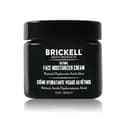
The Brickell pick on this list is included because it gets the important spec right: it is fragrance-free, it pairs the retinol with hyaluronic acid and vitamin E, and it is a genuine one-step night cream. It also costs several times what an equivalent unisex fragrance-free retinol costs, and it does not publish its strength. We think it is a reasonable buy if you specifically want a men’s-brand product and value the packaging and positioning. We do not think it outperforms our top pick, and we would rather tell you that than pretend otherwise.
What to realistically expect
The same as anyone else: smoother texture and more even tone in the first one to three months, softening of fine lines over a longer horizon, and results that hold only while you keep using it. Thicker skin may mean a slightly slower visible response and slightly better tolerance — the direction of travel is the same.
The rule that trips most people up is sunscreen. Retinol increases sun sensitivity, and sun exposure causes the photoaging you are treating. Men are, on average, considerably less consistent with daily SPF than women, and if you are going to skip that step, a nightly retinol is doing half a job. If you want the full picture of what to expect and when, our results timeline lays it out, and the strength guide explains where to start.