Retinol Room.

Best CeraVe Retinol

CeraVe sells two retinol serums in near-identical bottles for two different jobs, plus a daytime cream with SPF in it. None of the three states a retinol percentage. Here is which one you actually want, and how to tell them apart before you buy the wrong one.

By Stephen V.Last updated How we pick

If you are buying a CeraVe retinol for post-acne marks, uneven tone or texture, buy the Resurfacing Retinol Serum. That is what it is formulated and marketed for — encapsulated retinol with ceramides, niacinamide and licorice root — and it is also the cheapest of the three, which makes it our budget pick.

If you are buying one for fine lines and dullness, buy the Retinol Serum with Niacinamide & Hyaluronic Acidinstead. It is the anti-aging version of the same idea, with more humectant and buffering in the base. It costs about four dollars more and it is the one most people actually mean when they say “the CeraVe retinol serum”.

That distinction is the whole reason this page exists. The two serums come in similar bottles from the same brand on the same shelf, and they are built for different problems. People buy the Resurfacing serum for wrinkles and conclude that CeraVe retinol does not work. It is doing exactly what its own listing says it does.

One thing we cannot tell you about any of them: how much retinol is in the bottle. CeraVe publishes no percentage for any of these three products, so every spec table below reads “Not published” in that row. Nothing requires a cosmetic brand to state it, and the federal rule on ingredient lists only orders ingredients by predominance above one percent — which every cosmetic retinoid sits below. If a stated strength is your requirement, this brand cannot meet it, and our The Ordinary range is the page you want.

How this is funded: we earn a commission if you buy through our links, at no extra cost to you. It never changes which product we recommend, and we’ll tell you when we’d skip one. Full disclosure.

Quick picks

Ranked on formulation, stated concentration and buyer fit. Select a row to jump to the full write-up. We have not tested these products — here is exactly what we do instead.

#ProductBest forPrice
1
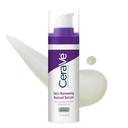
CeraVe Retinol Serum with Niacinamide & Hyaluronic Acid

CeraVe Retinol Serum with Niacinamide & Hyaluronic Acid

CeraVe's other retinol serum, and the one people buy by accident when they meant the Resurfacing one. This is the anti-aging version — retinol with niacinamide, hyaluronic acid and ceramides in a fluid base, aimed at fine lines and dullness rather than post-acne marks.

Best overall for fine lines
$18.34 · View on Amazon

$24.9927% off

Price as of November 21, 2026. #ad How we’re funded

2
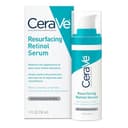
CeraVe Resurfacing Retinol Serum

CeraVe Resurfacing Retinol Serum

Encapsulated retinol with ceramides and licorice root, aimed squarely at post-acne marks and texture rather than deep wrinkles. Gentle, barrier-friendly and cheap — but the strength is unstated, so set expectations by what it's for.

Best for post-acne marks — budget pick
$16.49 · View on Amazon

$21.9925% off

Price as of November 21, 2026. #ad How we’re funded

3
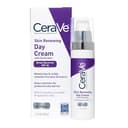
CeraVe Anti-Aging Retinol Face Cream SPF 30

CeraVe Anti-Aging Retinol Face Cream SPF 30

An unusual daytime retinol: a moisturizer that combines a low retinol dose with broad-spectrum SPF 30 and ceramides. The convenience is real, but retinol is fundamentally a PM active — treat this as a daytime moisturizer with a retinol bonus, not your main treatment.

Best daytime option, with real caveats
$21.39 · View on Amazon

$27.9924% off

Price as of November 21, 2026. #ad How we’re funded

The picks in full

#1Best overall for fine lines

CeraVe Retinol Serum with Niacinamide & Hyaluronic Acid

CeraVe's other retinol serum, and the one people buy by accident when they meant the Resurfacing one. This is the anti-aging version — retinol with niacinamide, hyaluronic acid and ceramides in a fluid base, aimed at fine lines and dullness rather than post-acne marks.

Strengths

  • Niacinamide, hyaluronic acid and ceramides do real buffering work
  • Fluid, lightweight texture that layers under a moisturizer easily
  • Drugstore price from a brand with a strong barrier-formulation record

Trade-offs

  • Retinol concentration is not published
  • Easy to confuse with CeraVe's Resurfacing serum, which is a different product for a different job
Key activeRetinol + niacinamide + hyaluronic acid
Stated concentrationNot published
FormatFluid serum
Fragrance-freeYes
Best forNormal, Dry, Sensitive

Formulation note. Retinol paired with niacinamide, hyaluronic acid and CeraVe's ceramide complex. The supporting cast is the point: the barrier ingredients are what let a retinol sit comfortably on skin that reacts. CeraVe's own product page states "Free of Added Fragrance" and its published ingredient list carries none (read 2026-10-27). The retinol figure itself is undisclosed.

Ingredients and claims read from the product listing, on August 11, 2026. “Not published” means the brand does not state that figure.

#2Best for post-acne marks — budget pick

CeraVe Resurfacing Retinol Serum

Encapsulated retinol with ceramides and licorice root, aimed squarely at post-acne marks and texture rather than deep wrinkles. Gentle, barrier-friendly and cheap — but the strength is unstated, so set expectations by what it's for.

Strengths

  • Ceramides + niacinamide support the barrier while the retinol works
  • Encapsulated delivery is gentler on reactive skin
  • One of the least expensive 'real' retinol serums

Trade-offs

  • Concentration is not published
  • Marketed for marks, not deep wrinkles — set expectations accordingly
Key activeEncapsulated retinol
Stated concentrationNot published
FormatFluid lotion-serum
Fragrance-freeYes
Best forAcne-prone, Normal, Sensitive

Formulation note. Encapsulated retinol + 3 essential ceramides + niacinamide + licorice root extract. The ceramide payload is why it stays tolerable; the retinol strength is not disclosed.

Ingredients and claims read from the product listing, on July 18, 2026. “Not published” means the brand does not state that figure.

#3Best daytime option, with real caveats

CeraVe Anti-Aging Retinol Face Cream SPF 30

An unusual daytime retinol: a moisturizer that combines a low retinol dose with broad-spectrum SPF 30 and ceramides. The convenience is real, but retinol is fundamentally a PM active — treat this as a daytime moisturizer with a retinol bonus, not your main treatment.

Strengths

  • Broad-spectrum SPF 30 built in
  • Ceramides + hyaluronic acid support the barrier
  • Fragrance-free

Trade-offs

  • Retinol works best at night; a daytime dose is secondary
  • Concentration not published, and low by design
Key activeRetinol + SPF 30 (ceramides)
Stated concentrationNot published
FormatLight day cream
Fragrance-freeYes
Best forNormal, Dry, Sensitive

Formulation note. Low-dose retinol + broad-spectrum SPF 30 + 3 ceramides + hyaluronic acid. A daytime moisturizer first; the retinol is a supporting extra, not a replacement for a nightly treatment.

Ingredients and claims read from the product listing, on July 18, 2026. “Not published” means the brand does not state that figure.

How to tell the two serums apart

Read the job, not the bottle. The Resurfacing serum names post-acne marks and texture; the Skin Renewingserum names fine lines and dullness. Both are 30 ml fluid serums, both carry CeraVe’s three-ceramide complex, both are fragrance-free, and neither states a retinol figure. The formulation difference that matters is the supporting cast: the Resurfacing serum leans on encapsulated delivery plus licorice root extract, which is a pigment-and-marks play, while the Skin Renewing serum pairs the retinol with niacinamide and hyaluronic acid, which is a cushioning-and-hydration play.

Encapsulation is worth one honest sentence, because it is the Resurfacing serum’s headline. Wrapping retinol in a carrier is a genuine attempt at two real problems — the molecule is unstable, and it irritates. A validated study of twelve commercial cosmetics measured retinoid losses of 0% to 80% over six months at 25 °C, with light degradation worse than heat, so stability is not a marketing invention. What encapsulation is not is a strength claim. It describes how the retinol is delivered, not how much of it there is. Our encapsulated retinol roundup covers the format across brands.

The fragrance position, which is unusually good

All three products here are fragrance-free, and in the Skin Renewing serum’s case the brand says so explicitly: CeraVe’s own US product page carries the label claim “Free of Added Fragrance” with the stated reason “To avoid fragrance irritation”, and its published ingredient list contains no fragrance, parfum or essential oil. That is worth more than it sounds. Fragrance is among the commonest causes of allergic contact dermatitis, and the reaction can show up days later — precisely the window in which someone blames the retinoid, stops, and never finds out it was the base. On this axis CeraVe beats several more expensive brands on this site outright.

Why the SPF cream is third, not first

The Anti-Aging Retinol Face Cream SPF 30 is a sensible product sold into a confusion. Retinol is a night active: it is degraded by light, and the published record on retinoids is built on nightly use. A daytime cream carrying a low, undisclosed retinol dose alongside broad-spectrum SPF 30 is a good moisturizerwith a bonus, and treating it as your retinoid means under-treating all year. Buy it as the SPF step if you want the convenience — the ceramides and hyaluronic acid are the same quality as the serums — but keep a nightly treatment. Our morning or night guide sets out the light-degradation argument in full.

The criteria, in order

  1. The right product for the stated job. With no percentages to compare, what each formula is built for is the most reliable information available, and we rank on it.
  2. How much buffering the base does. Niacinamide, hyaluronic acid and ceramides are the reason a CeraVe retinol is tolerable on skin that reacts to other brands, and the Skin Renewing serum carries the most of it.
  3. Published fragrance status, which all three have and which we weight heavily.
  4. Night-first. A product that puts the retinoid where it works gets ranked above one that puts it where it degrades.
  5. Cost of a ten-month run. All three clear it comfortably; the published retinoid record plateaus at roughly ten months of nightly use, so the bottle you can keep rebuying is the one that works.

Which one, by situation

Post-acne marks, blackheads or rough texture: Resurfacing serum, and read retinol for dark spots for what a cosmetic retinoid can and cannot do to pigment. Its full review goes deeper.

Fine lines, dullness, first retinoid on dry or reactive skin: Skin Renewing serum. Its review covers the niacinamide pairing and why the undisclosed strength matters less here than it does on a high-strength product.

You want one daytime cream and will keep a separate night treatment: the SPF 30 cream, as the morning step.

You want a stated percentage: not this brand. Go to The Ordinary for a published figure at a lower price, or high-strength retinol if you are already tolerant.

What we left out

CeraVe’s non-retinol products.The brand’s plain moisturizing cream and hydrating cleanser are genuinely good and appear on this site as supporting products in routines, but they are not retinoids and do not belong in a ranked retinoid list.

Any claim about which serum has more retinol.We do not know, nobody outside the company does, and the ingredient list cannot tell you — position proves presence, never amount. Any page ranking these three on strength is making the number up.
Frequently asked questions

What is the difference between CeraVe's two retinol serums?

Different jobs. The Resurfacing Retinol Serum is built for post-acne marks and texture — encapsulated retinol with ceramides, niacinamide and licorice root extract. The Retinol Serum with Niacinamide & Hyaluronic Acid is the anti-aging one, aimed at fine lines and dullness, with more humectant and buffering in the base. Both are 30 ml, both fragrance-free, neither states a percentage. Buying the Resurfacing serum for wrinkles is the single commonest mistake with this brand.

How much retinol is in CeraVe's retinol serum?

CeraVe does not say, for any of its retinol products. That is normal for the category rather than unusual — nothing requires a cosmetic brand to publish a figure, and the federal rule on ingredient lists orders ingredients by predominance only above one percent, which every cosmetic retinoid sits below. So the ingredient list proves the retinol is there and tells you nothing about how much. If a stated strength is your requirement, this is the wrong brand.

Is CeraVe retinol good for beginners?

It is one of the better first retinoids on the market, for reasons that have nothing to do with the retinol: the ceramide and niacinamide base does real buffering work, all three products are fragrance-free, and the price makes a ten-month run affordable. The caveat is the one running through this page — you are starting at an unknown dose, so you cannot step up deliberately later. Our beginner roundup compares it against the stated-strength starters.

Can I use the CeraVe retinol SPF cream instead of a night retinol?

We would not. Retinol is degraded by light and the published record on retinoids is built on nightly use, so a daytime cream carrying a low undisclosed dose is a moisturizer with a bonus rather than a treatment. Use it as your morning SPF step if you like the convenience — the ceramides are the same quality as the serums — and keep something nightly.

Are CeraVe retinol products fragrance-free?

Yes, all three on this page. For the Skin Renewing serum the brand states it outright: its own US product page carries the label claim 'Free of Added Fragrance' with the reason 'To avoid fragrance irritation', and the published ingredient list contains no fragrance, parfum or essential oil. That matters because fragrance is among the commonest causes of allergic contact dermatitis and the reaction is often delayed — the window in which people blame the retinoid.

Is CeraVe retinol better than The Ordinary?

They are good at opposite things. CeraVe gives you a buffered formula — ceramides, niacinamide, hyaluronic acid — and no number. The Ordinary gives you an exact percentage and nothing to cushion it. If your skin reacts easily, take the buffering. If you want to know what you are putting on and to step up deliberately over a year, take the number. Our head-to-head page works through it product by product.

Sources

  • CeraVe — Skin Renewing Retinol Serum product page (label claims) — CeraVe's own US product page, fetched October 27, 2026, carrying the label claim 'Free of Added Fragrance' with the stated reason 'To avoid fragrance irritation'; the published ingredient list contains no fragrance, parfum or essential oil. Cited for the fragrance-free status of this serum, which the registry previously recorded as not published. The retinol concentration is still genuinely undisclosed and is unaffected (accessed October 27, 2026)
  • CeraVe — Resurfacing Retinol Serum (brand product page) — The brand's own page for the product. Publishes the full INCI, in which niacinamide is 5th, dipotassium glycyrrhizate 8th, hydrogenated lecithin 9th, ceramides NP, AP and EOP 10th to 12th, RETINOL 19th and sodium hyaluronate 20th. States 'Free of Added Fragrance' and 'Won't clog pores'. Directions: 'Apply evenly to face daily' in the PM, avoiding eyes and lips, with sunscreen used alongside. The product is marketed for post-acne marks, pore appearance, texture and brightness. NO retinol percentage is stated anywhere on the page, and the page publishes no efficacy figure, sample size or study design. Cited for what the brand publishes about its own formula, never as evidence of efficacy (accessed October 10, 2026)
  • CeraVe — Skin Renewing Retinol Serum (brand product page) — The brand's own page for CeraVe's OTHER retinol serum — the anti-aging one, routinely confused with the Resurfacing serum. Publishes the full INCI, in which ceramides NP, AP and EOP are 11th to 13th, niacinamide 15th, RETINOL 23rd and hydrolyzed hyaluronic acid 32nd. States 'Free of Added Fragrance'. Marketed for the appearance of fine lines, wrinkles, texture and radiance across all skin types; directions are to apply in the evening after cleansing and 'gradually increase to daily use as skin adapts'. NO retinol percentage is stated, and no efficacy figure, sample size or study design is published. Cited for what the brand publishes about its own formula, never as evidence of efficacy (accessed October 10, 2026)
  • Temova Rakuša Ž, Škufca P, Kristl A, Roškar R — Retinoid stability and degradation kinetics in commercial cosmetic products (J Cosmet Dermatol, 2021) — Validated HPLC-UV study of 16 retinoid derivatives (retinol, retinyl palmitate, beta-carotene and hydroxypinacolone retinoate) in 12 commercial cosmetics over 6 months of long-term and accelerated stability testing plus a one-week photostability study. Retinoid degradation followed first-order kinetics; the products showed a 0%-80% decline after 6 months at 25 °C and a 40%-100% decline at 40 °C; 'light degradation was more pronounced than temperature-induced degradation'; instabilities were 'formulation-dependent and associated with lower contents than declared in some cosmetics'. Cited for the size of the stability problem a sealed single-dose format is built to solve — the study did not test this product (accessed September 19, 2026)
  • Mechanistic Basis and Clinical Evidence for Nicotinamide (Niacinamide) in Skin (PMC) — Review of niacinamide's barrier, ceramide and pigmentation effects (accessed July 17, 2026)
  • Lam ECS, Li R, Rodrigues MR, et al. — Enhanced retinoid response by a combination of the vitamin A ester retinyl propionate with niacinamide and a flavonoid containing Ceratonia siliqua extract in retinoid responsive in vitro models (Int J Cosmet Sci, 2021) — LABORATORY study, not a clinical trial: retinyl propionate was tested alone and with niacinamide in a RARalpha reporter cell line and in keratinocyte gene-expression profiling. Combining 0.5 microM or 2 microM retinyl propionate with 10 mM niacinamide produced a 56% and 95% signal increase over retinyl propionate alone; niacinamide on its own had very modest activity. The authors hypothesize niacinamide raises NAD levels and so modulates conversion to retinoic acid. Evidence that the pairing is not antagonistic in vitro — NOT evidence of a measured benefit on human skin (accessed August 31, 2026)
  • American Academy of Dermatology — Eczema types: Contact dermatitis causes — AAD names fragrance among the most common causes of allergic contact dermatitis, and notes the rash can take hours or days to appear (accessed August 19, 2026)
  • American Academy of Dermatology — How can I find eczema friendly products? — AAD sets out the difference between the labels: unscented means a fragrance is masked so you cannot smell it, fragrance-free means the product contains no fragrance at all (accessed August 19, 2026)
  • American Academy of Dermatology — Retinoid or retinol? — AAD on the difference between prescription retinoids and OTC retinol (accessed July 17, 2026)
  • U.S. FDA — 21 CFR 701.3, Designation of ingredients (eCFR) — The federal rule governing how a cosmetic ingredient list is ordered. Paragraph (a): 'The label on each package of a cosmetic shall bear a declaration of the name of each ingredient in descending order of predominance, except that fragrance or flavor may be listed as fragrance or flavor.' Paragraph (f) allows an alternative: ingredients 'present at a concentration greater than 1 percent, in descending order of predominance', followed by ingredients 'present at a concentration of not more than 1 percent, without respect to order of predominance', followed by color additives 'without respect to order of predominance'. Cited for the exact limit of what an ingredient's POSITION can tell a reader: late placement indicates the 1-percent-or-less group, but within that group the order carries no information about quantity (accessed September 26, 2026)

Keep reading