Retinol Room.

Retinol for Blackheads

A blackhead is an open comedone — a plug of dead cells and sebum that has oxidized at the surface. Retinoids are the ingredient class that slows how fast new ones form. What they will not do is empty the ones already there tonight.

By Stephen V.Last updated How we pick

First, a definition that changes the answer. A blackhead is an open comedone: a follicle plugged with dead cells and sebum, open at the surface, where the contents have darkened on contact with air. The dark color is oxidation, not dirt — which is why scrubbing harder has never worked and never will.

That matters because it tells you what a treatment has to do. Two separate jobs: clear the plug that is in the follicle now, and slow the process that keeps producing new ones. Retinoids are strong on the second and slow on the first. Most of the disappointment people report comes from buying one and expecting the other.

The AAD lists retinoids among the treatments used for comedonal acne, and that is the claim we are making here: a retinoid is the durable fix, not the fast one. If you want your nose to look better this month, an oil-soluble acid does more — our salicylic acid comparison covers how the two divide the work, and why they belong at different times of day.

Picks below are ranked with congestion as the criterion rather than anti-aging: lighter bases, real comedolytic evidence where it exists, and one product that is not a retinol at all because for this specific complaint it has the better case.

How this is funded: we earn a commission if you buy through our links, at no extra cost to you. It never changes which product we recommend, and we’ll tell you when we’d skip one. Full disclosure.

Quick picks

Ranked on formulation, stated concentration and buyer fit. Select a row to jump to the full write-up. We have not tested these products — here is exactly what we do instead.

#ProductBest forPrice
1
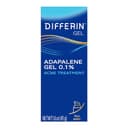
Differin Adapalene Gel 0.1% Acne Treatment (45 g pump)

Differin Adapalene Gel 0.1% Acne Treatment (45 g pump)

The only prescription-grade retinoid you can buy off the shelf, at a stated 0.1% adapalene. If your reason for wanting retinol is acne rather than lines, this is very likely the more appropriate product — and it is regulated as a drug, with the trial evidence that implies.

Best overall
$23.97 · View on Amazon

Price as of August 20, 2026. #ad How we’re funded

2
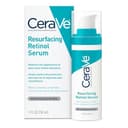
CeraVe Resurfacing Retinol Serum

CeraVe Resurfacing Retinol Serum

Encapsulated retinol with ceramides and licorice root, aimed squarely at post-acne marks and texture rather than deep wrinkles. Gentle, barrier-friendly and cheap — but the strength is unstated, so set expectations by what it's for.

Best gentle retinol
$9.99 · View on Amazon

$21.9955% off

Price as of August 20, 2026. #ad How we’re funded

3
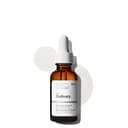
The Ordinary Retinol 0.5% in Squalane

The Ordinary Retinol 0.5% in Squalane

The clearest-labeled retinol you can buy: an exact 0.5% pure retinol in a squalane base, at a price that makes 'start low and go slow' painless. For most people ready to move up from a starter strength, this is the sensible middle rung.

Best value
$9.30 · View on Amazon

Price as of August 20, 2026. #ad How we’re funded

4
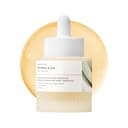
SKIN1004 Retinol 0.2% Boosting Shot Ampoule

SKIN1004 Retinol 0.2% Boosting Shot Ampoule

The best value on this page by a clear margin: a stated 0.2%, in a full 30 ml, for less than most brands charge for a third of the size. The listing pairs retinol with retinal and centella, which is a sensible combination for skin that wants potency and cushioning at once.

Best stated strength
$13.88 · View on Amazon

Price as of August 20, 2026. #ad How we’re funded

5
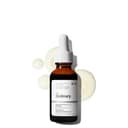
The Ordinary Granactive Retinoid 2% Emulsion

The Ordinary Granactive Retinoid 2% Emulsion

Not retinol at all, but a retinoid ester (hydroxypinacolone retinoate) marketed as gentler. A reasonable option for skin that flakes on plain retinol — with the honest caveat that its evidence base is thinner than retinol's.

Best if retinol irritates you
$12.10 · View on Amazon

Price as of August 20, 2026. #ad How we’re funded

The picks in full

#1Best overall

Differin Adapalene Gel 0.1% Acne Treatment (45 g pump)

The only prescription-grade retinoid you can buy off the shelf, at a stated 0.1% adapalene. If your reason for wanting retinol is acne rather than lines, this is very likely the more appropriate product — and it is regulated as a drug, with the trial evidence that implies.

Strengths

  • States an exact 0.1% adapalene — a regulated over-the-counter drug, not a cosmetic
  • Backed by randomized trials against tretinoin, with comparable efficacy and better tolerability
  • 45 g pump lasts a long time at a pea-sized nightly dose

Trade-offs

  • It is an acne treatment first — the anti-aging evidence base belongs to other retinoids
  • Expect a genuine adjustment period of dryness and peeling in the first weeks
  • Not the right tool if your only concern is fine lines
Key activeAdapalene (a third-generation retinoid)
Stated concentration0.1%
FormatGel
Fragrance-freeNot published
Best forAcne-prone, Oily, Normal

Formulation note. Adapalene is a synthetic retinoid that binds retinoic acid receptors directly, so unlike retinol it needs no conversion in the skin. It is sold in the US as an over-the-counter acne drug at 0.1%, which is why the strength is on the box — drug labeling requires it.

Ingredients and claims read from the product listing, on August 11, 2026. “Not published” means the brand does not state that figure.

#2Best gentle retinol

CeraVe Resurfacing Retinol Serum

Encapsulated retinol with ceramides and licorice root, aimed squarely at post-acne marks and texture rather than deep wrinkles. Gentle, barrier-friendly and cheap — but the strength is unstated, so set expectations by what it's for.

Strengths

  • Ceramides + niacinamide support the barrier while the retinol works
  • Encapsulated delivery is gentler on reactive skin
  • One of the least expensive 'real' retinol serums

Trade-offs

  • Concentration is not published
  • Marketed for marks, not deep wrinkles — set expectations accordingly
Key activeEncapsulated retinol
Stated concentrationNot published
FormatFluid lotion-serum
Fragrance-freeYes
Best forAcne-prone, Normal, Sensitive

Formulation note. Encapsulated retinol + 3 essential ceramides + niacinamide + licorice root extract. The ceramide payload is why it stays tolerable; the retinol strength is not disclosed.

Ingredients and claims read from the product listing, on July 18, 2026. “Not published” means the brand does not state that figure.

#3Best value

The Ordinary Retinol 0.5% in Squalane

The clearest-labeled retinol you can buy: an exact 0.5% pure retinol in a squalane base, at a price that makes 'start low and go slow' painless. For most people ready to move up from a starter strength, this is the sensible middle rung.

Strengths

  • Publishes the exact strength — 0.5% — which almost no drugstore retinol does
  • Squalane base is lightly occlusive and cushions irritation
  • Sold in 0.2% / 0.5% / 1% so you can step up deliberately

Trade-offs

  • Pure retinol in an anhydrous oil — no added niacinamide or soothing actives
  • Squalane finish can feel heavy layered over other oils
Key activeRetinol
Stated concentration0.5%
FormatLightweight oil serum
Fragrance-freeYes
Best forNormal, Dry, Not-too-sensitive

Formulation note. Pure retinol dispersed in squalane; no water phase, so none of the pH and packaging fuss vitamin C needs. The strength is printed on the label, which is the exception in this category, not the rule.

Ingredients and claims read from the product listing, on July 18, 2026. “Not published” means the brand does not state that figure.

#4Best stated strength

SKIN1004 Retinol 0.2% Boosting Shot Ampoule

The best value on this page by a clear margin: a stated 0.2%, in a full 30 ml, for less than most brands charge for a third of the size. The listing pairs retinol with retinal and centella, which is a sensible combination for skin that wants potency and cushioning at once.

Strengths

  • States 0.2% and comes in a full 30 ml — the best size-to-price ratio here
  • Centella in the base, which is the K-beauty answer to a soothing supporting cast
  • Listed as containing retinal alongside retinol, so it is not a token dose of one active

Trade-offs

  • Combining two vitamin A forms makes the total retinoid exposure harder to place
  • Ampoule format is thinner than a cream, so drier skin will need more moisturizer over it
Key activeRetinol + retinal (retinaldehyde) with centella
Stated concentration0.2% retinol
FormatLight ampoule serum
Fragrance-freeNot published
Best forNormal, Combination, Sensitive

Formulation note. A stated 0.2% retinol with retinal and centella asiatica, per the listing. The stated figure covers the retinol; the retinal content is not separately quantified, so the total retinoid dose is only partly published.

Ingredients and claims read from the product listing, on August 13, 2026. “Not published” means the brand does not state that figure.

#5Best if retinol irritates you

The Ordinary Granactive Retinoid 2% Emulsion

Not retinol at all, but a retinoid ester (hydroxypinacolone retinoate) marketed as gentler. A reasonable option for skin that flakes on plain retinol — with the honest caveat that its evidence base is thinner than retinol's.

Strengths

  • Retinoid ester is widely reported as less irritating than pure retinol
  • Stated 2% of the Granactive Retinoid complex — a labeled figure
  • Light emulsion texture layers easily

Trade-offs

  • Hydroxypinacolone retinoate has far less published evidence than retinol
  • The '2%' is the complex, not 2% retinol — don't read it as high-strength
Key activeGranactive Retinoid (hydroxypinacolone retinoate)
Stated concentration2% Granactive Retinoid complex
FormatLight emulsion
Fragrance-freeYes
Best forSensitive, Retinol-reactive

Formulation note. The active is hydroxypinacolone retinoate, a retinoic-acid ester — not free retinol. The '2%' refers to the solubilized complex, not a retinol percentage. We present it as a gentler alternative with a smaller evidence base, not an equal to retinol.

Ingredients and claims read from the product listing, on July 18, 2026. “Not published” means the brand does not state that figure.

Blackheads, whiteheads, and the things that are neither

Precision here saves money, because three different-looking complaints get treated as one and only two of them respond to a retinoid.

  • Blackheads (open comedones). Plugged follicle, open at the surface, contents oxidized dark. Responds to retinoids over months.
  • Whiteheads (closed comedones). The same plug under a closed surface, appearing as small flesh-colored bumps. Responds to retinoids similarly, often more slowly.
  • Sebaceous filaments. The tiny gray-ish dots on and around the nose that refill within days of being squeezed. These are normal follicular structures, not a disorder, and no product removes them permanently. Retinoids can make them less obvious; nothing makes them disappear.

That third category is the source of an enormous amount of wasted effort. If the dots cover your nose evenly, refill quickly and have always been there, you are probably looking at sebaceous filaments and the correct response is to stop attacking them.

What a retinoid actually does to a comedone

It changes how the follicle behaves. Retinoids normalize the turnover and adhesion of the cells lining the follicle, so dead cells shed rather than compacting into a plug. That is a change to the process rather than to the current contents, which is exactly why the effect builds over months and why it holds while you keep using it.

It also explains the early weeks. Speeding up turnover pushes existing subclinical congestion toward the surface faster than usual, so blackheads and small bumps can seem to multiply before they settle. That is the retinol purge, and on this complaint it is more likely than average because you already have plugs in the pipeline. Our purge guide covers how to tell an adjustment from a genuine reaction.

Why adapalene tops this list

The first pick is not a retinol. Adapalene is a third-generation retinoid sold over the counter at a stated 0.1%, and unlike a cosmetic retinol it is a regulated drug with direct clinical evidence in acne behind it.

For comedonal congestion specifically, that evidence gap is the whole argument. A cosmetic retinol is a reasonable tool for texture, tone and lines and a second-choice tool for blackheads. If blackheads are genuinely your main complaint, buying the drug rather than the cosmetic is the more efficient decision, and it usually costs about the same.

Where adapalene loses: it is not the anti-aging tool a retinol is, it can be drying, and it is a treatment with an acne label rather than a broad routine product. Our retinol vs adapalene comparison sets out both sides, and our Differin review covers the product.

What clears the plugs already there

Retinoids will get there eventually. If you want it sooner, the honest answer involves other ingredients — and this site would rather tell you that than sell you a retinol on a promise it will not keep quickly.

  • Salicylic acid. Oil-soluble, so it penetrates the sebum in the follicle rather than sitting on top of it. Fast feedback, and a cleanser format is the lowest-risk way to combine it with a retinoid.
  • Time and patience. Unglamorous, and the plugs do clear.
  • A professional extraction, if it matters for an occasion. Done by someone trained, not by you at a mirror at midnight.

What does not work, despite the marketing: pore strips remove the top of the plug and leave the rest, charcoal masks do not draw anything out of a follicle, and scrubbing irritates skin that then produces more of the inflammation you are trying to avoid. The AAD’s own oily-skin guidance is explicit that scrubbing makes things look worse.

The routine that suits this complaint

  1. Gentle cleanse at night. A salicylic acid cleanser in the morning is a good addition once your retinoid is established.
  2. Retinoid on completely dry skin, twice a week to start, building slowly. Our frequency guide has the schedule.
  3. Light, oil-free moisturizer over the top. Congested skin still needs it, and skipping it is why people flake and quit.
  4. Broad-spectrum sunscreen every morning. Non-negotiable on any retinoid.
  5. Leave the extractions alone. Squeezing turns a comedone into an inflamed lesion, and inflamed lesions leave marks that outlast the blackhead by months.

Our oily-skin roundup covers the base and texture question in more depth, and our large pores page covers the closely related complaint of pore visibility.

When this is not the right page

If your complaint includes inflamed papules, pustules, or anything painful and deep, you have acne rather than isolated congestion, and the treatment picture is broader — our acne page and acne-prone roundup cover it, and persistent or scarring acne is a reason to see a doctor rather than shop.

If your complaint is the dots on and around the nose that refill in days, revisit the sebaceous filament section above. And if what you actually dislike is pore size rather than pore contents, our large pores page is more honest about what can and cannot change than most pages on that subject.

What we left out

We left out pore strips, charcoal masks, blackhead vacuums and every “pore cleansing” product that treats oxidation as dirt. We left out the scrubs and cleansing brushes that trade a short-term clean feeling for a longer-term inflammation problem. And we left out retinol products whose entire pitch is pore refinement at an undisclosed strength — our strength guide explains why an unpublished number is the thing to notice on a product sold on a specific promise.
Frequently asked questions

Does retinol get rid of blackheads?

Over months, and by preventing new ones more than by clearing old ones. Retinoids normalize how follicle cells shed, so plugs form more slowly — that is the durable fix. What they do not do is empty an existing comedone quickly. Expect gradual improvement over eight to twelve weeks, not a clear nose next week.

How long does retinol take to clear blackheads?

Two to three months for a clear trend, longer for a full result — and the first few weeks can look worse as existing congestion is pushed to the surface. If you are still seeing no change at all after twelve consistent weeks, the strength, the frequency or the ingredient choice is worth revisiting.

Is retinol or salicylic acid better for blackheads?

They do different jobs. Salicylic acid is oil-soluble and clears the plug that is in the pore now, with feedback in days. A retinoid changes how quickly new plugs form, with results over months. The common and sensible answer is both, separated — a salicylic cleanser in the morning, the retinoid at night.

Why do I have more blackheads after starting retinol?

Faster turnover brings existing subclinical congestion to the surface sooner than it would have arrived otherwise. It is the purge, and this complaint is one of the most likely to experience it because there is more in the pipeline to bring up. It should settle within a few weeks; escalating irritation, burning or spreading redness is a different signal.

Are the dots on my nose blackheads?

Often not. Sebaceous filaments are normal follicular structures that appear as small gray dots, cover the nose fairly evenly, and refill within days of being squeezed. They are not a disorder and no product removes them permanently. Retinoids can make them less noticeable; nothing eliminates them, and treating them aggressively usually makes the surrounding skin worse.

Should I use adapalene instead of retinol for blackheads?

For this complaint specifically, it has the better case: it is a regulated drug at a stated 0.1% with direct clinical evidence in acne, sold over the counter at a comparable price. Choose a cosmetic retinol instead if you also want the texture, tone and fine-line benefits, or if adapalene has proved too drying.

Do pore strips work?

They remove the top of a plug and leave the rest, which is why the blackhead reappears quickly, and they can irritate the surrounding skin. They are a cosmetic quick fix rather than a treatment. If you want a genuine clear-out before an event, a professional extraction is the safer version.

Sources

Keep reading