What causes crepey skin
Two processes, running together. The first is intrinsic aging: collagen and elastin production slows with time, and existing fibers degrade. The second is photoaging — cumulative UV exposure, which breaks down dermal collagen far faster than time alone. That is why crepiness appears on forearms, chest and the backs of hands rather than on skin that never sees daylight, and why it often looks worse on the side of the body that faces the car window. The backs of the hands are a special case — washed all day, and small enough that a stated-strength face product becomes affordable — so our retinol for hands page ranks them on that logic rather than this one.
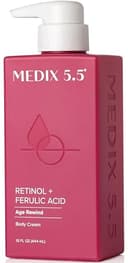
A third factor makes it look worse than it is: dryness. Dehydrated skin has poorer light reflection and its surface irregularities are more visible. That is why a good moisturizer produces an immediate cosmetic improvement in crepiness that no retinoid can match on a same-day basis — and why the best products for this job are treatment and moisturizer in one.
For women, the timing often clusters around menopause. Estrogen decline is associated with a rapid fall in dermal collagen in the years immediately following, which is why crepiness can seem to appear suddenly rather than gradually. Our menopausal skin page covers that in more detail.
What a retinoid can realistically do
The mechanism is well established: retinoids stimulate collagen synthesis and improve measures of photoaged skin. Over months, that means better skin quality — smoother surface, more even tone, slightly thicker and more resilient dermis. On crepey areas, that reads as a reduction in the fine crosshatched texture and a general improvement in how the skin looks in raking light.
What it will not do is tighten loose skin. If you can lift a fold and it stays lifted, that is laxity, and no topical will change it. It also will not work quickly: body skin is thicker in some places, thinner in others, and slower to remodel than the face everywhere. Give this six months before you form a view, and twelve before you decide it has plateaued.
Realistic checkpoints
- Weeks 1–4: better hydration and immediate cosmetic improvement from the moisturizer component. No retinoid effect yet.
- Months 2–3: smoother surface texture, possibly some flaking early on if you moved too fast.
- Months 4–6: the tone and fine-texture change that people actually notice in photographs.
- Beyond: maintenance. Stopping reverses the gains over time, which is the same as everywhere else on this site.
How to treat a body-sized area
Apply to damp skin after showering. The moisturizer component works better on damp skin, and this is the one habit most likely to make the routine stick, because it attaches to something you already do.
Start twice a week and build.Body skin is not automatically tougher than facial skin — the inner arms and chest are among the most reactive skin you have. The standard ramp-up schedule applies.
Use enough. The most common failure here is a face-sized dose spread over a body-sized area. If a bottle is lasting six months, you are not using enough of it, and the price advantage of the big bottle is exactly what makes generous application possible.
Do not use it under a sunburn or on freshly shaved skin. Both are compromised barriers, and both will sting.
Protect the areas you are treating. Forearms and chest are the two places sunscreen is most consistently forgotten and most consistently needed. Treating photodamage while continuing to accumulate it is running to stand still.
What else helps
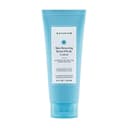
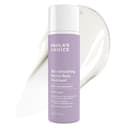
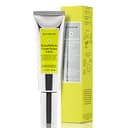
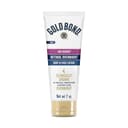
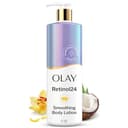
A plain, well-formulated moisturizer used daily does more for the immediate appearance of crepiness than any active, and it is the foundation the retinoid sits on top of. Look for a combination of humectants and occlusives — that is what a conventional body lotion already is, which is why treatment-in-a-lotion formats make sense for this job. Our Naturium retinol body lotion review takes the top pick of that format apart: what the shea-butter base contributes, and what the missing strength figure costs you.
Sun protection prevents the next decade of it. Alpha hydroxy acids improve surface texture and are a reasonable alternative for people who cannot tolerate retinoids — though they raise sun sensitivity too, and stacking them with a retinoid on the same area is the standard route to an irritated mess. Our retinol vs glycolic acid page covers the choice between them.
When it is not crepiness
Thin, easily-bruised, papery skin on the forearms can also result from long-term topical or systemic steroid use, and some medical conditions affect skin thickness directly. If your skin has changed rapidly, tears easily, or bruises with minimal contact, that is worth raising with a doctor rather than treating with a body lotion. General guidance, not medical advice — but this is a case where the distinction genuinely matters.
That steroid point is also where the most common worry about retinoids gets its plausibility, and it is worth separating cleanly: the drug class that thins skin with prolonged use is topical corticosteroids, and a retinoid was shown in a controlled study to partially protect against exactly that effect. Our guide on whether retinol thins skin sets out the biopsy evidence.