What a peptide is, and what the published record actually says
A peptide is a short chain of amino acids — a fragment of a protein. The cosmeceutical literature sorts the ones used in skincare into groups by what they are claimed to do: signal peptides, which are proposed to tell fibroblasts to make more collagen; neurotransmitter-affecting peptides, which are proposed to interfere with muscle contraction; and carrier peptides, which ferry trace minerals such as copper. Those are classifications of intent, not of proven effect, and it is worth holding them at that distance.
Compare that with the molecule they are sitting next to. Retinoids have a published record on photoaged skin that nothing else over the counter comes close to: a double-blind study in which prescription tretinoin produced epidermal hyperplasia, compaction of the stratum corneum and new collagen fibrils in the papillary dermis, maxing out at about ten months; and a controlled trial in which collagen I formation rose 80% on daily tretinoin against a 14% fall on vehicle. Reviews of photoaging cosmeceuticals put retinoids first and peptides in the supporting tier, and the AAD’s own consumer page on wrinkle remedies is similarly unexcited about the second group.
So the honest framing is this: you are buying a retinol. The peptide is a reasonable thing for it to carry, and it is not the reason the product will or will not work. If a product is asking you to pay more for the peptide than for the retinoid, you are paying on the wrong side of the evidence. Our retinol vs peptides comparison sets out the full case, including the delivery problem: peptides are large, water-loving molecules and getting them through an intact barrier to a fibroblast is the open question nobody selling them has answered in public.
What the ingredient lists do and do not prove
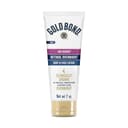
Gold Bond publishes all forty-five of its ingredients on its own site. Niacinamide is seventh, retinol is eighteenth, sodium ascorbate twenty-first, and palmitoyl hexapeptide-12— the thing the front of the pack calls a “Retinol & Peptide Complex” — is twenty-second, with ceramide NG forty-third. That is the most transparent version of this pairing anywhere on this site, and it is also the cheapest product on the page.
It still does not tell you a dose. The federal rule on cosmetic ingredient lists orders ingredients by predominance only above one percent; everything below that line may be listed in any order. Every cosmetic retinoid, and every cosmetic peptide, lives under that line. Position proves presence. It never proves amount. Any page ranking these three on “how much peptide” would be making the number up.
The criteria, in order
- A peptide stated by the brand— on the pack, the listing or a published ingredient list. “Peptide complex” with nothing named is weaker evidence than a named INCI entry, and we say which is which.
- A stated retinol strength wins. One of the three publishes one. That product is first, and the reason is the retinoid, not the peptide.
- Fragrance-free beats fragrancedat the same formulation quality. Fragrance is among the commonest causes of allergic contact dermatitis, and the rash can appear hours or days later — the window in which people blame the retinol.
- Cost of a ten-month run, not cost of a bottle. The published record on retinoids plateaus at roughly ten months of nightly use; a product you ration because of the price is the one that does not get there.
- The base has to suit the skin that is using it. A high-strength retinol needs a base that cushions, and a dual face-and-body lotion is necessarily dosed for the more delicate of the two uses.
Which of the three, by situation
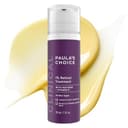
You already use a retinol comfortably and want to step up:the Paula’s Choice 1%. Read our step-up guide first, because moving to a stated 1% is a real jump and the usual mistake is to make it too early.
You want the peptide claim to be verifiable and the price to be low: the Gold Bond lotion, with the honest caveat from our full review: the brand’s “overnight” claim is about hydration and surface optics, not about the retinoid, which works on a ten-month timescale regardless of what the box says.
You want to use something every night from the start and will pay for it: Kiehl’s Micro-Dose, which sells a dose rather than a strength and carries ceramide and peptide support in the base. It is the most expensive way to buy a retinol on this page by a wide margin, and the proposition — a small amount nightly rather than more, twice a week — is genuine. Our review is the place to decide whether that is worth the money to you.
What we left out, and why
Every product whose peptide we could not verify. Several popular retinols market a peptide blend in their ad copy and name no peptide in a published ingredient list. An unverifiable claim is not a pick, however well the product would otherwise have ranked.
Olay’s retinol night moisturizer is the most frustrating exclusion. Its current live listing title names a peptide, but it no longer carries the model name our registry records for it, and our rule is that we do not print a model name the live listing does not support. It stays out until that resolves. The same listing problem has kept it off three previous waves, which we record rather than quietly working around.
Products marketed on “collagen” rather than on a peptide are out on substance. Collagen is far too large a molecule to reach the dermis from a cream, and a cream containing it is a moisturizer with a good story. That is the subject of our peptides comparison rather than a pick here.
How to use one of these
As you would use the same retinol without the peptide. Two nights a week for the first month, on dry skin after cleansing, a pea for the whole face, moisturizer over the top, sunscreen every morning. The peptide does not change the dose or the ramp, and none of the three brands publishes a schedule that depends on it. If you are starting from nothing, do not start here — start with our beginner picks, then come back when a stated 1% is a sensible next step rather than a setback.