Retinol Room.

Retinol for Sagging and Loose Skin

The one concern where the honest answer is partly no. Three different things get called sagging, a retinoid addresses one of them well, and the dermatologists' own association says a cream cannot lift skin. What it can do, and the picks for the part it reaches.

By Stephen V.Last updated How we pick

This is the page where we have to start by taking something away. If you have come here looking for a retinol that lifts a jawline, tightens a neck or firms loose skin on a stomach, no product on this site will do that, and we are not going to spend two thousand words implying otherwise before admitting it in the last paragraph.

The American Academy of Dermatology puts it more bluntly than we would dare to on a page that earns a commission: “If you’re looking for facelift-like results from a jar, you’ll likely be disappointed,” and a cream or lotion “cannot penetrate the skin deeply enough” to lift sagging skin. The same page allows exactly one exception, and it is the reason this page exists: “You may see a small change if a product contains a retinoid, such as retinol, which can help your body make more collagen.”

A small change, from the only ingredient class that gets one. That is a narrow, unglamorous, entirely real claim, and it is worth something — because “sagging” is not one problem. At least three distinct things get filed under the word, and they sit at different depths. One of them is skin that has become thinner and less dense, which is precisely what a retinoid acts on. The other two are happening underneath the skin, where nothing you rub on it can reach.

So the job of this page is to sort out which one you are looking at in the mirror, tell you honestly whether a retinol is worth your money for it, and then rank six picks for the part it genuinely addresses — face, jawline, neck, eye area and body. We own none of these products and we have tested none of them, which is set out on how we review. The ranking is argued from published formulation facts and from what the evidence says the molecule does.

How this is funded: we earn a commission if you buy through our links, at no extra cost to you. It never changes which product we recommend, and we’ll tell you when we’d skip one. Full disclosure.

Quick picks

Ranked on formulation, stated concentration and buyer fit. Select a row to jump to the full write-up. We have not tested these products — here is exactly what we do instead.

#ProductBest forPrice
1
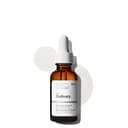
The Ordinary Retinol 0.5% in Squalane

The Ordinary Retinol 0.5% in Squalane

The clearest-labeled retinol you can buy: an exact 0.5% pure retinol in a squalane base, at a price that makes 'start low and go slow' painless. For most people ready to move up from a starter strength, this is the sensible middle rung.

Best overall for the long haul
$9.30 · View on Amazon

Price as of October 3, 2026. #ad How we’re funded

2
Naturium Retinaldehyde Cream Serum 0.10%

Naturium Retinaldehyde Cream Serum 0.10%

A stated 0.10% retinal in a cream-serum base, sold in a 1.7 oz size explicitly for face, neck and chest. That size-and-scope combination is unusual and genuinely useful: most retinals come in 1 oz bottles you end up rationing for the face alone.

Best for the neck and jawline
$25.59 · View on Amazon

$32.0020% off

Price as of October 3, 2026. #ad How we’re funded

3
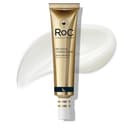
RoC Retinol Correxion Deep Wrinkle Night Cream

RoC Retinol Correxion Deep Wrinkle Night Cream

The drugstore retinol cream people actually keep re-buying — retinol delivered in a moisturizing cream base, which suits dry, mature skin that finds serums drying. A dependable, cheap nightly option.

Best cream for thin, drier skin
$20.99 · View on Amazon

$29.9930% off

Price as of October 3, 2026. #ad How we’re funded

4
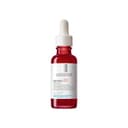
La Roche-Posay Pure Retinol Face Serum (B3 + HA)

La Roche-Posay Pure Retinol Face Serum (B3 + HA)

Pairs pure retinol with niacinamide and hyaluronic acid, so the buffering that reduces flaking is built into the formula rather than something you layer yourself. The gentlest 'serious' retinol here — for skin that dries out on plainer options.

Best supported serum formula
$35.24 · View on Amazon

$44.9922% off

Price as of October 3, 2026. #ad How we’re funded

5
Naturium Skin-Renewing Retinol Body Lotion Jumbo (14 oz)

Naturium Skin-Renewing Retinol Body Lotion Jumbo (14 oz)

The same shea-butter retinol lotion as the 8 oz, in the size the job actually needs. Arms, legs and chest are a lot of skin, and the standard bottle is the reason people start rationing a treatment that only works where they put it. Check the per-ounce math before you buy either — that is the whole decision between these two.

Best for loose skin on the body
$40.00 · View on Amazon

$43.999% off

Price as of October 3, 2026. #ad How we’re funded

6
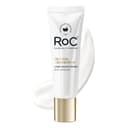
RoC Retinol Correxion Under Eye Cream

RoC Retinol Correxion Under Eye Cream

The reference drugstore retinol eye cream — a retinol formulation made specifically for the thinner skin around the eyes, aimed at crow's-feet and under-eye lines. Widely available and inexpensive, though the strength isn't stated.

Best for the eye area
$19.97 · View on Amazon

$21.979% off

Price as of October 3, 2026. #ad How we’re funded

The picks in full

#1Best overall for the long haul

The Ordinary Retinol 0.5% in Squalane

The clearest-labeled retinol you can buy: an exact 0.5% pure retinol in a squalane base, at a price that makes 'start low and go slow' painless. For most people ready to move up from a starter strength, this is the sensible middle rung.

Strengths

  • Publishes the exact strength — 0.5% — which almost no drugstore retinol does
  • Squalane base is lightly occlusive and cushions irritation
  • Sold in 0.2% / 0.5% / 1% so you can step up deliberately

Trade-offs

  • Pure retinol in an anhydrous oil — no added niacinamide or soothing actives
  • Squalane finish can feel heavy layered over other oils
Key activeRetinol
Stated concentration0.5%
FormatLightweight oil serum
Fragrance-freeYes
Best forNormal, Dry, Not-too-sensitive

Formulation note. Pure retinol dispersed in squalane; no water phase, so none of the pH and packaging fuss vitamin C needs. The strength is printed on the label, which is the exception in this category, not the rule.

Ingredients and claims read from the product listing, on July 18, 2026. “Not published” means the brand does not state that figure.

#2Best for the neck and jawline

Naturium Retinaldehyde Cream Serum 0.10%

A stated 0.10% retinal in a cream-serum base, sold in a 1.7 oz size explicitly for face, neck and chest. That size-and-scope combination is unusual and genuinely useful: most retinals come in 1 oz bottles you end up rationing for the face alone.

Strengths

  • States 0.10% retinal — a mid rung you can actually place on the ladder
  • 1.7 oz is enough to cover neck and chest without rationing
  • Cream-serum texture is more cushioning than a thin emulsion

Trade-offs

  • Larger bottles take longer to finish, and retinal degrades once opened
  • Still a real retinoid dose over a large area — introduce it slowly
Key activeRetinaldehyde (retinal)
Stated concentration0.10%
FormatCream serum
Fragrance-freeNot published
Best forNormal, Dry, Mature

Formulation note. A stated 0.10% retinaldehyde in a cream-serum base, listed for face, neck and chest. Sold alongside a 0.05% and a 0.15% in the same line, so the range functions as a ladder in the same way The Ordinary's retinols do.

Ingredients and claims read from the product listing, on August 11, 2026. “Not published” means the brand does not state that figure.

#3Best cream for thin, drier skin

RoC Retinol Correxion Deep Wrinkle Night Cream

The drugstore retinol cream people actually keep re-buying — retinol delivered in a moisturizing cream base, which suits dry, mature skin that finds serums drying. A dependable, cheap nightly option.

Strengths

  • Retinol in an emollient cream is gentler for dry skin
  • Long track record and wide availability
  • Low price for a nightly retinol

Trade-offs

  • Concentration is not published
  • Contains fragrance — a consideration for reactive skin
Key activeRetinol
Stated concentrationNot published
FormatRich night cream
Fragrance-freeNo
Best forDry, Mature

Formulation note. Retinol in a moisturizing cream base. Contains fragrance, so it isn't our pick for sensitive skin — the cream format is its advantage for dry skin.

Ingredients and claims read from the product listing, on July 18, 2026. “Not published” means the brand does not state that figure.

#4Best supported serum formula

La Roche-Posay Pure Retinol Face Serum (B3 + HA)

Pairs pure retinol with niacinamide and hyaluronic acid, so the buffering that reduces flaking is built into the formula rather than something you layer yourself. The gentlest 'serious' retinol here — for skin that dries out on plainer options.

Strengths

  • Niacinamide + glycerin + hyaluronic acid buffer the retinol's dryness
  • Fragrance-free, from a brand built around reactive skin
  • Well-tolerated texture that layers cleanly under moisturizer

Trade-offs

  • Does NOT publish the retinol percentage — you're trusting the brand
  • Among the pricier options for an unstated strength
Key activeRetinol
Stated concentrationNot published
FormatSilky lotion-serum
Fragrance-freeYes
Best forSensitive, Dry, Normal

Formulation note. Pure retinol + niacinamide (vitamin B3) + hyaluronic acid. The support actives are the selling point; the retinol strength itself is not disclosed, which we flag rather than guess.

Ingredients and claims read from the product listing, on July 18, 2026. “Not published” means the brand does not state that figure.

#5Best for loose skin on the body

Naturium Skin-Renewing Retinol Body Lotion Jumbo (14 oz)

The same shea-butter retinol lotion as the 8 oz, in the size the job actually needs. Arms, legs and chest are a lot of skin, and the standard bottle is the reason people start rationing a treatment that only works where they put it. Check the per-ounce math before you buy either — that is the whole decision between these two.

Strengths

  • 14 oz — sized for whole-limb use rather than a face-serum habit applied to a body
  • Listing names encapsulated retinol and shea butter, so the base moisturizes as it treats
  • Removes the main failure mode of body retinol: applying too little to make it stretch

Trade-offs

  • Retinol strength is not published, exactly as on the 8 oz
  • Higher up-front cost than the standard size — the saving is per ounce, not per bottle
  • A bottle this size takes months to finish, and retinol degrades once opened
Key activeEncapsulated retinol (+ shea butter)
Stated concentrationNot published
FormatRich body lotion
Fragrance-freeNot published
Best forDry, Normal

Formulation note. The 14 oz size of the same Skin-Renewing Retinol Body Lotion. Its listing title names 'Encapsulated Retinol & Shea Butter' where the 8 oz title names shea butter only — we record that as a difference between the two LISTINGS, not as evidence that the formulas differ. Neither states a retinol percentage.

Ingredients and claims read from the product listing, on September 5, 2026. “Not published” means the brand does not state that figure.

#6Best for the eye area

RoC Retinol Correxion Under Eye Cream

The reference drugstore retinol eye cream — a retinol formulation made specifically for the thinner skin around the eyes, aimed at crow's-feet and under-eye lines. Widely available and inexpensive, though the strength isn't stated.

Strengths

  • Formulated at an eye-appropriate strength for delicate skin
  • Long track record for the eye area specifically
  • Inexpensive and easy to find

Trade-offs

  • Retinol strength not published
  • Contains fragrance — patch-test near the eye first
Key activeRetinol
Stated concentrationNot published
FormatLight eye cream
Fragrance-freeNo
Best forNormal, Mature

Formulation note. Retinol in a formula dosed for the thin skin around the eyes. Eye-area retinol is intentionally milder than face retinol; the exact figure is undisclosed.

Ingredients and claims read from the product listing, on July 18, 2026. “Not published” means the brand does not state that figure.

Three different things called “sagging”

Here is a test you can run in about five seconds, and it decides almost everything that follows. Pinch the skin on the back of your hand or along your jaw, lift it, and let go.

  • If it snaps back but feels thin and paperybetween your fingers, you are mostly looking at dermal thinning. This is retinol’s territory.
  • If it returns slowly, like fabric rather than elastic, you are looking at elastic fiber damage. Retinol has something to say here, though not what the marketing claims.
  • If you can lift a fold and it stays lifted, or if the problem is that features have moved rather than that skin has changed, that is structural. Nothing topical will touch it.

1. Thinned, less dense skin — the part retinol reaches

With age and sun, the dermis loses collagen and the epidermis thins. Skin that is thinner drapes worse, creases more readily and reads as slack even where nothing has actually descended. This is the one mechanism where the retinoid evidence is strong and direct.

The clearest record is the 1993 New England Journal of Medicine biopsy study: collagen I formation was 56% lower in photodamaged skin than in sun-protected skin, and ten to twelve months of daily 0.1% tretinoin produced an 80% increase in collagen I formation against a 14% decrease on vehicle. Separately, the long-term histology of topical tretinoin describes “epidermal hyperplasia, compaction of the stratum corneum and the deposition of ultrastructurally visible collagen fibrils in the papillary dermis.” A thicker epidermis over a denser papillary dermis is a measurable change in the structure of the skin itself.

Two honest caveats, because they matter for what you should expect. Both of those records used prescription tretinoin, not cosmetic retinol — our retinol vs tretinoin comparison covers the gap between them. And the same long-term study found the improvement peaked at about ten months with no further gain between ten and twenty-two. That is the realistic ceiling: firmer-looking, denser, better-draping skin, arriving slowly, and then plateauing.

2. Elastic fibers that no longer recoil — and the claim that is backwards

Recoil is elastin’s job, and sun ruins it. The published picture is not simply that elastin runs out: solar elastosis is “one of the main markers of cutaneous photoaging” and is “characterized by disorganized and non-functional deposition of elastic fibers.” The architecture fails rather than the supply.

This is where a very common marketing claim falls apart, and it is worth stating plainly because you will see it everywhere. Retinol is routinely sold as “rebuilding elastin to tighten skin.” In cultured human fibroblasts, retinoic acid does close to the opposite: UVB pushed elastin mRNA up roughly three-fold, and all-trans-retinoic acid inhibited that rise by about 16% and the promoter activity by about 65%. The authors suggest the anti-photoaging effect “may be related, at least in part, to down-regulation of elastin gene expression elevated by UVB.”

Read those two findings together and it makes sense: the elastin that UV drives up is the disorganized, non-functional kind, and suppressing its accumulation is a reasonable thing for a retinoid to do. But it is not the same as restoring springiness to skin that has lost it. That study was cell culture and prescription retinoic acid, not skin and not a bottle of cosmetic retinol. We are citing it for one narrow reason: if a brand tells you its retinol rebuilds your elastin, the published direction of effect does not support it.

3. Volume and structure that has moved — not retinol’s territory at all

Jowls, a heavy nasolabial fold, hooded upper lids, a slackening jawline: much of this is not a skin problem. The surgical anatomy literature introduced the term pseudoptosisfor it — fourteen hemifacial cadaver dissections describing how “diminished volume of a specific deep fat compartment leads to an excess skin envelope and the illusion of a more prominent nasolabial fold.” Deep fat deflates, the skin that covered it is now surplus, and the result reads as sagging. Add ligament laxity, muscle change and bone remodeling and you have most of what people photograph and send to a dermatologist.

There is no topical route to a deep fat compartment. A retinoid applied to the surface can improve the quality of the skin envelope; it cannot reduce how much envelope there is. If this is your main concern, the useful conversation is with a board-certified dermatologist about the procedures below, not with a serum.

What actually tightens skin, for the sake of a fair comparison

We would rather tell you this than have you buy six creams finding it out. The AAD lists the interventions that do produce tightening, with its own timelines: ultrasound, where “with 1 treatment, most people see modest lifting and tightening within 2 to 6 months”; non-invasive radiofrequency, best results “in about 6 months” and results that “can last 2 to 3 years”; laser treatment needing “3 to 5 treatments”; minimally invasive radiofrequency giving “gradual tightening and lifting for close to 1 year”; laser resurfacing, described as the “most effective procedure for tightening loose skin”; and at the top, “a surgical lift, such as a facelift or eyelid surgery, will give you the most dramatic results.”

Note two things in that list. Even the real interventions are described as modestand take two to six months. And the AAD’s own candidacy guidance asks whether you have “a small amount of sagging skin,” adding: “Do you have lots of sagging skin? If so, skin-tightening may not be helpful.” If device-based tightening has limits that honest, a serum’s limits are tighter still.

The criteria we ranked on

Because the mechanism here is collagen deposition and epidermal thickening over months, the usual roundup criteria are the wrong ones. Strength is not what decides this. Staying on the product for six to twelve months is what decides it, and that reframes everything:

  • Cost per month over a year, not per bottle. The collagen record plateaus around ten months. A product you abandon in week six because of the price produces nothing. We weighted heavily toward formulas you can still be using next summer.
  • Enough product for the area you are actually treating. A neck, a jawline, a chest or a stomach is many times the surface of a face. A 30 ml face serum rationed across a torso is the single most common way this fails. Two picks below are sized for large areas on purpose.
  • A base that supports thin skin rather than stripping it. The skin most likely to look slack is often also the thinnest and driest. A formula arriving with emollients, ceramides or niacinamide does part of the work and makes nightly use realistic.
  • A stated strength where one exists, so you can reason about the dose. Three picks below print a number. Three do not, and their spec tables say “Not published” rather than a guess — our strength and percentage guide explains why that is so common.
  • No firming claim we cannot support. Nothing was ranked here because its box says lifting, firming or tightening. Those words are unregulated and tell you about a marketing department.

Area by area

Face and cheeks

The most favorable case, because facial skin remodels faster than body skin and gets treated consistently. Expect better density and a smoother drape rather than lift. Any of the first four picks suits this.

Jawline and jowls

Partially addressable at best. The skin quality improves; the contour is governed by the structures underneath. Worth doing if you are realistic, and the practical point is coverage — take whatever you use down over the jaw and onto the upper neck rather than stopping at the chin, which is where most people stop.

Neck and chest

Thin skin, less sebaceous support, and famously intolerant of retinoids. Start at twice a week, buffer with a moisturizer, and accept that this area takes the longest. Our neck and chest roundup goes into the full field; the retinal pick here is the one we would start with, because it is sized and labeled for exactly this area.

Under and around the eyes

Be careful what you are asking for. Under-eye crepe and fine lines can genuinely improve. Hooded upper lids and under-eye bags are anatomy — the AAD names eyelid surgery, not a cream, for those. Our under-eyes page covers the distinction, and the eye-area pick here is a low-irritation format rather than a lifting product.

Stomach, arms and thighs, including after weight loss

The honest answer is the least satisfying one on the page. Significant loose skin after major weight loss is an excess-envelope problem — there is more skin than there is now body to fill it — and the AAD’s own line about “lots of sagging skin” applies directly. A body retinol will improve the quality of that skin: texture, tone, crepiness, how it reflects light. It will not reduce its area. If you are deciding between a lotion and a consultation, and the amount of loose skin is substantial, the consultation is the honest recommendation. Where a lotion is worth it, buy the big size — the economics of treating a torso only work at volume.

What we left out, and why

Anything sold primarily as a firming or lifting cream. With no stated retinoid, no published strength and an unregulated claim, there is nothing to assess. Every pick here is in our registry with a published active and a dated listing behind it.

Peptide and growth-factor “lifting” serums. Peptides have a real if modest cosmetic literature, but they are not a retinoid and this is a retinol site; our retinol vs peptides comparison sets out what each is for. Neither lifts.

Collagen supplements and facial exercise. Outside what this site covers, and outside what we could source to the standard the rest of the page is held to.

High-strength retinol as a shortcut. It is not one here. The collagen effect shows up at cosmetic strengths, the thin skin on a neck is the least able to tolerate a strong product, and quitting is the failure mode that matters. Starting too strong is how people quit. If you do want to step up later, our guide to doing it deliberately is the method.

Setting expectations, in months

Weeks 1 to 6:nothing to see on this concern. Any early change is the moisturizer in the base, which is real but temporary — the AAD notes that a good moisturizer plumping fine lines is a result that “is temporary.” Your only job is getting to regular use without a reaction. Our beginners guide is the ramp.

Months 2 to 4: texture and tone improve first. Skin photographs better in side light. This is not firmness yet, and it is the point at which most people wrongly conclude the product is not working on the thing they bought it for.

Months 4 to 10: the density change, if you get one. Better drape, less crepe, skin that feels less papery when you pinch it. This is the honest best-case outcome and it is a real one.

Beyond ten months: maintenance. The long-term tretinoin record showed the improvement peaking at around ten months with nothing further to twenty-two, so keep using it to hold the ground rather than expecting more. Our results timeline guide covers how to judge this without fooling yourself; photographs in fixed lighting beat memory every time.

And the one thing that outperforms every product on this page: daily sunscreen. The collagen deficit and the non-functional elastic fibers are both substantially UV-driven, and the AAD lists sun protection among the habits that decide whether skin tightening helps you at all. A retinoid without a morning SPF is repairing damage you are still doing.
Frequently asked questions

Does retinol tighten skin?

Not in the sense of lifting it. The American Academy of Dermatology states that a cream or lotion cannot penetrate the skin deeply enough to lift sagging skin, and that results from a skin-firming cream are subtle at best — while allowing that you may see a small change from a retinoid, because it helps your body make more collagen. So: retinol can make thinned skin denser and better-draping over months, and it cannot reposition skin that has descended. Which of those you have decides whether it is worth buying.

What is the best retinol for sagging skin?

Whichever one you will still be using in ten months, which is why our top pick is a stated-strength serum at a price that survives a year rather than the strongest or most expensive option. The collagen evidence plateaus at around ten months of daily use, so duration beats potency here. For the neck and jawline we would start with the labeled retinal sized for face, neck and chest; for the body, the large size, because treating a torso with a face serum fails on economics.

Can retinol help jowls or a sagging jawline?

Only partly, and not in the way people hope. Much of what reads as jowling is structural — the surgical anatomy literature describes how deflation of a deep facial fat compartment leaves an excess skin envelope, which it calls pseudoptosis. A retinoid can improve the quality of that envelope but not how much of it there is. If the contour is the concern rather than the skin, that is a dermatologist conversation about devices or surgery.

Does retinol rebuild elastin?

The published evidence points the other way, which is worth knowing because the claim is everywhere. In cultured human fibroblasts, all-trans-retinoic acid suppressed the UVB-driven rise in elastin gene expression — by about 16% at the mRNA level and about 65% on promoter activity. That is arguably a good thing, because the elastin UV drives up is the disorganized, non-functional kind seen in solar elastosis. But suppressing abnormal elastin is not the same as restoring recoil, and no brand should be telling you it is.

How long does retinol take to firm skin?

Months, with a specific shape. Texture and tone move first, at roughly two to four months. Any density or drape change comes later, in the four-to-ten-month window. The long-term tretinoin data showed improvement peaking at about ten months with no further gain through twenty-two, so that is the realistic ceiling. Nothing useful happens in the first six weeks on this concern.

Will retinol help loose skin on my stomach after weight loss?

It will improve the skin's texture, tone and crepiness. It will not reduce the amount of skin, which is the actual problem after significant weight loss — there is more envelope than there is body to fill it. The AAD is direct that if you have lots of sagging skin, skin-tightening may not be helpful, and that applies here more than anywhere. If the amount is substantial, a consultation is the honest recommendation and a lotion is the cosmetic extra, not the fix.

Is retinol or a firming cream better for sagging skin?

Retinol, by default, because it is the only ingredient class the AAD credits with any change at all on this concern. 'Firming' and 'lifting' are unregulated marketing words that tell you nothing about what is in the bottle. If a firming cream contains a retinoid, you are buying a retinol with a more expensive label; if it does not, there is nothing to assess.

Can retinol make skin look saggier or thinner?

It does not thin skin — that myth is the subject of its own page, and the histology shows the opposite, a thicker epidermis. But the adjustment period can temporarily make skin look worse: flaking, tightness and irritation all read badly in the mirror. That phase is measured in weeks. What genuinely sets this concern back is quitting, since the gains only accrue over months.

What strength retinol should I use on my neck for sagging?

The lowest one you can find, applied least often to start. Neck skin is thinner, has less sebaceous support and is the area people most often damage by treating it like facial skin. Twice a week, buffered over or under a moisturizer, with a slow build to every other night, is the sensible protocol — and the slowness costs you nothing, because the outcome depends on months of use rather than on the number on the bottle.

Sources

  • American Academy of Dermatology — Many ways to firm sagging skin — The AAD's own consumer page on skin tightening, and the clearest published statement of what a topical can and cannot do about laxity. On creams: 'If you're looking for facelift-like results from a jar, you'll likely be disappointed', 'Despite the claims, the results you see from a skin-firming cream will be subtle at best', and a cream or lotion 'cannot penetrate the skin deeply enough' to lift sagging skin — while 'A good moisturizer can plump up your skin, making fine lines and wrinkles less noticeable. This result is temporary.' On retinoids specifically: 'You may see a small change if a product contains a retinoid, such as retinol, which can help your body make more collagen.' It then lists the procedures that do tighten, with the AAD's own timelines: ultrasound, 'With 1 treatment, most people see modest lifting and tightening within 2 to 6 months'; non-invasive radiofrequency, best results 'in about 6 months' and 'Results can last 2 to 3 years'; laser treatment, '3 to 5 treatments' with results 'between 2 and 6 months'; minimally invasive radiofrequency, 'gradual tightening and lifting for close to 1 year'; laser resurfacing, the 'Most effective procedure for tightening loose skin'; and 'A surgical lift, such as a facelift or eyelid surgery, will give you the most dramatic results.' On candidacy it advises being at a healthy weight, eating a healthy diet, quitting smoking, drinking little alcohol, protecting skin from the sun and never tanning indoors, and having 'a small amount of sagging skin' — adding 'Do you have lots of sagging skin? If so, skin-tightening may not be helpful.' Cited for the published limit on topicals and for what the real treatments for laxity are (accessed October 3, 2026)
  • Griffiths CE et al. — Restoration of collagen formation in photodamaged human skin by tretinoin (N Engl J Med, 1993) — Biopsies from 26 subjects plus 29 patients treated 10 to 12 months with daily 0.1% tretinoin cream (15 patients) or vehicle (14). Collagen I formation was 56% LOWER in photodamaged skin than in sun-protected buttock skin (P < 0.001); tretinoin produced an 80% INCREASE in collagen I formation against a 14% decrease on vehicle (P = 0.006). Prescription tretinoin, not cosmetic retinol — cited for the direction of the effect on dermal collagen (accessed September 18, 2026)
  • Voorhees JJ — Clinical effects of long-term therapy with topical tretinoin and cellular mode of action (J Int Med Res, 1990) — Double-blind, placebo-controlled study: 0.1% topical tretinoin reduced the effects of photoageing maximally after 10 months, with no further improvement between 10 and 22 months. Histologically it induced 'epidermal hyperplasia, compaction of the stratum corneum and the deposition of ultrastructurally visible collagen fibrils in the papillary dermis', reduced the number and activity of melanocytes, and significantly increased mitoses (accessed September 18, 2026)
  • Weihermann AC, Lorencini M, Brohem CA, de Carvalho CM — Elastin structure and its involvement in skin photoageing (Int J Cosmet Sci, 2017) — Review of what happens to elastin in photoaged skin. It describes 'the loss of elastic properties caused by changes in elastin production, increased degradation and/or processing' as producing 'a substantial impact on tissue esthetics and health', and names solar elastosis as 'one of the main markers of cutaneous photoaging', 'characterized by disorganized and non-functional deposition of elastic fibers' — with UV-induced alternative splicing of the elastin gene, leading to 'inadequate synthesis of the proteins required for the correct assembly of elastic fibers', offered as a potential explanation. Cited for why sun-damaged skin loses recoil: the problem is non-functional elastic fiber architecture, not simply a shortage of elastin (accessed October 3, 2026)
  • Lee KS, Kim SJ, Ryoo YW, Kim BC — All-trans-retinoic acid down-regulates elastin promoter activity elevated by ultraviolet B irradiation in cultured skin fibroblasts (J Dermatol Sci, 1998) — In-vitro study in cultured human skin fibroblasts. UVB up-regulated elastin mRNA roughly 3-fold between 3 and 10 mJ/cm2, with promoter activation peaking at more than 5.4-fold that of non-irradiated controls after a single 20 mJ/cm2 dose. All-trans-retinoic acid 'inhibited the increase in elastin mRNA level following a single exposure to UVB by approximately 16%, and the increase in promotor activity by about 65%'. The authors conclude that 'the anti-photoaging effect of t-RA may be related, at least in part, to down-regulation of elastin gene expression elevated by UVB'. Cultured fibroblasts and prescription retinoic acid, not skin and not cosmetic retinol — cited because it points the opposite way to the popular claim that retinol 'rebuilds elastin to tighten skin'. The elastin UV drives up is the disorganized elastotic kind; suppressing it is not the same as restoring recoil (accessed October 3, 2026)
  • Rohrich RJ, Pessa JE, Ristow B — The youthful cheek and the deep medial fat compartment (Plast Reconstr Surg, 2008) — Fourteen hemifacial cadaver dissections using dye injection to map the deep medial cheek, submentalis and sub-orbicularis oris fat compartments, with latex injection for arterial supply. The paper 'introduces the concept of pseudoptosis as a mechanism of midfacial aging: diminished volume of a specific deep fat compartment leads to an excess skin envelope and the illusion of a more prominent nasolabial fold', and concludes that 'Loss of volume of deep medial cheek fat leads to pseudoptosis and is an additional determinant of the nasolabial fold.' Surgical anatomy, not a skincare study — cited for the published mechanism behind the part of 'sagging' that happens underneath the skin rather than in it, which is why a topical has nothing to act on there (accessed October 3, 2026)
  • Kafi R, Kwak HS, Schumacher WE, et al. — Improvement of naturally aged skin with vitamin A (retinol) (Arch Dermatol, 2007) — Randomized, double-blind, vehicle-controlled left-versus-right ARM study in 36 elderly subjects (mean age 87): 0.4% retinol lotion or vehicle applied by study staff up to 3 times a week for 24 weeks. Fine wrinkling scores improved significantly on the retinol arm (-1.64 versus -0.08 on vehicle; p < .001), with increased glycosaminoglycan expression and procollagen I staining on biopsy. The cosmetic-retinol trial closest to hand skin: it is the arm rather than the hand, a stated 0.4%, and three applications a week (accessed September 12, 2026)
  • American Academy of Dermatology — Wrinkle remedies — AAD on which over-the-counter approaches to lines have support and which do not (accessed August 11, 2026)

Keep reading