What $25 buys, and what it does not
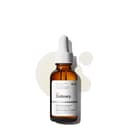
It buys the active. Every product on this page contains a real retinoid, and two of them — The Ordinary’s 0.2% retinol and 0.2% retinal — publish an exact figure, which most products at four times the price do not. The published evidence that makes people want a retinoid at all was built on prescription tretinoin: a double-blind study showing epidermal hyperplasia, compaction of the stratum corneum and new collagen fibrils in the papillary dermis, peaking at around ten months, and a controlled trial in which collagen I formation rose 80% on daily tretinoin against a 14% fall on vehicle. A cheap cosmetic retinol does not inherit those numbers. What it inherits is the mechanism and the requirement to keep going, and on that second point a $9 bottle has a real advantage over a $65 one.
What $25 does not buy is packaging, a stated strength from a drugstore brand, or any kind of airless dispenser. That last one is not purely cosmetic: a validated study of sixteen retinoid derivatives in twelve commercial cosmetics measured losses of 0% to 80% over six months at 25 °C and 40% to 100% at 40 °C, with light degradation worse than heat. Cheap retinol in a clear jar on a sunny windowsill is a real problem. Keep these in a drawer, and if you want the structural fix rather than the behavioural one, our encapsulated retinol roundupcovers the sealed formats — one of which, RoC’s capsules, also lands under this band.
The one trade-off you are making at this price
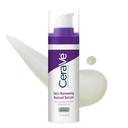
Under $25 you choose between a published number and a buffered base. The Ordinary gives you the number and nothing to cushion it — pure retinol in squalane, no niacinamide, no ceramides. CeraVe gives you the cushioning and no number at all. Both are defensible, and which is right depends on your skin rather than on your budget. If you react to things, take the base. If you intend to step up deliberately over a year, take the number, because you cannot escalate from an unknown starting dose. Our head-to-head between the two is the long version of that paragraph.
The criteria, in order
- A live price strictly under $25at our last dated check. Nothing is included on a “usually about” basis.
- One pick per format. A page with six serums on it is not useful to someone who needs an eye cream.
- A published strength, or a base that earns its absence. One of the two, on every pick.
- Enough product for the job. A 15 ml eye cream is fine for two eyes; 30 ml of face serum is not enough for a neck and chest, which is why a body lotion is on the page.
- Fragrance status stated, and flagged where a product contains fragrance, because the reaction is frequently delayed and gets blamed on the retinoid.
Which one, by situation
First retinoid ever: The Ordinary 0.2%, two nights a week. Our beginner roundup explains the ramp.
Skin that reacts to everything: the CeraVe serum, for the ceramides and the published fragrance-free claim.
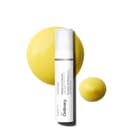
Already tolerant and want more effect for the same money: The Ordinary Retinal 0.2%, which is a closer molecule rather than a bigger number. Our retinol vs retinal page explains the conversion step.
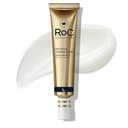
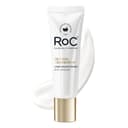
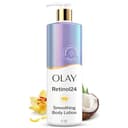
Dry or mature skin that finds serums tight: the RoC night cream, with its fragrance caveat. Crow’s feet: the RoC eye cream, patch-tested first. Neck, chest, arms:the Olay body lotion, which is 17 fl oz for about eleven dollars — the only way to treat a real surface area at this price.
What we left out
Everything over the line.La Roche-Posay’s serum, Paula’s Choice 1% and both Avene Retrinal creams are better products than most of this page and none of them fits the band. They are on our under-$50 page and our under-$100 page instead.
Products with no live offer. Three retinols in our registry currently return no buyable price, and we will not rank a product we cannot price. They are excluded until the daily check sees an offer again.
“Cheapest” as a criterion on its own. The cheapest retinol is not automatically the best buy under $25, which is why our budget pick is named as the budget pick rather than ranked first. Our value roundup is the page that argues cost per month over a full ten-month run, which is a different question from a hard price ceiling.