COSRX Retinol 0.1% Cream Review
A stated 0.1% retinol in a cream base, with a stated 0.3% one rung above it. That is a genuinely low, genuinely labeled starting point — the thing the US drugstore aisle almost never offers — in a tube smaller than it looks.
How this is funded: we earn a commission if you buy through our links, at no extra cost to you. It never changes which product we recommend, and we’ll tell you when we’d skip one. Full disclosure.
A stated 0.1% retinol in a cream base, sold in a two-rung range with a 0.3% above it. That is the K-beauty pattern this site likes: a real number on the box and a deliberate step to take next, at a price the US drugstore shelf charges for an unstated 'retinol complex'.
Strengths
- States an exact 0.1% — one of the lowest labeled strengths you can buy
- Sold alongside a 0.3%, so stepping up is a known quantity rather than a guess
- Cream base and small size suit cautious use around the eye and neck area
Trade-offs
- 0.1% is deliberately mild — experienced users will outgrow it quickly
- 0.67 fl oz is a small tube for the money if you are treating the whole face
| Key active | Retinol |
|---|---|
| Stated concentration | 0.1% |
| Format | Light cream |
| Fragrance-free | Not published |
| Best for | A genuinely low, clearly-labeled first retinol |
Formulation note. A stated 0.1% retinol in a cream, listed for the eye and neck area as well as the face. The published figure is what earns it a place: at this strength, knowing the number is the difference between a deliberate start and a guess.
Ingredients and claims read from the product listing, on August 13, 2026. “Not published” means the brand does not state that figure.
This site has one recurring complaint about the retinol category, and it is that most brands will not tell you how much retinol is in the bottle. CeraVe, RoC, Neutrogena and Olay all decline; our strength guide exists mostly because of it. So a cheap cream that prints 0.1% on the front, and sells a stated 0.3% one rung up, starts from a position of goodwill here.
What the number buys you
A stated 0.1% is about as low as a genuine retinol goes on a label. That is not a criticism. It means you know exactly where you are standing, which is the thing that makes every subsequent decision a decision rather than a guess.
Consider the alternative. Start on an unstated drugstore retinol, tolerate it comfortably, and want more — where do you go? You have no idea what you have been using, so any move is blind. Start here, get comfortable, and the next step is a stated 0.3% in the same base from the same brand: one variable changed, deliberately.
That ladder structure is the same argument we make for The Ordinary’s 0.2% / 0.5% / 1% range, and it is why both appear near the top of our beginner roundup. A published figure is worth more than a marketing claim about strength, and the K-beauty shelf supplies them far more often than the Western mass market does — our Korean retinol roundup covers that pattern.
The cream base
A light cream rather than a serum, which matters more than it sounds. A cream buffers the retinoid in its own base — a permanently half-sandwiched delivery — and it doubles as at least part of your moisturizer step. On a low strength aimed at beginners, that combination is coherent product design rather than a compromise.
It also makes this a reasonable choice for the neck and the area around the eyes, both of which the listing mentions. Neck skin is thinner and reacts sooner than facial skin; a low stated strength in a cushioning base is the sensible way to treat it. Our neck and chest roundup covers that field properly.
The trade is texture on oily skin. A cream is the wrong finish for a face already producing plenty of oil, and our oily-skin roundup picks water-light serums instead. If you are oily and want a stated low strength, the ampoule formats in the same Korean category are the better fit.
The size problem
Here is where the enthusiasm needs tempering. The tube is 0.67 fl oz — roughly 20 ml, about two thirds of a standard 30 ml serum. At a pea-sized nightly dose for a face, that is still a couple of months, so this is not a rip-off. But it is small, and the small size is exactly what makes the low sticker price possible.
The comparison that matters is cost per milliliter, not cost per tube. On that basis a 30 ml stated-strength serum from a budget brand frequently comes out ahead, and if you are treating neck and chest as well as face, this tube will not last the distance. It is a common pattern across the K-beauty retinol shelf and we flag it on the category roundup too.
There is a small counter-argument. Retinol degrades once opened, so a tube you finish inside a couple of months is arguably a better format than a large bottle you are still using eight months later. Our shelf-life guide covers why that is a real consideration rather than a rationalization.
Who it suits
First-time retinoid users who want to know what they are applying. That is the core case, and it is a strong one — a labeled 0.1% is a gentler start than most of the drugstore shelf and an infinitely more informative one.
It also suits people restarting after a break, after a bad experience, or after pregnancy, where beginning at the bottom of a ladder is the right instinct. And it suits anyone treating the neck or the eye area, where a low strength in a cream is the format the skin actually calls for.
Who should skip it
Experienced users. If you are already comfortable on a stated 0.5% retinol nightly, 0.1% is a step down rather than sideways and you will outgrow it quickly. Our high-strength roundup is the relevant shelf.
Oily skin that dislikes cream textures — see above. Anyone treating a large area, where the tube size makes it expensive per month. And anyone for whom confirmed fragrance-free status is a requirement, since the listing we read did not state it and we will not assume it; our fragrance-free roundup is filtered on that.
How to use it
At night, on clean and completely dry skin, a pea-sized amount for the whole face. Twice a week for the first month even at this strength — a low number is a reason to be confident, not a reason to skip the ramp-up. Add a night at a time once the current schedule is comfortable, using the schedule in our frequency guide.
Because it is a cream, you may find it doubles as your moisturizer on retinoid nights. If your skin is dry, add a plain cream over the top anyway. Keep the rest of the routine free of acids and strong vitamin C while you are adjusting, per the layering guide, and wear broad-spectrum sunscreen every morning without exception.
The verdict
One of the most sensible first retinols on the market, for one reason above all others: it tells you what is in it, and it sells you the next rung. That combination is rarer than it should be and it is worth more than a marginally higher strength you cannot place.
Buy it as a genuine starting point, not as a destination — and go in expecting to replace it with the 0.3% in a few months, which is exactly how a ladder is supposed to work. Just check the cost per milliliter before you assume the small tube is a bargain.
General guidance, not medical advice. Retinol Room is written by an enthusiast, not a dermatologist. For a diagnosis, a reaction, or a prescription active like tretinoin, see a qualified professional. Introduce any new active slowly and patch-test first.
If it’s not the one, consider these
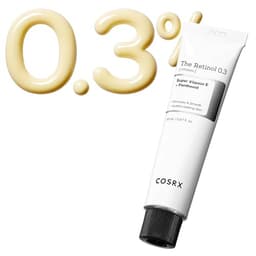
COSRX Retinol 0.3% Cream
The next rung of the same line at a stated 0.3% — same base, one variable changed, which is the whole point of buying into a ladder.
The Ordinary Retinol 0.2% in Squalane
A stated 0.2% in squalane at a comparable price with double the volume, if you don't need a cream base.
$8.10 · View on AmazonPrice as of October 4, 2026. #ad How we’re funded
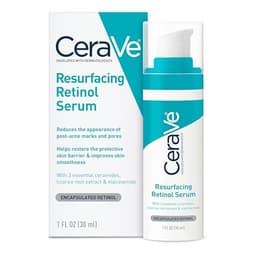
CeraVe Resurfacing Retinol Serum
Encapsulated retinol with ceramides for reactive skin — no stated figure, but a gentler formulation story and a bigger bottle.
Read the full review
Frequently asked questions
Is 0.1% retinol strong enough to do anything?
It is a real retinoid dose, and at the low end of what is commonly sold. Expect a slower, milder version of what a retinoid does — texture and tone over months rather than a dramatic change — with a much easier adjustment period. The trade is deliberate: you are buying tolerability and a known number rather than speed.
Is COSRX Retinol 0.1% good for beginners?
It is one of the better first bottles available, precisely because the figure is printed. Starting somewhere you can measure means your next step is a decision rather than a guess — and COSRX sells a stated 0.3% in the same line to step up to.
How does it compare to The Ordinary's 0.2%?
Lower stated strength, cream base rather than squalane oil, smaller tube. The Ordinary gives you more product and a slightly higher labeled dose for similar money; COSRX gives you a cushioning cream texture and a lower rung to start on. Both publish their number, which puts both ahead of most of the drugstore shelf.
Can I use it around my eyes and on my neck?
The listing describes it as suitable for the eye and neck area as well as the face, and the low stated strength supports that. Still apply it sparingly around the orbital bone rather than on the lid, and ramp up on the neck separately — neck skin is thinner and reacts sooner than the face does.
Is the tube too small?
It is 0.67 fl oz — about two thirds of a standard serum bottle. For a face at a pea-sized nightly dose that is still a couple of months. If you are also treating the neck and chest it disappears fast, and the cost per milliliter stops looking like a bargain. Compare on that basis rather than sticker price.
Is it fragrance-free?
The listing we read did not state it, so our spec table prints 'Not published' rather than guessing. If confirmed fragrance-free matters to you, our fragrance-free roundup lists only products where a listing states it.
How long before I see results?
Texture and tone typically begin shifting between weeks four and twelve, and at a low strength expect the slower end of that. Fine lines are a months-long project at any strength. Our results timeline guide sets out the honest checkpoints.
Sources
- American Academy of Dermatology — Retinoid or retinol? — AAD on the difference between prescription retinoids and OTC retinol (accessed July 17, 2026)
- Human Skin Aging and the Anti-Aging Properties of Retinol (PubMed) — Review of topical retinol's effect on collagen and photoaging (accessed July 17, 2026)
- Moisturizers — StatPearls (NCBI Bookshelf) — Reference on humectants (hyaluronic acid), occlusives and emollients (accessed July 17, 2026)
- Mechanistic Basis and Clinical Evidence for Nicotinamide (Niacinamide) in Skin (PMC) — Review of niacinamide's barrier, ceramide and pigmentation effects (accessed July 17, 2026)
- American Academy of Dermatology — How to maximize results from anti-aging skin care products — AAD on introducing one product at a time and giving it long enough to work (accessed August 11, 2026)
Keep reading
Best Korean retinol
The category this comes from, and why it publishes percentages the US shelf won't.
See the picksBest retinol for beginners
The wider beginner field, where a labeled 0.1% competes directly.
See the picksRetinol strength & percentage guide
What 0.1%, 0.3% and 1% actually mean, and why a published figure is worth paying for.
Decode the labelsRetinol for beginners
Week by week, what to expect from a first retinoid and how to build tolerance.
Read the guide