What mandelic acid is, in measured numbers
Mandelic acid is an alpha hydroxy acid, the same family as glycolic and lactic acid, and like them it works on the stratum corneum: it weakens the cohesion holding dead corneocytes together so the visible surface layer sheds and the skin underneath reads smoother. The reference literature on chemical resurfacing describes the family’s mechanism in exactly those terms.
What makes mandelic acid different from its siblings is two properties you can look up rather than take on trust. PubChem’s own record puts its molecular weight at 152.15 g/mol against glycolic acid’s 76.05 and lactic acid’s 90.08— so it is roughly double the size of the small AHA everyone starts with. And its computed XLogP is +0.6, where glycolic’s is −1.1 and lactic’s is −0.7. A positive value means it leans oil-soluble; the others lean water-soluble. Its IUPAC name, 2-hydroxy-2-phenylacetic acid, explains why: there is a benzene ring hanging off the molecule that glycolic and lactic acid do not have.
Those two numbers are the whole marketing case for mandelic acid, and they are a fair case as far as they go. A bigger molecule crosses the surface layer more slowly, which is the structural reason it is sold as the AHA for people who sting. Being mildly oil-tolerant means it is less put off by a sebaceous follicle, which is the structural reason it is pitched at acne. Our glycolic acid comparisonmakes the same argument from the other end — glycolic is the smallest AHA, which is why it penetrates fastest and why it stings most.
Note what those numbers are not. They are properties of a molecule, not results on skin. “Penetrates more slowly” is a prediction about tolerance, not a measurement of benefit, and nobody should be sold a result on the strength of a molecular weight.
The published record, in full
What exists for mandelic acid
Two records, and we are listing both because the list is genuinely that short.
The first is a 2018 study in a facial plastic surgery journal. Twenty-four patients — twenty women, four men, aged 42 to 68 — applied a topical mandelic acid formulation to the face twice a day for four weeks, with lower-eyelid skin measured weekly on a Cutometer. After four weeks, elasticity had increased 25.4% (P = .003) and firmness 23.8% (P = .029). Those are real measurements with real statistics, and they are the strongest thing mandelic acid has.
They are also 24 people, four weeks, one measurement site, no vehicle-controlled comparison arm described in the record, and — stated in the abstract itself — a formulation the authors say they developed. The study measured skin mechanics at the lower eyelid. It did not measure wrinkle depth, pigment, acne counts or anything in the dermis. We cite it for exactly what it found and no more.
The second is the Cochrane systematic review of topical treatments for acne, which covered alpha hydroxy acids across 49 trials and 3,880 reported participants, searched to May 2019. Its own background sentence is the summary: the clinical benefit of these treatments “is unclear”. The entire mandelic acid content of that review is one line — no difference in patient-assessed improvement between a glycolic acid peel and a salicylic-mandelic acid peel, on 40 participants, graded low-quality evidence — and the authors’ conclusion notes that outside the azelaic acid comparisons, the quality of evidence was “low or very low”, with risk of bias and imprecision limiting confidence.
That is the whole file. It is not nothing, and it is not a reason to assume mandelic acid is useless. It is a reason not to compare it with a retinoid as though the two sit on the same shelf.
What exists for a retinoid
For contrast, the comparison case: in controlled work on photodamaged skin, collagen I formation was 56% lower than in sun-protected skin, and ten to twelve months of daily 0.1% tretinoin produced an 80% increase in collagen I formation against a 14% decrease on vehicle. Separate double-blind histology on 0.1% tretinoin found epidermal hyperplasia, compaction of the stratum corneum and new collagen fibrils in the papillary dermis, with clinical improvement peaking at about ten months and no further gain out to twenty-two. The dermatologists’ own association names a retinoid among the ingredients that fade existing dark spots; it does not name mandelic acid.
Two qualifications we always make and will make here. That work used prescription tretinoin at a dose no cosmetic retinol carries, so a 0.2% retinol is not the drug in those studies. And the timescale is the real finding: ten months before the curve flattens. Our results timeline guide breaks that period down month by month.
Even discounted for both, the asymmetry is not subtle. One active has a decade of biopsy evidence at a known dose. The other has 24 patients and four weeks.
So what is each one actually for
The useful framing is the one we apply to every acid on this site: an AHA removes what is already there, fast. A retinoid changes what gets made, slowly. They are not rivals so much as a cosmetic fix and a structural one.
- You sting on everything.Mandelic acid, genuinely — its size is a real reason to expect a gentler ride, and this is the one recommendation on the page where it wins outright. Then move to a retinoid once your barrier is calm, starting at the lowest stated rung.
- Dull, rough, flaky, and you have an event on Saturday. The acid. A retinoid will not do anything visible in four days and may make the flaking worse first.
- Post-acne marks and uneven texture.The retinoid. This is the comparison’s clearest case: marks sit deeper than an AHA’s reach, and the retinoid record on pigment is the one the AAD actually cites. See retinol for acne scars.
- Fine lines, laxity, anything described as structural. The retinoid, on the biopsy record above. The mandelic study measured eyelid mechanics after four weeks and should not be read as a wrinkle result.
- Active breakouts.Neither, strictly. The Cochrane review says the AHA case for acne is unclear, and cosmetic retinol is the weakest rung of the retinoid ladder — an over-the-counter adapalene is the stronger, better-evidenced choice, which our retinol vs adapalene comparison works through.
- Rough body skin, elbows, knees, keratosis pilaris. Both have a place, and the published guidance names acids and retinoids together for KP. We cover that in retinol vs lactic acid, where lactic acid — which at least has a wider body of use on the body — is the more sensible acid to pick. For the specific case of dotted shins, see retinol for strawberry legs.
Why no mandelic acid product is ranked here
Because this site only ranks products whose listing we have verified and whose formula we can read, and mandelic acid does not currently clear that bar for us. It is a niche active sold mostly by small brands at a scatter of strengths, often in blends where another acid is doing much of the work, and the strength printed on the front is frequently a total acid figure rather than a mandelic one. Ranking a list of those would mean implying a comparison we cannot support.
So the honest recommendation is the same one we make on benzoyl peroxide: if you want to try mandelic acid, buy a low single-acid concentration from a brand that publishes its full ingredient list, use it a couple of nights a week, and spend the rest of the budget on the retinoid side, where the evidence is. Two things worth checking on any label: whether the percentage quoted is mandelic acid specifically or a blend total, and whether a second acid is sitting further down the list doing the actual exfoliating.
Running both without wrecking your barrier
It is perfectly reasonable to use both. Three rules, and the first is the one people break.
- Never the same night while you are establishing tolerance. Alternate. Both act on the surface layer, one by loosening it and one by speeding its turnover, and stacking them is the single most common route to the flaking people blame on retinol. Our layering guide has the schedule.
- Moisturize over both, every time. Not optional on either.
- Sunscreen every morning, and more carefully than usual.The FDA warns that AHA products can increase skin sensitivity to the sun, and recommends sun protection alongside their use; a retinoid raises sensitivity by a different route. Two roads to the same place means the morning half of the routine does more work than either product does. Broad-spectrum SPF 30 or higher, applied properly — see retinol and sunscreen.
And the standing rule for every acid-plus-retinoid page on this site: if the skin is stinging, peeling or tight, the answer is to subtract rather than to buffer harder. Drop the acid first. It is the one of the two with less to lose.
The verdict
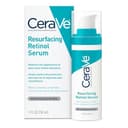
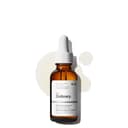
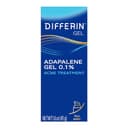
Buy the retinoid. The CeraVe Resurfacing serum if texture and marks are the complaint, The Ordinary Retinol 0.2% if you are starting from a reactive baseline and want the lowest stated rung there is, the adapalene gel if the honest problem is acne rather than texture.
Buy mandelic acid if — and really only if — acids have stung you before and you want one more sympathetic to the problem. It is a legitimate product with a real structural reason to be gentler and a very thin evidence file, and anyone telling you it is a retinol alternative is comparing 24 patients over four weeks with ten months of biopsies.