Teen skin is a different problem from aging skin
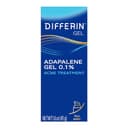
Almost every retinol product on the market is sold against wrinkles, and almost every teenager looking at one has a different problem: congestion, spots, oiliness and the flat brown or red marks acne leaves behind. Those are acne problems. The retinoid that treats them best is the one regulated as an acne drug.
The mechanism is why. Acne begins as a microcomedone you cannot see — a follicle plugged with dead cells and oil — and a retinoid’s contribution is to normalize how fast that lining sheds, which is prevention rather than spot treatment. That is slow work: expect a genuine adjustment period of dryness and some peeling in the first weeks and a judgement call at around twelve weeks, not a result on Friday. Our retinol for acne page runs through the full timeline.
Why not just buy an anti-aging retinol?
Three reasons, in order of how much they matter.
- The strength is usually secret.Most cosmetic retinols publish no percentage at all, which on teenage skin — oilier, more reactive, and often already using a benzoyl peroxide or salicylic acid wash — means stacking an unknown dose onto a known irritant. Where a cosmetic retinol is the right answer, this page only lists ones that print the number.
- The claims are aimed at someone else.A night cream formulated for dry mature skin is a poor match for a sebaceous T-zone, and the anti-aging evidence base — the collagen and histology work this site cites constantly — was produced in older, photoaged skin.
- Cost. A 45 g pump of adapalene used at a pea a night lasts a long time. Teenage skincare routines are famously high-churn, and the cheapest product that works is the one still being used in March.
The criteria, in order
- Is it for acne? If yes, a regulated retinoid with a printed strength beats a cosmetic one. That is the whole ranking at the top of this page.
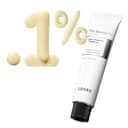
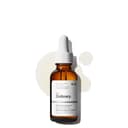
- Is the strength published?Where a cosmetic retinol is appropriate, we only list products that state a figure — 0.1% and 0.2% here, which are genuine starter rungs rather than a brand’s idea of one.
- Does the base suit oily, acne-prone skin? Fluid serums and light creams, not rich night balms.
- Does it leave room for sunscreen? Any retinoid makes daily broad-spectrum SPF 30 or higher non-negotiable, and a teenager will not wear a sunscreen that fights with their moisturizer.
- Is it cheap enough to finish? See above.
Pigmented skin changes the priorities
For deeper skin tones, the mark left after a spot clears — post-inflammatory hyperpigmentation — is frequently the more distressing half of the problem, and the AAD’s own acne guidance for skin of color is explicit that treating the acne early and gently is how you prevent it. The practical consequence on this page is that irritation is not a harmless side effect: retinoid dermatitis can itself leave pigment behind. Start at the lowest frequency, buffer with a moisturizer, and do not chase a faster result. Our picks for deeper skin tones cover this in detail.
How a teenager should actually use one
A pea-sized amount for the whole face, on dry skin after cleansing, two nights the first week and building up only when there is no stinging. Moisturizer over the top every night, from the first night. Broad-spectrum SPF 30+ every morning. Nothing else new at the same time — no scrubs, no acid toner, no second active — because the point of starting slowly is to know what caused what.
Wash with a gentle cleanser and warm water, and do not scrub: the AAD’s own face-washing guidance is to be gentle, and scrubbing an inflamed face makes every retinoid worse. Expect things to look slightly worse before better — our purge guideexplains which version of “worse” is normal and which one means stop.
What we left out, and why
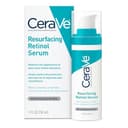
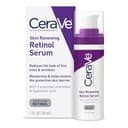
Every retinol whose strength is not published.On adult pages we list plenty of them with the figure flagged as undisclosed. On a page aimed at teenage skin we do not, with one exception: CeraVe’s two serums, which are here because their encapsulated-retinol-plus-ceramide formulation is the most cushioned way to treat marks on a budget, and because the brand publishes its full ingredient list even though it withholds the percentage.
High-strength retinols. Nothing above a stated 0.2% belongs on this page. Our high-strength roundup exists for people who have spent a year earning their way there.
Body lotions, eye creams and anything sold on “firming”. Not the problem being solved.
Any claim about what a retinoid does to a teenager’s collagen. The published collagen work was done in photoaged adult skin. We are not going to extrapolate it onto a fifteen-year-old to sell a serum.