Retinol Room.

Best Over-the-Counter Retinoid

Four different molecules are sold over the counter as “retinoids”, and they are not interchangeable: one is a real third-generation retinoid you used to need a prescription for, one converts to the active form in a single step rather than two, one is an ester with a published pilot study behind it, and one is plain retinol. Ranked, with who each is actually for.

By Stephen V.Last updated How we pick

For lines, texture and tone — the reason most people start — buy The Ordinary Retinal 0.2% Emulsion. Retinaldehyde is one conversion step from retinoic acid instead of two, the brand prints the exact figure, and the published tolerance work puts retinaldehyde alongside retinol rather than alongside tretinoin. It is also the cheapest way to buy the better molecule.

For acne, buy Differin Adapalene Gel 0.1% instead. It is the only product on this page that is a drug rather than a cosmetic, it is the only one with a stated strength that was set by a regulator rather than a marketing team, and a meta-analysis of five randomized trials put adapalene 0.1% at similar efficacy to prescription tretinoin 0.025% with better local tolerability. Nothing else sold over the counter has that behind it.

Budget pick: The Ordinary Retinol 0.2% in Squalane. It is the cheapest product in our whole registry, it publishes its strength, and plain retinol at a stated low dose is the correct starting molecule for most people. Spending more than this on your first bottle buys you a nicer base, not a better outcome.

The reason this page exists: “retinoid” on a label can mean four chemically different things, and the market sells them as if they were rungs on one ladder. They are not. Below, all four, ranked on what their own published records support — then a plain explanation of the conversion chain, which is the one piece of chemistry worth understanding before you spend anything.

How this is funded: we earn a commission if you buy through our links, at no extra cost to you. It never changes which product we recommend, and we’ll tell you when we’d skip one. Full disclosure.

Quick picks

Ranked on formulation, stated concentration and buyer fit. Select a row to jump to the full write-up. We have not tested these products — here is exactly what we do instead.

#ProductBest forPrice
1
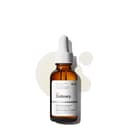
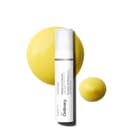
The Ordinary Retinal 0.2% Emulsion

The Ordinary Retinal 0.2% Emulsion

The cheapest way into retinaldehyde by a wide margin, and it states its strength — a labeled 0.2% retinal in a light emulsion. Retinal is a genuinely strong rung, so the low price should not be read as a low commitment.

Best overall for lines and texture
$14.90 · View on Amazon

Price as of November 21, 2026. #ad How we’re funded

2
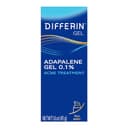
Differin Adapalene Gel 0.1% Acne Treatment (45 g pump)

Differin Adapalene Gel 0.1% Acne Treatment (45 g pump)

The only prescription-grade retinoid you can buy off the shelf, at a stated 0.1% adapalene. If your reason for wanting retinol is acne rather than lines, this is very likely the more appropriate product — and it is regulated as a drug, with the trial evidence that implies.

Best for acne, and the only drug here
$23.97 · View on Amazon

Price as of November 21, 2026. #ad How we’re funded

3
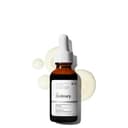
The Ordinary Retinol 0.2% in Squalane

The Ordinary Retinol 0.2% in Squalane

The gentlest true-retinol starting point on the shelf: a stated 0.2% in the same cushioning squalane base. If you have never used a retinoid, this is where to begin before touching anything stronger.

Budget pick — the cheapest one that works
4
The Ordinary Granactive Retinoid 2% Emulsion

The Ordinary Granactive Retinoid 2% Emulsion

Not retinol at all, but a retinoid ester (hydroxypinacolone retinoate) marketed as gentler. A reasonable option for skin that flakes on plain retinol — with the honest caveat that its evidence base is thinner than retinol's.

Best for skin that reacts to retinol
$12.10 · View on Amazon

Price as of November 21, 2026. #ad How we’re funded

5
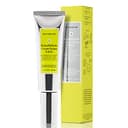
Naturium Retinaldehyde Cream Serum 0.10%

Naturium Retinaldehyde Cream Serum 0.10%

A stated 0.10% retinal in a cream-serum base, sold in a 1.7 oz size explicitly for face, neck and chest. That size-and-scope combination is unusual and genuinely useful: most retinals come in 1 oz bottles you end up rationing for the face alone.

Best retinal once you are tolerant
$29.99 · View on Amazon

$32.006% off

Price as of November 21, 2026. #ad How we’re funded

6
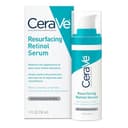
CeraVe Resurfacing Retinol Serum

CeraVe Resurfacing Retinol Serum

Encapsulated retinol with ceramides and licorice root, aimed squarely at post-acne marks and texture rather than deep wrinkles. Gentle, barrier-friendly and cheap — but the strength is unstated, so set expectations by what it's for.

Best buffered retinol for sensitive skin
$16.49 · View on Amazon

$21.9925% off

Price as of November 21, 2026. #ad How we’re funded

The picks in full

#1Best overall for lines and texture

The Ordinary Retinal 0.2% Emulsion

The cheapest way into retinaldehyde by a wide margin, and it states its strength — a labeled 0.2% retinal in a light emulsion. Retinal is a genuinely strong rung, so the low price should not be read as a low commitment.

Strengths

  • States an exact 0.2% retinal, which most retinal products do not
  • Dramatically cheaper than every other retinal on this page
  • Light emulsion base layers easily under a moisturizer

Trade-offs

  • 0.2% retinal is a high rung, not a starter — it is not where a beginner should begin
  • Small 0.5 fl oz bottle, so it does not last as long as the price suggests
Key activeRetinaldehyde (retinal)
Stated concentration0.2%
FormatLight emulsion
Fragrance-freeNot published
Best forRetinol-experienced, Normal

Formulation note. Retinaldehyde sits one conversion step from retinoic acid, where retinol sits two. That is why a 0.2% retinal is not comparable to a 0.2% retinol — the numbers look similar and the potency is not.

Ingredients and claims read from the product listing, on August 11, 2026. “Not published” means the brand does not state that figure.

#2Best for acne, and the only drug here

Differin Adapalene Gel 0.1% Acne Treatment (45 g pump)

The only prescription-grade retinoid you can buy off the shelf, at a stated 0.1% adapalene. If your reason for wanting retinol is acne rather than lines, this is very likely the more appropriate product — and it is regulated as a drug, with the trial evidence that implies.

Strengths

  • States an exact 0.1% adapalene — a regulated over-the-counter drug, not a cosmetic
  • Backed by randomized trials against tretinoin, with comparable efficacy and better tolerability
  • 45 g pump lasts a long time at a pea-sized nightly dose

Trade-offs

  • It is an acne treatment first — the anti-aging evidence base belongs to other retinoids
  • Expect a genuine adjustment period of dryness and peeling in the first weeks
  • Not the right tool if your only concern is fine lines
Key activeAdapalene (a third-generation retinoid)
Stated concentration0.1%
FormatGel
Fragrance-freeNot published
Best forAcne-prone, Oily, Normal

Formulation note. Adapalene is a synthetic retinoid that binds retinoic acid receptors directly, so unlike retinol it needs no conversion in the skin. It is sold in the US as an over-the-counter acne drug at 0.1%, which is why the strength is on the box — drug labeling requires it.

Ingredients and claims read from the product listing, on August 11, 2026. “Not published” means the brand does not state that figure.

#3Budget pick — the cheapest one that works

The Ordinary Retinol 0.2% in Squalane

The gentlest true-retinol starting point on the shelf: a stated 0.2% in the same cushioning squalane base. If you have never used a retinoid, this is where to begin before touching anything stronger.

Strengths

  • Stated 0.2% — a genuine beginner strength, plainly labeled
  • Squalane base softens the early dryness
  • About as cheap as effective retinol gets

Trade-offs

  • Too gentle to be anyone's long-term destination — you'll want to step up
  • Still pure retinol, so introduce it slowly regardless of the low number
Key activeRetinol
Stated concentration0.2%
FormatLightweight oil serum
Fragrance-freeYes
Best forSensitive, Beginner, Normal

Formulation note. 0.2% pure retinol in squalane — the entry rung of The Ordinary's three-strength ladder. Starting here and moving to 0.5% only once nightly use is comfortable is the textbook way to build tolerance.

Ingredients and claims read from the product listing, on July 18, 2026. “Not published” means the brand does not state that figure.

#4Best for skin that reacts to retinol

The Ordinary Granactive Retinoid 2% Emulsion

Not retinol at all, but a retinoid ester (hydroxypinacolone retinoate) marketed as gentler. A reasonable option for skin that flakes on plain retinol — with the honest caveat that its evidence base is thinner than retinol's.

Strengths

  • Retinoid ester is widely reported as less irritating than pure retinol
  • Stated 2% of the Granactive Retinoid complex — a labeled figure
  • Light emulsion texture layers easily

Trade-offs

  • Hydroxypinacolone retinoate has far less published evidence than retinol
  • The '2%' is the complex, not 2% retinol — don't read it as high-strength
Key activeGranactive Retinoid (hydroxypinacolone retinoate)
Stated concentration2% Granactive Retinoid complex
FormatLight emulsion
Fragrance-freeYes
Best forSensitive, Retinol-reactive

Formulation note. The active is hydroxypinacolone retinoate, a retinoic-acid ester — not free retinol. The '2%' refers to the solubilized complex, not a retinol percentage. We present it as a gentler alternative with a smaller evidence base, not an equal to retinol.

Ingredients and claims read from the product listing, on July 18, 2026. “Not published” means the brand does not state that figure.

#5Best retinal once you are tolerant

Naturium Retinaldehyde Cream Serum 0.10%

A stated 0.10% retinal in a cream-serum base, sold in a 1.7 oz size explicitly for face, neck and chest. That size-and-scope combination is unusual and genuinely useful: most retinals come in 1 oz bottles you end up rationing for the face alone.

Strengths

  • States 0.10% retinal — a mid rung you can actually place on the ladder
  • 1.7 oz is enough to cover neck and chest without rationing
  • Cream-serum texture is more cushioning than a thin emulsion

Trade-offs

  • Larger bottles take longer to finish, and retinal degrades once opened
  • Still a real retinoid dose over a large area — introduce it slowly
Key activeRetinaldehyde (retinal)
Stated concentration0.10%
FormatCream serum
Fragrance-freeNot published
Best forNormal, Dry, Mature

Formulation note. A stated 0.10% retinaldehyde in a cream-serum base, listed for face, neck and chest. Sold alongside a 0.05% and a 0.15% in the same line, so the range functions as a ladder in the same way The Ordinary's retinols do.

Ingredients and claims read from the product listing, on August 11, 2026. “Not published” means the brand does not state that figure.

#6Best buffered retinol for sensitive skin

CeraVe Resurfacing Retinol Serum

Encapsulated retinol with ceramides and licorice root, aimed squarely at post-acne marks and texture rather than deep wrinkles. Gentle, barrier-friendly and cheap — but the strength is unstated, so set expectations by what it's for.

Strengths

  • Ceramides + niacinamide support the barrier while the retinol works
  • Encapsulated delivery is gentler on reactive skin
  • One of the least expensive 'real' retinol serums

Trade-offs

  • Concentration is not published
  • Marketed for marks, not deep wrinkles — set expectations accordingly
Key activeEncapsulated retinol
Stated concentrationNot published
FormatFluid lotion-serum
Fragrance-freeYes
Best forAcne-prone, Normal, Sensitive

Formulation note. Encapsulated retinol + 3 essential ceramides + niacinamide + licorice root extract. The ceramide payload is why it stays tolerable; the retinol strength is not disclosed.

Ingredients and claims read from the product listing, on July 18, 2026. “Not published” means the brand does not state that figure.

The conversion chain, in one paragraph

Only one molecule does anything in skin: retinoic acid. Everything else sold as a retinoid is a precursor that has to be converted into it inside the skin, and each conversion step loses some of the dose. Retinyl esters convert in three steps, retinol in two, retinaldehyde in one, and retinoic acid — prescription tretinoin — in none, which is why it is both the most effective and the most irritating. That is the whole hierarchy. It explains why a stated 0.2% retinal is not the same proposition as a stated 0.2% retinol, and why a “retinol” whose active is actually retinyl palmitate is the weakest thing on any shelf. Our retinyl palmitate comparison covers that last trap in detail.

Where adapalene sits, and why it is the odd one out

Adapalene is not a precursor at all. It is a synthetic third-generation retinoid that binds retinoic acid receptors directly, and in the United States it is regulated as an over-the-counter drugfor acne rather than as a cosmetic. That single fact changes what you can know about it. Its strength is on the label because the monograph requires it. Its indication is on the label. Its warnings are on the label. Compare that with every cosmetic retinol on this site, where the percentage is usually absent and the federal rule on ingredient lists only orders ingredients by predominance above one percent — so a late position proves presence and nothing else.

The trade-off is that adapalene is built for acne, not for photoaging. Its evidence base is comedonal and inflammatory acne; the collagen record that makes people buy retinoids for lines was built on tretinoin and, at a longer distance, on cosmetic retinol. If your problem is breakouts, that is the right trade. If your problem is lines, it is the wrong one, and a retinal is the better buy. Our retinol vs adapalene page works through the decision properly.

What hydroxypinacolone retinoate is, and what it is not

HPR — sold here as The Ordinary’s Granactive Retinoid 2% Emulsion — is an ester of retinoic acid, and the pitch is that it binds receptors without the conversion chain and without the irritation. The citable evidence for it is one open pilot study of a fixed combination containing 0.1% HPR plus 1% encapsulated retinol in mild to moderate acne: a 41% mean reduction in acne grade, 15.3% mild-to-moderate local side effects, and the authors themselves calling for a controlled trial. That is genuinely promising and it is genuinely thin, and anyone telling you HPR is “as good as tretinoin without the irritation” is well ahead of the published record.

Also worth knowing before you read the bottle: the 2% on the front refers to the Granactive Retinoid complex, not to HPR itself. The same pattern — a large number describing the delivery material rather than the active — catches buyers out repeatedly, and our granactive retinoid comparison sets out exactly what the figure measures. We rank it fourth, as the one to try when plain retinol has already failed on tolerance rather than as a first choice.

The criteria, in order

  1. A published strength beats an unpublished one.Five of the six picks print a figure. That is not a coincidence — we rank disclosure, because without it you cannot step up deliberately, you cannot compare two bottles, and you cannot tell a token dose from a working one.
  2. The molecule’s own evidence, not the category’s. Adapalene gets credit for the adapalene meta-analysis; it does not get credit for the tretinoin collagen trials. Retinal gets credit for the tolerance study that tested retinaldehyde; it does not inherit tretinoin’s biopsy record either.
  3. Tolerability at equal evidence. The molecule you can use four nights a week for ten months beats the one you abandon in week three. The published retinoid record plateaus at roughly ten months of continuous use, so quitting is the main failure mode, not under-dosing.
  4. Cost of a ten-month run, not cost of a bottle.
  5. A base that suits the skin using it. A buffered serum with niacinamide and ceramides is a different product from an anhydrous oil, even at the same stated percentage.

Which one, by situation

You have never used a retinoid: The Ordinary Retinol 0.2% in Squalane, two nights a week, with a moisturizer over the top. Our beginner picks explain the ramp, and our beginner guide covers what the first six weeks actually feel like.

You are breaking out: Differin. It is a drug with an acne indication and it costs less than most serums. Read retinol for acne for how it fits around the rest of a routine.

You already tolerate a retinol and want more effect: move sideways to a retinal rather than up to a higher retinol. The Ordinary Retinal 0.2% first; Naturium Retinaldehyde 0.10% if you want a 50 ml cream-serum bottle big enough for neck and chest as well. Our retinal roundup compares the whole retinal shelf.

Retinol has already made your skin angry:the Granactive Retinoid emulsion, or the buffered CeraVe serum with niacinamide and ceramides. Both are real answers to the same problem from opposite directions — change the molecule, or change the base.

What we left out, and why

Prescription tretinoin, because it is not over the counter in the United States and this page is about what you can buy without a visit. It is the benchmark the whole category is measured against, and our retinol vs tretinoin comparison is the honest version of that gap.

Retinyl palmitate products, on substance. Three conversion steps from retinoic acid is a long way to travel, and a product marketed as a retinol whose active is an ester is the one category we will not rank.

Bakuchiol and other “natural retinol alternatives”, because they are not retinoids. They belong on our retinol alternatives page, where the evidence can be stated at its real strength rather than borrowed from this category.
Frequently asked questions

What is the strongest retinoid you can buy over the counter?

By molecule rather than by percentage, adapalene 0.1% — it binds retinoic acid receptors directly, with no conversion step, and a meta-analysis of five randomized trials put it at similar efficacy to prescription tretinoin 0.025% with better local tolerability. By stated percentage, the strongest retinols on our registry are the 1% rungs. Those are two different questions, and the percentage is the less useful one: 1% of a molecule that converts twice is not obviously more than 0.1% of one that does not convert at all.

Is retinal better than retinol?

It is one conversion step closer to retinoic acid rather than two, which is a real pharmacological difference and the reason we rank a retinal first on this page. The published tolerance work groups retinaldehyde with retinol rather than with tretinoin, so the step up does not automatically cost you comfort. What it does cost is money per millilitre on most shelves — which is why our top pick is the cheapest retinal we can find that prints its number.

Can I use adapalene for wrinkles?

People do, and it is a genuine retinoid, so it is not an unreasonable idea. But its own evidence base is acne, and the collagen record that sells retinoids for lines was built on tretinoin and on cosmetic retinol rather than on adapalene. We will not transfer one molecule's trial record to another, so if lines are the reason you are buying, a retinal or a stated-strength retinol is the better-evidenced choice.

Why do so few retinols state a percentage?

Because nothing requires them to. A cosmetic has to list its ingredients, and the federal rule orders that list by predominance only above one percent — below that line the order carries no information at all. Every cosmetic retinoid sits below that line. So a brand that publishes a figure is choosing to, and a brand that does not is telling you something about its priorities rather than about its formula.

Should I use more than one of these at once?

No. They all end up at the same receptor, so stacking two is a way to get the irritation of a higher dose without knowing what dose you took. Pick one, use it long enough to judge it — the published record plateaus around ten months — and change one variable at a time if it is not working.

Is an over-the-counter retinoid worth it at all, compared with a prescription?

Yes, with the gap stated honestly. A twelve-week double-blind study that escalated a retinol serum through 0.25%, 0.5% and 1% against tretinoin cream through 0.025%, 0.05% and 0.1% found the two at parity on investigator and subject assessment at week 12, with the retinol group showing greater epidermal thickening on biopsy. That was industry-adjacent cosmetic research rather than an independent trial, and we cite it for the escalation method and the direction of the histology rather than as proof of equivalence. The practical answer: an over-the-counter retinoid you actually keep using beats a prescription you stopped.

Sources

Keep reading