Retinol Room.

Retinol for Keratosis Pilaris

The rough bumps on upper arms and thighs are clogged follicles — not acne, not dryness, and not something a scrub fixes. Where a retinoid genuinely helps, what the AAD lists ahead of it, and why this is management rather than a cure.

By Stephen V.Last updated How we pick

Keratosis pilaris is the rough, bumpy texture — often called chicken skin — that appears most commonly on the backs of the upper arms and on the thighs. The American Academy of Dermatology describes it plainly: tiny, rough-feeling bumps that occur when dead skin cells clog the pores. It is common, it is harmless, and it is extremely persistent.

That mechanism is why it belongs on a retinol site at all. KP is a keratinizationproblem — skin cells failing to shed cleanly and plugging the follicle — and normalizing how skin cells shed is precisely what retinoids do. The AAD names retinoids (adapalene, retinol, tazarotene, tretinoin) among the exfoliating ingredients used on it, alongside urea, lactic acid, glycolic acid, alpha hydroxy acid and salicylic acid.

Two things you should know before reading any further, because they set realistic expectations. First: retinol is on that list, but it is not at the top of it.For most people the fastest and gentlest improvements come from urea and lactic acid, which both exfoliate and moisturize at once — and the AAD specifically describes creamy moisturizers containing urea or lactic acid for soothing the itch and dryness. Second: treatment cannot cure keratosis pilaris.The AAD says so directly. You are managing it, and if you stop, it comes back.

So the picks below are honest about their role. They are retinol body products, chosen for cost per ounce and a base that genuinely moisturizes, for the person who wants to add the retinoid layer to a KP routine or who is already using one for crepey texture and wants it to work on the bumps too. If you have never treated KP at all, start with the urea or lactic acid routine described further down — it is cheaper, faster and more comfortable, and we would rather tell you that than sell you a retinol.

How this is funded:we earn a commission if you buy through our links, at no extra cost to you. It never changes which product we recommend, and we’ll tell you when we’d skip one. Full disclosure.

Quick picks

Ranked on formulation, stated concentration and buyer fit. Select a row to jump to the full write-up. We have not tested these products — here is exactly what we do instead.

#ProductBest forPrice
1
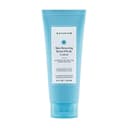
Naturium Skin-Renewing Retinol Body Lotion

Naturium Skin-Renewing Retinol Body Lotion

The sensible middle of this category: a shea-butter body lotion with retinol in it, in a size you can actually use on arms and legs, at a price that does not make you ration it. If you want one bottle that moisturizes properly and treats quietly, this is the shape that makes sense.

Best overall
$25.99 · View on Amazon

Price as of August 13, 2026. #ad How we’re funded

2
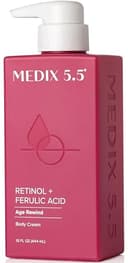
Medix 5.5 Retinol Body Lotion Firming Moisturizer

Medix 5.5 Retinol Body Lotion Firming Moisturizer

The value play for treating a lot of skin: a 15 oz pump aimed squarely at crepey texture on arms and legs, at a price per ounce that makes daily whole-body use realistic. It is a mass-market formula with big claims on the label — treat the claims with the usual skepticism and the size as the real reason to buy it.

Best value for a large area
$19.99 · View on Amazon

Price as of August 13, 2026. #ad How we’re funded

3
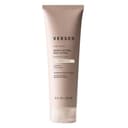
Versed Press Restart Retinol Body Lotion

Versed Press Restart Retinol Body Lotion

A cocoa-butter-and-squalane body lotion with retinol, marketed at body texture and body breakouts as much as at crepey skin. The base is the appeal — squalane cushions the way it does in a face serum — and it is the one here that most obviously suits back and chest congestion alongside rough texture.

Best gentle option
$17.79 · View on Amazon

$20.9915% off

Price as of August 13, 2026. #ad How we’re funded

4
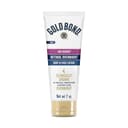
Gold Bond Age Renew Retinol Overnight Body & Face Lotion

Gold Bond Age Renew Retinol Overnight Body & Face Lotion

The drugstore default, and a reasonable one: retinol plus a peptide complex in an overnight lotion cleared for face as well as body. It is the cheapest way to start treating body skin, and the dual-use labeling makes it an easy single bottle — just do not expect it to outperform a dedicated face retinol on your face.

Best budget pick
$11.97 · View on Amazon

Price as of August 13, 2026. #ad How we’re funded

The picks in full

#1Best overall

Naturium Skin-Renewing Retinol Body Lotion

The sensible middle of this category: a shea-butter body lotion with retinol in it, in a size you can actually use on arms and legs, at a price that does not make you ration it. If you want one bottle that moisturizes properly and treats quietly, this is the shape that makes sense.

Strengths

  • Shea butter base means it works as a real moisturizer, not just a carrier
  • 8 oz is enough to cover arms and legs regularly
  • Mid-range price per ounce for a treatment lotion

Trade-offs

  • Retinol strength is not published
  • Stock has been thinner than the rest of this list — check availability before you plan around it
Key activeRetinol (+ shea butter)
Stated concentrationNot published
FormatRich body lotion
Fragrance-freeNot published
Best forDry, Normal

Formulation note. Retinol in a shea-butter body lotion base, per the listing. The emollient base is the reason it doubles as your moisturizer; the retinol figure is undisclosed, as it is across this whole category.

Ingredients and claims read from the product listing, on August 11, 2026. “Not published” means the brand does not state that figure.

#2Best value for a large area

Medix 5.5 Retinol Body Lotion Firming Moisturizer

The value play for treating a lot of skin: a 15 oz pump aimed squarely at crepey texture on arms and legs, at a price per ounce that makes daily whole-body use realistic. It is a mass-market formula with big claims on the label — treat the claims with the usual skepticism and the size as the real reason to buy it.

Strengths

  • 15 oz — the most product here by a wide margin, so you can use it generously
  • Lowest cost per ounce of the treatment-focused options
  • Aimed specifically at crepey, sagging body texture

Trade-offs

  • Retinol strength is not published, and the label claims run ahead of the evidence
  • Mass-market formula — less considered than the dermatologist-brand options
Key activeRetinol
Stated concentrationNot published
FormatBody lotion
Fragrance-freeNot published
Best forDry, Normal, Mature

Formulation note. A 15 oz retinol body lotion sold for crepey and sagging body skin. The volume is the honest selling point; the retinol percentage is not published and the marketing language is considerably more confident than the published evidence for any body retinol.

Ingredients and claims read from the product listing, on August 11, 2026. “Not published” means the brand does not state that figure.

#3Best gentle option

Versed Press Restart Retinol Body Lotion

A cocoa-butter-and-squalane body lotion with retinol, marketed at body texture and body breakouts as much as at crepey skin. The base is the appeal — squalane cushions the way it does in a face serum — and it is the one here that most obviously suits back and chest congestion alongside rough texture.

Strengths

  • Cocoa butter plus squalane is a genuinely cushioning base for retinol
  • Aimed at body breakouts as well as texture, which most body retinols ignore
  • Reasonable price per ounce in an 8 oz bottle

Trade-offs

  • Retinol strength is not published
  • Cocoa butter base is heavier than a plain lotion — slow to sink in before bed
Key activeRetinol (+ cocoa butter, squalane)
Stated concentrationNot published
FormatRich body lotion
Fragrance-freeNot published
Best forDry, Normal, Body-breakout-prone

Formulation note. Retinol in a cocoa butter and squalane base, per the listing, positioned for body texture and body breakouts. Squalane is the same cushioning oil The Ordinary uses on the face; the retinol percentage is not disclosed.

Ingredients and claims read from the product listing, on August 11, 2026. “Not published” means the brand does not state that figure.

#4Best budget pick

Gold Bond Age Renew Retinol Overnight Body & Face Lotion

The drugstore default, and a reasonable one: retinol plus a peptide complex in an overnight lotion cleared for face as well as body. It is the cheapest way to start treating body skin, and the dual-use labeling makes it an easy single bottle — just do not expect it to outperform a dedicated face retinol on your face.

Strengths

  • Lowest barrier to entry of anything here
  • Peptide complex alongside the retinol, per the listing
  • Labeled for face and body, so one bottle covers both

Trade-offs

  • Retinol strength is not published
  • A face-and-body formula is dosed conservatively — it is not a substitute for a real face retinol
Key activeRetinol + peptide complex
Stated concentrationNot published
FormatOvernight body lotion
Fragrance-freeNot published
Best forDry, Normal

Formulation note. Retinol with a peptide complex in an overnight lotion labeled for both face and body. Dual-purpose formulas are dosed for the more delicate application, so read this as a gentle body treatment rather than a strong one.

Ingredients and claims read from the product listing, on August 11, 2026. “Not published” means the brand does not state that figure.

What keratosis pilaris actually is

Each bump is a hair follicle plugged with keratin — the protein your skin is largely built from. Instead of shedding cleanly, dead cells accumulate at the follicle opening and form a hard plug, which is what you feel as roughness. Some bumps are skin-colored, some are red or brown, and the surrounding skin is frequently dry.

It is not acne, and treating it as acne is the most common mistake. There is no bacterial component, spot treatments do nothing, and the harsh cleansers people reach for make the accompanying dryness worse. It is also not simply dry skin — a plain moisturizer improves the comfort and the appearance but leaves the plugs in place.

The AAD notes it is common, harmless, and affects people of all ages. It frequently runs in families, often improves with age, and can worsen in winter when the air is drier. Knowing it is harmless is genuinely useful information, because a lot of the damage people do to KP skin comes from treating it as urgent.

Where retinol fits

Retinoids normalize how skin cells differentiate and shed. On a follicle that is plugging because cells are not shedding cleanly, that is a mechanism that addresses the cause rather than the surface — which is why the whole retinoid family appears on the AAD’s ingredient list for KP.

What that means in practice: expect gradual smoothing over months rather than a noticeable change in a fortnight. Retinoids also improve the redness and the post-inflammatory marks left by bumps that have been picked or scratched, which for many people is a bigger cosmetic win than the texture itself.

What retinol will not do is dissolve an existing plug quickly. Acids and urea act on the plug that is already there; a retinoid changes the behavior that keeps making new ones. That difference is exactly why the two are frequently used together and why, if you can only use one, the acid is usually the faster route to visible improvement.

What works better first

We would be doing you a disservice to leave this out. The AAD’s list is not ranked, but the practical hierarchy most people find is:

  • Urea (typically 10–20%) or lactic acid.These do both jobs at once — they soften and break down the keratin plug and they hydrate. For most people this is the single most effective over-the-counter product for KP.
  • Glycolic or salicylic acid. Effective exfoliants for the plugs; drier and more likely to sting on skin that is already rough and irritated.
  • A retinoid.Slower, works on the cause, and pairs well with the above — on alternate days rather than layered together.
  • A plain creamy moisturizer, always. The AAD recommends applying it within five minutes of getting out of the bath or shower, while skin is still damp, and doing it at least two or three times a day. This is unglamorous and it does more than any single active.

We do not sell urea or lactic acid products — this site covers retinol — so take that recommendation as exactly what it is: the thing we would tell a friend, with nothing in it for us.

How to use a retinol on keratosis pilaris

  1. Apply to damp skin after showering. Body retinol lotions work better on damp skin and the habit attaches to something you already do, which is the main predictor of whether you keep it up.
  2. Start twice a week. The backs of the upper arms are more reactive than people assume, and KP skin often has a compromised barrier already. Build up over several weeks as our frequency guide sets out.
  3. Do not layer it with an acid on the same night.Alternate. A retinoid plus a glycolic body wash plus a urea cream in one session is the reliable route to a raw, itchy mess — see our retinol vs glycolic acid page for why.
  4. Use enough. Two upper arms and two thighs is a lot of surface. A face-sized dose spread over a body-sized area is the most common reason people conclude a body retinol did nothing.
  5. Moisturize on the nights you are not treating. Consistent hydration is doing at least as much work as the active.
  6. Wear sunscreen on exposed areas.Retinoids raise photosensitivity, and arms and shoulders are among the most commonly missed areas — our sunscreen guide covers the quantities.

What makes it worse

Scrubbing.The instinct is to sand the bumps off, and it is the single worst thing you can do — aggressive physical exfoliation inflames the follicle and leaves you with red, sore skin and the same plugs. The AAD’s guidance on exfoliating is explicitly gentle.

Picking. Every picked bump risks a mark that outlasts the bump by months. If the marks are your main complaint rather than the texture, our dark spots page covers what a retinoid can do about them.

Hot showers and stripping washes. Both worsen the dryness that makes KP more visible. Lukewarm water and a gentle non-soap cleanser.

Stacking everything at once. A retinoid, a glycolic wash, a urea cream and a loofah in the same week is not a treatment plan, it is four exfoliation mechanisms competing for one barrier.

A realistic timeline

Weeks 1–4: the moisturizing component improves comfort, itch and appearance. The bumps are still there. Weeks 4–12: texture starts to smooth if you have been consistent; redness begins to settle. The AAD suggests telling your dermatologist if you have seen no improvement after four to six weeks of a treatment plan, which is a reasonable point to reassess. Months 3–6: the marks left by old bumps fade, which is often the change people actually notice in photographs.

And then: maintenance, indefinitely.The AAD is explicit that treatment cannot cure keratosis pilaris and that you need to keep treating to keep the bumps under control. Stopping means it returns. That is not a failure of the product; it is the nature of the condition, and knowing it up front saves a lot of disappointment. The same is true of retinoid results generally — our results timeline makes the same point about the face.

When to see a dermatologist

If it is itchy enough to disturb you, if it is widespread, if it is on the face and you are unsure whether it is KP or acne, or if you have followed a sensible routine for six weeks with no change at all. Prescription options exist, including stronger topical retinoids like tazarotene and tretinoin and, in some cases, laser or light treatment for the redness and discoloration. Retinol Room is written by an enthusiast, not a dermatologist — this is general guidance, and KP that is bothering you enough to research it is worth ten minutes of a professional’s time.
Frequently asked questions

Does retinol help keratosis pilaris?

Yes, gradually. KP is a keratinization problem — dead cells plugging the follicle — and retinoids normalize how skin cells shed, so they work on the cause rather than the surface. The AAD lists retinoids among the ingredients used on KP. Expect smoothing over months rather than weeks, and expect urea or lactic acid to produce faster visible change.

What's the best treatment for keratosis pilaris?

For most people, a urea or lactic acid cream plus consistent moisturizing — those exfoliate the existing plug and hydrate at the same time. The AAD's list also includes glycolic acid, salicylic acid, alpha hydroxy acid and retinoids. A retinoid is a good addition rather than the obvious first purchase, and we say that as a site that sells retinol.

How long does retinol take to work on KP?

Comfort and dryness improve in the first few weeks from the moisturizer, texture over roughly one to three months, and the marks left by old bumps over three to six. The AAD suggests speaking to a dermatologist if a treatment plan has produced no improvement after four to six weeks — that's a fair point to reassess rather than just persist.

Can I use retinol and an exfoliating acid on my KP?

Yes, but on alternate days rather than layered in the same session. Both disrupt the barrier by different routes, and KP skin is often dry and mildly irritated to begin with. A common pattern is acid two or three times a week, retinoid on two other nights, plain moisturizer every day without exception.

Will keratosis pilaris go away permanently?

Not from treatment. The AAD states plainly that treatment cannot cure keratosis pilaris and that you'll need to keep treating your skin to keep the bumps under control. It does often improve with age on its own. Treat it as ongoing management, not a course you finish.

Should I use a face retinol on my arms?

You can, but you'll ration it — and under-application is the main reason people think body retinol doesn't work. Two upper arms and two thighs is several times the surface area of a face. A larger, cheaper body lotion used generously beats an expensive face serum used sparingly, and the moisturizing base of a body product is doing useful work here in its own right.

Sources

Keep reading