How to Stop Retinol Peeling
Flaking is not proof the retinol is working, and it is not something to push through. Seven fixes in the order to try them, how long it should last, and the point at which the answer is to stop.
How this is funded: we earn a commission if you buy through our links, at no extra cost to you. It never changes which product we recommend, and we’ll tell you when we’d skip one. Full disclosure.
Peeling is the single most common reason people give up on retinol, and it is almost always fixable without abandoning the product. Before the fixes, one thing worth clearing up, because it changes how you respond to it: flaking is not evidence that the retinol is working.
It is evidence that your barrier is losing water faster than it is replacing it. Plenty of people get excellent results with no visible peeling at all, and the two are not connected in the way the folk wisdom implies. Treating discomfort as proof of efficacy leads people to push through irritation that is actively setting them back — a damaged barrier absorbs more of everything, which makes the next application worse than the last.
The fixes, in order
Work down this list rather than jumping to the bottom. Most people find the problem resolves at step one or two, and each step you skip is information you lose about what actually caused it.
1. Cut the frequency, not the product
Drop back one step — nightly to alternate nights, alternate nights to twice a week — and stay there for a fortnight before rebuilding. This fixes the majority of cases on its own, and it costs you almost nothing in results, because frequency you can sustain beats frequency you abandon. Our frequency guide has the schedule.
2. Check how much you are using
A pea-sized amount covers the entire face. If you are using more, that alone can be the cause — and doubling the amount does not double the benefit, because the receptors involved saturate. Peeling concentrated around the nose and mouth is nearly always product pooling in the creases rather than a strength problem.
3. Apply to completely dry skin
Damp skin absorbs more, and more absorption means more irritation rather than more result. Wait several minutes after cleansing. This is the single easiest change on the list and one of the most effective.
4. Sandwich it
Plain moisturizer, then retinol, then moisturizer again. It moderates how much retinoid reaches the skin and supports the barrier overnight. Use a fragrance-free cream with no actives of its own — the layers are supposed to be inert. Our sandwich method guide covers it in full.
5. Remove everything else
Exfoliating acids, scrubs, cleansing brushes, strong vitamin C, clay masks, anything marketed as resurfacing. All of it, for now. This is the step people resist and it is frequently the actual cause — a retinoid plus a glycolic toner is a barrier problem regardless of how gentle either is alone. See the layering guide.
6. Do not pick, scrub or peel the flakes
Removing loose flakes mechanically takes intact barrier with them and extends the cycle. Moisturize generously and let the skin shed on its own schedule. If flakes are catching under makeup, a gentle wipe with a damp cloth is the limit.
7. Change the product, last
If the first six steps have not settled it after a month, the formulation is probably wrong for your skin — too high a strength, a bare active where you need a buffered one, or fragrance you are reacting to. Our sensitive-skin roundup and encapsulated picks are the two shelves to look at. Switching product first is a common instinct and usually the wrong order, because it replaces the variable you understand with one you do not.
What the fixes above actually need
Three cheap, boring things — none of them a retinol, none of them a replacement for dropping your frequency first. They are what steps four, six and the waiting-it-out part are asking you to have in the house.
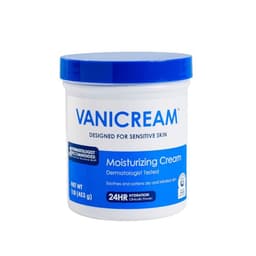
The sandwich layer
Vanicream Moisturizing Cream, 16 oz tub
The dull, no-actives cream the sandwich method asks for — the listing's own pitch is that it is formulated without common irritants, which is the whole specification here. The tub size is the point: buffering only works if you are generous with it.
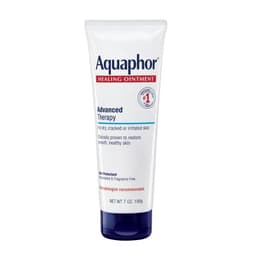
For the flaky patches
Aquaphor Advanced Therapy Healing Ointment, 7 oz
A skin protectant ointment for the places a retinoid peels first — the creases beside the nose, the corners of the mouth, the patch where you used too much. It seals rather than treats, which is exactly what an over-worked barrier needs, and it is the wrong thing to put under a retinol layer.
Price as of September 25, 2026. #ad How we’re funded
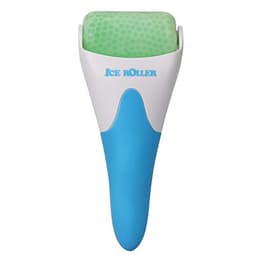
For the nights it stings
ESARORA Ice Roller for Face & Eye
Cold is the cheapest way to take the heat out of a tight, red retinol night, and it adds nothing to your face to react to. Freeze it, roll it over the flushed areas for a minute, then leave the skin alone — it is comfort, not treatment, and on a bad week that is the thing that stops people quitting.
Price as of September 25, 2026. #ad How we’re funded
None of these are retinols — they are the supporting products this page already recommends, listed so you can act on the advice. Product images supplied by Amazon; prices are live and dated on each button.
How long it should last
Two to six weeks of intermittent dryness and mild flaking is a normal adjustment for most people, easing as the skin adapts. It tends to be worse in winter, worse on dry or mature skin, and worse on the neck and around the mouth.
What is not normal: peeling that is still severe past six to eight weeks, peeling that is getting worse rather than better, or peeling accompanied by burning, spreading redness or raw areas. That is not an adjustment period being completed — it is a dose your skin is not tolerating.
When to stop entirely
- Burning or stinging on application, rather than mild tingling.
- Redness spreading beyond where you applied the product.
- Weeping, cracking or raw areas.
- Swelling, hives or itching — possible allergy rather than irritation.
- Any reaction still escalating after several weeks of the fixes above.
In those cases, stop, simplify to a gentle cleanser and a plain moisturizer, and let the barrier recover for two to four weeks before considering a restart at a lower strength. Our safety guide covers the signs in more detail, and our guide to a retinol burnsets out the stop-and-repair protocol night by night for skin that has gone past flaking into stinging. If something looks like an allergic reaction rather than irritation, that is a question for a doctor — this site is written by an enthusiast, not a dermatologist.
Preventing it next time
Whether you are restarting or stepping up a strength, the same principles prevent most of this. Start at twice a week and hold for a month. Sandwich from night one rather than waiting for a problem. Change one thing at a time. Do not add a new active in the same month you start or increase a retinoid. And keep the moisturizer generous throughout — the barrier doing well is what makes everything else tolerable.
The one variable people never check is the amount. A face receiving two or three times the intended dose every night will flake regardless of how gentle the formula is, and it is the easiest thing on this list to rule out — our dosing guide shows how to work it out from your own bottle rather than guessing.
One last note on timing: winter, air conditioning, long flights and a course of any drying medication all reduce your tolerance. If your retinol suddenly starts flaking after months of comfort, look at what changed around you before assuming the product did.
General guidance, not medical advice. Retinol Room is written by an enthusiast, not a dermatologist. For a diagnosis, a reaction, or a prescription active like tretinoin, see a qualified professional. Introduce any new active slowly and patch-test first.
Frequently asked questions
Is peeling a sign retinol is working?
No. Flaking is a sign your barrier is losing water faster than it's replacing it — an irritation response, not a measure of efficacy. Plenty of people get excellent results with no visible peeling at all. The idea that discomfort proves potency is one of the most persistent and least useful beliefs in skincare.
How long does retinol peeling last?
For most people, somewhere between two and six weeks of intermittent dryness and mild flaking, easing as skin adjusts. If it's still going strong past six to eight weeks, or getting worse rather than better, that's not an adjustment period — the dose or frequency is too high for your skin and something needs to change.
Should I stop using retinol if my face is peeling?
Reduce before you stop. Drop the frequency back a step, sandwich it with moisturizer, remove every other active, and hold for two weeks. Stop entirely if you have spreading redness, burning on application, weeping or raw areas, or a reaction that keeps escalating — those are barrier damage rather than adjustment.
Can I exfoliate the flaky skin off?
Don't. Scrubbing or using an acid on peeling skin removes intact barrier along with the loose flakes, which extends exactly the problem you're trying to end. Moisturize generously and let it shed on its own. If flakes are catching under makeup, a very gentle damp-cloth wipe is as far as it should go.
Why is my skin peeling around my nose and mouth?
Because product pools in the creases there and the skin is thinner. It's usually a quantity problem rather than a strength problem. Use less, spread more deliberately, and apply a little plain moisturizer to those areas first as a targeted buffer before the retinol goes on.
Can I wear makeup over peeling skin?
You can, and it will look worse than usual — foundation clings to flakes. Prioritize hydration underneath: a hydrating serum plus a richer moisturizer, given a few minutes to absorb, does more for the finish than any product applied on top. The more durable solution is fixing the peeling rather than working around it.
Sources
- American Academy of Dermatology — Retinoid or retinol? — AAD on the difference between prescription retinoids and OTC retinol (accessed July 17, 2026)
- American Academy of Dermatology — Dermatologists' top tips for relieving dry skin — AAD on moisturizing damp skin and choosing a cream for dry skin (accessed July 17, 2026)
- Moisturizers — StatPearls (NCBI Bookshelf) — Reference on humectants (hyaluronic acid), occlusives and emollients (accessed July 17, 2026)
- American Academy of Dermatology — How to maximize results from anti-aging skin care products — AAD on introducing one product at a time and giving it long enough to work (accessed August 11, 2026)
- Tolerance profile of retinol, retinaldehyde and retinoic acid under maximized and long-term clinical conditions (PubMed) — Retinol and retinaldehyde share a low irritation potential; retinoic acid (tretinoin) is more irritating (accessed July 17, 2026)
Keep reading
Retinol burn: what to do
When flaking has become stinging and heat — the stop-and-repair protocol, and how to restart without repeating it.
Read the guideThe retinol sandwich method
The buffering technique that fixes most of this — step by step.
Read the guideThe retinol purge explained
The other early-weeks phenomenon, and how to tell an adjustment from real irritation.
Read the guideBest retinol for sensitive skin
If the fixes don't hold, the formulations built to be tolerable in the first place.
See the picksRetinol mistakes to avoid
The ten errors behind most peeling, and the fix for each.
Read the guide