Retinol Room.

Retinol vs Benzoyl Peroxide

Two different jobs, and for active acne not the same league. Benzoyl peroxide attacks the bacteria in an inflamed pore; a retinoid changes how the pore fills in the first place. Which to buy for which kind of breakout — and why the published evidence keeps pointing at both.

By Stephen V.Last updated How we pick

If you have active, inflamed acne right now, the honest answer is that cosmetic retinol is the wrong tool and benzoyl peroxide is only half of the right one. Buy Differin Adapalene Gel 0.1%— a real retinoid sold as an over-the-counter acne drug — and use benzoyl peroxide alongside it rather than instead of it. That combination, not either one alone, is where the trial evidence sits.

If what you have is what acne left behind— flat brown or red marks, rough texture, visible pores — then benzoyl peroxide has nothing to offer you and a retinoid has a great deal. Buy the CeraVe Resurfacing Retinol Serum: it is cheap, fragrance-free, buffered with niacinamide and ceramides, and marked for exactly that job.

The reason the comparison confuses people is that the two products are aimed at different stages of the same process. Benzoyl peroxide is antibacterial: it reduces the organisms in an inflamed pore, which is why it works on the red, sore spots and works relatively fast. A retinoid is keratolytic and normalizing: it changes how the follicular lining sheds, which is why it works on the plugs and the marks and works slowly. Asking which is better is like asking whether a fire extinguisher beats a smoke alarm.

Four picks below, then the mechanisms, then the combination evidence, then the specific cases where you should pick one and skip the other.

How this is funded: we earn a commission if you buy through our links, at no extra cost to you. It never changes which product we recommend, and we’ll tell you when we’d skip one. Full disclosure.

Quick picks

Ranked on formulation, stated concentration and buyer fit. Select a row to jump to the full write-up. We have not tested these products — here is exactly what we do instead.

#ProductBest forPrice
1
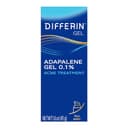
Differin Adapalene Gel 0.1% Acne Treatment (45 g pump)

Differin Adapalene Gel 0.1% Acne Treatment (45 g pump)

The only prescription-grade retinoid you can buy off the shelf, at a stated 0.1% adapalene. If your reason for wanting retinol is acne rather than lines, this is very likely the more appropriate product — and it is regulated as a drug, with the trial evidence that implies.

Best for active acne
$23.97 · View on Amazon

Price as of October 10, 2026. #ad How we’re funded

2
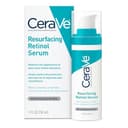
CeraVe Resurfacing Retinol Serum

CeraVe Resurfacing Retinol Serum

Encapsulated retinol with ceramides and licorice root, aimed squarely at post-acne marks and texture rather than deep wrinkles. Gentle, barrier-friendly and cheap — but the strength is unstated, so set expectations by what it's for.

Best for post-acne marks and texture
$16.49 · View on Amazon

$21.9925% off

Price as of October 10, 2026. #ad How we’re funded

3
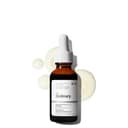
The Ordinary Granactive Retinoid 2% Emulsion

The Ordinary Granactive Retinoid 2% Emulsion

Not retinol at all, but a retinoid ester (hydroxypinacolone retinoate) marketed as gentler. A reasonable option for skin that flakes on plain retinol — with the honest caveat that its evidence base is thinner than retinol's.

Best if retinoids irritate you
$12.10 · View on Amazon

Price as of October 10, 2026. #ad How we’re funded

4
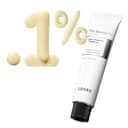
COSRX Retinol 0.1% Cream

COSRX Retinol 0.1% Cream

A stated 0.1% retinol in a cream base, sold in a two-rung range with a 0.3% above it. That is the K-beauty pattern this site likes: a real number on the box and a deliberate step to take next, at a price the US drugstore shelf charges for an unstated 'retinol complex'.

Best stated low strength for congestion
$21.33 · View on Amazon

$27.0021% off

Price as of October 10, 2026. #ad How we’re funded

The picks in full

#1Best for active acne

Differin Adapalene Gel 0.1% Acne Treatment (45 g pump)

The only prescription-grade retinoid you can buy off the shelf, at a stated 0.1% adapalene. If your reason for wanting retinol is acne rather than lines, this is very likely the more appropriate product — and it is regulated as a drug, with the trial evidence that implies.

Strengths

  • States an exact 0.1% adapalene — a regulated over-the-counter drug, not a cosmetic
  • Backed by randomized trials against tretinoin, with comparable efficacy and better tolerability
  • 45 g pump lasts a long time at a pea-sized nightly dose

Trade-offs

  • It is an acne treatment first — the anti-aging evidence base belongs to other retinoids
  • Expect a genuine adjustment period of dryness and peeling in the first weeks
  • Not the right tool if your only concern is fine lines
Key activeAdapalene (a third-generation retinoid)
Stated concentration0.1%
FormatGel
Fragrance-freeNot published
Best forAcne-prone, Oily, Normal

Formulation note. Adapalene is a synthetic retinoid that binds retinoic acid receptors directly, so unlike retinol it needs no conversion in the skin. It is sold in the US as an over-the-counter acne drug at 0.1%, which is why the strength is on the box — drug labeling requires it.

Ingredients and claims read from the product listing, on August 11, 2026. “Not published” means the brand does not state that figure.

#2Best for post-acne marks and texture

CeraVe Resurfacing Retinol Serum

Encapsulated retinol with ceramides and licorice root, aimed squarely at post-acne marks and texture rather than deep wrinkles. Gentle, barrier-friendly and cheap — but the strength is unstated, so set expectations by what it's for.

Strengths

  • Ceramides + niacinamide support the barrier while the retinol works
  • Encapsulated delivery is gentler on reactive skin
  • One of the least expensive 'real' retinol serums

Trade-offs

  • Concentration is not published
  • Marketed for marks, not deep wrinkles — set expectations accordingly
Key activeEncapsulated retinol
Stated concentrationNot published
FormatFluid lotion-serum
Fragrance-freeYes
Best forAcne-prone, Normal, Sensitive

Formulation note. Encapsulated retinol + 3 essential ceramides + niacinamide + licorice root extract. The ceramide payload is why it stays tolerable; the retinol strength is not disclosed.

Ingredients and claims read from the product listing, on July 18, 2026. “Not published” means the brand does not state that figure.

#3Best if retinoids irritate you

The Ordinary Granactive Retinoid 2% Emulsion

Not retinol at all, but a retinoid ester (hydroxypinacolone retinoate) marketed as gentler. A reasonable option for skin that flakes on plain retinol — with the honest caveat that its evidence base is thinner than retinol's.

Strengths

  • Retinoid ester is widely reported as less irritating than pure retinol
  • Stated 2% of the Granactive Retinoid complex — a labeled figure
  • Light emulsion texture layers easily

Trade-offs

  • Hydroxypinacolone retinoate has far less published evidence than retinol
  • The '2%' is the complex, not 2% retinol — don't read it as high-strength
Key activeGranactive Retinoid (hydroxypinacolone retinoate)
Stated concentration2% Granactive Retinoid complex
FormatLight emulsion
Fragrance-freeYes
Best forSensitive, Retinol-reactive

Formulation note. The active is hydroxypinacolone retinoate, a retinoic-acid ester — not free retinol. The '2%' refers to the solubilized complex, not a retinol percentage. We present it as a gentler alternative with a smaller evidence base, not an equal to retinol.

Ingredients and claims read from the product listing, on July 18, 2026. “Not published” means the brand does not state that figure.

#4Best stated low strength for congestion

COSRX Retinol 0.1% Cream

A stated 0.1% retinol in a cream base, sold in a two-rung range with a 0.3% above it. That is the K-beauty pattern this site likes: a real number on the box and a deliberate step to take next, at a price the US drugstore shelf charges for an unstated 'retinol complex'.

Strengths

  • States an exact 0.1% — one of the lowest labeled strengths you can buy
  • Sold alongside a 0.3%, so stepping up is a known quantity rather than a guess
  • Cream base and small size suit cautious use around the eye and neck area

Trade-offs

  • 0.1% is deliberately mild — experienced users will outgrow it quickly
  • 0.67 fl oz is a small tube for the money if you are treating the whole face
Key activeRetinol
Stated concentration0.1%
FormatLight cream
Fragrance-freeNot published
Best forBeginner, Sensitive, Normal

Formulation note. A stated 0.1% retinol in a cream, listed for the eye and neck area as well as the face. The published figure is what earns it a place: at this strength, knowing the number is the difference between a deliberate start and a guess.

Ingredients and claims read from the product listing, on August 13, 2026. “Not published” means the brand does not state that figure.

What each one actually does

Benzoyl peroxide: antibacterial, fast, drying

Benzoyl peroxide is one of the core topicals in the AAD’s own acne guidance and has been sold as an over-the-counter acne drug for decades. Its value is the part no retinoid replicates: it reduces the bacterial load inside an inflamed follicle, and it does so on a timescale of days to weeks rather than months. For papules and pustules — the sore, raised, red spots — it is the first thing most guidance reaches for.

Its costs are equally specific. It is drying, more so at higher concentrations, and the higher strengths are not reliably more effective in return. Every package warns that it can bleach hair and fabric, which is a real inconvenience with towels and pillowcases. And it does not address the microcomedone — the plug forming in the pore before anything is visible — so used alone it treats today’s spots without changing tomorrow’s.

Retinoids: slow, preventive, and a family rather than a product

The single most useful thing to understand here is that “retinol” is the weakest rung of a ladder. Prescription tretinoin and over-the-counter adapalene are drugs with acne indications; cosmetic retinol is a cosmetic that happens to belong to the same chemical family and converts to the active form only after two steps in the skin. The AAD’s own explainer on the difference between a retinoid and a retinol is blunt about the gap in potency.

Adapalene is the one that matters for this comparison, because it crosses the gap. The reference pharmacology on it describes a receptor-selective retinoid indicated for acne, with the familiar early dryness and irritation as its main adverse effects. It is available without a prescription at 0.1%, it is cheap, and it does the preventive job that benzoyl peroxide cannot: normalizing how the follicle sheds so plugs form less readily.

The combination, which is what the evidence actually supports

There is a reason guidance pairs these rather than choosing between them. In a randomized, investigator-blinded, vehicle-controlled split-face trial, sixty-seven people with moderate or severe facial acne and at least ten atrophic scars used adapalene 0.3% with benzoyl peroxide 2.5% on one side of the face for twenty-four weeks. Total scar count fell 15.5% on the treated side and rose 14.4% on the vehicle side — about a thirty-point difference, and the paper opens by noting how few trials have looked at topical acne treatment and scarring at all. It was funded by the manufacturer, which is worth knowing, and it remains the clearest published result on this pairing.

Two practical notes if you run both. Older advice held that benzoyl peroxide degrades tretinoin, which is why the traditional instruction was one in the morning and one at night; modern fixed-dose adapalene-and-benzoyl-peroxide products exist precisely because that combination is formulated to be stable. If you are using separate products and want to be careful, morning and night is still the simplest way to avoid the question. If you are using one combination product, follow its label.

And expect more dryness than either alone. Two actives that both increase shedding will find the limit of your barrier faster. Our layering guide and retinol burn page cover what to do when they do.

Pick one and skip the other, in four specific cases

  1. Occasional inflamed spots on otherwise clear skin. Benzoyl peroxide, used on the spots, not the whole face. A retinoid is a programme; this is an incident.
  2. Blackheads, closed comedones and congestion with little inflammation. A retinoid. Benzoyl peroxide has little to offer a non-inflamed plug — see our blackheads page.
  3. Post-acne marks and the texture left behind. A retinoid, and only a retinoid. Benzoyl peroxide does not fade pigment and does not remodel dermal collagen. Our acne scars page separates the marks that fade from the scars that do not.
  4. Deeper or darker skin tones with post-inflammatory hyperpigmentation. Retinoid-led, carefully. The AAD’s guidance on acne in skin of color is explicit that the discoloration left behind is often the bigger complaint than the spots, and that irritation itself can drive more pigment — so the gentlest effective version of the routine wins. Our skin-of-color roundup is built on that literature.

Why there is no benzoyl peroxide product on this page

Because we do not carry one. This site ranks only products in its own verified registry, with a live price and a listing we have checked, and benzoyl peroxide is a pharmacy commodity sold at a dozen strengths under a dozen labels. Rather than rank one we have not verified, we will say the useful part plainly: buy a low strength — the lower concentrations are generally as effective as the higher ones and considerably less drying — from whichever brand your pharmacy stocks, and spend your money on the retinoid side of the routine instead.

That is also why the picks above are the retinoid half. Differin is the one product in our registry that is a genuine acne drug rather than a cosmetic, and the other three are the cosmetic retinoids we would use for the marks-and-texture job once the active breakouts are under control.

When neither is the answer

Nodules, cysts, acne that scars, or acne that has not improved on consistent over-the-counter treatment after about twelve weeks is a dermatologist’s problem, not a shopping problem. The 2024 guideline of care exists because acne has prescription options — oral and topical — that nothing on a shelf matches, and the scarring evidence above is a reminder that waiting has a cost. If you are reading a comparison page while your skin is actively scarring, book the appointment and treat this page as background.
Frequently asked questions

Can you use retinol and benzoyl peroxide together?

Yes, and for inflamed acne the published evidence favors the combination over either alone — a split-face trial of adapalene 0.3% with benzoyl peroxide 2.5% cut scar counts 15.5% on the treated side against a 14.4% rise on vehicle over 24 weeks. Expect more dryness than either alone. If you are using two separate products and want to avoid the old stability question, use one in the morning and one at night.

Which is better for acne, retinol or benzoyl peroxide?

For active, inflamed spots, benzoyl peroxide — it reduces bacteria in the pore and works in weeks rather than months. For the plugs that become spots and the marks left behind, a retinoid. Cosmetic retinol is the weakest member of the retinoid family, so if acne is the actual problem, over-the-counter adapalene is the retinoid to use rather than a retinol serum.

Is adapalene better than retinol for acne?

For acne, yes, and it is not a close call. Adapalene is a receptor-selective retinoid sold as an over-the-counter acne drug; cosmetic retinol is a cosmetic that converts to the active form in two steps and carries no acne indication. Retinol's place is the post-acne work — marks, texture, pores — and general photoaging.

Does benzoyl peroxide help with acne scars?

Not on its own. It has no published action on pigment or on dermal collagen, which are what post-acne marks and atrophic scars are made of. The one trial result on topical treatment and scarring used benzoyl peroxide combined with a retinoid, and the retinoid is the part doing the remodeling.

What strength of benzoyl peroxide should I use?

A low one. Higher concentrations are not reliably more effective and are reliably more drying and more likely to bleach fabric, so there is little reason to start at the top. Apply it to the areas that actually break out rather than the whole face, and moisturize over it.

Will benzoyl peroxide deactivate my retinol?

The concern comes from older work on tretinoin, and it is the reason the traditional advice was to use one in the morning and the other at night. Modern fixed-dose products combining adapalene and benzoyl peroxide are formulated to be stable together, so the question is really about separate products. Splitting them between morning and night costs you nothing and settles it.

I only get a few spots. Do I need either?

Probably just benzoyl peroxide, used on the spots when they appear. A retinoid is a months-long programme aimed at how your skin behaves overall; occasional inflamed spots on otherwise clear skin are an incident rather than a pattern. If the few spots are joined by rough texture, visible pores or lingering marks, that is when a retinoid starts to earn its place.

Sources

Keep reading