What retinol can and can’t do around the eyes
Sorting the four complaints properly is the difference between a purchase that works and one that disappoints.
Crow’s-feet and fine lines — yes
This is the clearest win. Topical retinoids have a substantial published record for improving fine lines and photoaged texture, and the outer corner of the eye is one of the first places sun damage and expression combine to show it. Expect gradual softening over months of consistent use, not erasure — and expect it to work better on fine, static lines than on the deeper creases that appear when you smile. Dynamic lines caused by muscle movement are not a topical problem.
Crepey, thinning under-eye skin — yes, slowly
The same turnover and collagen-supporting mechanisms that help elsewhere apply here, and crepiness is one of the things regular users most often report improving. The caveat is patience: this is thin skin doing slow work, and three to six months of consistent, gentle use is a fair evaluation period.
Dark circles — sometimes, and it depends on the cause
This is where honesty is most needed. Dark circles have several distinct causes and retinol only addresses some of them. If the darkness is pigmentation— genuine excess melanin in the skin — then retinol’s effect on turnover and tone can help over time, especially paired with niacinamide and daily sunscreen. If the darkness is vascular— blood vessels showing through skin that is naturally thin — retinol may help marginally by supporting thickness over the long run, but it is not a solution. And if it is structural— shadow cast by a hollow or a tear trough — no cream of any kind will change it, because the problem is anatomy and light rather than skin.
A rough self-test: look in a mirror with light coming from directly in front of you rather than above. If the darkness largely disappears, it was shadow, and you are shopping for the wrong product. Our retinol for dark spots page covers the pigmentation side in more depth.
Puffiness and bags — no
Under-eye puffiness is generally fluid, fat pad position, or both, and retinol addresses neither. Products that pair retinol with caffeine may produce a brief tightening effect, but that is the caffeine and it is temporary. If puffiness is your main concern, retinol is not the ingredient you are looking for and we would rather say so.
How to use retinol around the eyes safely
The eye area punishes carelessness faster than the rest of the face, and most of the horror stories come down to technique rather than the product.
Use a product dosed for the eye area. A face serum at a stated 0.5% or 1% is not appropriate here. Eye formulations are deliberately gentler, and that is exactly what thin, mobile skin needs. If you use a strong face retinol, keep it to the orbital bone and outward and let a dedicated product handle the rest.
Apply less than you think, and further out than you think.A grain of rice for both eyes is plenty. Pat it along the orbital bone — the bony ridge you can feel under your eye — rather than right up against the lash line. Product migrates upward and inward overnight on its own; starting close to the lash line is how people end up with irritated, watering eyes.
Start once or twice a week.Even for someone using retinol nightly on their face, the eye area deserves its own slower ramp. Build to three or four nights a week over a couple of months, and be content to stay there. Moisturize on top. And patch-test first — the outer corner, for a few nights, before you commit.
Sunscreen, and sunglasses.Retinol increases sun sensitivity, and the eye area receives a great deal of incidental UV. Daily broad-spectrum SPF plus sunglasses does more for crow’s-feet in the long run than any night cream will. If a product ever stings persistently or your eyes water each morning, stop — that is irritation, not adjustment. Our purge guide covers where that line sits, and our safety guidecovers when to avoid retinoids altogether. This is general information, not medical advice — persistent under-eye changes are worth a doctor’s opinion.
Eye cream or face serum?
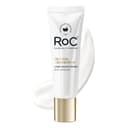
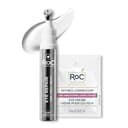
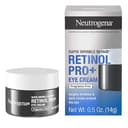
The cynical view is that eye creams are face creams in smaller, more expensive jars. For plain moisturizers, that is often close to true. For retinol it is genuinely not: eye-area retinols are formulated at deliberately lower, gentler doses because the skin cannot take a facial treatment strength. Buying a dedicated product here is one of the few cases where the eye-cream category earns its keep. Our eye cream roundup ranks the field in more detail.