Why dry skin needs a different filter
A retinoid speeds up turnover and, in the adjustment period, increases transepidermal water loss — the rate at which water evaporates out through the skin. On a barrier that is already lipid-poor, that is the same stress applied to a smaller reserve. The flaking arrives sooner, lasts longer, and is worse in winter.
Two things follow. First, the base should be contributing emollients and occlusives rather than just carrying the active — that is the difference between a cream and a thin serum. Second, the moisturizer step matters even more than usual, which is why several picks here collapse the two into one product.
The AAD’s dry-skin guidance points the same direction: moisturize while skin is still damp, and prefer a cream or ointment over a lotion when skin is genuinely dry. A retinoid routine on dry skin should be built around that instruction, not in spite of it.
A caveat on whose face this list is for. If your cheeks are dry but your forehead and nose are shiny, a cream-based pick will sit on the T-zone all night. That is a different filter and it has its own page — our combination-skin roundup ranks on a base that is acceptable in both zones rather than optimal in one.
What to look for in the base
- Emollients and occlusives, not just humectants. Glycerin and hyaluronic acid draw water in; they need something on top to keep it there. A cream base does both jobs at once. Our hyaluronic acid comparison covers why a humectant alone can backfire in dry air.
- Ceramides or a comparable lipid story. Not a magic word, but a reasonable proxy for a formula built to replace what dry skin is short of.
- Niacinamide. The most useful supporting active in this category — barrier support alongside a retinoid is the pairing that lets people stay on schedule.
- A texture you will actually apply generously. Dry skin needs more product per night, and a bottle you ration is a bottle that under-delivers.
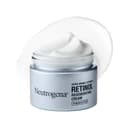
What to be wary of: high-alcohol thin serums, mattifying formulas designed for the opposite skin type, and any retinol packaged in a jar you will dip into nightly — our shelf-life guide explains why the container matters for an unstable active.
The odd one out: an oil serum on a dry-skin page
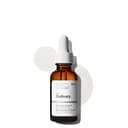
The Ordinary’s stated 0.5% in squalane sits awkwardly on a list otherwise made of creams, and it is here deliberately. Squalane is an emollient, the formula is anhydrous, and on dry skin that finish reads as cushioning rather than greasy — the exact opposite of how it performs on the oily-skin page, where we leave it out for the same reason.
It is also the only pick here that publishes an exact percentage, which on this site counts for a great deal. If you want to know what you are applying and you want a base that does not fight your skin type, this is the cheapest way to get both. Our full review covers the ladder.
Dry, mature, or both?
Considerable overlap, and worth splitting so you land on the right page. Skin generally gets drier with age, so most mature-skin advice is also dry-skin advice. But the two pages are ranked on different things:
- This page ranks on how much the base contributes to a compromised barrier — whatever your age.
- Our mature-skin roundup ranks on efficacy for photoaging, with gentleness as a constraint rather than the headline.
- Our menopausal-skin page covers the specific case where dryness and reactivity both increase over a short period.
If you are dry at thirty, this page. If you are dry at fifty-five and your priority is lines rather than comfort, start with the mature-skin roundup and use this page as the tiebreak on base.
How to use a retinoid on dry skin
- Sandwich it from the first night. Do not wait for a problem. Moisturizer, retinoid, moisturizer — our sandwich method guide has the technique, and on dry skin it should be the default rather than a rescue.
- Twice a week to start, and hold there for a month. Dry skin adjusts more slowly. The schedule in our frequency guide applies with an extra week at each step.
- Apply to completely dry skin. Counterintuitive on dry skin, and still correct — damp skin absorbs more and irritates more.
- Be generous with the moisturizer. Both layers, every night, retinoid or not. Off nights are repair nights.
- Adjust for the season. Winter, central heating and air conditioning all reduce tolerance. Dropping a night in February is a sensible response, not a failure.
If you want the extra comfort of an occlusive layer, our slugging guide covers how to do it without accidentally making the retinoid night stronger than you intended — which is the mistake most people make with that technique.
What we left out
We left out the thin, water-light serums that suit oily and combination skin, including two we rate highly elsewhere — they simply do not carry enough base for this reader. We left out high-strength retinols; a stated 1% on dry skin is an unnecessarily hard start, and our high-strength roundup is there when tolerance is established. And we left out anything fragranced where a fragrance-free equivalent exists at the same job, because dry skin is more permeable and there is no reason to add a common allergen to it — our fragrance-free roundup covers that filter in full.