Retinol Room.

Best Retinol Under $100

Every retinol worth buying fits under $100, which makes this the band where the question changes: not “what can I afford” but “what does the expensive shelf actually sell me”. Four answers that are real, one that is not, and the $9 bottle that beats most of them on the only metric that matters.

By Stephen V.Last updated How we pick

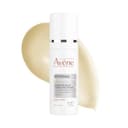
If you want the best product in the $50–$100 shelf specifically, buy Avene Retrinal 0.1%. It is the highest published retinaldehyde figure we track, in a cream base from a pharmacy brand built around reactive skin — a closer molecule than retinol at a strength you can actually place on a ladder, which is the clearest thing this band sells.

One stock note, because it changes our usual answer here. Kiehl’s Micro-Dose Serum is the most interesting product on this shelf and the one we would normally lead with — it is the only retinol on this site built around a small dose every single night from the beginning, supported by ceramides and peptides, rather than a larger amount twice a week with a ramp-up. At our last dated check Amazon listed it as currently unavailable, so it is ranked below the products you can buy today and its buy row will read “Check price” until an offer returns. If consistency is where you have failed before, it is still worth watching for.

Budget pick: The Ordinary Retinol 0.2% in Squalane— and we mean it more pointedly on this page than on any other. It is the cheapest product in our registry, it publishes an exact strength that four of the five expensive picks below do not, and on the one metric the published evidence actually rewards — using a retinoid continuously for about ten months — a nine-dollar bottle is easier to keep buying than a sixty-five-dollar one.

Start with the fact that reframes the question. As of November 21, 2026, 44 of the 47 retinols we track were listed on Amazon below $100— the live figure from our dated daily check. In other words: essentially the entire category is under this ceiling, and the most expensive thing we track costs sixty-eight dollars. There is no $200 tier to aspire to. You are already at the top of the market.

So this page is not a luxury list. It is an audit of what the expensive shelf sells, and our honest summary is: four real things and one that is mostly packaging. If your requirement is simply “the best retinol, and the ceiling is incidental”, the answer is a $45 pharmacy serum on our under-$50 page, not anything below. Read on if the specific things this band offers are the things you want.

How this is funded: we earn a commission if you buy through our links, at no extra cost to you. It never changes which product we recommend, and we’ll tell you when we’d skip one. Full disclosure.

Quick picks

Ranked on formulation, stated concentration and buyer fit. Select a row to jump to the full write-up. We have not tested these products — here is exactly what we do instead.

#ProductBest forPrice
1
Avene Retrinal 0.1% Anti-Aging Retinaldehyde Cream

Avene Retrinal 0.1% Anti-Aging Retinaldehyde Cream

The step up from Avene's 0.05%, at a stated 0.1% retinal in the same cream base. The right buy once the lower rung is comfortable nightly — and a clean example of a brand letting you progress by a known amount rather than a guess.

Best overall — highest stated retinal strength
$68.00 · View on Amazon

Price as of November 21, 2026. #ad How we’re funded

2
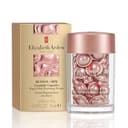
Elizabeth Arden Retinol + HPR Ceramide Capsules Skin Renewing Serum (30 ct)

Elizabeth Arden Retinol + HPR Ceramide Capsules Skin Renewing Serum (30 ct)

Single-dose capsules that solve retinol's real packaging problem — light and air — by never exposing the rest of the product to either. It pairs retinol with HPR, a retinoid ester, plus ceramides. The dose control is genuine; the price per night is not small.

Best sealed single doses
$39.20 · View on Amazon

$56.0030% off

Price as of November 21, 2026. #ad How we’re funded

3
Soft Services Theraplush Fragrance-Free Overnight Retinol Repair Hand Cream

Soft Services Theraplush Fragrance-Free Overnight Retinol Repair Hand Cream

The one hand retinol that behaves like a serious face product: a stated 0.05% retinol in a rich overnight cream with colloidal oatmeal and panthenol, fragrance-free, in an airless refillable pump. It is built for exactly the problem hands have — a barrier stripped by washing — and it is priced like a face treatment, which on a 1.7 oz pod is the honest objection.

Best for hands specifically
$62.00 · View on Amazon

Price as of November 21, 2026. #ad How we’re funded

4
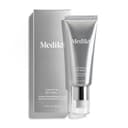
Medik8 Crystal Retinal 1 Night Serum

Medik8 Crystal Retinal 1 Night Serum

The entry rung of the best-known retinal ladder in skincare — and, unlike most of the shelf, one that publishes the figure behind every rung. Medik8 numbers the range 1, 3, 6, 10, 20 and 24 and prints the matching percentage (0.01% to 0.24%), which is a structurally honest way to sell a potent active. You just pay premium prices at every rung.

Gentlest first retinal — read the caveat
$42.00 · View on Amazon

$56.0025% off

Price as of November 21, 2026. #ad How we’re funded

5
Kiehl's Retinol Skin-Renewing Daily Micro-Dose Serum

Kiehl's Retinol Skin-Renewing Daily Micro-Dose Serum

The premium expression of a genuinely good idea: a small daily dose of retinol, formulated to be used every night from the start rather than ramped up. You pay a lot for the packaging and the brand — but the every-night-from-day-one proposition is the one that actually gets people to stick with retinol.

Best nightly dose — stock unconfirmed
$45.50 · View on Amazon

$65.0030% off

Price as of November 21, 2026. #ad How we’re funded

6
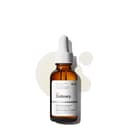
The Ordinary Retinol 0.2% in Squalane

The Ordinary Retinol 0.2% in Squalane

The gentlest true-retinol starting point on the shelf: a stated 0.2% in the same cushioning squalane base. If you have never used a retinoid, this is where to begin before touching anything stronger.

Budget pick — and a serious recommendation

The picks in full

#1Best overall — highest stated retinal strength

Avene Retrinal 0.1% Anti-Aging Retinaldehyde Cream

The step up from Avene's 0.05%, at a stated 0.1% retinal in the same cream base. The right buy once the lower rung is comfortable nightly — and a clean example of a brand letting you progress by a known amount rather than a guess.

Strengths

  • States 0.1% retinal, so the step up from 0.05% is a known quantity
  • Same cushioning cream base as the lower strength — only the dose changes
  • A potent formula that still suits skin that reacts to plain retinol

Trade-offs

  • Expensive relative to a budget retinal at a similar figure
  • Doubling the stated strength is a real jump — do not start here
Key activeRetinaldehyde (retinal)
Stated concentration0.1%
FormatAnti-aging cream
Fragrance-freeNot published
Best forNormal, Dry, Retinal-experienced

Formulation note. The 0.1% rung of the same Retrinal cream line. Because both strengths publish a figure and share a base, moving between them changes one variable — which is exactly what you want when you are testing your own tolerance.

Ingredients and claims read from the product listing, on August 11, 2026. “Not published” means the brand does not state that figure.

#2Best sealed single doses

Elizabeth Arden Retinol + HPR Ceramide Capsules Skin Renewing Serum (30 ct)

Single-dose capsules that solve retinol's real packaging problem — light and air — by never exposing the rest of the product to either. It pairs retinol with HPR, a retinoid ester, plus ceramides. The dose control is genuine; the price per night is not small.

Strengths

  • Each capsule is airtight and single-use, so the retinol cannot oxidize in the bottle
  • One capsule is a pre-measured dose — no guessing at how much to use
  • Retinol plus HPR plus ceramides, so there is buffering built in

Trade-offs

  • Expensive per night, and a 30-count is one month at nightly use
  • Neither the retinol nor the HPR concentration is published
  • Single-use plastic capsules are a real waste trade-off
Key activeRetinol + HPR (hydroxypinacolone retinoate) + ceramides
Stated concentrationNot published
FormatSingle-dose capsule serum
Fragrance-freeNot published
Best forNormal, Dry, Mature

Formulation note. Physically encapsulated single doses — a sealed capsule per night — rather than molecular encapsulation of the retinol itself. Both approaches address stability; they are not the same thing, and the listing describes the capsule format. Concentrations are undisclosed.

Ingredients and claims read from the product listing, on August 11, 2026. “Not published” means the brand does not state that figure.

#3Best for hands specifically

Soft Services Theraplush Fragrance-Free Overnight Retinol Repair Hand Cream

The one hand retinol that behaves like a serious face product: a stated 0.05% retinol in a rich overnight cream with colloidal oatmeal and panthenol, fragrance-free, in an airless refillable pump. It is built for exactly the problem hands have — a barrier stripped by washing — and it is priced like a face treatment, which on a 1.7 oz pod is the honest objection.

Strengths

  • Prints the strength — 0.05% retinol — which no body lotion on this site does
  • 1% colloidal oatmeal and 0.5% panthenol per the listing: barrier support in the same step
  • Fragrance-free variant, airless pump, and a 1.7 oz pod that a pair of hands will finish while it is fresh

Trade-offs

  • By far the highest price per ounce of any hand option — the set is case plus one pod, and refills are a recurring cost
  • 0.05% is a low number on paper; it is dosed for nightly use on wash-stripped skin, not for people chasing a strong retinol
  • The listing's roughly six-week-per-pod estimate assumes two pumps a night on hands only
Key activeRetinol (+ colloidal oatmeal, panthenol)
Stated concentration0.05%
FormatRich overnight hand cream
Fragrance-freeYes
Best forDry, Wash-stripped, Mature

Formulation note. Per its listing: 0.05% pure retinol, 1% colloidal oatmeal and 0.5% panthenol, fragrance-free, sold as the last step before bed for the hands. Dispensed from a refillable airless pump — the packaging this site keeps asking for on retinol products — with 50 ml (1.7 fl oz) per pod. The sibling 'Hold' listing is the same formula claims with an added fragrance; we link the fragrance-free one.

Ingredients and claims read from the product listing, on September 12, 2026. “Not published” means the brand does not state that figure.

#4Gentlest first retinal — read the caveat

Medik8 Crystal Retinal 1 Night Serum

The entry rung of the best-known retinal ladder in skincare — and, unlike most of the shelf, one that publishes the figure behind every rung. Medik8 numbers the range 1, 3, 6, 10, 20 and 24 and prints the matching percentage (0.01% to 0.24%), which is a structurally honest way to sell a potent active. You just pay premium prices at every rung.

Strengths

  • Publishes an exact 0.01% retinaldehyde, and a stated figure for every rung above it
  • Part of an explicit 1 / 3 / 6 / 10 / 20 / 24 ladder, so progression is planned rather than improvised
  • Hyaluronic acid and vitamin E in the base, per the listing

Trade-offs

  • Premium pricing, and the ladder above it costs more at every rung
  • The rung number is not the percentage — 1 means 0.01%, so it cannot be read against a retinol figure directly
Key activeRetinaldehyde (retinal)
Stated concentration0.01%
FormatNight serum
Fragrance-freeNot published
Best forSensitive, Normal, Beginner-to-retinal

Formulation note. Sold as Crystal Retinal 1, the lowest rung of a numbered range that also includes 3, 6, 10, 20 and 24. The number is the rung, not the dose — but Medik8 publishes the dose behind each one on its own Crystal Retinal range page (read 2026-09-01), where rung 1 is stated as 0.01% twin-encapsulated retinaldehyde and rung 24 as 0.24%. The base carries hyaluronic acid and vitamin E, per the listing.

Ingredients and claims read from the product listing, on August 11, 2026. “Not published” means the brand does not state that figure.

#5Best nightly dose — stock unconfirmed

Kiehl's Retinol Skin-Renewing Daily Micro-Dose Serum

The premium expression of a genuinely good idea: a small daily dose of retinol, formulated to be used every night from the start rather than ramped up. You pay a lot for the packaging and the brand — but the every-night-from-day-one proposition is the one that actually gets people to stick with retinol.

Strengths

  • Built around daily use, which is the habit that actually produces results
  • Ceramide and peptide support in the base
  • Pump packaging protects the retinol better than a jar

Trade-offs

  • By far the highest price per ounce of any face serum we list
  • Retinol percentage is not published, at a price where it really should be
Key activeRetinol + ceramide + peptide
Stated concentrationNot published
FormatFluid serum
Fragrance-freeNot published
Best forNormal, Dry, Mature

Formulation note. Sold as a low-dose daily retinol rather than a high-strength weekly one. The premise is that a smaller amount used every night beats a larger amount used twice a week — which matches how retinol results actually accumulate. The dose is undisclosed.

Ingredients and claims read from the product listing, on August 11, 2026. “Not published” means the brand does not state that figure.

#6Budget pick — and a serious recommendation

The Ordinary Retinol 0.2% in Squalane

The gentlest true-retinol starting point on the shelf: a stated 0.2% in the same cushioning squalane base. If you have never used a retinoid, this is where to begin before touching anything stronger.

Strengths

  • Stated 0.2% — a genuine beginner strength, plainly labeled
  • Squalane base softens the early dryness
  • About as cheap as effective retinol gets

Trade-offs

  • Too gentle to be anyone's long-term destination — you'll want to step up
  • Still pure retinol, so introduce it slowly regardless of the low number
Key activeRetinol
Stated concentration0.2%
FormatLightweight oil serum
Fragrance-freeYes
Best forSensitive, Beginner, Normal

Formulation note. 0.2% pure retinol in squalane — the entry rung of The Ordinary's three-strength ladder. Starting here and moving to 0.5% only once nightly use is comfortable is the textbook way to build tolerance.

Ingredients and claims read from the product listing, on July 18, 2026. “Not published” means the brand does not state that figure.

The four things this band genuinely sells

1. A dose designed for nightly use.Most retinols are sold as a strength and leave the frequency to you, which is why most people end up on two nights a week forever. Kiehl’s sells the opposite arrangement: a micro-dose intended for every night, with ceramide and peptide support in the base. That is a real product decision rather than a marketing one, and it addresses the actual failure mode — the published retinoid record plateaus at roughly ten months of continuous use, so frequency is doing more work than concentration.

2. The highest stated retinaldehyde figure available.Avene’s Retrinal 0.1% is a stated 0.1% retinal in a cream base, which is the strongest published retinal number in our registry. Retinal converts to retinoic acid in one step rather than two, and published tolerance work groups it with retinol rather than with tretinoin, so this is a genuinely strong product that is not a genuinely harsh one. One caveat we will not bury: Avene’s US professional channel now describes its current 0.1% as “formerly Retrinal 0.1 Cream” with a new and improved formula, and the Amazon listing title is generic enough that it does not say which generation is in the box. We rank it on its stated strength and cream base, which hold either way, and we make no claim about which formulation you will receive.

3. Sealed single doses.Elizabeth Arden’s capsules pair retinol with hydroxypinacolone retinoate and ceramides in thirty airtight doses. The format answers a measured problem: a validated study of sixteen retinoid derivatives across twelve commercial cosmetics found losses of 0% to 80% after six months at 25 °C and 40% to 100% at 40 °C, with light degradation worse than heat, and some products testing below their declared content. What the premium does notbuy here is disclosure — Elizabeth Arden publishes neither its retinol figure nor its HPR figure, and the one citable HPR study used a fixed combination of 0.1% HPR plus 1% encapsulated retinol that this brand does not claim to match. RoC sells the same sealed-capsule logic, fragrance-free, with its complete eight-item formula published, for about a third of the price; our head-to-head between them is blunt about the comparison.

4. A formula for a specific small problem.Soft Services’ Theraplush is a fragrance-free overnight retinol hand cream at a stated 0.05%, with colloidal oatmeal and panthenol. Hands are a genuinely awkward case — the AAD notes a dermatologist may recommend a retinol lotion at bedtime for crepe-paper hands, and the thing that defeats it is washing. A product built for that, with a published strength and no fragrance, is a reasonable use of sixty dollars if hands are your actual complaint. Our retinol for hands page is the fuller argument.

The one that is mostly a ladder, not a dose

Medik8’s Crystal Retinal 1 is a stated 0.01%retinaldehyde — rung one of a five-rung ladder — for around fifty-six dollars. We rank it fourth and we are going to be plain about why it is on the page at all: as the gentlest entry to a retinal with an exact figure on the box and a designed escalation path, it is a coherent product. As value, it is poor. A stated 0.01% is one tenth of Naturium’s stated 0.10% at roughly half the price, and our Medik8 vs Naturium comparison recommends the Naturium for exactly that reason. Buy the Medik8 if you are committing to the ladder; do not buy it believing the price signals strength.

What this band does not buy

Evidence. No cosmetic retinol at any price on this site has a published trial of its own. The record everyone is borrowing from is prescription tretinoin: a double-blind study showing epidermal hyperplasia, stratum corneum compaction and new collagen fibrils in the papillary dermis peaking at around ten months, and a controlled trial where collagen I formation rose 80% on daily tretinoin against a 14% fall on vehicle. A $65 serum inherits exactly as much of that as a $9 one, which is to say the mechanism and not the numbers.

Disclosure. Two of the five expensive picks publish a strength; three do not. The cheapest product on the page publishes one. Price does not predict transparency in this category, and that is worth knowing before you read a price as a quality signal.

Results in a hurry. Nothing in this band shortens the timeline. The histology peaks at around ten months either way.

The criteria, in order

  1. A live price strictly under $100 at our last dated check.
  2. Something no cheaper shelf offers.A more expensive version of an under-$50 pick does not earn a slot — that is what the under-$50 page is for.
  3. A published figure, or a format advantage we can describe concretely.
  4. Fragrance-free beats fragranced at equal quality.
  5. Cost of a ten-month run, which is the criterion this entire band struggles with and the reason a budget pick sits on the page.

Which one, by situation

You keep stopping and want a nightly habit:Kiehl’s, when it is back in stock — Amazon listed it as currently unavailable at our last dated check. Its review is the place to decide whether the micro-dose proposition is worth the money to you. In the meantime the practical substitute is a cushioned formula you can use most nights without a ramp: the CeraVe serums are the cheap version of that argument.

You are tolerant and want the strongest published retinal: Avene Retrinal 0.1%, with the generation caveat above. Its review covers both rungs.

You want sealed doses and travel a lot: the Elizabeth Arden capsules, or the RoC ones for a third of the price if disclosure matters more than the ceramide blend.

Your hands are the problem: Theraplush.

You just want the best retinol: the La Roche-Posay serum at about $45, on the under-$50 page. We would rather tell you that than sell you up.
Frequently asked questions

Is expensive retinol worth it?

Sometimes, for specific reasons that are not potency. What the $50–$100 shelf reliably sells is a formula designed for nightly use from day one, sealed single-dose packaging, the highest published retinaldehyde figure available, and formulas built for one awkward area such as hands. What it does not sell is better evidence — no cosmetic retinol at any price has a trial of its own — or a stated strength, which the cheapest product on this page publishes and three of the expensive ones do not.

What is the most expensive retinol you need to buy?

On our tracking, nothing above about $68, because that is the top of the market we cover and essentially the whole category sits under $100. The count at the top of this page is computed live from our price layer with the date of the last check printed beside it. If you are shopping with a $100 budget, the useful framing is not 'how close to the ceiling can I get' but 'which of four specific features do I actually want'.

Is Medik8 Crystal Retinal worth $56?

Crystal Retinal 1 is a stated 0.01% retinaldehyde — rung one of a five-rung ladder. As the gentlest entry to a retinal with an exact figure on the box and a designed escalation path, it is coherent. As value it is poor: Naturium states 0.10% for roughly half the price, and our Medik8 vs Naturium comparison recommends the Naturium for that reason. Buy the Medik8 if you are committing to the ladder, not because the price implies strength.

Do sealed retinol capsules actually work better?

They address a measured problem rather than an imaginary one. A validated study of sixteen retinoid derivatives in twelve commercial cosmetics found degradation of 0% to 80% over six months at 25 °C and 40% to 100% at 40 °C, with light worse than heat, and some products below their declared content. A sealed single dose is a structural answer to that, and it also stops the commonest beginner error of using too much. The study did not test any product on this page. And the format is available fragrance-free with a fully published formula for about a third of the price from RoC.

Should I spend more on retinol or on sunscreen?

Sunscreen, if you have to choose, and it is not a close call. The damage a retinoid is working against is largely photodamage, and the AAD's own guidance pairs retinoid use with daily broad-spectrum protection — a retinoid also raises sun sensitivity, so skipping sunscreen partly undoes the point. A $9 retinol plus a sunscreen you will actually reapply beats a $65 retinol and nothing.

Why is a $9 retinol on a page about retinol under $100?

Because a budget pick belongs on every page we write, and on this page it is also an argument. The published record rewards continuous use over roughly ten months, and the product most likely to be in your bathroom in month nine is the one that costs nine dollars and states its strength. We would rather put that on the page than imply the expensive shelf is where the answer lives.

Sources

  • Temova Rakuša Ž, Škufca P, Kristl A, Roškar R — Retinoid stability and degradation kinetics in commercial cosmetic products (J Cosmet Dermatol, 2021) — Validated HPLC-UV study of 16 retinoid derivatives (retinol, retinyl palmitate, beta-carotene and hydroxypinacolone retinoate) in 12 commercial cosmetics over 6 months of long-term and accelerated stability testing plus a one-week photostability study. Retinoid degradation followed first-order kinetics; the products showed a 0%-80% decline after 6 months at 25 °C and a 40%-100% decline at 40 °C; 'light degradation was more pronounced than temperature-induced degradation'; instabilities were 'formulation-dependent and associated with lower contents than declared in some cosmetics'. Cited for the size of the stability problem a sealed single-dose format is built to solve — the study did not test this product (accessed September 19, 2026)
  • Tolerance profile of retinol, retinaldehyde and retinoic acid under maximized and long-term clinical conditions (PubMed) — Retinol and retinaldehyde share a low irritation potential; retinoic acid (tretinoin) is more irritating (accessed July 17, 2026)
  • Veraldi S et al. — Hydroxypinacolone retinoate with retinol glycospheres in mild to moderate acne (G Ital Dermatol Venereol, 2015) — Open pilot study of a fixed combination containing 0.1% hydroxypinacolone retinoate (a synthetic ester of 9-cis-retinoic acid) plus 1% encapsulated retinol: 41% mean reduction in acne grade, 15.3% mild-to-moderate local side effects, and the authors themselves call for a controlled trial (accessed August 19, 2026)
  • Griffiths CE et al. — Restoration of collagen formation in photodamaged human skin by tretinoin (N Engl J Med, 1993) — Biopsies from 26 subjects plus 29 patients treated 10 to 12 months with daily 0.1% tretinoin cream (15 patients) or vehicle (14). Collagen I formation was 56% LOWER in photodamaged skin than in sun-protected buttock skin (P < 0.001); tretinoin produced an 80% INCREASE in collagen I formation against a 14% decrease on vehicle (P = 0.006). Prescription tretinoin, not cosmetic retinol — cited for the direction of the effect on dermal collagen (accessed September 18, 2026)
  • Voorhees JJ — Clinical effects of long-term therapy with topical tretinoin and cellular mode of action (J Int Med Res, 1990) — Double-blind, placebo-controlled study: 0.1% topical tretinoin reduced the effects of photoageing maximally after 10 months, with no further improvement between 10 and 22 months. Histologically it induced 'epidermal hyperplasia, compaction of the stratum corneum and the deposition of ultrastructurally visible collagen fibrils in the papillary dermis', reduced the number and activity of melanocytes, and significantly increased mitoses (accessed September 18, 2026)
  • American Academy of Dermatology — What can make my hands look younger? — AAD states that for wrinkly, crepe-paper-like skin on the hands a dermatologist may recommend a lotion containing a retinol or glycolic acid, applied before bedtime, often alongside a light chemical peel every 1 to 3 months; that many adults develop age spots on their hands which grow with age and time in the sun, and that skin-lightening creams and lotions take the longest to deliver results but cost less than cryosurgery, laser, peels or microdermabrasion; that rough scaly patches on the hands may be actinic keratoses (precancerous growths that usually develop in fair-skinned people aged 40 or older) and should be checked by a dermatologist; that loss of fullness makes hand skin lax and crepe-paper-like and is treated with fillers, not topicals; and, for maintaining results, to apply a broad-spectrum water-resistant SPF 30+ sunscreen to the hands every day before going outdoors, wear gloves while cleaning and gardening because hot water, detergents and yard work dry and age the hands, and moisturize after washing (accessed September 12, 2026)
  • American Academy of Dermatology — Retinoid or retinol? — AAD on the difference between prescription retinoids and OTC retinol (accessed July 17, 2026)
  • American Academy of Dermatology — How to apply sunscreen — AAD on how much sunscreen to use (about a teaspoon for the face) and reapplying every two hours (accessed August 11, 2026)
  • U.S. FDA — 21 CFR 701.3, Designation of ingredients (eCFR) — The federal rule governing how a cosmetic ingredient list is ordered. Paragraph (a): 'The label on each package of a cosmetic shall bear a declaration of the name of each ingredient in descending order of predominance, except that fragrance or flavor may be listed as fragrance or flavor.' Paragraph (f) allows an alternative: ingredients 'present at a concentration greater than 1 percent, in descending order of predominance', followed by ingredients 'present at a concentration of not more than 1 percent, without respect to order of predominance', followed by color additives 'without respect to order of predominance'. Cited for the exact limit of what an ingredient's POSITION can tell a reader: late placement indicates the 1-percent-or-less group, but within that group the order carries no information about quantity (accessed September 26, 2026)
  • U.S. Federal Trade Commission — 16 CFR 233.1, Guides Against Deceptive Pricing: former price comparisons (eCFR) — The FTC's guide states that a reduction from a former price is a genuine bargain only if 'the former price is the actual, bona fide price at which the article was offered to the public on a regular basis for a reasonably substantial period of time', and that where 'an artificial, inflated price was established for the purpose of enabling the subsequent offer of a large reduction — the "bargain" being advertised is a false one'. Its own example is a $7.50 pen listed at $10 for a few days so it can be 'cut' back to $7.50. Cited as the standard a struck-through list price has to meet before a percentage-off figure means anything (accessed September 14, 2026)

Keep reading