What lactic acid is good at
Lactic acid belongs to the alpha hydroxy acid family, and the reference literature on chemical resurfacing describes the family’s mechanism the same way: they act on the stratum corneum, loosening cohesion between corneocytes so the surface layer sheds. Within that family lactic acid is the large, gentle one — a bigger molecule than glycolic acid, which is generally held to penetrate less and sting less, and the reason it turns up in body lotions and sensitive-skin products rather than in peel kits.
Three things follow. It works fast, because removing a layer is an immediate effect. It is the acid most likely to be tolerable on skin that reacts to everything. And its effect is shallow by design: it does not reach the dermis, it does not remodel anything, and when you stop, the surface returns to the state your skin keeps producing.
It also carries one specific caution the FDA puts on the whole AHA class: increased sun sensitivity. That is not a reason to avoid it, but it is a reason the morning sunscreen is non-negotiable on an acid routine as well as a retinoid one — see our sunscreen guide.
What a retinoid is good at
Everything with a timescale. The published record on retinoids is the strongest thing in non-prescription skincare: double-blind histology on 0.1% tretinoin showing epidermal hyperplasia, compaction of the stratum corneum and new collagen fibrils in the papillary dermis, with clinical improvement in photoaging peaking at about ten months and no further gain out to twenty-two. There is no equivalent body of work on lactic acid for lines, pigment depth or dermal structure, and nobody serious claims otherwise.
The flip side is that a retinoid asks for patience and charges an entry fee: two to twelve weeks of adjustment in which skin is drier, sometimes flakier, and occasionally worse-looking than when you started. An acid asks for none of that and gives you none of the long-run result. Our timeline guide is the honest version of what those months look like.
The one place the guidance names both
Keratosis pilaris — the rough little bumps on the backs of the upper arms and thighs. The AAD’s own treatment page names alpha hydroxy acid, glycolic acid, lactic acid and a retinoid (adapalene, retinol, tazarotene or tretinoin) in the same breath, because the condition is a plug of keratin in a follicle and both approaches address it from different directions. That is the clearest published case for running the two, and our keratosis pilaris page sets out the schedule.
Which to buy, by what you are treating
- Rough, bumpy upper arms and thighs: both, on alternate nights. Acid first if the bumps are the complaint, retinoid if the discoloration is.
- Dry, flaky, dull-looking body skin: start with moisturizer, honestly. If that is not enough, a retinol body lotion treats the cause; an acid treats the look.
- Dark, thickened elbows and knees: retinoid-led, with an acid as the alternate-night partner. Our elbows and knees page works through why scrubbing is the one approach to avoid.
- Facial texture, visible pores, post-acne marks:retinoid. This is its home ground — see textured skin.
- Fine lines, crepiness, photoaging: retinoid, with no real competition from any acid at cosmetic strengths.
- Sensitive skin that has failed every retinoid:lactic acid is a genuine consolation prize — the gentlest useful active in the aisle. Our retinol alternatives page covers the rest of that list.
Running both without stripping your barrier
The failure mode is predictable: people add an acid to a retinoid routine on the same night, their barrier gives up in a fortnight, and they conclude the retinol was too strong. Three rules keep it manageable.
- Alternate nights, never the same night, until you know how your skin handles each one alone. Two actives that both increase shedding will find the limit of your barrier faster than either one would.
- Moisturize over both. Dryness is the shared side effect, and the AAD recommends creams over thin lotions for dry skin and applying within minutes of patting dry.
- Sunscreen every morning. AHAs carry an FDA-flagged sun-sensitivity caution and retinoids are a PM active for related reasons. The morning step is where the result is protected.
Our layering guide covers the full ordering question, and retinol vs glycolic acid is the sharper-edged version of this comparison if the acid you are considering is the stronger one.
A note on the one bottle that contains both
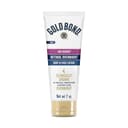
Gold Bond’s Age Renew Retinol lotion publishes its full forty-five-ingredient list, and sodium lactate — the salt form of lactic acid, used here as a humectant rather than as an exfoliating acid — appears in it alongside retinol, niacinamide and a ceramide. That is worth understanding precisely rather than loosely: it is not a lactic acid treatment, and nobody should buy it expecting an acid’s immediate smoothing. It is a retinol lotion whose formula happens to use a lactate for water binding, which is a sensible piece of formulation and not a second active.
That is a useful calibration for this whole comparison. A list that names both does not make a product two treatments. Under the federal rule, a cosmetic ingredient list is ordered by predominance only above one percent — below that, order carries no information at all, so no ingredient list will ever tell you whether the acid in a formula is doing anything.