Retinol Room.

Paula's Choice vs The Ordinary Retinol

The only head-to-head on this site where both brands print the number. Two stated 1% retinols, one about four times the price of the other — so the question is not which is stronger. It is what the difference buys, and that has a specific answer.

By Stephen V.Last updated How we pick

For most people the answer is The Ordinary, and specifically Retinol 0.5% in Squalane— not either 1%. It states its strength, it costs less than a sandwich, and 0.5% is the rung most faces do best on for years. Buy it if you are anywhere short of nightly, comfortable, high-strength use.

Buy The Ordinary Retinol 1% in Squalane if 0.5% is already comfortable every night and you want to step up on a budget. It is the cheapest stated 1% we have found, in the same cushioning anhydrous squalane base as the lower rungs, which is what makes the step a deliberate decision rather than a guess.

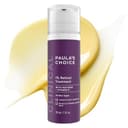
Buy Paula’s Choice CLINICAL 1% Retinol Treatmentif you want the same stated 1% in a lightweight water-based lotion with peptides, vitamin C and licorice root alongside it, delivered from an air-restrictive tube rather than a dropper bottle. You are paying roughly four times The Ordinary’s price for the vehicle, the supporting cast and the packaging — not for more retinol. That can be a perfectly rational purchase. It is just important to know which part you are buying.

And buy the Granactive Retinoid 2% Emulsionif plain retinol has made your skin miserable. It is not retinol at all, the “2%” is the complex rather than the dose, and its evidence base is thinner — all of which we would rather say plainly than sell around.

How this is funded: we earn a commission if you buy through our links, at no extra cost to you. It never changes which product we recommend, and we’ll tell you when we’d skip one. Full disclosure.

Quick picks

Ranked on formulation, stated concentration and buyer fit. Select a row to jump to the full write-up. We have not tested these products — here is exactly what we do instead.

#ProductBest forPrice
1
The Ordinary Retinol 0.5% in Squalane

The Ordinary Retinol 0.5% in Squalane

The clearest-labeled retinol you can buy: an exact 0.5% pure retinol in a squalane base, at a price that makes 'start low and go slow' painless. For most people ready to move up from a starter strength, this is the sensible middle rung.

Best for most people
$9.30 · View on Amazon

Price as of October 10, 2026. #ad How we’re funded

2
The Ordinary Retinol 1% in Squalane

The Ordinary Retinol 1% in Squalane

The top rung of the clearest-labeled retinol ladder on the shelf: a stated 1% pure retinol in the same squalane base, for a few dollars. It is genuinely strong — the right buy only once 0.5% is comfortable nightly, and the wrong one for anybody still building tolerance.

Best cheap step up to a stated 1%
$11.90 · View on Amazon

Price as of October 10, 2026. #ad How we’re funded

3
Paula's Choice CLINICAL 1% Retinol Treatment

Paula's Choice CLINICAL 1% Retinol Treatment

A stated 1% retinol with peptides and vitamin C, for people who've already built tolerance and want to move up. The strength is on the label — which is the whole point of buying up from a starter, rather than a mystery 'complex'.

Best 1% if you want the base and the packaging
$48.75 · View on Amazon

$65.0025% off

Price as of October 10, 2026. #ad How we’re funded

4
The Ordinary Granactive Retinoid 2% Emulsion

The Ordinary Granactive Retinoid 2% Emulsion

Not retinol at all, but a retinoid ester (hydroxypinacolone retinoate) marketed as gentler. A reasonable option for skin that flakes on plain retinol — with the honest caveat that its evidence base is thinner than retinol's.

Best if plain retinol is too much
$12.10 · View on Amazon

Price as of October 10, 2026. #ad How we’re funded

The picks in full

#1Best for most people

The Ordinary Retinol 0.5% in Squalane

The clearest-labeled retinol you can buy: an exact 0.5% pure retinol in a squalane base, at a price that makes 'start low and go slow' painless. For most people ready to move up from a starter strength, this is the sensible middle rung.

Strengths

  • Publishes the exact strength — 0.5% — which almost no drugstore retinol does
  • Squalane base is lightly occlusive and cushions irritation
  • Sold in 0.2% / 0.5% / 1% so you can step up deliberately

Trade-offs

  • Pure retinol in an anhydrous oil — no added niacinamide or soothing actives
  • Squalane finish can feel heavy layered over other oils
Key activeRetinol
Stated concentration0.5%
FormatLightweight oil serum
Fragrance-freeYes
Best forNormal, Dry, Not-too-sensitive

Formulation note. Pure retinol dispersed in squalane; no water phase, so none of the pH and packaging fuss vitamin C needs. The strength is printed on the label, which is the exception in this category, not the rule.

Ingredients and claims read from the product listing, on July 18, 2026. “Not published” means the brand does not state that figure.

#2Best cheap step up to a stated 1%

The Ordinary Retinol 1% in Squalane

The top rung of the clearest-labeled retinol ladder on the shelf: a stated 1% pure retinol in the same squalane base, for a few dollars. It is genuinely strong — the right buy only once 0.5% is comfortable nightly, and the wrong one for anybody still building tolerance.

Strengths

  • States an exact 1% — a genuinely high strength, printed on the label
  • Squalane base cushions a strength that would otherwise be harsh
  • The cheapest stated-1% retinol we've found

Trade-offs

  • 1% will over-strip skin that has not built tolerance — not a starter
  • Pure retinol in an oil base, with no niacinamide or soothing actives to buffer it
Key activeRetinol
Stated concentration1%
FormatLightweight oil serum
Fragrance-freeYes
Best forRetinol-experienced, Normal, Dry

Formulation note. 1% pure retinol dispersed in squalane — the same anhydrous base as the 0.2% and 0.5%, at the top of the three-strength ladder. The strength is printed on the label, which is what makes stepping up a deliberate decision rather than a guess.

Ingredients and claims read from the product listing, on August 11, 2026. “Not published” means the brand does not state that figure.

#3Best 1% if you want the base and the packaging

Paula's Choice CLINICAL 1% Retinol Treatment

A stated 1% retinol with peptides and vitamin C, for people who've already built tolerance and want to move up. The strength is on the label — which is the whole point of buying up from a starter, rather than a mystery 'complex'.

Strengths

  • Publishes an exact 1% strength — genuinely high
  • Peptides and licorice extract round out the anti-aging angle
  • Air-restrictive tube keeps the retinol stable

Trade-offs

  • 1% will over-strip skin that hasn't built tolerance — not a beginner product
  • Premium price per milliliter
Key activeRetinol
Stated concentration1%
FormatLightweight lotion
Fragrance-freeYes
Best forNormal, Retinol-experienced

Formulation note. 1% retinol + peptides + vitamin C + licorice root. High strength, stated plainly — pair with a slow ramp and a nightly moisturizer.

Ingredients and claims read from the product listing, on July 18, 2026. “Not published” means the brand does not state that figure.

#4Best if plain retinol is too much

The Ordinary Granactive Retinoid 2% Emulsion

Not retinol at all, but a retinoid ester (hydroxypinacolone retinoate) marketed as gentler. A reasonable option for skin that flakes on plain retinol — with the honest caveat that its evidence base is thinner than retinol's.

Strengths

  • Retinoid ester is widely reported as less irritating than pure retinol
  • Stated 2% of the Granactive Retinoid complex — a labeled figure
  • Light emulsion texture layers easily

Trade-offs

  • Hydroxypinacolone retinoate has far less published evidence than retinol
  • The '2%' is the complex, not 2% retinol — don't read it as high-strength
Key activeGranactive Retinoid (hydroxypinacolone retinoate)
Stated concentration2% Granactive Retinoid complex
FormatLight emulsion
Fragrance-freeYes
Best forSensitive, Retinol-reactive

Formulation note. The active is hydroxypinacolone retinoate, a retinoic-acid ester — not free retinol. The '2%' refers to the solubilized complex, not a retinol percentage. We present it as a gentler alternative with a smaller evidence base, not an equal to retinol.

Ingredients and claims read from the product listing, on July 18, 2026. “Not published” means the brand does not state that figure.

Why this comparison is unusual

Almost every brand head-to-head on this site runs into the same wall: neither side publishes a retinol percentage, so the only honest comparison left is the ingredient list. Our CeraVe vs RoC page is entirely about that problem.

This pair is the exception. Paula’s Choice prints 1% retinol on the label. The Ordinary prints 0.2%, 0.5% and 1%across a three-rung ladder. So for once the dose is not a mystery, and the comparison can be about everything else — which is the part that actually differs.

Start by taking the obvious question off the table. At a stated 1% each, the nominal retinol dose in Paula’s Choice and in The Ordinary’s top rung is the same. Neither brand publishes a head-to-head study, neither publishes an assay of what is left in the bottle after six months, and nobody should tell you one 1% is stronger than another 1%. If a page claims otherwise, ask where the number came from.

The four real differences

1. The base: anhydrous oil against a water-based lotion

The Ordinary disperses retinol in squalane. There is no water phase at all, the texture is a light oil serum, and the base is mildly occlusive — it cushions. The trade-off is that it feels heavy layered over other oils and it brings nothing else to the party: no niacinamide, no soothing actives, no antioxidants.

Paula’s Choice is a lightweight lotion that carries peptides, vitamin C and licorice extract with the retinol. If you prefer a lotion finish under a moisturizer, or you want one bottle to do the retinoid and the antioxidant step, that is a genuine reason to choose it. Vitamin C in particular has its own review literature on stability and photoprotection, and getting it in the same product removes a step.

2. Packaging, which is the most underrated line on either label

The best-published problem with cosmetic retinoids is not strength. It is decay. A validated analysis of sixteen retinoid derivatives across twelve commercial cosmetics found degradation following first-order kinetics, with declines of zero to eighty percent after six months at 25 °C and forty to one hundred percent at 40 °C — and light degradation more pronounced than heat. Some products held up. Some had almost nothing left.

Paula’s Choice ships this product in an air-restrictive tube, which is the better of the two formats on that measure. The Ordinary uses a dropper bottle, which admits air with every use. Neither brand publishes stability data for its own product, so this is a structural argument rather than a measured one — but it is the clearest thing the higher price buys. Our guide to retinol shelf life works through how to store either one so the difference matters less.

3. The ladder, which only one brand has

The Ordinary sells 0.2%, 0.5% and 1% of the same formula in the same base. That is the single most useful thing about the range, and it has nothing to do with price: you can move up one rung at a time and change exactly one variable. Our step-up guideis built around that method, and the escalating-dose study it cites — retinol taken 0.25% to 0.5% to 1% over twelve weeks, against tretinoin escalated in parallel — is the published version of the same idea.

Paula’s Choice has rungs of its own across its wider range, but this particular product is the top of them. Starting here is the mistake we see most often: a stated 1% on skin with no tolerance produces the flaking, stinging and red patches people then blame on retinol as a category. If that is where you are, our retinol burn page is more use than either product.

4. Cost over the ten months it actually takes

Both bottles are 30 ml. Prices are live on each buy button above and dated, so do the arithmetic with today’s numbers rather than ours — but the ratio has been roughly four to one for as long as we have tracked both.

That matters because of how long the published effect takes. The double-blind tretinoin work found the improvement in photoaging peaking at about ten months, with no further gain between ten and twenty-two. A retinoid is a ten-month commitment at minimum, and the product that gets rationed is the one that never reaches the plateau. If the price difference means you will use less, less often, the cheaper bottle is not just cheaper. It is better.

What neither brand will tell you

Neither publishes a clinical result for the product you are buying. Neither publishes a sample size, a study design or a peer-reviewed reference on its own retinol. What we have instead is the published record for the molecule— strong, and mostly built on prescription tretinoin at higher doses than any cosmetic carries — plus a stated percentage on both labels, which is two more honest numbers than most of this category offers.

One more non-difference worth saying out loud: both are fragrance-free. That removes the most common swing factor in these comparisons. On our CeraVe vs RoC page, fragrance is the deciding issue. Here it is not a factor at all, which is why the decision comes down to base, packaging, ladder and price.

The short version

  • New to retinol: neither 1%. Start at The Ordinary 0.2%, step to 0.5%.
  • Comfortable at 0.5% nightly: The Ordinary 1%, same base, a few dollars.
  • Want a lotion, antioxidants and better packaging:Paula’s Choice 1%, and the premium is for those three things.
  • Flaking on plain retinol: the Granactive Retinoid emulsion, with its thinner evidence base understood.
Frequently asked questions

Is Paula's Choice retinol stronger than The Ordinary's?

No. Both state 1% retinol, so the nominal dose is the same, and neither brand publishes an assay or a head-to-head study that would let anyone claim otherwise. The differences are the base, the supporting actives, the packaging and the price.

Is The Ordinary's retinol worse because it is cheap?

There is no published basis for saying so. It prints its strength — which most of this category refuses to do — it is fragrance-free, and the squalane base is a sensible vehicle for a retinoid. The strongest argument against it is the dropper bottle, which admits air with every use, on a molecule whose published stability problem is real.

Which should a beginner buy?

Neither 1%. Start with The Ordinary Retinol 0.2% in Squalane, two nights a week, and move to 0.5% once that is comfortable nightly. The printed ladder is the reason to begin with this brand: you can change one variable at a time instead of guessing.

Does Paula's Choice have a lower-strength retinol?

Its wider range includes lower-strength retinol products, but the one we rank here is the CLINICAL 1% Retinol Treatment, which is the top of that ladder and not a starting point. If you want to begin on a stated low strength, the cheapest route is The Ordinary 0.2%.

Is the Granactive Retinoid 2% the same as 2% retinol?

No, and this is the most misread label in the category. The active is hydroxypinacolone retinoate, a retinoid ester, and the 2% refers to the solubilized complex rather than to free retinol. It is widely reported as gentler than plain retinol and it has considerably less published evidence behind it — a reasonable choice for reactive skin, not a high-strength product.

Can I use both?

There is no reason to and a good reason not to. Two retinoids on the same face means two unknowns moving at once, and the published advice on introducing anti-aging products is to add one at a time and give it long enough to work. Pick one, run it for ten months, then decide.

Does the air-restrictive tube really matter?

It is the clearest structural advantage the more expensive product has. The published stability work on commercial retinoid cosmetics found zero to eighty percent degradation over six months at room temperature, with light exposure doing more damage than heat — so a format that limits air and light is sound engineering. Neither brand publishes stability data for its own product, so treat it as a sensible preference rather than a measured difference.

Sources

  • American Academy of Dermatology — Retinoid or retinol? — AAD on the difference between prescription retinoids and OTC retinol (accessed July 17, 2026)
  • Draelos ZD, Peterson RS — Newly formulated retinol serums vs tretinoin cream in escalating doses (J Drugs Dermatol, 2020) — Twelve-week double-blind study in 45 photoaged women aged 35 to 65 (Fitzpatrick I-IV) using a STEP-UP protocol: retinol serum escalated 0.25% then 0.5% then 1.0%, or tretinoin cream 0.025% then 0.05% then 0.1%, each with a moisturizer. The two were at parity on investigator and subject assessment and on TEWL at week 12; retinol improved visual smoothness more than tretinoin at week 4 (P = 0.031) and skin dryness significantly (P < 0.001); week-12 punch biopsies showed newly formed collagen and GREATER epidermal thickening in the retinol group. Industry-adjacent cosmetic research, not an independent trial — cited for the escalation method and the direction of the histology (accessed September 18, 2026)
  • Temova Rakuša Ž, Škufca P, Kristl A, Roškar R — Retinoid stability and degradation kinetics in commercial cosmetic products (J Cosmet Dermatol, 2021) — Validated HPLC-UV study of 16 retinoid derivatives (retinol, retinyl palmitate, beta-carotene and hydroxypinacolone retinoate) in 12 commercial cosmetics over 6 months of long-term and accelerated stability testing plus a one-week photostability study. Retinoid degradation followed first-order kinetics; the products showed a 0%-80% decline after 6 months at 25 °C and a 40%-100% decline at 40 °C; 'light degradation was more pronounced than temperature-induced degradation'; instabilities were 'formulation-dependent and associated with lower contents than declared in some cosmetics'. Cited for the size of the stability problem a sealed single-dose format is built to solve — the study did not test this product (accessed September 19, 2026)
  • Voorhees JJ — Clinical effects of long-term therapy with topical tretinoin and cellular mode of action (J Int Med Res, 1990) — Double-blind, placebo-controlled study: 0.1% topical tretinoin reduced the effects of photoageing maximally after 10 months, with no further improvement between 10 and 22 months. Histologically it induced 'epidermal hyperplasia, compaction of the stratum corneum and the deposition of ultrastructurally visible collagen fibrils in the papillary dermis', reduced the number and activity of melanocytes, and significantly increased mitoses (accessed September 18, 2026)
  • Griffiths CE et al. — Restoration of collagen formation in photodamaged human skin by tretinoin (N Engl J Med, 1993) — Biopsies from 26 subjects plus 29 patients treated 10 to 12 months with daily 0.1% tretinoin cream (15 patients) or vehicle (14). Collagen I formation was 56% LOWER in photodamaged skin than in sun-protected buttock skin (P < 0.001); tretinoin produced an 80% INCREASE in collagen I formation against a 14% decrease on vehicle (P = 0.006). Prescription tretinoin, not cosmetic retinol — cited for the direction of the effect on dermal collagen (accessed September 18, 2026)
  • Vitamin C in dermatology (PMC) — Telang — review of topical vitamin C forms, stability and photoprotection (accessed July 17, 2026)
  • Veraldi S et al. — Hydroxypinacolone retinoate with retinol glycospheres in mild to moderate acne (G Ital Dermatol Venereol, 2015) — Open pilot study of a fixed combination containing 0.1% hydroxypinacolone retinoate (a synthetic ester of 9-cis-retinoic acid) plus 1% encapsulated retinol: 41% mean reduction in acne grade, 15.3% mild-to-moderate local side effects, and the authors themselves call for a controlled trial (accessed August 19, 2026)
  • American Academy of Dermatology — How to maximize results from anti-aging skin care products — AAD on introducing one product at a time and giving it long enough to work (accessed August 11, 2026)
  • U.S. FDA — 21 CFR 701.3, Designation of ingredients (eCFR) — The federal rule governing how a cosmetic ingredient list is ordered. Paragraph (a): 'The label on each package of a cosmetic shall bear a declaration of the name of each ingredient in descending order of predominance, except that fragrance or flavor may be listed as fragrance or flavor.' Paragraph (f) allows an alternative: ingredients 'present at a concentration greater than 1 percent, in descending order of predominance', followed by ingredients 'present at a concentration of not more than 1 percent, without respect to order of predominance', followed by color additives 'without respect to order of predominance'. Cited for the exact limit of what an ingredient's POSITION can tell a reader: late placement indicates the 1-percent-or-less group, but within that group the order carries no information about quantity (accessed September 26, 2026)

Keep reading