Retinol Room.

Best High-Strength Retinol

The top of the over-the-counter ladder — stated 0.5% and 1% retinols for skin that already tolerates a nightly retinoid. How to know you're ready, and how to step up without wrecking your barrier.

By Stephen V.Last updated How we pick

This is the shortest roundup on the site, and deliberately so. To recommend a high-strength retinol we insist on one thing above all others: the brand has to publish the percentage. A “maximum strength retinol complex” with no number on the box cannot be called high-strength in any meaningful sense — you would simply be trusting an adjective. Every pick below prints an exact figure, which is why the list is four products long rather than twenty.

High strength means something specific here: a stated 0.5% or 1% pure retinol, at the top of what is sold over the counter. That is a genuine step up from the 0.2% and 0.3% starters that dominate the drugstore shelf, and it is a step that only makes sense once you have earned it. The single most common mistake in this category is buying strength to compensate for impatience — and more retinol on an unprepared barrier produces irritation, not faster results. Irritated skin is skin that skips nights, and skipped nights are what actually slow you down.

So the honest test before you buy anything on this page: are you using a lower-strength retinol almost every night, comfortably, and have you stopped seeing further change?If yes, step up — this is exactly the right moment, and the picks below are how to do it deliberately. If no, our beginner picks or the general serum roundup will serve you far better, and you can come back here in six months.

How this is funded:we earn a commission if you buy through our links, at no extra cost to you. It never changes which product we recommend, and we’ll tell you when we’d skip one. Full disclosure.

Quick picks

Ranked on formulation, stated concentration and buyer fit. Select a row to jump to the full write-up. We have not tested these products — here is exactly what we do instead.

#ProductBest forPrice
1
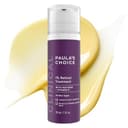
Paula's Choice CLINICAL 1% Retinol Treatment

Paula's Choice CLINICAL 1% Retinol Treatment

A stated 1% retinol with peptides and vitamin C, for people who've already built tolerance and want to move up. The strength is on the label — which is the whole point of buying up from a starter, rather than a mystery 'complex'.

Best overall
$48.75 · View on Amazon

$65.0025% off

Price as of August 11, 2026. #ad How we’re funded

2
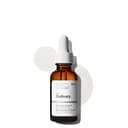
The Ordinary Retinol 1% in Squalane

The Ordinary Retinol 1% in Squalane

The top rung of the clearest-labeled retinol ladder on the shelf: a stated 1% pure retinol in the same squalane base, for a few dollars. It is genuinely strong — the right buy only once 0.5% is comfortable nightly, and the wrong one for anybody still building tolerance.

Best value 1%
$9.90 · View on Amazon

Price as of August 11, 2026. #ad How we’re funded

3
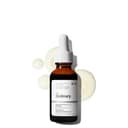
The Ordinary Retinol 0.5% in Squalane

The Ordinary Retinol 0.5% in Squalane

The clearest-labeled retinol you can buy: an exact 0.5% pure retinol in a squalane base, at a price that makes 'start low and go slow' painless. For most people ready to move up from a starter strength, this is the sensible middle rung.

Best first step up
$9.30 · View on Amazon

Price as of August 11, 2026. #ad How we’re funded

4
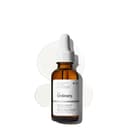
The Ordinary Granactive Retinoid 2% Emulsion

The Ordinary Granactive Retinoid 2% Emulsion

Not retinol at all, but a retinoid ester (hydroxypinacolone retinoate) marketed as gentler. A reasonable option for skin that flakes on plain retinol — with the honest caveat that its evidence base is thinner than retinol's.

Best for reactive skin
$12.10 · View on Amazon

Price as of August 11, 2026. #ad How we’re funded

The picks in full

#1Best overall

Paula's Choice CLINICAL 1% Retinol Treatment

A stated 1% retinol with peptides and vitamin C, for people who've already built tolerance and want to move up. The strength is on the label — which is the whole point of buying up from a starter, rather than a mystery 'complex'.

Strengths

  • Publishes an exact 1% strength — genuinely high
  • Peptides and licorice extract round out the anti-aging angle
  • Air-restrictive tube keeps the retinol stable

Trade-offs

  • 1% will over-strip skin that hasn't built tolerance — not a beginner product
  • Premium price per milliliter
Key activeRetinol
Stated concentration1%
FormatLightweight lotion
Fragrance-freeYes
Best forNormal, Retinol-experienced

Formulation note. 1% retinol + peptides + vitamin C + licorice root. High strength, stated plainly — pair with a slow ramp and a nightly moisturizer.

Ingredients and claims read from the product listing, on July 18, 2026. “Not published” means the brand does not state that figure.

#2Best value 1%

The Ordinary Retinol 1% in Squalane

The top rung of the clearest-labeled retinol ladder on the shelf: a stated 1% pure retinol in the same squalane base, for a few dollars. It is genuinely strong — the right buy only once 0.5% is comfortable nightly, and the wrong one for anybody still building tolerance.

Strengths

  • States an exact 1% — a genuinely high strength, printed on the label
  • Squalane base cushions a strength that would otherwise be harsh
  • The cheapest stated-1% retinol we've found

Trade-offs

  • 1% will over-strip skin that has not built tolerance — not a starter
  • Pure retinol in an oil base, with no niacinamide or soothing actives to buffer it
Key activeRetinol
Stated concentration1%
FormatLightweight oil serum
Fragrance-freeYes
Best forRetinol-experienced, Normal, Dry

Formulation note. 1% pure retinol dispersed in squalane — the same anhydrous base as the 0.2% and 0.5%, at the top of the three-strength ladder. The strength is printed on the label, which is what makes stepping up a deliberate decision rather than a guess.

Ingredients and claims read from the product listing, on August 11, 2026. “Not published” means the brand does not state that figure.

#3Best first step up

The Ordinary Retinol 0.5% in Squalane

The clearest-labeled retinol you can buy: an exact 0.5% pure retinol in a squalane base, at a price that makes 'start low and go slow' painless. For most people ready to move up from a starter strength, this is the sensible middle rung.

Strengths

  • Publishes the exact strength — 0.5% — which almost no drugstore retinol does
  • Squalane base is lightly occlusive and cushions irritation
  • Sold in 0.2% / 0.5% / 1% so you can step up deliberately

Trade-offs

  • Pure retinol in an anhydrous oil — no added niacinamide or soothing actives
  • Squalane finish can feel heavy layered over other oils
Key activeRetinol
Stated concentration0.5%
FormatLightweight oil serum
Fragrance-freeYes
Best forNormal, Dry, Not-too-sensitive

Formulation note. Pure retinol dispersed in squalane; no water phase, so none of the pH and packaging fuss vitamin C needs. The strength is printed on the label, which is the exception in this category, not the rule.

Ingredients and claims read from the product listing, on July 18, 2026. “Not published” means the brand does not state that figure.

#4Best for reactive skin

The Ordinary Granactive Retinoid 2% Emulsion

Not retinol at all, but a retinoid ester (hydroxypinacolone retinoate) marketed as gentler. A reasonable option for skin that flakes on plain retinol — with the honest caveat that its evidence base is thinner than retinol's.

Strengths

  • Retinoid ester is widely reported as less irritating than pure retinol
  • Stated 2% of the Granactive Retinoid complex — a labeled figure
  • Light emulsion texture layers easily

Trade-offs

  • Hydroxypinacolone retinoate has far less published evidence than retinol
  • The '2%' is the complex, not 2% retinol — don't read it as high-strength
Key activeGranactive Retinoid (hydroxypinacolone retinoate)
Stated concentration2% Granactive Retinoid complex
FormatLight emulsion
Fragrance-freeYes
Best forSensitive, Retinol-reactive

Formulation note. The active is hydroxypinacolone retinoate, a retinoic-acid ester — not free retinol. The '2%' refers to the solubilized complex, not a retinol percentage. We present it as a gentler alternative with a smaller evidence base, not an equal to retinol.

Ingredients and claims read from the product listing, on July 18, 2026. “Not published” means the brand does not state that figure.

How to know you’re ready to step up

There is no test for this beyond an honest reading of your own skin, but the criteria are clearer than most people assume. Work through all three.

You’re using your current retinol near-nightly, comfortably

Not “most nights, with some flaking I put up with”. Comfortably — no persistent dryness, no stinging on application, no patches you are working around. If your current product still causes reactions, a stronger one will cause more, and the answer is time rather than a bigger number.

You’ve given the current strength long enough

Retinol works on a timescale of months. Texture typically improves in the first one to three months of consistent use and fine-line changes take considerably longer, so concluding at week six that a strength has stopped working is concluding far too early. Give a strength at least three to six months of near-nightly use before you decide it has plateaued. Our results timeline sets out what should be happening when.

Your current strength is a known quantity

This is the one people miss. If you are stepping up from a product that never told you its strength, you are moving from an unknown to a known — which may be a much larger jump than you intend. Someone moving from an unstated, conservatively dosed drugstore cream to a stated 1% could easily be tripling their exposure. Treat that transition with the same caution as a complete beginner would, regardless of how long you have been using the old product.

0.5% or 1%? How to choose the rung

For most people stepping up for the first time, 0.5% is the right answer, and 1% is the rung after that rather than the destination to jump to. A stated 0.5% is a meaningful increase over a 0.2% or 0.3% starter, sits in the range where a lot of the useful over-the-counter work happens, and is far more forgiving if you misjudge your tolerance.

One percent is genuinely strong, and it is where the trade-off between potency and tolerability starts to bite for a lot of skin. Go there if you have spent real time at 0.5% without reaction and want more. There is also a legitimate reason to choose 1% that has nothing to do with your face: cost. Because the stated-1% products here are inexpensive, some people buy the 1% and simply use it less often. That works, but it is a worse plan than it sounds — frequency drives results, so a strength you can use nightly beats a stronger one you use twice a week.

The gentler high-strength route

If your skin reacts but you still want to move up, a retinoid ester is a reasonable alternative path. The Granactive Retinoid pick below states a 2% figure — but read that carefully, because it is 2% of the retinoid complex, not 2% retinol, and it is emphatically not four times stronger than a 0.5% retinol. What it offers is a different molecule, hydroxypinacolone retinoate, widely reported as gentler, with a thinner published evidence base than retinol. That is a fair trade for skin that cannot tolerate a step up any other way, and a poor one for anyone chasing maximum potency. Our retinol vs retinoid comparison explains where these molecules sit relative to each other.

How to step up without a setback

The mechanics matter more at this end of the ladder, because there is less margin for error.

Drop your frequency back. Even though you were using your previous retinol nightly, restart the new one at two or three nights a week and rebuild over several weeks. Your tolerance is to a strength, not to the category. Buffer more than you think you need to.These are treatment formulas without heavy niacinamide or ceramide payloads, so the cushioning has to come from your moisturizer — apply it generously on top, and consider applying it underneath too in the first fortnight. Use less product, not more. A pea-sized amount covers the whole face; doubling it at 1% doubles the irritation without doubling the benefit.

Stop stacking.Exfoliating acids and strong vitamin C serums in the same evening routine are the most reliable way to compromise a barrier at these strengths — move vitamin C to the morning and give the acids a night off. Our layering guide covers what combines safely. And keep broad-spectrum sunscreen non-negotiable every morning; sun sensitivity rises with strength.

When to stop chasing a bigger number

There is a ceiling here, and it arrives sooner than the marketing suggests. If you are comfortably tolerating a stated 1% and still want more, the next step is not a stronger cosmetic product — it is a conversation with a dermatologist about prescription tretinoin, which is a different molecule with its own substantial evidence base rather than simply a larger dose of the same thing. Our retinol vs tretinoin comparison covers what changes when you cross that line, and our safety guide covers the circumstances in which you should not be escalating at all. This is general information, not medical advice.
Frequently asked questions

What counts as high-strength retinol?

In over-the-counter terms, a stated 0.5% or 1% pure retinol. Below that you're in starter and intermediate territory; above it you're generally into prescription retinoids, which are a different molecule rather than a bigger number. We only call a product high-strength if the brand publishes the figure — 'maximum strength' with no number on the box tells you nothing you can act on.

Is 1% retinol better than 0.5%?

Not automatically, and for most people 0.5% is the better buy. Higher concentrations produce more irritation, and irritated skin gets used less often — which slows results rather than speeding them. One percent makes sense if you've spent months at 0.5% comfortably and want to progress. It's a rung on a ladder, not a shortcut up it.

How do I know when I'm ready to move up?

Three tests, all of which should be yes. You're using your current retinol almost every night without dryness or stinging; you've been at that strength for at least three to six months; and you've stopped noticing further improvement. If any of those is no, wait. Stepping up early is the most common reason people end up abandoning retinol altogether.

Can I step up from a drugstore retinol that doesn't state its strength?

You can, but treat it as a bigger jump than it looks. If your current product never published a number, you don't actually know what you're stepping up from, and moving to a stated 1% could easily be tripling your exposure. Restart at two or three nights a week as though you were new to retinol, and build from there — regardless of how long you used the old one.

Is 2% Granactive Retinoid stronger than 1% retinol?

No, and the numbers aren't comparable. The 2% refers to the Granactive Retinoid complex, not to 2% retinol — the active is hydroxypinacolone retinoate, a different molecule that's widely reported as gentler than pure retinol and has a considerably thinner published evidence base. Treat it as a gentler alternative route for reactive skin, not as a higher rung on the same ladder.

What if a high strength irritates me?

Drop back rather than push through. Reduce frequency to once or twice a week, buffer more heavily with moisturizer, and if it still stings after a couple of weeks, return to your previous strength for a few more months. Persistent stinging, spreading redness or raw patches are irritation, not a purge, and pushing through them damages the barrier you need intact for the retinol to work at all.

Sources

Keep reading