Why the percentages get published
We can describe the pattern without pretending to know a regulator’s reasoning. What is observable is that K-beauty competes on ingredient specificity in a way the Western mass market largely does not. Korean product pages routinely lead with concentrations, and the shopper is expected to compare them. On the US drugstore shelf, the front of the box competes on a brand promise — “rapid wrinkle repair”, “24-hour”, “maximum strength” — and the number is left out because leaving it out costs the brand nothing.
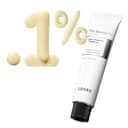
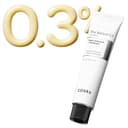
The consequence for you is practical. A stated 0.1% means you know exactly where you are starting. A stated 0.3% above it means the step up changes one variable. That is the same argument we make for The Ordinary’s ladder in the serum roundup, and it is the reason a modest K-beauty cream can be a better buy than a more expensive Western serum that will not commit to a figure.
The two things this category gets wrong
1. Small sizes hide the real price
Several of the best-labeled products here come in 0.67 fl oz tubes — about 20 ml, roughly two-thirds of a standard serum bottle. At a pea-sized nightly dose that is still a couple of months, but if you are treating the neck as well it disappears fast. Compare cost per milliliter rather than sticker price: the best value on this page is a full 30 ml at the lowest price of the six, and it is not the product with the smallest number on the front.
2. The supporting-ingredient story runs ahead of the evidence
Centella, niacinamide and ceramides all have a genuine case — niacinamide in particular has published support for barrier function, tone and texture, which is exactly the job you want a supporting ingredient doing next to a retinoid.
Fermentation, ginseng and snail mucin are a different matter. They are not harmful and they are not nothing; they are simply not why a retinoid works, and the marketing frequently implies otherwise. When you see “fermented retinol”, read it as a processing description rather than a strength, a different molecule, or a reason to expect more. Our strength guide covers how to read a label that describes everything except the dose.
Retinol or retinal?
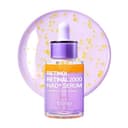
This category sells both, sometimes in the same bottle, and the distinction matters. Retinal — retinaldehyde — sits one enzymatic conversion from retinoic acid where retinol sits two, which makes it more potent at a much smaller number. Two of the picks below contain retinal, and one contains both forms.
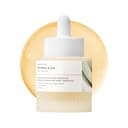
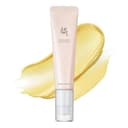
A product listing retinol and retinal together is a reasonable formulation idea and an awkward one for anyone trying to track their exposure: even when the retinol figure is printed, the retinal content usually is not, so the stated percentage covers only part of what you are applying. Treat those products as stronger than the number suggests and ramp up accordingly. Our retinol vs retinal comparison sets out the conversion chain, and our retinal roundup covers the dedicated retinal field. The eye-area pick below is the cheapest retinal we have found anywhere, and our Beauty of Joseon Revive Eye Serum review works through what its published ingredient list can and cannot tell you about the dose.
How this compares to buying Western
Honestly? For most people the deciding factor is not origin, it is what is on the label. A stated 0.5% retinol from The Ordinary costs less than anything on this page and tells you more than three of the six products here do. If your only criterion is a published number at a real strength, that is still the efficient buy.
Where this category genuinely wins is the bottom of the ladder. If you want a labeled0.1% or 0.2% — a true beginner strength you can place, in a cushioning base, without stepping down to an unstated drugstore cream — the Korean shelf serves that better than the Western one does. It also wins on gentle one-step formats, where a moisturizer with a real retinoid in it is a more coherent product than most Western equivalents. Our beginner roundup and sensitive-skin roundup are the two pages to read alongside this one.
How to use these
Exactly as you would any retinoid, with one addition. At night, on clean and completely dry skin, a pea-sized amount for the whole face. Start at two nights a week and build over several weeks — the schedule in our frequency guide applies unchanged. Moisturize on top. Broad-spectrum sunscreen every morning, without exception.
The addition: K-beauty routines are often long, and a seven-step routine plus a retinoid is a lot of contact for skin that is adjusting. While you are building tolerance, cut the routine back — drop exfoliating toners and any acid-containing essence, and keep the layers either side of the retinoid simple. Our layering guide covers what safely shares a routine, and the sandwich method is the right technique if these prove sharper than you expected.
What we left out
We left out multi-piece “Korean skincare gift sets” where a retinol product is one of six unbranded items — the retinoid content is invariably unstated and the rest is filler. We left out products where the retinoid appears far down an ingredient list behind eight marketed actives. And we left out anything we could not confirm as currently purchasable: every pick on this page returned a live price and an in-stock listing when we checked it, which is the same bar every product on this site has to clear. How we work is set out on how we review— we have not tested these, and we do not pretend to.