Retinol Room.

Best Retinol Serum Under $50

Under $25 the serum question is what is carrying the retinoid. Between $25 and $50 it changes completely: this is where stated retinaldehyde appears, sold as a ladder you can climb. Seven serums ranked on the molecule, with live, dated prices and a live count of what qualifies today.

By Stephen V.Last updated How we pick

Buy Naturium’s Retinaldehyde Cream Serum 0.10%. It is the one thing in this band you genuinely cannot get below it: a stated retinaldehyde strength, in a 50 ml cream-serum, sold as the middle rung of a real three-step ladder — 0.05%, 0.10%, 0.15% — so stepping up later changes the dose and nothing else. Retinal sits one oxidation step from retinoic acid where retinol sits two, and the published tolerance work groups retinaldehyde with retinol rather than with tretinoin, so you are not trading comfort for the shorter conversion chain.

Budget pick: The Ordinary Retinal 0.2% Emulsion— and we are going to be blunt about it, because the arithmetic is not flattering to the band. It states a higher retinal figure, costs a fraction of the top pick, and the only real concessions are a 15 ml bottle instead of 50 ml and a thin emulsion instead of a cream-serum with no rung above it to climb to. If you are not sure you will stick with a retinal, start here and spend the difference on nothing.

As of November 23, 2026, 21 of the 24 retinol serums we track were listed on Amazon below $50— the live figure from our dated daily check, not an estimate. Which tells you something about this band before you read a single pick: almost the entire serum shelf is inside it.So “under $50” is not a constraint, it is the whole category, and the useful question is what the upper half of it sells that the lower half does not.

So what does the money actually buy between $25 and $50? A molecule and a ladder — not more evidence, and not a published figure as a matter of course. Two of the three priciest serums on this page publish no percentage at all, and one of them is the single most expensive serum we track under the band. Below $25 the shelf is retinol and the real question is what is carrying it, which is the whole argument of our under-$25 serum page. Above $25 the question changes to which retinoid you are buying, because this is the band where stated retinaldehyde lives.

How this is funded: we earn a commission if you buy through our links, at no extra cost to you. It never changes which product we recommend, and we’ll tell you when we’d skip one. Full disclosure.

Quick picks

Ranked on formulation, stated concentration and buyer fit. Select a row to jump to the full write-up. We have not tested these products — here is exactly what we do instead.

#ProductBest forPrice
1
Naturium Retinaldehyde Cream Serum 0.10%

Naturium Retinaldehyde Cream Serum 0.10%

A stated 0.10% retinal in a cream-serum base, sold in a 1.7 oz size explicitly for face, neck and chest. That size-and-scope combination is unusual and genuinely useful: most retinals come in 1 oz bottles you end up rationing for the face alone.

Best overall — stated retinal with a ladder
$29.99 · View on Amazon

$32.006% off

Price as of November 23, 2026. #ad How we’re funded

2
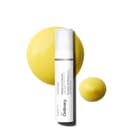
The Ordinary Retinal 0.2% Emulsion

The Ordinary Retinal 0.2% Emulsion

The cheapest way into retinaldehyde by a wide margin, and it states its strength — a labeled 0.2% retinal in a light emulsion. Retinal is a genuinely strong rung, so the low price should not be read as a low commitment.

Budget pick — cheapest stated retinal in the band
$14.90 · View on Amazon

Price as of November 23, 2026. #ad How we’re funded

3
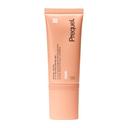
Prequel Retinal Serum 0.1% Retinaldehyde Gel

Prequel Retinal Serum 0.1% Retinaldehyde Gel

A stated 0.1% retinaldehyde at a fraction of what the pharmacy creams charge for the same figure, in a fragrance-free gel built around a sustained-release encapsulation. The cheapest honest way to sit at the middle rung of the retinal ladder.

Best stated retinal in a 50 ml gel
$23.19 · View on Amazon

$28.9920% off

Price as of November 23, 2026. #ad How we’re funded

4
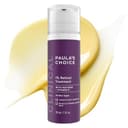
Paula's Choice CLINICAL 1% Retinol Treatment

Paula's Choice CLINICAL 1% Retinol Treatment

A stated 1% retinol with peptides and vitamin C, for people who've already built tolerance and want to move up. The strength is on the label — which is the whole point of buying up from a starter, rather than a mystery 'complex'.

Best stated 1% retinol
$45.50 · View on Amazon

$65.0030% off

Price as of November 23, 2026. #ad How we’re funded

5
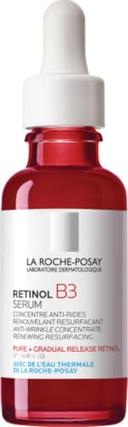
La Roche-Posay Pure Retinol Face Serum (B3 + HA)

La Roche-Posay Pure Retinol Face Serum (B3 + HA)

Pairs pure retinol with niacinamide and hyaluronic acid, so the buffering that reduces flaking is built into the formula rather than something you layer yourself. The gentlest 'serious' retinol here — for skin that dries out on plainer options.

Best buffered serum for reactive skin
$33.73 · View on Amazon

$44.9925% off

Price as of November 23, 2026. #ad How we’re funded

6
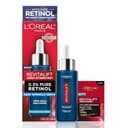
L'Oreal Paris Revitalift 0.3% Pure Retinol Night Serum

L'Oreal Paris Revitalift 0.3% Pure Retinol Night Serum

A rare drugstore serum that actually states its strength — a labeled 0.3% pure retinol. That transparency, at a mass-market price, is exactly what we reward; it slots between a 0.2% starter and a 0.5%.

Best stated-strength drugstore serum
$29.88 · View on Amazon

$31.997% off

Price as of November 23, 2026. #ad How we’re funded

7
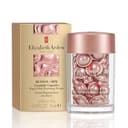
Elizabeth Arden Retinol + HPR Ceramide Capsules Skin Renewing Serum (30 ct)

Elizabeth Arden Retinol + HPR Ceramide Capsules Skin Renewing Serum (30 ct)

Single-dose capsules that solve retinol's real packaging problem — light and air — by never exposing the rest of the product to either. It pairs retinol with HPR, a retinoid ester, plus ceramides. The dose control is genuine; the price per night is not small.

Best sealed single dose
$39.20 · View on Amazon

$56.0030% off

Price as of November 23, 2026. #ad How we’re funded

The picks in full

#1Best overall — stated retinal with a ladder

Naturium Retinaldehyde Cream Serum 0.10%

A stated 0.10% retinal in a cream-serum base, sold in a 1.7 oz size explicitly for face, neck and chest. That size-and-scope combination is unusual and genuinely useful: most retinals come in 1 oz bottles you end up rationing for the face alone.

Strengths

  • States 0.10% retinal — a mid rung you can actually place on the ladder
  • 1.7 oz is enough to cover neck and chest without rationing
  • Cream-serum texture is more cushioning than a thin emulsion

Trade-offs

  • Larger bottles take longer to finish, and retinal degrades once opened
  • Still a real retinoid dose over a large area — introduce it slowly
Key activeRetinaldehyde (retinal)
Stated concentration0.10%
FormatCream serum
Fragrance-freeNot published
Best forNormal, Dry, Mature

Formulation note. A stated 0.10% retinaldehyde in a cream-serum base, listed for face, neck and chest. Sold alongside a 0.05% and a 0.15% in the same line, so the range functions as a ladder in the same way The Ordinary's retinols do.

Ingredients and claims read from the product listing, on August 11, 2026. “Not published” means the brand does not state that figure.

#2Budget pick — cheapest stated retinal in the band

The Ordinary Retinal 0.2% Emulsion

The cheapest way into retinaldehyde by a wide margin, and it states its strength — a labeled 0.2% retinal in a light emulsion. Retinal is a genuinely strong rung, so the low price should not be read as a low commitment.

Strengths

  • States an exact 0.2% retinal, which most retinal products do not
  • Dramatically cheaper than every other retinal on this page
  • Light emulsion base layers easily under a moisturizer

Trade-offs

  • 0.2% retinal is a high rung, not a starter — it is not where a beginner should begin
  • Small 0.5 fl oz bottle, so it does not last as long as the price suggests
Key activeRetinaldehyde (retinal)
Stated concentration0.2%
FormatLight emulsion
Fragrance-freeNot published
Best forRetinol-experienced, Normal

Formulation note. Retinaldehyde sits one conversion step from retinoic acid, where retinol sits two. That is why a 0.2% retinal is not comparable to a 0.2% retinol — the numbers look similar and the potency is not.

Ingredients and claims read from the product listing, on August 11, 2026. “Not published” means the brand does not state that figure.

#3Best stated retinal in a 50 ml gel

Prequel Retinal Serum 0.1% Retinaldehyde Gel

A stated 0.1% retinaldehyde at a fraction of what the pharmacy creams charge for the same figure, in a fragrance-free gel built around a sustained-release encapsulation. The cheapest honest way to sit at the middle rung of the retinal ladder.

Strengths

  • States an exact 0.1% retinaldehyde, described on the listing as stabilized and sustained-release
  • Says fragrance-free outright — most retinals leave the question unanswered
  • A full 1.7 fl oz, larger than most retinals sold at this figure

Trade-offs

  • A stated 0.1% retinal is a real dose: the listing's “ideal for beginners” means new to retinal, not new to retinoids
  • Amazon's listing title calls it a “Retinal Serum” while the brand sells it as Retinal Renew — match the figure, not the name
Key activeRetinaldehyde (retinal)
Stated concentration0.1%
FormatGel
Fragrance-freeYes
Best forNormal, Oily, Dry, Sensitive

Formulation note. A stated 0.1% stabilized retinaldehyde in a gel, with ectoin, glycerin, jojoba oil and bio-enhanced centella asiatica in the base, per the listing. The listing credits stability and “effective sustained release to minimize irritation” to an encapsulation the brand calls Hydroxysomes, and states “fragrance-free, pH-stabilized”. Amazon titles this ASIN “Retinal Serum”; the brand's own name for the line is Retinal Renew, which is what the sibling 0.2% listing (B0FY37K9L4) is titled.

Ingredients and claims read from the product listing, on November 21, 2026. “Not published” means the brand does not state that figure.

#4Best stated 1% retinol

Paula's Choice CLINICAL 1% Retinol Treatment

A stated 1% retinol with peptides and vitamin C, for people who've already built tolerance and want to move up. The strength is on the label — which is the whole point of buying up from a starter, rather than a mystery 'complex'.

Strengths

  • Publishes an exact 1% strength — genuinely high
  • Peptides and licorice extract round out the anti-aging angle
  • Air-restrictive tube keeps the retinol stable

Trade-offs

  • 1% will over-strip skin that hasn't built tolerance — not a beginner product
  • Premium price per milliliter
Key activeRetinol
Stated concentration1%
FormatLightweight lotion
Fragrance-freeYes
Best forNormal, Retinol-experienced

Formulation note. 1% retinol + peptides + vitamin C + licorice root. High strength, stated plainly — pair with a slow ramp and a nightly moisturizer.

Ingredients and claims read from the product listing, on July 18, 2026. “Not published” means the brand does not state that figure.

#5Best buffered serum for reactive skin

La Roche-Posay Pure Retinol Face Serum (B3 + HA)

Pairs pure retinol with niacinamide and hyaluronic acid, so the buffering that reduces flaking is built into the formula rather than something you layer yourself. The gentlest 'serious' retinol here — for skin that dries out on plainer options.

Strengths

  • Niacinamide + glycerin + hyaluronic acid buffer the retinol's dryness
  • Fragrance-free, from a brand built around reactive skin
  • Well-tolerated texture that layers cleanly under moisturizer

Trade-offs

  • Does NOT publish the retinol percentage — you're trusting the brand
  • Among the pricier options for an unstated strength
Key activeRetinol
Stated concentrationNot published
FormatSilky lotion-serum
Fragrance-freeYes
Best forSensitive, Dry, Normal

Formulation note. Pure retinol + niacinamide (vitamin B3) + hyaluronic acid. The support actives are the selling point; the retinol strength itself is not disclosed, which we flag rather than guess.

Ingredients and claims read from the product listing, on July 18, 2026. “Not published” means the brand does not state that figure.

#6Best stated-strength drugstore serum

L'Oreal Paris Revitalift 0.3% Pure Retinol Night Serum

A rare drugstore serum that actually states its strength — a labeled 0.3% pure retinol. That transparency, at a mass-market price, is exactly what we reward; it slots between a 0.2% starter and a 0.5%.

Strengths

  • Publishes 0.3% pure retinol — unusual honesty for a drugstore serum
  • Widely stocked and often discounted
  • Fragranced but formulated for nightly use

Trade-offs

  • Contains fragrance — a consideration for reactive skin
  • 0.3% is a modest strength; experienced users will outgrow it
Key activeRetinol
Stated concentration0.3%
FormatLightweight serum
Fragrance-freeNo
Best forNormal, Beginner-to-intermediate

Formulation note. 0.3% pure retinol in a night serum. The stated strength is the reason it earns a place — most drugstore rivals hide the number, and this one doesn't.

Ingredients and claims read from the product listing, on July 18, 2026. “Not published” means the brand does not state that figure.

#7Best sealed single dose

Elizabeth Arden Retinol + HPR Ceramide Capsules Skin Renewing Serum (30 ct)

Single-dose capsules that solve retinol's real packaging problem — light and air — by never exposing the rest of the product to either. It pairs retinol with HPR, a retinoid ester, plus ceramides. The dose control is genuine; the price per night is not small.

Strengths

  • Each capsule is airtight and single-use, so the retinol cannot oxidize in the bottle
  • One capsule is a pre-measured dose — no guessing at how much to use
  • Retinol plus HPR plus ceramides, so there is buffering built in

Trade-offs

  • Expensive per night, and a 30-count is one month at nightly use
  • Neither the retinol nor the HPR concentration is published
  • Single-use plastic capsules are a real waste trade-off
Key activeRetinol + HPR (hydroxypinacolone retinoate) + ceramides
Stated concentrationNot published
FormatSingle-dose capsule serum
Fragrance-freeNot published
Best forNormal, Dry, Mature

Formulation note. Physically encapsulated single doses — a sealed capsule per night — rather than molecular encapsulation of the retinol itself. Both approaches address stability; they are not the same thing, and the listing describes the capsule format. Concentrations are undisclosed.

Ingredients and claims read from the product listing, on August 11, 2026. “Not published” means the brand does not state that figure.

What the second twenty-five dollars actually buys

A different molecule, sold with a number on it.This is the real finding. Below $25 you can buy retinaldehyde — one product does it well — but you cannot buy a retinal range. Naturium sells 0.05%, 0.10% and 0.15% cream-serums; Prequel prints 0.1% on a 50 ml gel. Retinal is one oxidation step from retinoic acid, retinol is two, and the published tolerance study grouped retinaldehyde with retinol as low-irritation rather than with tretinoin. That combination — a closer molecule, a printed figure, and somewhere to go next — does not exist below this band.

A published high dose of retinol, with a supporting cast. Paula’s Choice CLINICAL 1% is the top of the over-the-counter retinol ladder and it earns its slot on the formula around the figure rather than on the figure itself, because The Ordinary states the same 1% for a fraction of the price. Peptides and antioxidants are what the extra money buys. That is a legitimate purchase and it is not a dose upgrade.

A formula that buffers itself from a brand built on reactive skin.La Roche-Posay’s Pure Retinol serum carries retinol with niacinamide, glycerin and hyaluronic acid, fragrance-free, and it is the most expensive unstated dose on this page. You are paying for the formula and the dermatology distribution record, not for information — which is a trade some people should absolutely make.

Single-dose packaging.Elizabeth Arden’s capsules seal each application away from air and light until the moment you use it, which matters more for this molecule than for most, and makes over-application structurally impossible. The per-night cost is the honest caveat, and the retinoid is a retinol-plus-HPR blend with no percentage attached.

What it does not buy

Evidence. No serum on this page, at any price in this band, comes with a controlled trial of itself. The record the whole category rests on is prescription tretinoin: in photodamaged skin, collagen I formation rose by about 80% on ten to twelve months of daily 0.1% tretinoin against a 14% fall on vehicle, with the improvement curve rising for roughly ten months before it plateaus. Nothing cosmetic inherits those numbers, and the price tag has no bearing on it whatsoever.

Disclosure.Five of these seven publish an exact figure and two do not — and the two that do not sit among the three priciest products on the page. Price does not predict which brands tell you the dose. Nothing requires a cosmetic to state a concentration, and the federal rule that orders ingredient lists stops being useful exactly here, because everything at one percent or less may be listed without respect to order of predominance. Every cosmetic retinoid sits in that group.

A bigger bottle.Not reliably. The cheapest pick here is 15 ml and two of the pricier ones are 50 ml, but the most expensive serum on the page is 30 ml. Work out cost per millilitre before you decide anything is good value — our value roundup does that arithmetic across the whole site.

How we ranked these

1. Which molecule, and is there a number on it? A stated retinal beats a stated retinol at the same price for the simple reason that fewer conversion steps means more of the active arriving, and a stated anything beats an unstated anything because escalation stops being a guess.

2. Is there a rung above and below?A single strength sold alone is less useful than the same strength sold inside a range, because moving up means changing the base your skin has already proved it tolerates. Naturium’s three-step retinal range is the best example of this on the whole site.

3. What is carrying it? A cream-serum, a gel, a thin emulsion, a buffered fluid and a sealed capsule are five genuinely different experiences of the same molecule. Our under-$25 page ranks entirely on this axis, because below $25 it is the only axis left.

4. Fragrance, as published and nothing more. Three of these seven carry a fragrance-free claim on the published label, one states fragrance outright, and three publish nothing in either direction, which we record as not published rather than inferring from a sibling product. Retinoid irritation and a genuine fragrance allergy look similar in the mirror and are different problems.

We rank nothing on a claim we cannot check. Nobody here has tested these on skin, we run no trials, and a page that tells you how a serum “felt” after four weeks is telling you a story. What we do is read every label and every published list and say plainly where the information stops — our method page is the detail.

Which one for which job

Never used a retinoid?Nothing on this page. Start with a stated low dose of retinol — see the beginner roundup or the bottom rungs on our percentage ladder— and come back here when you are comfortable four nights a week.

Comfortable on retinol and want the next step? The retinal picks, in price order. Moving from retinol to retinaldehyde is a change of molecule rather than a step up in strength, so treat it as a new product: two or three nights a week for a fortnight regardless of what you were tolerating before. Our retinol versus retinal comparison is the page for that decision and the retinal roundup ranks the molecule across every price.

Skin that flakes or stings on everything? The buffered pharmacy serum, and accept that you will not know the dose. Our gentle roundup ranks the alternatives by the mechanism that makes each one gentle.

Already at the top of the retinol ladder? The stated 1%, and read the high-strength roundupfirst — it is blunt about who should not be there.

Storage, because this band is mostly retinal

Retinaldehyde and retinol both degrade, and the degradation is measured rather than theoretical. A validated study of sixteen retinoid derivatives across twelve commercial cosmetic products found losses of 0% to 80% after six months at 25 °C and 40% to 100% at 40 °C, with light doing more damage than heat, and some products testing below their declared content. The FDA does not require a cosmetic to carry an expiration date and notes that shelf life depends on storage. Three practical consequences: buy a size you will finish, prefer opaque packaging and a narrow neck over a wide open jar, and keep it out of a steamy bathroom window. Our guide to whether retinol expires has the rest.

How to start, whichever one you buy

At night, on dry skin, two or three nights a week, moisturizer over the top, sunscreen every morning without exception. Hold that for four weeks before you change anything, and change one thing at a time. The specific mistake to avoid in this band is stacking a stated retinal on top of an unstated retinol you already own, which leaves you with no idea what you are applying — pick one. Our routine guide has the order of operations and the mistakes guide covers the errors that cost people months.
Frequently asked questions

What is the best retinol serum under $50?

Naturium's Retinaldehyde Cream Serum 0.10%, because it is the one thing in this band you cannot buy below it: a stated retinaldehyde strength in a 50 ml cream-serum, sold as the middle rung of a 0.05% / 0.10% / 0.15% ladder. Retinal converts to retinoic acid in one step where retinol takes two, and the published tolerance work groups it with retinol rather than with tretinoin.

Is a $40 retinol serum better than a $15 one?

Not on anything we can verify, and the honest arithmetic on this page is unflattering: the budget pick states a higher retinal figure than the top pick at a fraction of the price. What the extra money buys reliably is bottle size, a nicer base, a ladder to climb, or a supporting formula of peptides and antioxidants. What it does not buy is evidence or disclosure — two of the three priciest serums here publish no percentage at all.

How many retinol serums are actually under $50?

Almost all of them. The live count at the top of this page is computed at request time from our own dated daily check, and it is usually the large majority of every retinol serum we track. That is the useful thing to know about this band: $50 is not a budget constraint on the serum shelf, it is the shelf. So the page ranks on what the upper half of the band sells that the lower half does not.

Should I buy a retinal instead of a retinol under $50?

If you are already comfortable on retinol several nights a week, it is a reasonable next move, and this is the band where stated retinal is sold as a ladder rather than a one-off. If you have never used a retinoid, no — start with a stated low dose of retinol and come back. Switching molecules is a change of product rather than a step up in strength, so restart at two or three nights a week either way.

Which serums under $50 publish their strength?

Five of the seven ranked here. Naturium states 0.10% retinaldehyde (with a 0.05% and a 0.15% beside it), The Ordinary states 0.2% retinal, Prequel states 0.1% retinaldehyde, L'Oreal states 0.3% in its own product name and Paula's Choice states 1% retinol. La Roche-Posay and Elizabeth Arden publish no figure, which is normal for this category rather than unusual — and both sit among the three priciest products on the page.

Is this the same as your under-$25 serum page?

No, and deliberately so. The under-$25 page ranks on the base — anhydrous oil, buffered fluid, encapsulated gel, sealed capsule — because below $25 that is the only question left, and only one pick appears on both pages. This page ranks on the molecule, because stated retinaldehyde sold as a ladder is the specific thing that appears between $25 and $50 and nowhere cheaper.

How long will a serum in this band last?

We will not print a figure, because no brand publishes one and the fingertip-unit literature does not supply a per-bottle answer. What we can tell you is that the bottles here range from 15 ml to 50 ml at overlapping prices, so cost per millilitre varies by several times across the page. Write the date you opened it on the bottle — retinoids degrade measurably, and a bottle that lasts you eighteen months is not the strength it says by the end.

Do I need a serum at all, or would a cream do?

For most faces either works, and the format matters less than whether you keep using it. A serum suits skin that is oily or combination, or anyone layering a separate moisturizer. A cream suits dry or mature skin that wants one step instead of two. Our cream roundups cover that side of the shelf, including a page for creams under $25, where the only published percentages in the band come from Korean brands.

Sources

  • American Academy of Dermatology — Retinoid or retinol? — AAD on the difference between prescription retinoids and OTC retinol (accessed July 17, 2026)
  • U.S. FDA — 21 CFR 701.3, Designation of ingredients (eCFR) — The federal rule governing how a cosmetic ingredient list is ordered. Paragraph (a): 'The label on each package of a cosmetic shall bear a declaration of the name of each ingredient in descending order of predominance, except that fragrance or flavor may be listed as fragrance or flavor.' Paragraph (f) allows an alternative: ingredients 'present at a concentration greater than 1 percent, in descending order of predominance', followed by ingredients 'present at a concentration of not more than 1 percent, without respect to order of predominance', followed by color additives 'without respect to order of predominance'. Cited for the exact limit of what an ingredient's POSITION can tell a reader: late placement indicates the 1-percent-or-less group, but within that group the order carries no information about quantity (accessed September 26, 2026)
  • Tolerance profile of retinol, retinaldehyde and retinoic acid under maximized and long-term clinical conditions (PubMed) — Retinol and retinaldehyde share a low irritation potential; retinoic acid (tretinoin) is more irritating (accessed July 17, 2026)
  • Human Skin Aging and the Anti-Aging Properties of Retinol (PubMed) — Review of topical retinol's effect on collagen and photoaging (accessed July 17, 2026)
  • The use of retinoids in the treatment of photoaging (PubMed) — Clinical-trial evidence for topical retinoids in photoaging (accessed July 17, 2026)
  • Draelos ZD, Peterson RS — Newly formulated retinol serums vs tretinoin cream in escalating doses (J Drugs Dermatol, 2020) — Twelve-week double-blind study in 45 photoaged women aged 35 to 65 (Fitzpatrick I-IV) using a STEP-UP protocol: retinol serum escalated 0.25% then 0.5% then 1.0%, or tretinoin cream 0.025% then 0.05% then 0.1%, each with a moisturizer. The two were at parity on investigator and subject assessment and on TEWL at week 12; retinol improved visual smoothness more than tretinoin at week 4 (P = 0.031) and skin dryness significantly (P < 0.001); week-12 punch biopsies showed newly formed collagen and GREATER epidermal thickening in the retinol group. Industry-adjacent cosmetic research, not an independent trial — cited for the escalation method and the direction of the histology (accessed September 18, 2026)
  • Veraldi S et al. — Hydroxypinacolone retinoate with retinol glycospheres in mild to moderate acne (G Ital Dermatol Venereol, 2015) — Open pilot study of a fixed combination containing 0.1% hydroxypinacolone retinoate (a synthetic ester of 9-cis-retinoic acid) plus 1% encapsulated retinol: 41% mean reduction in acne grade, 15.3% mild-to-moderate local side effects, and the authors themselves call for a controlled trial (accessed August 19, 2026)
  • Temova Rakuša Ž, Škufca P, Kristl A, Roškar R — Retinoid stability and degradation kinetics in commercial cosmetic products (J Cosmet Dermatol, 2021) — Validated HPLC-UV study of 16 retinoid derivatives (retinol, retinyl palmitate, beta-carotene and hydroxypinacolone retinoate) in 12 commercial cosmetics over 6 months of long-term and accelerated stability testing plus a one-week photostability study. Retinoid degradation followed first-order kinetics; the products showed a 0%-80% decline after 6 months at 25 °C and a 40%-100% decline at 40 °C; 'light degradation was more pronounced than temperature-induced degradation'; instabilities were 'formulation-dependent and associated with lower contents than declared in some cosmetics'. Cited for the size of the stability problem a sealed single-dose format is built to solve — the study did not test this product (accessed September 19, 2026)
  • Griffiths CE et al. — Restoration of collagen formation in photodamaged human skin by tretinoin (N Engl J Med, 1993) — Biopsies from 26 subjects plus 29 patients treated 10 to 12 months with daily 0.1% tretinoin cream (15 patients) or vehicle (14). Collagen I formation was 56% LOWER in photodamaged skin than in sun-protected buttock skin (P < 0.001); tretinoin produced an 80% INCREASE in collagen I formation against a 14% decrease on vehicle (P = 0.006). Prescription tretinoin, not cosmetic retinol — cited for the direction of the effect on dermal collagen (accessed September 18, 2026)
  • Voorhees JJ — Clinical effects of long-term therapy with topical tretinoin and cellular mode of action (J Int Med Res, 1990) — Double-blind, placebo-controlled study: 0.1% topical tretinoin reduced the effects of photoageing maximally after 10 months, with no further improvement between 10 and 22 months. Histologically it induced 'epidermal hyperplasia, compaction of the stratum corneum and the deposition of ultrastructurally visible collagen fibrils in the papillary dermis', reduced the number and activity of melanocytes, and significantly increased mitoses (accessed September 18, 2026)
  • U.S. FDA — Shelf Life and Expiration Dating of Cosmetics — FDA states no U.S. law requires cosmetics to carry an expiration date, that drugs (including sunscreens and acne treatments) must, and that heat and dipping fingers into a product shorten its usable life (accessed August 19, 2026)
  • American Academy of Dermatology — How can I find eczema friendly products? — AAD sets out the difference between the labels: unscented means a fragrance is masked so you cannot smell it, fragrance-free means the product contains no fragrance at all (accessed August 19, 2026)
  • Long CC, Finlay AY — The finger-tip unit: a new practical measure (Clin Exp Dermatol, 1991) — The paper that defined the fingertip unit. Thirty adult patients treated various body regions; the number of FTUs required was face and neck 2.5, front of trunk 6.7, back of trunk 6.8, arm and forearm 3.3, hand 1.2, leg and thigh 5.8, foot 1.8. One FTU covers 286 cm2 (s.d. 80) — 312 cm2 in males, 257 cm2 in females. It is a dermatological DOSING measure for ointments, not a retinol instruction, and is cited here only as the published way to reason about how much topical product an area takes (accessed September 18, 2026)

Keep reading