The gap, named precisely
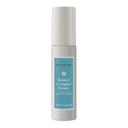
Naturium publishes no retinol percentage for the Retinol Complex Serum, and no bakuchiol percentage either. That is normal for this category rather than a Naturium failing — CeraVe, RoC, Neutrogena, Olay and La Roche-Posay are all silent too, and nothing requires a cosmetic brand to speak. Even a complete ingredient list would not settle it: the federal rule declares cosmetic ingredients in descending order of predominance only above one percent, and everything at one percent or less may be listed without respect to order. Every cosmetic retinoid sits below that line. Position proves presence, never amount.
The practical cost is worth stating exactly, because “they should tell us” is not an argument. Starting at an unknown dose means you cannot escalate deliberately. If the serum is too much, you do not know whether to drop a rung or change the base. If it has done nothing in six months, you do not know whether to go up or to conclude the format is wrong. A published figure is the only thing that turns that into a decision, which is why the budget pick on this page is a bare 0.5% in squalane despite being the least sophisticated formula here.
The swap most people miss: Naturium’s own retinal
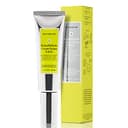
If what bothers you is the missing number, the shortest route to a stated dose without leaving the brand is Naturium’s Retinaldehyde Cream Serum 0.10%. It is the one product in the range that prints a figure, and it prints a useful one: a stated 0.10% retinal, sold alongside a 0.05% and a 0.15% in the same line, which makes the range function as a ladder in the way The Ordinary’s retinols do.
Two honest notes. It is a different molecule— retinaldehyde is one oxidation step from retinoic acid where retinol is two, so you are not swapping strength-for-strength, and a 0.10% retinal is not a 0.10% retinol. The published tolerance work is reassuring rather than alarming here: it groups retinol and retinaldehyde together as low-irritation molecules and separates both from retinoic acid. And it costs noticeably more than the serum it is replacing, in a larger bottle listed for face, neck and chest, which is either good value or more product than you will finish depending on how much area you treat. Our retinal roundup places it against the rest of the format and its review goes through the size trade-off.
Which alternative keeps which property
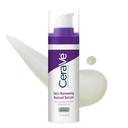
If you want the same thing with better-documented buffering: CeraVe Skin Renewing
The nearest match on price and intent, and the swap that trades one support strategy for another with more published history behind it. Where Naturium pairs its retinol with bakuchiol, CeraVe pairs it with niacinamide, hyaluronic acid and the brand’s ceramide complex — and niacinamide has its own literature on barrier function and tone, separately from the retinoid, which is what makes pairing them in one bottle the most practical kind of buffering there is.
It is also more explicit about fragrance. CeraVe’s own US product page carries the label claim “Free of Added Fragrance” with the stated reason “To avoid fragrance irritation”, and its published ingredient list contains no fragrance, parfum or essential oil. Naturium’s serum is fragrance-free too; CeraVe simply says so on the page. What this swap does not fix is the dose: CeraVe publishes no percentage either. Our head-to-head of exactly these two is the long version of this trade.
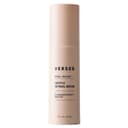
If you liked the encapsulation-plus-bakuchiol idea: Versed Press Restart
The closest match on paper, and the one to buy if what you wanted was the same combination from a brand that will show you the whole formula. Versed publishes its complete 41-item ingredient list in order on its own product page: water first, sunflower seed oil second, aloe third, retinol sixth, tocopherol seventh and eighth, bakuchiol ninth, then botanical extracts, shea butter, rosehip and sea-buckthorn oils, sodium hyaluronate and glycerin. No fragrance, parfum or individually declared fragrance material appears anywhere in it.
Three caveats we will not bury. It publishes no percentage, so retinol in position six still does not give you a dose. Its free-from claim is a count of exclusions (“parabens, silicones, sulfates, and 1,350+ ingredients”) rather than an explicit fragrance-free claim, even though no fragrance is in the list. And it contains no niacinamide and no squalane, which some coverage of it implies. Its full review reads the list line by line.
If you expected bakuchiol to be the active: read this first
A share of these searches come from people who bought the Naturium because of the bakuchiol and then found the marketing positions it as support. That reading is correct, and it is the right way round. The honest position on bakuchiol is that there is a reasonable head-to-head study finding it comparable to retinol and better tolerated — which is a real result and a good reason to welcome it in a formula — against retinol’s much larger published record. So treat it as help with tolerance rather than as a second retinoid, and do not pay a premium for it.
If you want bakuchiol as the only active, because you are pregnant, breastfeeding or simply done with retinoids, that is a different purchase and a different page: our bakuchiol comparison sets out what the evidence supports, and our pregnancy guide is the one to read before you buy anything in this category.
If the Naturium still stung: PURITO Retinol + Retinal
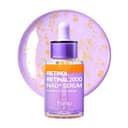
Naturium’s serum is already one of the gentler encapsulated retinols, so if it was still too much, the lever to pull is the formula’s whole intent rather than more soothing extras. PURITO’s serum pairs retinol with retinaldehyde instead of pushing either hard, from a brand built around minimal low-irritation formulas, at a lower price than the Naturium.
The caveat is the biggest one on the page: PURITO publishes neitherfigure, and “for sensitive skin” is positioning rather than a guarantee. Patch-test it. If it is the ceramides specifically you want, the CeraVe above keeps those; if the retinoid dose itself needs to come down, our sensitive-skin roundup ranks on that directly and our beginner roundup starts lower still.
If you want the body lotion: Gold Bond Age Renew
The autocomplete asks for this one by name, and it is a genuinely different question from the serum. Naturium’s Skin-Renewing Retinol Body Lotion is a shea-butter lotion in a size that covers arms and legs without rationing, and its own registry entry carries a stock caveat: availability has been thinner than the rest of the category, which is exactly the circumstance that sends people looking.
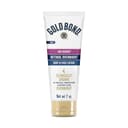
Gold Bond’s Age Renew is the cheapest sensible replacement and is better built than its price suggests. The brand’s own published 45-ingredient list puts niacinamide seventh and retinol eighteenth, with an emollient stack of shea butter, jojoba esters, squalene and phytosterols, followed by sodium ascorbate, palmitoyl hexapeptide-12 — the named retinol-and-peptide complex — and ceramide NG. It is fragrance-free, hypoallergenic and dermatologist-tested per the brand page, and labeled for face as well as body.
Two things to be clear about. Retinol in position eighteen only places it in the sub-one-percent group, which is true of every cosmetic retinoid, so that tells you nothing about dose. And a dual-purpose formula is dosed for the more delicate application: read it as a gentle body treatment, not as a strong one, and not as a replacement for a face retinol. If you want more options, our body lotion roundup ranks the whole format and our review of the original explains what the Naturium does better.
What none of these alternatives gives you
Encapsulated retinol plus bakuchiol, fragrance-free, at that price. That specific package is the Naturium serum’s own thing. Versed matches the combination and charges a little less but publishes an exclusions count instead of a fragrance-free claim; CeraVe matches the price and the fragrance claim but substitutes ceramides; The Ordinary substitutes nothing at all. If the package is why you bought it, the honest recommendation is to keep buying it.
A published retinol percentage, from five of the six swaps.Only the budget pick fixes that for retinol, and only Naturium’s own retinal fixes it by changing molecule. Most “dupe” lists for this product quietly swap one undisclosed dose for another, and it is worth knowing that is what is happening.
A trial of its own. Neither the original nor any alternative here has one, and no cosmetic retinol does. The record the category borrows from is prescription tretinoin: collagen I formation up roughly 80% on ten to twelve months of daily 0.1% tretinoin against a 14% fall on vehicle, with the improvement curve plateauing at around ten months. No cosmetic retinol inherits those numbers, at any price, and anyone who tells you a bottle has been tested in-house for four weeks is telling you a story.
One note on encapsulation, since three picks here use it
Wrapping retinol in a carrier addresses two measured problems. The instability is real and quantified: a validated study of sixteen retinoid derivatives across twelve commercial cosmetics found losses of 0% to 80% after six months at 25 °C and 40% to 100% at 40 °C, with light worse than heat, and some products testing below their declared content. Slower release also tends to lower irritation for a given amount of active.
What encapsulation is not is a strength claim. It describes how the retinol is delivered, not how much there is, and it cannot be compared across brands because none of them publishes the carrier chemistry or the dose. Our encapsulated retinol roundup covers the format across the site, including the sealed single-dose capsules that attack the stability problem structurally rather than chemically.
How to switch without a setback
Match frequency, not formulas. Whatever you move to, start at the number of nights per week you were already using and hold there for a month before changing anything — you are moving from an unknown dose to an unknown dose in most of these cases, so the only safe assumption is that the new one might be stronger. Moisturizer over the top, sunscreen every morning, nothing else new in the same fortnight.
If you are moving to the budget pick specifically, note that you are also moving to a bare formula: there is no niacinamide, no ceramide and no bakuchiol in the bottle, so the cushioning has to come from your moisturizer. That is the entire difference between a stated dose and a buffered one, and it is a choice rather than an upgrade. Our routine guide has the order of operations and our mistakes guide covers the switches that cost people months.