Compare
The retinol decisions people actually get stuck on — retinol versus retinal, versus prescription tretinoin, versus bakuchiol — sorted out in a scannable table plus plain English.
The vitamin-A aisle is a maze of near-identical words — retinol, retinal, retinaldehyde, retinoid, retinoic acid, tretinoin — and the marketing does nothing to untangle them. The confusion matters, because it’s the difference between a gentle over-the-counter serum and a prescription drug, and between a product with decades of clinical evidence and one with a promising handful of studies. This hub sorts out the comparisons people actually get stuck on, each as a scannable table first and then the plain-English version underneath.
The one idea that makes the whole family click is conversion. Your skin can only use one form of vitamin A directly — retinoic acid, which is what prescription tretinoin already is. Everything sold over the counter is a precursor that your skin has to convert into retinoic acid first, and every conversion step loses a little potency in exchange for gentleness. Retinaldehyde (retinal) is one step away and works faster; retinol is two steps away and is the gentle, slow, accessible standard; the esters are further still. More steps means milder and slower, not weaker in the end — just a longer runway.
That framing answers most of the questions below. Retinol vs retinal is the “same idea, one step faster” choice for people who tolerate retinol and want more without a prescription. Retinol vs tretinoin is the over-the-counter-versus-prescription decision: when a drugstore retinol is genuinely enough, and when it’s worth seeing a doctor. And retinol vs bakuchiolweighs the popular plant “alternative” — which has one good head-to-head study behind it — against the far deeper evidence base for retinol, and explains when bakuchiol is the smarter pick anyway (pregnancy, extreme sensitivity, rosacea-prone skin).
We compare these on the evidence, not on brand loyalty, and we cite the dermatology and peer-reviewed sources rather than asserting differences on our own authority. None of it is medical advice — a prescription retinoid in particular should be started with a doctor, and retinoids in any form are generally avoided in pregnancy. If you already know which molecule you want and just need a product, jump to the best retinol roundups; if you’re starting from scratch, the strength & percentage guide pairs naturally with everything here.
Everything in Compare
Retinol vs Retinal (Retinaldehyde)
One conversion step apart: why retinal works faster than retinol, and who each one suits.
Retinol vs Tretinoin
Same family, very different strength and status. When over-the-counter retinol is enough and when to see a doctor.
Retinol vs Bakuchiol
The plant 'alternative' to retinol — what the evidence actually says, and when bakuchiol is the smarter choice.
Retinol vs Retinoid
The question contains a category error — retinol IS a retinoid. The whole vitamin A family mapped, from retinyl esters up to tretinoin.
Retinol vs Vitamin C
Not rivals — a night active and a morning active solving different problems. What each is good at, and which to buy first.
Retinol vs Niacinamide
The friendliest answer on the site: these two are partners. Niacinamide supports the barrier retinol stresses.
The Ordinary vs CeraVe Retinol
The two budget retinols everyone weighs against each other — one states its strength, the other buffers you with ceramides.
Our top pick
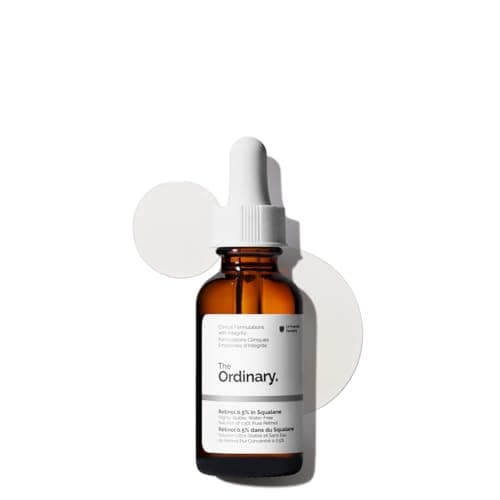
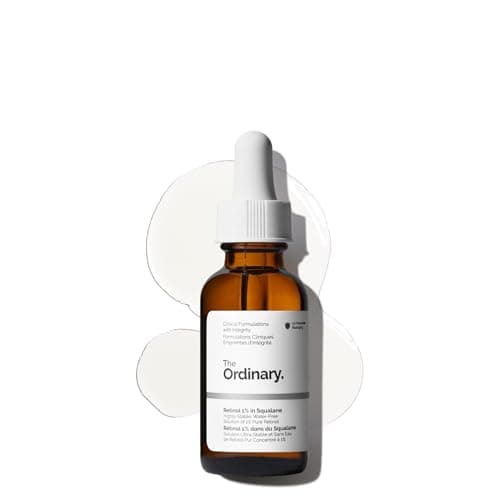
The Ordinary Retinol 0.5% in Squalane
$9.30 · View on AmazonPrice as of October 17, 2026. #ad How we’re funded
Retinol Alternatives
Pregnant, reactive, or done with the flaking? The substitutes ranked by evidence — including the one that beats every serum on the page.
Retinol vs Adapalene (Differin)
A cosmetic versus a regulated drug you can buy off the shelf. Which one your actual complaint calls for — and why the answer is usually clearer than people expect.
Our top pick
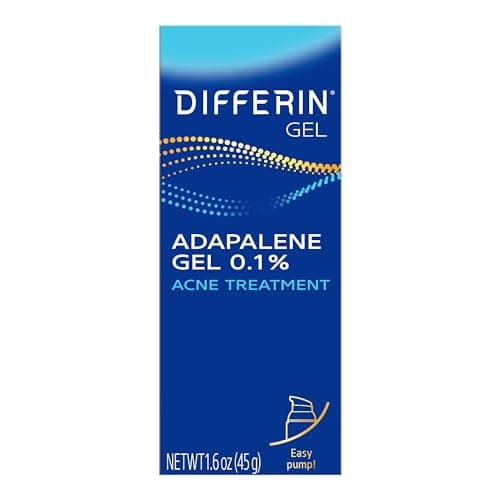
Differin Adapalene Gel 0.1% Acne Treatment (45 g pump)
$23.97 · View on AmazonPrice as of October 17, 2026. #ad How we’re funded
Retinol vs Glycolic Acid
One works on the surface tonight, the other rebuilds underneath over months. What each actually changes, why stacking them is the classic barrier mistake, and which to buy first.
Retinol vs Peptides
Peptides are marketed as the gentle alternative to retinol. The evidence is real but much thinner — here is what each is genuinely good for, and why they belong in the same routine.
RoC vs Neutrogena Retinol
The two drugstore retinol lines people cross-shop in the same aisle. Neither states a strength, so the decision comes down to base, fragrance and what you want it to replace.
Our top pick
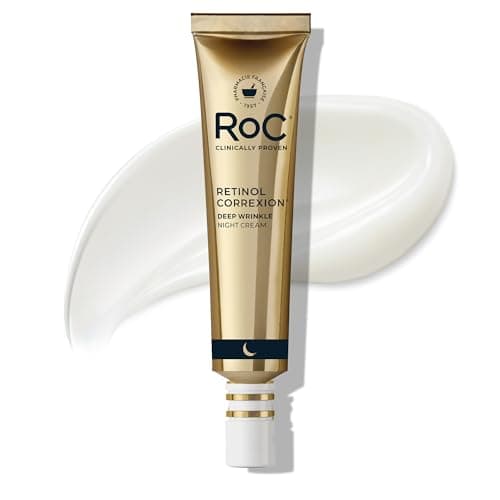
RoC Retinol Correxion Deep Wrinkle Night Cream
Retinol vs Granactive Retinoid
One molecule has fifty years of published work behind it; the other has a much better tolerability reputation and a fraction of the evidence. And the 2% on the bottle is not what people think it is.
Our top pick
The Ordinary Retinol 0.5% in Squalane
$9.30 · View on AmazonPrice as of October 17, 2026. #ad How we’re funded
Retinol Serum vs Cream
The format is not the strength — but it changes how much retinoid reaches your skin, how many steps your routine has, and whether the label tells you anything at all.
Our top pick
The Ordinary Retinol 0.5% in Squalane
$9.30 · View on AmazonPrice as of October 17, 2026. #ad How we’re funded
Retinol vs Azelaic Acid
A systematic review found azelaic acid beat vehicle for rosacea, acne and melasma — and found no eligible trials at all for skin aging. That one line decides most of this comparison.
Retinol vs Salicylic Acid
One gets inside the pore and clears what is already there. The other changes how fast the pore clogs again. Consecutive halves of the same problem, which makes this a sequencing question.
Retinol vs Hyaluronic Acid
Not a real choice: one is a treatment that changes skin over months, the other is a humectant that makes it look better tonight. Plus the layering mistake that makes hyaluronic acid backfire.
CeraVe vs La Roche-Posay Retinol
Two pharmacy-aisle brands from the same parent company, neither of which prints a retinol percentage, at prices that are nowhere near each other. What the premium actually buys.
Our top pick
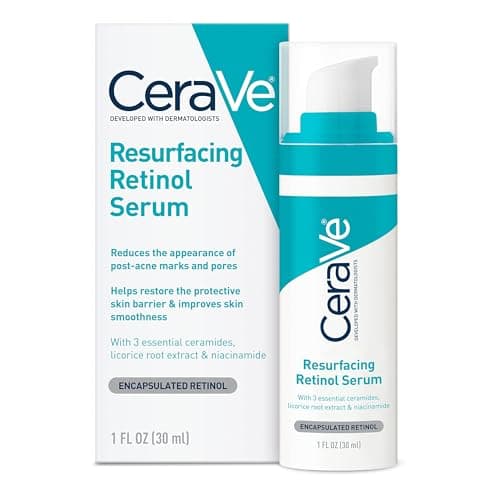
CeraVe Resurfacing Retinol Serum
CeraVe vs Neutrogena Retinol
The two drugstore retinols most often picked up in the same aisle. Encapsulated retinol with ceramides against an 'accelerated' retinol blend — neither publishes a number, and they fail differently.
Our top pick
CeraVe Resurfacing Retinol Serum
The Ordinary vs La Roche-Posay Retinol
One prints the percentage and leaves the formula bare; the other prints nothing and buffers it heavily. At a 3x price gap the decision is about who manages your tolerance — you, or the formula.
Our top pick
The Ordinary Retinol 0.5% in Squalane
$9.30 · View on AmazonPrice as of October 17, 2026. #ad How we’re funded
Medik8 vs The Ordinary Retinal
Both publish their retinaldehyde percentage, and the numbers are twenty-fold apart in the opposite direction to the prices. Why 'Crystal Retinal 1' is not 1% of anything.
Our top pick
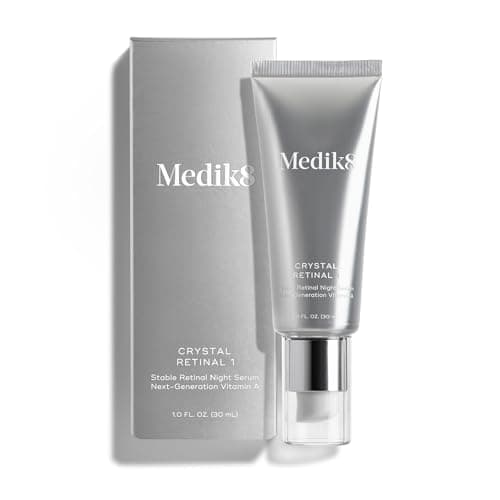
Medik8 Crystal Retinal 1 Night Serum
$56.00 · View on AmazonPrice as of October 17, 2026. #ad How we’re funded
Elizabeth Arden vs RoC Retinol Capsules
Same format, same 30-count, same undisclosed strength, at a two-and-a-half-fold price gap. One of them publishes its entire eight-ingredient formula.
Our top pick
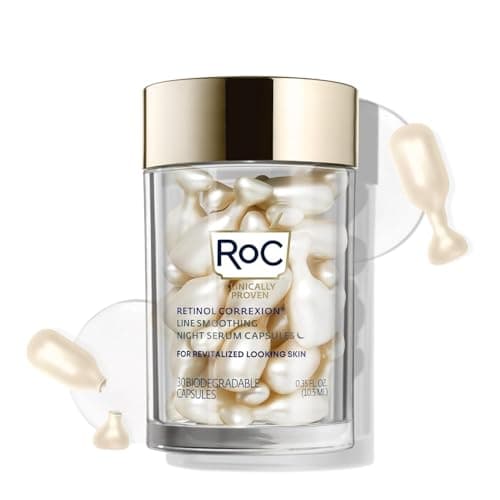
RoC Retinol Correxion Anti-Aging Wrinkle Night Serum Capsules (30 ct)
Retinol vs Retinyl Palmitate
Both are vitamin A, both get marketed as retinol, and only one of them is. The conversion steps between them, and how to tell which one is actually in your cream.
Our top pick
The Ordinary Retinol 0.5% in Squalane
$9.30 · View on AmazonPrice as of October 17, 2026. #ad How we’re funded
CeraVe vs RoC Retinol
Neither brand publishes a percentage, so the comparison comes down to the ingredient lists — and they disagree. One buffers the retinol with niacinamide and ceramides; the other stacks acids behind it and adds fragrance.
Our top pick
CeraVe Resurfacing Retinol Serum
Paula's Choice vs The Ordinary Retinol
The only head-to-head on this site where both brands print the number. Two stated 1% retinols, one about four times the price of the other — so the question is what the difference buys, and the answer is specific.
Our top pick
The Ordinary Retinol 1% in Squalane
$11.90 · View on AmazonPrice as of October 17, 2026. #ad How we’re funded
Retinol vs Benzoyl Peroxide
Not the same job, and for active acne not the same league: one kills the bacteria in a pore, the other changes how the pore fills in the first place. Which to buy for which kind of breakout — and why the honest answer is often neither on its own.
Our top pick
Differin Adapalene Gel 0.1% Acne Treatment (45 g pump)
$23.97 · View on AmazonPrice as of October 17, 2026. #ad How we’re funded
Retinol vs Lactic Acid
The gentlest acid against the best-evidenced active. Lactic acid works on the layer you can already see; a retinoid works on the one making it. For rough body skin, keratosis pilaris and texture, the choice is more decided than people expect.
Our top pick
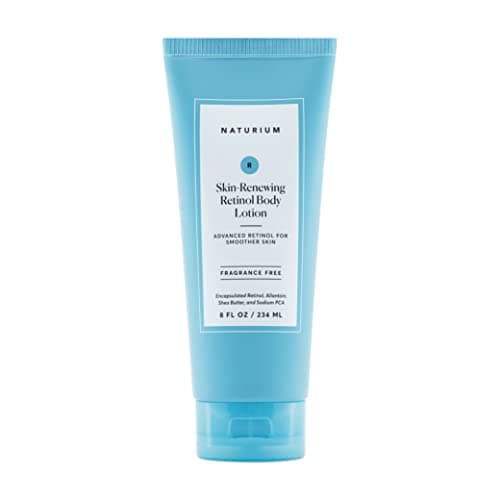
Naturium Skin-Renewing Retinol Body Lotion
$25.99 · View on AmazonPrice as of October 17, 2026. #ad How we’re funded
Retinol vs Mandelic Acid
The big, slow, oil-tolerant AHA against the best-evidenced active in skincare. Mandelic acid has a real structural reason to be gentler and an evidence file of two records — and there is still one person who should buy it first.
Our top pick
CeraVe Resurfacing Retinol Serum
Medik8 vs Naturium Retinal
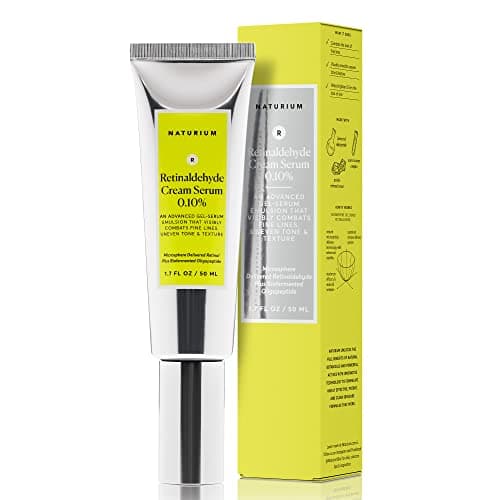
The rare comparison where both brands print the number — and the numbers are ten times apart. Crystal Retinal 1 is a stated 0.01%; Naturium's cream serum is a stated 0.10%, in a bigger bottle, for less money.
Our top pick
Naturium Retinaldehyde Cream Serum 0.10%
Naturium vs CeraVe Retinol
Two cheap encapsulated-retinol serums, and neither brand will tell you how much retinol is in the bottle. So the comparison is decided on what else is in the formula, what each one is sold to do, and which brand gives you a number at all.
Our top pick
CeraVe Resurfacing Retinol Serum