Retinol Room.

Medik8 vs The Ordinary Retinal

Both publish their retinaldehyde percentage, which almost nothing else on the shelf does — and the numbers are twenty-fold apart in the opposite direction to the prices. Why 'Crystal Retinal 1' is not 1% of anything, and which one you should actually start on.

By Stephen V.Last updated How we pick

Start on Medik8 Crystal Retinal 1 if you have never used retinal before. Start on The Ordinary Retinal 0.2% Emulsion if you already use a retinol comfortably and want to move up for the lowest possible price. Those two sentences are the whole verdict, and they are not the answer the prices imply.

Here is the fact that reorders this comparison. Both brands publish their retinaldehyde concentration — which is genuinely unusual, and both deserve credit for it. Medik8 Crystal Retinal 1 is 0.01% retinaldehyde. The Ordinary Retinal 0.2% Emulsion is 0.2%. That is a twenty-fold difference in stated strength, and the cheaper product is the stronger one by a very long way.

The confusion is caused by the name. Medik8 numbers its Crystal Retinal range 1, 3, 6, 10, 20 and 24, and publishes the matching percentages on its own range page: 0.01%, 0.03%, 0.06%, 0.1%, 0.2% and 0.24%. The number on the box is the rung, not the dose. “Crystal Retinal 1” is not 1%, and it is not comparable to a 1% retinol either.

Read against that scale, The Ordinary’s 0.2% retinal is the equivalent of Medik8’s rung 20 — the second-highest rung in the entire range — at a fraction of the price of rung 1. It is not a cheap starter. It is a cheap ceiling, and buying it as a first retinal is the single most common mistake in this category.

How this is funded: we earn a commission if you buy through our links, at no extra cost to you. It never changes which product we recommend, and we’ll tell you when we’d skip one. Full disclosure.

Quick picks

Ranked on formulation, stated concentration and buyer fit. Select a row to jump to the full write-up. We have not tested these products — here is exactly what we do instead.

#ProductBest forPrice
1
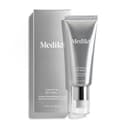
Medik8 Crystal Retinal 1 Night Serum

Medik8 Crystal Retinal 1 Night Serum

The entry rung of the best-known retinal ladder in skincare — and, unlike most of the shelf, one that publishes the figure behind every rung. Medik8 numbers the range 1, 3, 6, 10, 20 and 24 and prints the matching percentage (0.01% to 0.24%), which is a structurally honest way to sell a potent active. You just pay premium prices at every rung.

Best first retinal
$56.00 · View on Amazon

Price as of October 5, 2026. #ad How we’re funded

2
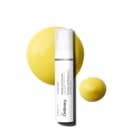
The Ordinary Retinal 0.2% Emulsion

The Ordinary Retinal 0.2% Emulsion

The cheapest way into retinaldehyde by a wide margin, and it states its strength — a labeled 0.2% retinal in a light emulsion. Retinal is a genuinely strong rung, so the low price should not be read as a low commitment.

Best value, if you are already experienced
$13.41 · View on Amazon

$14.9010% off

Price as of October 5, 2026. #ad How we’re funded

3
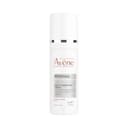
Avene Retrinal 0.05% Anti-Aging Retinaldehyde Cream

Avene Retrinal 0.05% Anti-Aging Retinaldehyde Cream

The gentlest sensible way into retinal: a stated 0.05% in a cream base from a French pharmacy brand built around reactive skin. If retinol has irritated you and you still want to move up the family rather than down, this is the entry point.

Best middle rung for sensitive skin
$49.50 · View on Amazon

Price as of October 5, 2026. #ad How we’re funded

4
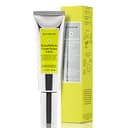
Naturium Retinaldehyde Cream Serum 0.10%

Naturium Retinaldehyde Cream Serum 0.10%

A stated 0.10% retinal in a cream-serum base, sold in a 1.7 oz size explicitly for face, neck and chest. That size-and-scope combination is unusual and genuinely useful: most retinals come in 1 oz bottles you end up rationing for the face alone.

Best for face, neck and chest
$31.99 · View on Amazon

Price as of October 5, 2026. #ad How we’re funded

The picks in full

#1Best first retinal

Medik8 Crystal Retinal 1 Night Serum

The entry rung of the best-known retinal ladder in skincare — and, unlike most of the shelf, one that publishes the figure behind every rung. Medik8 numbers the range 1, 3, 6, 10, 20 and 24 and prints the matching percentage (0.01% to 0.24%), which is a structurally honest way to sell a potent active. You just pay premium prices at every rung.

Strengths

  • Publishes an exact 0.01% retinaldehyde, and a stated figure for every rung above it
  • Part of an explicit 1 / 3 / 6 / 10 / 20 / 24 ladder, so progression is planned rather than improvised
  • Hyaluronic acid and vitamin E in the base, per the listing

Trade-offs

  • Premium pricing, and the ladder above it costs more at every rung
  • The rung number is not the percentage — 1 means 0.01%, so it cannot be read against a retinol figure directly
Key activeRetinaldehyde (retinal)
Stated concentration0.01%
FormatNight serum
Fragrance-freeNot published
Best forSensitive, Normal, Beginner-to-retinal

Formulation note. Sold as Crystal Retinal 1, the lowest rung of a numbered range that also includes 3, 6, 10, 20 and 24. The number is the rung, not the dose — but Medik8 publishes the dose behind each one on its own Crystal Retinal range page (read 2026-09-01), where rung 1 is stated as 0.01% twin-encapsulated retinaldehyde and rung 24 as 0.24%. The base carries hyaluronic acid and vitamin E, per the listing.

Ingredients and claims read from the product listing, on August 11, 2026. “Not published” means the brand does not state that figure.

#2Best value, if you are already experienced

The Ordinary Retinal 0.2% Emulsion

The cheapest way into retinaldehyde by a wide margin, and it states its strength — a labeled 0.2% retinal in a light emulsion. Retinal is a genuinely strong rung, so the low price should not be read as a low commitment.

Strengths

  • States an exact 0.2% retinal, which most retinal products do not
  • Dramatically cheaper than every other retinal on this page
  • Light emulsion base layers easily under a moisturizer

Trade-offs

  • 0.2% retinal is a high rung, not a starter — it is not where a beginner should begin
  • Small 0.5 fl oz bottle, so it does not last as long as the price suggests
Key activeRetinaldehyde (retinal)
Stated concentration0.2%
FormatLight emulsion
Fragrance-freeNot published
Best forRetinol-experienced, Normal

Formulation note. Retinaldehyde sits one conversion step from retinoic acid, where retinol sits two. That is why a 0.2% retinal is not comparable to a 0.2% retinol — the numbers look similar and the potency is not.

Ingredients and claims read from the product listing, on August 11, 2026. “Not published” means the brand does not state that figure.

#3Best middle rung for sensitive skin

Avene Retrinal 0.05% Anti-Aging Retinaldehyde Cream

The gentlest sensible way into retinal: a stated 0.05% in a cream base from a French pharmacy brand built around reactive skin. If retinol has irritated you and you still want to move up the family rather than down, this is the entry point.

Strengths

  • States 0.05% retinal — a true entry rung, plainly labeled
  • Cream base from a brand whose whole positioning is reactive skin
  • A far more forgiving starting point than a 0.2% retinal

Trade-offs

  • Pharmacy pricing — several times the cost of a budget retinal
  • 0.05% is deliberately modest; you will likely want to step up in time
Key activeRetinaldehyde (retinal)
Stated concentration0.05%
FormatAnti-aging cream
Fragrance-freeNot published
Best forSensitive, Dry, Beginner-to-retinal

Formulation note. A stated 0.05% retinaldehyde in a cream rather than a serum, from Avene's thermal-spring-water range. The low stated figure is the point — retinal is potent enough that starting at the bottom of the ladder is the sensible move.

Ingredients and claims read from the product listing, on August 11, 2026. “Not published” means the brand does not state that figure.

#4Best for face, neck and chest

Naturium Retinaldehyde Cream Serum 0.10%

A stated 0.10% retinal in a cream-serum base, sold in a 1.7 oz size explicitly for face, neck and chest. That size-and-scope combination is unusual and genuinely useful: most retinals come in 1 oz bottles you end up rationing for the face alone.

Strengths

  • States 0.10% retinal — a mid rung you can actually place on the ladder
  • 1.7 oz is enough to cover neck and chest without rationing
  • Cream-serum texture is more cushioning than a thin emulsion

Trade-offs

  • Larger bottles take longer to finish, and retinal degrades once opened
  • Still a real retinoid dose over a large area — introduce it slowly
Key activeRetinaldehyde (retinal)
Stated concentration0.10%
FormatCream serum
Fragrance-freeNot published
Best forNormal, Dry, Mature

Formulation note. A stated 0.10% retinaldehyde in a cream-serum base, listed for face, neck and chest. Sold alongside a 0.05% and a 0.15% in the same line, so the range functions as a ladder in the same way The Ordinary's retinols do.

Ingredients and claims read from the product listing, on August 11, 2026. “Not published” means the brand does not state that figure.

What retinal is, and why the rung matters more here

Retinaldehyde sits one conversion step from retinoic acid, the form that actually acts on skin. Retinol sits two. That single step is why a retinal and a retinol at the same printed percentage are not equivalent products, and why getting the rung wrong on a retinal is more punishing than getting it wrong on a retinol.

It also means the published figure carries more information than usual. On a retinol you are a step further from the active and a formulation can blunt or sharpen the effect considerably. On a retinal the number is closer to the thing you care about, which is precisely why a twenty-fold gap between two products is a real twenty-fold gap and not a labeling artifact. Our retinol vs retinal comparison works the chemistry through properly.

The two products, side by side

Medik8 Crystal Retinal 1

A 30 ml night serum at 0.01% retinaldehyde, with hyaluronic acid and vitamin E in the base per the listing. What you are buying is not potency — it is the lowest genuinely-labeled rung available, inside a numbered range you can climb on purpose. If you intend to use a retinoid for a decade, starting on a planned ladder rather than an improvised one is a defensible reason to pay more, and Medik8 publishing every figure in that ladder is the reason we rate it as the starter here.

The honest cost is the price at every rung, not just this one. The ladder is premium all the way up, and the step from 1 to 3 to 6 is another purchase each time.

The Ordinary Retinal 0.2% Emulsion

A 15 ml light emulsion at 0.2% retinaldehyde — the cheapest route into retinal by a wide margin, and one of very few products in the whole category that prints its figure. The base layers easily under a moisturizer. The two things to hold in mind are that 0.2% retinal is a high rung and not a starting point, and that 15 ml is a small bottle, so the price per use is less dramatic than the price per bottle.

Cost per millilitre, which is the comparison people actually want

Work it out from the live prices in the table above rather than from the shelf price: Medik8 is 30 ml, The Ordinary is 15 ml, so the bottle sizes differ by a factor of two before the prices are even considered. The Ordinary is still substantially cheaper per millilitre at every price we have seen. It is also twenty times the stated strength, which is the reason the saving is not the headline.

Which should you buy?

If you have never used a retinoid at all

Neither. Start on a retinol, establish that your skin tolerates a vitamin A derivative, and come back. The beginner roundup is the right page for a first bottle, and when to start retinol covers the question underneath it.

If you use retinol comfortably and want to step up

The Ordinary, and treat it as the step up it is: two nights a week for the first month, a pea for the whole face, moisturizer over the top. Our guide to stepping up sets out the tests that say you are ready, and the published escalation logic behind them.

If you have reacted badly to retinoids before

Medik8 rung 1, or the Avene Retrinal 0.05% in the table above if you would rather have a cream than a serum. Both are low, both print their figure, and both give you somewhere to go afterwards. The sensitive skin roundup ranks on irritation risk rather than strength.

If you want one retinal for face, neck and chest

Neither — 30 ml and 15 ml are both face-sized. The Naturium Retinaldehyde 0.10% in the table is 50 ml and explicitly sold for the larger area, and our neck and chest roundup explains why size outranks strength once you go below the jaw.

Storage matters more with retinal

Retinoids degrade with light and heat, and the published stability work on commercial retinoid cosmetics found losses ranging from none at all to total over six months at room temperature, with light the worse of the two stressors. That is a reason to keep either of these closed, out of the bathroom window and away from the shower, and a reason not to buy the biggest bottle you can find on the theory that it will last.

It is also why neither of these numbers describes what is in the bottle in month eight. The figure is what was formulated, not what survives your bathroom. Our guide to retinol shelf life goes through the packaging hierarchy.

The verdict

Medik8 for your first retinal, The Ordinary for your fourth. The brands are not competing for the same buyer, whatever the search query implies: one sells the bottom of a published ladder at a premium, the other sells near the top of that same ladder for the price of lunch. The mistake to avoid is reading “1” as stronger than “0.2%” because it costs four times as much.
Frequently asked questions

Is Medik8 Crystal Retinal 1 the same as 1% retinal?

No, and this is the most consequential misunderstanding in the category. Medik8 numbers its range 1, 3, 6, 10, 20 and 24 as rungs, and publishes the percentages behind them on its own range page: rung 1 is 0.01% retinaldehyde and rung 24 is 0.24%. Crystal Retinal 1 is 0.01%, which is the lowest rung, not a 1% product.

Which is stronger, Medik8 or The Ordinary retinal?

The Ordinary, by twenty times on the published figures — 0.2% against Medik8 rung 1's 0.01%. On Medik8's own scale, The Ordinary's 0.2% is the equivalent of Crystal Retinal 20, the second-highest rung in the range. The cheaper product is substantially the stronger one.

Can a beginner start on The Ordinary Retinal 0.2%?

We would not. 0.2% retinal is a high rung and retinal sits one conversion step from retinoic acid, so there is less margin for error than with a retinol. Establish tolerance on a retinol first, then move across. If you want to start on retinal specifically, Medik8 rung 1 or a 0.05% retinal cream is the honest starting point.

Why is The Ordinary's retinal so much cheaper?

Smaller bottle and a different pricing strategy. The Ordinary's is 15 ml against Medik8's 30 ml, so the gap in price per millilitre is half what the shelf price suggests — though The Ordinary is still clearly cheaper per ml. Nothing about the price difference implies anything about which product is stronger; both publish their figures, and the cheap one is higher.

Is it worth paying for the Medik8 ladder?

If you intend to escalate deliberately over years, there is a real argument for it: every rung publishes its percentage, so progression is planned rather than guessed. The cost is that every rung is premium-priced, and you buy a new bottle each time you move. If you would rather improvise with cheaper products and print your own schedule, the ladder is not worth the premium.

Can I switch straight from The Ordinary retinol 0.5% to its retinal 0.2%?

Not at the same frequency. The percentages look close and the potency is not — retinal is one conversion step from retinoic acid where retinol is two. Treat it as a new product: two nights a week for a month, then reassess.

Do either of these publish a clinical trial on the finished product?

Not one we can cite. The evidence for retinaldehyde as an ingredient is published, and both brands publish their concentration, which is more than most. Neither supplies a controlled trial on the bottle you are buying, and we have not tested either — the ranking here is a formulation and fit argument, stated as such.

Sources

  • Tolerance profile of retinol, retinaldehyde and retinoic acid under maximized and long-term clinical conditions (PubMed) — Retinol and retinaldehyde share a low irritation potential; retinoic acid (tretinoin) is more irritating (accessed July 17, 2026)
  • American Academy of Dermatology — Retinoid or retinol? — AAD on the difference between prescription retinoids and OTC retinol (accessed July 17, 2026)
  • Draelos ZD, Peterson RS — Newly formulated retinol serums vs tretinoin cream in escalating doses (J Drugs Dermatol, 2020) — Twelve-week double-blind study in 45 photoaged women aged 35 to 65 (Fitzpatrick I-IV) using a STEP-UP protocol: retinol serum escalated 0.25% then 0.5% then 1.0%, or tretinoin cream 0.025% then 0.05% then 0.1%, each with a moisturizer. The two were at parity on investigator and subject assessment and on TEWL at week 12; retinol improved visual smoothness more than tretinoin at week 4 (P = 0.031) and skin dryness significantly (P < 0.001); week-12 punch biopsies showed newly formed collagen and GREATER epidermal thickening in the retinol group. Industry-adjacent cosmetic research, not an independent trial — cited for the escalation method and the direction of the histology (accessed September 18, 2026)
  • Temova Rakuša Ž, Škufca P, Kristl A, Roškar R — Retinoid stability and degradation kinetics in commercial cosmetic products (J Cosmet Dermatol, 2021) — Validated HPLC-UV study of 16 retinoid derivatives (retinol, retinyl palmitate, beta-carotene and hydroxypinacolone retinoate) in 12 commercial cosmetics over 6 months of long-term and accelerated stability testing plus a one-week photostability study. Retinoid degradation followed first-order kinetics; the products showed a 0%-80% decline after 6 months at 25 °C and a 40%-100% decline at 40 °C; 'light degradation was more pronounced than temperature-induced degradation'; instabilities were 'formulation-dependent and associated with lower contents than declared in some cosmetics'. Cited for the size of the stability problem a sealed single-dose format is built to solve — the study did not test this product (accessed September 19, 2026)
  • U.S. FDA — 21 CFR 701.3, Designation of ingredients (eCFR) — The federal rule governing how a cosmetic ingredient list is ordered. Paragraph (a): 'The label on each package of a cosmetic shall bear a declaration of the name of each ingredient in descending order of predominance, except that fragrance or flavor may be listed as fragrance or flavor.' Paragraph (f) allows an alternative: ingredients 'present at a concentration greater than 1 percent, in descending order of predominance', followed by ingredients 'present at a concentration of not more than 1 percent, without respect to order of predominance', followed by color additives 'without respect to order of predominance'. Cited for the exact limit of what an ingredient's POSITION can tell a reader: late placement indicates the 1-percent-or-less group, but within that group the order carries no information about quantity (accessed September 26, 2026)
  • Human Skin Aging and the Anti-Aging Properties of Retinol (PubMed) — Review of topical retinol's effect on collagen and photoaging (accessed July 17, 2026)

Keep reading