Three molecules, in the order your skin converts them
Everything on this page is vitamin A. What differs is how many steps the skin has to take before the molecule becomes retinoic acid, the form that actually binds the receptor.
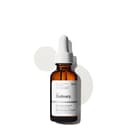
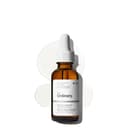
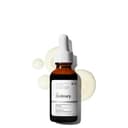
- Retinol(the three Squalane serums, 0.2% / 0.5% / 1%) — two conversion steps. The molecule with the deepest published record behind the class, and the one every “retinoid works” claim on this site ultimately rests on.
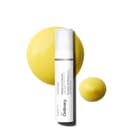
- Retinal, or retinaldehyde (the 0.2% Emulsion) — one conversion step. Its own indexed record is genuinely smaller than the tretinoin literature, which is why we treat it as a higher rung rather than a different species of product.
- Granactive Retinoid(the 2% Emulsion) — a retinoic acid ester, hydroxypinacolone retinoate. Widely reported as gentler, with far less published evidence than retinol; the one paper we cite on it is a combination study rather than a head-to-head against retinol at parity.
The practical consequence is the single most useful sentence on this page: you cannot compare these three on their printed percentages.A 0.2% retinal is not “weaker than” a 0.5% retinol, and nobody — including The Ordinary — has published a conversion table that would let you line them up. Our retinol vs retinal comparison walks the conversion chain properly, and retinol vs Granactive Retinoid does the same for the ester.
The bottle sizes change the arithmetic
Both the 0.5% and the 1% retinol come in 30 ml. The Retinal 0.2% Emulsion comes in 15 ml— half the volume. On the live prices showing on the cards above, that gap is the difference between the retinal looking cheap and being cheap: divide each price by its size before you decide anything. Our value roundup runs that arithmetic as a method, because we will not print a number that changes without us.
The base is the brand’s other real decision
The three retinols are suspended in squalane, with no water phase at all. That matters in two ways. An anhydrous base is lightly occlusive, which cushions the dryness a retinoid causes — and there is no water for a pH to misbehave in, which is why these serums do not carry the packaging and formulation fuss that water-based actives do. The trade-off is a slick finish that some people dislike layered over facial oils.
The Retinal 0.2% and the Granactive Retinoid 2% are light emulsions— thinner on the skin, easier under a moisturizer, and water-containing. Fragrance is the variable that decides many of this site’s other comparisons: it is among the commonest causes of allergic contact dermatitis, and when a reaction appears two days later it is the retinoid that gets blamed. Three of these four are fragrance-free. The exception is the Retinal 0.2% Emulsion, and the reason is worth knowing: The Ordinary publishes a free-from list for it — alcohol-free, oil-free, silicone-free, vegan, gluten-free, cruelty-free — and fragrance-free is not on it (brand page, read October 27, 2026). So we print “Not published” rather than assume, and if you have ever reacted to a fragranced product, that is the one rung of this ladder to patch-test first.
The climbing order, which is what the ladder is for
- Never used a retinoid: start at the 0.2% retinol, two nights a week, moisturizer over the top. See our beginner picks.
- Comfortable at 0.2% most nights: move to the 0.5%. This is where most people should settle for a long time — the published improvement curve for a retinoid runs for about ten months before it flattens, and the strength you hold for those ten months beats the strength you abandon in week three.
- Comfortable at 0.5% nightly and want more: either the 1% retinol (same molecule, same base, cheapest way to a stated high dose) or the 0.2% retinal (new molecule, one step closer, smaller bottle). Pick the 1% if you want the cheaper route and the 0.2% retinal if you want the faster-converting one; do not start both.
- Plain retinol irritates you at any rung: the Granactive Retinoid 2%, with eyes open about the thinner evidence base.
Whichever rung you move to, drop back to two nights a week for a fortnight when you get there. Tolerance is built per product, not banked once. Our step-up guide is the detailed version, and what happens when you stop using retinol covers the reverse case, because a break resets more than people expect.
Two things The Ordinary does not publish
Stability data for its own formulas.The validated study of 16 retinoid derivatives across 12 commercial cosmetics found degradation ranging from none to total over six months at room temperature, worse at 40 °C, with light doing more damage than heat. The Ordinary sells these in glass dropper bottles, which is a less air-restrictive arrangement than a sealed tube — a structural observation, not a measured result, since neither this brand nor its rivals publish their own numbers. Keep them in a drawer, finish them in a few months, and do not buy three at once.
A trial of any of these four products.Every efficacy expectation on this page comes from the retinoid literature in general — the double-blind histology showing epidermal thickening, stratum-corneum compaction and new papillary-dermis collagen peaking at around ten months, and the controlled trial where collagen I formation rose 80% on daily tretinoin against a 14% fall on vehicle. Those were prescription tretinoin at doses no cosmetic retinol carries. Anyone telling you one of these bottles “outperformed” another is describing a study that does not exist.
What this page does not recommend
Running two of them at once. Alternating a retinol and a retinal gives you no published advantage and makes any reaction impossible to attribute. One product, three months, then judge it.
The retinal as a first retinoid. It is sold as high-strength by the brand itself, and the 0.2% on the label invites exactly the wrong comparison with the 0.2% retinol. If you are new, the number you want is the one in the squalane bottle.
Reading “2%” as strength.The Granactive Retinoid’s 2% is the complex, not the dose. It is the most misread figure in this brand’s whole catalogue.