The core difference
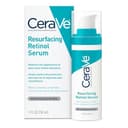
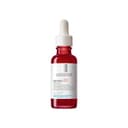
Both brands made the same decision about transparency and the opposite decision about purpose. Neither states a percentage. But CeraVe built a product to fix something specific, and La Roche-Posay built one to be tolerable while doing the general retinoid job.
Retinol form: encapsulated vs pure
CeraVe uses encapsulated retinol. The intent of encapsulation is slower release and better stability, which is a tolerability play — you are meant to get the active delivered gradually rather than all at once. La Roche-Posay uses pure retinol and buffers it with other ingredients instead.
Neither approach is inherently better, and there is a caveat worth stating plainly: “encapsulated” is not a regulated term and covers several genuinely different technologies. Our encapsulated retinol roundup unpicks what the word actually covers.
The supporting cast
CeraVe brings three essential ceramides, niacinamide and licorice root extract. The ceramide payload is the brand’s whole identity and it is the reason the serum stays comfortable on skin that reacts to things.
La Roche-Posay brings niacinamide and hyaluronic acid. Both have published literature behind them — niacinamide for barrier support and the appearance of aging skin, hyaluronic acid as a humectant. Neither brand states how much of either is present.
Base and finish
This is the difference you will actually notice. The CeraVe is a fluid lotion-serum that absorbs fast and leaves very little behind. The La Roche-Posay is a silkier, slightly more substantial lotion-serum that sits better on dry skin and will feel like too much to someone with a congested T-zone. On drier skin the LRP is more pleasant; on oilier skin the CeraVe is.
What each is sold to do
CeraVe’s own positioning is resurfacing: texture, post-acne marks, the appearance of pores. La Roche-Posay’s is lines and general anti-ageing. Both products contain a retinoid, so in practice both do some of both — but the formulation choices follow the positioning, and the positioning is the best guide available in the absence of a stated strength.
Which one to buy
Buy the CeraVe if your main complaint is texture, congestion or post-acne marks; if your skin is oily, combination or acne-prone; if you want the ceramide buffering; or if this is your first retinoid and you would rather find out cheaply whether you get on with the category at all. It is the better first purchase for most people, and it is the top pick on our oily-skin, combination-skin and sensitive-skin roundups for exactly these reasons.
Buy the La Roche-Posay if your skin is dry or mature, if fine lines rather than texture are the thing you want treated, if you have tried a bare retinol and found it too drying, or if you genuinely prefer the finish enough that it changes whether you use it nightly. Adherence is not a soft factor — a product you enjoy using is a product that gets used, and that is most of the outcome.
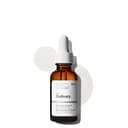
Buy neither if what you actually want is a stated strength. Both of these are unpublished-percentage products from brands that have never published one. If knowing the number matters to you, the fourth pick above prints an exact 0.5% on the label at a fraction of either price, and our strength guide explains what to do with that number once you have it.
The CeraVe siblings that muddy the comparison
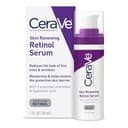
CeraVe sells two retinol serums, and people routinely buy the wrong one for this comparison. The Resurfacing serum is the encapsulated, ceramide-and-licorice formula aimed at marks. The Skin Renewing serum pairs retinol with niacinamide and hyaluronic acid — which is, on its published ingredient story, much closer to what La Roche-Posay is selling, at CeraVe’s price.
If your instinct after reading the section above was “I want the La Roche-Posay formula but not the La Roche-Posay price”, the Skin Renewing serum is the honest recommendation, and it is the third pick above for that reason. It is not identical — nobody can say it is, because neither brand publishes enough to make that claim — but it is the nearest thing on the shelf.
What this comparison cannot tell you
We have not tested these products, we do not own them, and no amount of reading listings substitutes for a clinical comparison that nobody has run. Specifically:
- Which is stronger. Unknowable. Neither publishes a concentration, and encapsulated versus pure retinol is not a strength axis in the first place — it is a delivery one.
- Which produces more collagen. No head-to-head trial of these two products exists. The retinoid evidence base is built on tretinoin and on generic retinol, not on branded cosmetic formulations.
- Whether the price gap tracks anything in the bottle. It may reflect the base, the actives, the packaging, the distribution channel or the brand. We are not going to pretend to know which.
What we can say is which product is built for which problem, and that is a considerably more useful basis for a decision than a made-up percentage.
Using either one
The routine is identical. Two nights a week for the first month, then three, then judge. A pea for the whole face, at night, on completely dry skin. Moisturizer after, or on both sides of it if you are dry. Sunscreen the next morning without exception. Our how to use retinol guide covers the five steps, and how much retinol to use covers the dose, which is where most people go wrong with both of these.
Do not run both at once. Two retinoids is not two results; it is one irritated face and no way of telling which product caused which outcome.