Where they genuinely differ
1. The base, and who has to do the buffering
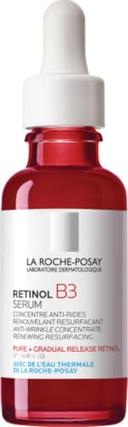
This is the most useful difference. La Roche-Posay puts niacinamide and hyaluronic acid in the serum itself, so the dryness-offsetting work is done inside the formula. Niacinamide has a published record in dermatology for barrier function and tone, and in a retinoid product its practical job is tolerability. If your skin flakes on plain retinol, buying the buffering pre-built is a real advantage over assembling it yourself.
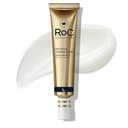
RoC’s Deep Wrinkle Night Cream takes the other route: the base is the buffering. It is an emollient night cream with RoC’s mineral complex, oil-free and non-comedogenic per its own listing, and it is doing moisturizer duty at the same time as treatment duty. For dry or mature skin that wants fewer steps, that is the more comfortable product. For oily or congested skin it is the wrong texture, and the serum or an encapsulated alternative is the better fit.
2. Fragrance — and this one is not close
The La Roche-Posay serum is fragrance-free. The RoC night cream is not. That is the single clearest point of separation between them, and it is the one we would weight most heavily if you have ever reacted to a skincare product. Fragrance is among the commonest causes of allergic contact dermatitis, and the reaction can take hours or days to appear — which is exactly the window in which people conclude the retinoid was too strong and quit. If you are starting a retinoid and something goes wrong, you want as few variables as possible.
It does not make the RoC cream a bad product; plenty of people use it for years without incident. It makes it a product you should not give to reactive skin as a first retinoid. Our fragrance-free roundup applies this filter across the whole category.
3. Format, and what each one replaces
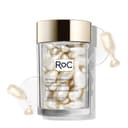
RoC is the only one of these two brands that sells the retinoid in more than one shape, which matters if you like the brand and the price but not the cream. Its night serum capsules are single-dose, sealed, and — unusually for the brand — formulated without fragrance, with an eight-item ingredient list the brand publishes in full. That makes the capsules, not the cream, the honest RoC answer for anyone who wants the serum format or needs to avoid fragrance. We have reviewed them separately.
La Roche-Posay has no equivalent format in this line. You buy the serum or you buy nothing.
4. Cost over the time a retinoid actually needs
The published long-term record on topical tretinoin found the effect on photoageing peaked at around ten months of daily use, with no further improvement out to twenty-two. So the relevant price is not the sticker, it is what ten months costs — and the RoC cream is roughly half the serum per unit, in a format that replaces your moisturizer as well. Live prices on both are on the buttons above; we do not print numbers in prose because they move.
That cost gap is the strongest argument for RoC and we are not going to argue it away. A cheaper product you keep using beats a better one you ration. The counter-argument is narrower: if fragrance or a thin barrier is likely to end the experiment in week three, the gap is irrelevant because you will not reach month ten either way.
What neither of them will tell you
Both products are sold on results and neither publishes the dose behind them. Worth being precise about what that does and does not mean.
It does not mean the retinol is token. Both are established formulations from large manufacturers with real formulation programs, and retinol’s own published record — collagen I formation around 56% lower in severely photodamaged skin, rising roughly 80% on ten to twelve months of daily prescription tretinoin — is the reason the molecule is in the bottle at all.
It does mean you cannot step up deliberately, cannot compare these two on potency, and cannot know whether a reaction means the dose was high or the base disagreed with you. The federal rule on cosmetic ingredient lists orders ingredients by predominance only above one percent, and every cosmetic retinoid sits below that line — so even a full ingredient list would not give you a dose. The honest position is that both are undisclosed, and anyone quoting you a percentage for either has invented it.
What we left out, and why
Any claim that one is stronger. There is no published head-to-head between these two products, no assay of either, and no stated percentage on either. A ranking on potency would be fabricated.
RoC’s eye products and the wider lines. Both brands sell more than the two products at issue here. The eye-area decision is a different one with different dosing, and it lives on our eye-cream roundup.
Any claim that we tested these. We own no units and ran no trial. The reasoning is from published formulas, listing claims and the evidence for the molecule, and the method is written out on our how we review page.
Which one to buy
Buy La Roche-Posay if your skin is sensitive, dry or reactive; if you have flaked out of a retinoid before; if fragrance is something you avoid on purpose; or if you want the buffering built in rather than layered. It is the lower risk product and the better first retinoid of the two.
Buy the RoC night cream if your skin is normal to dry and tolerant, you want one step instead of two, and the per-month cost is the deciding factor. It is the better value and, for the right skin, the easier habit.
Buy the RoC capsules instead if you want RoC’s price with a serum texture and no fragrance — the format that resolves the main objection to the cream.
Buy neither if a stated strength is what you are actually after. Both are good products with an undisclosed dose, and no amount of comparing them changes that.