Versed Press Restart Retinol Serum Review
An ounce of encapsulated retinol with bakuchiol beside it, sold specifically to people who have never used a retinoid or have failed at one. The brand publishes its entire 41-item formula, which is rare and genuinely useful — and it still does not publish the one number that would tell you how gentle the product actually is.
How this is funded: we earn a commission if you buy through our links, at no extra cost to you. It never changes which product we recommend, and we’ll tell you when we’d skip one. Full disclosure.
One of the few products that puts the delivery system in the product name rather than burying it: encapsulated retinol, with bakuchiol alongside, in a light face serum at a genuinely low price. A sensible gentle route in, provided you accept an unstated dose.
Strengths
- Encapsulation is stated on the listing, not implied by marketing adjectives
- Bakuchiol alongside the retinol for a softer on-ramp
- Light texture and a low price for a face serum
Trade-offs
- Retinol percentage is not published
- Bakuchiol's evidence base is far thinner than retinol's — treat it as tolerability, not potency
| Key active | Encapsulated retinol + bakuchiol |
|---|---|
| Stated concentration | Not published |
| Format | Light gel-cream serum |
| Fragrance-free | Yes |
| Best for | Cautious first-timers who want a gentle face serum |
Formulation note. Encapsulated retinol paired with bakuchiol in an oil-containing gel-cream the brand calls a serum. From the brand's own complete 41-item published list (read 2026-10-31): water first, sunflower seed oil SECOND, aloe third, retinol SIXTH, tocopherol and tocopheryl acetate seventh and eighth, bakuchiol NINTH, then shea butter, rosehip and sea-buckthorn oils and a run of botanical extracts. No niacinamide and no squalane. Retinol sixth is high for the price bracket, but 21 CFR 701.3 orders ingredients by predominance only above 1%, so position proves presence rather than dose, and the amount is not stated. Encapsulation holds the retinol in a carrier that releases it more gradually, which tends to lower irritation for a given amount of active; the brand publishes no irritation figure.
Ingredients and claims read from the product listing, on August 11, 2026. “Not published” means the brand does not state that figure.
The published ingredient list, read in order
Versed does the thing almost nobody in this category does: it publishes the whole formula on its own product page. Forty-one ingredients, counted by hand from the brand’s page on October 31, 2026. The first ten tell you most of what you need:
- Water
- Sunflower seed oil
- Aloe barbadensis leaf juice
- A sodium acrylate copolymer (the texture)
- Silica
- Retinol
- Tocopherol
- Tocopheryl acetate
- Bakuchiol
- Crithmum maritimum extract
After that: chamomile, neem flower and neem leaf, peony root, prickly pear stem, a papaya ferment, shea butter, rosehip and sea-buckthorn seed oils, sodium hyaluronate, glycerin and lecithin, finishing on preservatives and citric acid.
Retinol sixth of forty-one is high. It is higher than almost anything else we have read in this price bracket. It is also not a dose, and the distinction matters more here than anywhere: the federal rule on cosmetic ingredient lists orders ingredients by predominance only above one percent, and every cosmetic retinoid sits below that line. Below one percent a brand may list in any order it likes. Sixth place proves the retinol is really there and is not a marketing garnish. It does not tell you whether it is 0.1% or 0.5%, and Versed will not say.
What the list tells you that the marketing does not
This is an oil-containing serum, and that is the main thing to know before buying.Sunflower seed oil is the second ingredient, with shea butter, rosehip and sea-buckthorn oils further down. That is a deliberate choice for a product aimed at people whose barrier is the limiting factor, and it is the reason the brand calls it a “gel-cream formula” rather than a serum. If your skin is oily or acne-prone, this is the formula on this shelf most likely to feel wrong, and the ceramide-based encapsulated alternative is the better fit.
No niacinamide and no squalane. Both are absent from the list. If you have been shopping this category you will have seen both in most of its competitors, and their absence here is worth knowing because the buffering work is being done by plant oils and bakuchiol instead.
No fragrance material anywhere.No fragrance, no parfum, and none of the individually declared fragrance allergens — no linalool, no limonene, no citronellol. On a complete published list that is the strongest version of this evidence, and it is the same standard that makes the brand’s body lotion the one we recommend for shaved skin. Fragrance is among the commonest causes of allergic contact dermatitis and the reaction can surface hours or days later, which is the window in which people blame the retinoid.
One honest qualification, because this is where we would rather under-claim. Versed never uses the words “fragrance-free” on this page. Its claim is “Free from parabens, silicones, sulfates, and 1,350+ ingredients that have questionable data” — which is a count of exclusions and tells you nothing about what is in. And the formula does carry a run of botanical extracts, including two from neem and one from chamomile flower. Botanicals are not declared fragrance materials, so the fragrance-free read stands on the list. But if you react to plant extracts rather than to fragrance specifically, a clean fragrance column is not the reassurance it looks like.
The claims, separated from the record
The product is sold on gentleness. Three separate things are doing that work, and they are not equally well supported.
Encapsulation.The brand states it plainly — the formula “contains encapsulated retinol” — and putting the delivery system in the product name rather than burying it is to its credit. The mechanism is real: holding retinol in a carrier that releases it more gradually tends to lower irritation for a given amount of active. What does not exist is a figure. Versed publishes no irritation study, no sample size and no comparison against its own unencapsulated equivalent, so “gentle” here is a formulation argument rather than a measured result. That is not a criticism unique to this product — no brand in this category publishes one — but it is why we will not rank it above a stated low strength for a nervous first-timer.
Bakuchiol.There is one published comparison worth citing, in which bakuchiol and retinol performed comparably on photoaging measures with bakuchiol better tolerated. Treat that as the reason it is in the bottle, not as a potency claim: the evidence base behind bakuchiol is far thinner than retinol’s, and it is not a retinoid. It sits ninth, three places behind the retinol.
“For first-time retinol users.”The positioning is accurate about who the product is for and silent about the one thing a first-timer most needs, which is a number. You cannot ramp deliberately from an undisclosed dose, and you cannot step up from it either — there is no published rung above this product in its own line. That is the real cost of buying it as a starter.
What a retinol serum at this level actually does
The molecule’s record is good and the timeline is long. The biopsy work on prescription tretinoin found collagen I formation around 56% lower in severely photodamaged skin and roughly 80% higher after ten to twelve months of daily use, against a fall on vehicle — prescription dose, prescription molecule, and the reason anyone uses a retinoid at all. Cosmetic retinol converts to retinoic acid less efficiently and at an undisclosed amount here, so take the direction and discard the magnitude.
Practically: texture and tone first, over two to three months. Fine lines later. A plateau at around ten months that holds while you keep going. Nothing in weeks one to four except, possibly, some dryness as turnover speeds up.
How to actually run it
The brand’s own directions are more specific than most, and worth quoting because two details in them are unusual.
- “Smooth 2 pumps onto clean, almost-dry skin in the evening. Let it sink in for 1 minute before your next step.” The “almost-dry” instruction is deliberate — slightly damp skin helps a gel-cream spread, though it also speeds absorption of anything in it.
- “Face and neck. Bonus points for chest.” Rare, and useful. Most face serums are silent on the neck.
- “Every PM after cleansing.” This is the one direction we would override. Nightly from day one is how people fail at retinoids. Two or three nights a week for a fortnight, then build — the dose is undisclosed, so you have no idea what you are starting at.
Two pumps for face and neck is a sensible amount; for scale, the fingertip-unit figures put the whole face and neck at about 2.5 units. Follow with a moisturizer, and wear broad-spectrum sunscreen the next morning — a retinoid raises sun sensitivity while skin adjusts.
On storage: the validated stability work on retinoid derivatives in commercial cosmetics found losses of 0% to 80% over six months at 25 °C and 40% to 100% at 40 °C, light worse than heat. A pump bottle is structurally better than an open dropper because it limits air exchange. Versed publishes no stability data of its own, as none of them do.
Who should buy it, and who should not
Buy it if your barrier is the limiting factor rather than your nerve — dry, reactive or rosacea-prone skin that has failed on a plain retinol in a thin base. The oil-rich cushioning, the absence of any fragrance material and the encapsulation all point the same way, and the complete published list means you can actually check the formula against your own history before you buy. That combination is genuinely uncommon under twenty dollars.
Do not buy it if your skin is oily or acne-prone — sunflower oil second and three more oils below it is the wrong texture for you. Do not buy it if you react to botanical extracts, because there are six or seven in here. And do not buy it as a methodical first retinoid if what you want is to start low and step up on purpose: a product that prints a low stated strength does that job and this cannot.
The verdict
One of the better-disclosed budget retinol serums on the shelf, and still not a substitute for a printed percentage. The formula is thoughtfully built for exactly the buyer it names, the complete ingredient list is a real service to anyone with a history of reactions, and retinol sixth of forty-one says the active is not decoration.
What you are buying is comfort, and what you are giving up is control. For skin that keeps failing on plain retinol that is a sensible trade. For someone who simply has not started yet, a product that prints its strength — the stated 0.1% cream is the lowest we rank — remains the more rigorous way in: less cushioning, far more legible, and a dose you can actually step up from.
General guidance, not medical advice. Retinol Room is written by an enthusiast, not a dermatologist. For a diagnosis, a reaction, or a prescription active like tretinoin, see a qualified professional. Introduce any new active slowly and patch-test first.
If it’s not the one, consider these
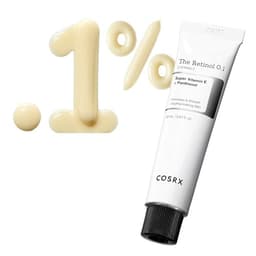
The pick if a stated number matters more to you than a gentle delivery system. A published 0.1% — the lowest stated strength we rank — in a cream rather than an oil-rich gel, so you know exactly where you are starting and can step up on purpose. Less cushioning behind it, and more legible.
Read the full review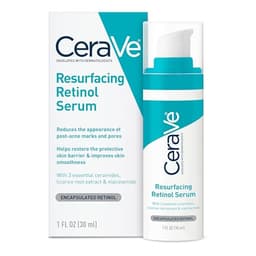
CeraVe Resurfacing Retinol Serum
The other encapsulated budget serum, and the one with ceramides and niacinamide doing the buffering instead of bakuchiol and plant oils. Also an undisclosed strength. Choose it over this if your skin is oily or acne-prone, since this formula's oil content is the thing most likely to put you off it.
Read the full review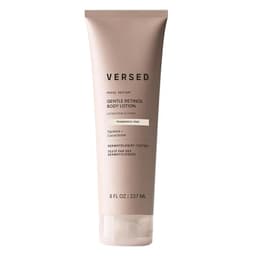
Versed Press Restart Retinol Body Lotion
The same line below the jawline, and the sibling product this serum is designed to sit alongside. An 8 oz fragrance-free body lotion built on the same disclosure standard — a complete published list with no fragrance material in it. Buy both only if you actually treat your body; one does not substitute for the other.
Read the full review
Frequently asked questions
What percentage retinol is in Versed Press Restart serum?
Versed publishes no figure, on its own product page or on the Amazon listing. Retinol sits sixth in the brand's complete published 41-item list, which is high — but under 21 CFR 701.3 ingredients are ordered by predominance only above one percent, and every cosmetic retinoid is below that line, so sixth place proves presence and not dose. Any site quoting you a percentage for this serum invented it. If a number is what you want, buy a product that prints one.
Is it fragrance-free?
Yes on the ingredient list, with one honest caveat. The brand publishes all 41 ingredients and no fragrance, parfum or individually declared fragrance material appears anywhere in them — no linalool, no limonene, no citronellol. That is the strongest form of this evidence, because it rests on a complete formula rather than a listing's silence. The caveat: the formula does contain several botanical extracts, including chamomile and neem flower and leaf, and botanicals are a common enough cause of reactions that "no declared fragrance" is not the same as "nothing that can irritate you." Versed itself does not use the words fragrance-free here — its claim is "Free from parabens, silicones, sulfates, and 1,350+ ingredients that have questionable data," which is a count of exclusions rather than a statement about fragrance.
Is Versed Press Restart retinol serum discontinued?
No. We re-pulled the Amazon record on October 31, 2026 and it returned In Stock with a live price, and the brand's own product page is live. What has changed is the name: the brand's page now heads it Press Restart Gentle Retinol Serum, while Amazon still says Press Restart Gentle Encapsulated Retinol Serum. It is the same product and the same published formula — the brand did exactly the same thing to its body lotion, so if you are comparing listings you may think you are looking at two products when you are looking at one.
Is this a good first retinol?
It is a reasonable one, and the case for it is the delivery system rather than the dose. Encapsulation holds the retinol in a carrier that releases it more gradually, which tends to lower irritation for a given amount of active, and the base is cushioning. What you give up is control: because no percentage is published, you cannot step up from it deliberately or know whether a reaction means the dose was too high or the botanicals disagreed with you. A stated low strength you can read off the box is the more methodical way in. This is the more comfortable one.
What does the bakuchiol add?
Tolerability, probably, and not potency. Bakuchiol has a published comparison against retinol in which the two performed comparably on photoaging measures with bakuchiol better tolerated, but the evidence base behind it is far thinner than retinol's and it is not a retinoid — it does not act on the same receptors. Read it here as a supporting act chosen to make a retinol serum feel gentler, which is consistent with the product's whole positioning. It is ninth in the list, three places behind the retinol.
Can you use it on your neck and chest?
Yes, and unusually the brand says so itself: its directions read "Face and neck. Bonus points for chest." That is worth noting because most face serums are silent on the question and most people's neck is further behind their face. One ounce will not cover much, though — two pumps is a face-and-neck dose, and if the chest is a real concern a body-sized product is the economic way to treat it.
Sources
- Versed — Press Restart Gentle Retinol Serum product page — The brand's own product page, fetched October 31, 2026, and its COMPLETE published ingredient list read in order and counted by hand: 41 items, with water first, Helianthus Annuus (sunflower) seed oil SECOND, aloe third, a sodium acrylate copolymer fourth, silica fifth, RETINOL SIXTH, tocopherol and tocopheryl acetate seventh and eighth, BAKUCHIOL NINTH, then a run of botanical extracts (Crithmum Maritimum, Chamomilla Recutita, Melia Azadirachta flower AND leaf, Paeonia Lactiflora root, Opuntia Streptacantha stem), a papaya ferment, shea butter, rosehip and sea-buckthorn seed oils, sodium hyaluronate, glycerin and lecithin, finishing on preservatives and citric acid. NO fragrance, parfum or individually declared fragrance material (no linalool, limonene, citronellol or geraniol) appears anywhere in it. Niacinamide and squalane are NOT in the formula. The page states NO retinol percentage. It describes the texture in the brand's own words as a "gel-cream formula" that "contains encapsulated retinol", and its free-from claim is "Free from parabens, silicones, sulfates, and 1,350+ ingredients that have questionable data" — a count of exclusions, not a fragrance-free claim. Directions, quoted: "Smooth 2 pumps onto clean, almost-dry skin in the evening. Let it sink in for 1 minute before your next step"; "Face and neck. Bonus points for chest"; "Every PM after cleansing." The page heading calls it Press Restart Gentle Retinol Serum while the Amazon listing says Press Restart Gentle Encapsulated Retinol Serum | Bakuchiol — the same naming drift this registry recorded for the brand's body lotion (accessed October 31, 2026)
- U.S. FDA — 21 CFR 701.3, Designation of ingredients (eCFR) — The federal rule governing how a cosmetic ingredient list is ordered. Paragraph (a): 'The label on each package of a cosmetic shall bear a declaration of the name of each ingredient in descending order of predominance, except that fragrance or flavor may be listed as fragrance or flavor.' Paragraph (f) allows an alternative: ingredients 'present at a concentration greater than 1 percent, in descending order of predominance', followed by ingredients 'present at a concentration of not more than 1 percent, without respect to order of predominance', followed by color additives 'without respect to order of predominance'. Cited for the exact limit of what an ingredient's POSITION can tell a reader: late placement indicates the 1-percent-or-less group, but within that group the order carries no information about quantity (accessed September 26, 2026)
- Prospective, randomized, double-blind assessment of topical bakuchiol and retinol for facial photoageing (PubMed) — Dhaliwal et al., Br J Dermatol 2019 — bakuchiol 0.5% vs retinol 0.5%: comparable wrinkle/pigment improvement, retinol caused more scaling and stinging (accessed July 17, 2026)
- American Academy of Dermatology — Retinoid or retinol? — AAD on the difference between prescription retinoids and OTC retinol (accessed July 17, 2026)
- Human Skin Aging and the Anti-Aging Properties of Retinol (PubMed) — Review of topical retinol's effect on collagen and photoaging (accessed July 17, 2026)
- Griffiths CE et al. — Restoration of collagen formation in photodamaged human skin by tretinoin (N Engl J Med, 1993) — Biopsies from 26 subjects plus 29 patients treated 10 to 12 months with daily 0.1% tretinoin cream (15 patients) or vehicle (14). Collagen I formation was 56% LOWER in photodamaged skin than in sun-protected buttock skin (P < 0.001); tretinoin produced an 80% INCREASE in collagen I formation against a 14% decrease on vehicle (P = 0.006). Prescription tretinoin, not cosmetic retinol — cited for the direction of the effect on dermal collagen (accessed September 18, 2026)
- Long CC, Finlay AY — The finger-tip unit: a new practical measure (Clin Exp Dermatol, 1991) — The paper that defined the fingertip unit. Thirty adult patients treated various body regions; the number of FTUs required was face and neck 2.5, front of trunk 6.7, back of trunk 6.8, arm and forearm 3.3, hand 1.2, leg and thigh 5.8, foot 1.8. One FTU covers 286 cm2 (s.d. 80) — 312 cm2 in males, 257 cm2 in females. It is a dermatological DOSING measure for ointments, not a retinol instruction, and is cited here only as the published way to reason about how much topical product an area takes (accessed September 18, 2026)
- American Academy of Dermatology — How can I find eczema friendly products? — AAD sets out the difference between the labels: unscented means a fragrance is masked so you cannot smell it, fragrance-free means the product contains no fragrance at all (accessed August 19, 2026)
- American Academy of Dermatology — Eczema types: Contact dermatitis causes — AAD names fragrance among the most common causes of allergic contact dermatitis, and notes the rash can take hours or days to appear (accessed August 19, 2026)
- Temova Rakuša Ž, Škufca P, Kristl A, Roškar R — Retinoid stability and degradation kinetics in commercial cosmetic products (J Cosmet Dermatol, 2021) — Validated HPLC-UV study of 16 retinoid derivatives (retinol, retinyl palmitate, beta-carotene and hydroxypinacolone retinoate) in 12 commercial cosmetics over 6 months of long-term and accelerated stability testing plus a one-week photostability study. Retinoid degradation followed first-order kinetics; the products showed a 0%-80% decline after 6 months at 25 °C and a 40%-100% decline at 40 °C; 'light degradation was more pronounced than temperature-induced degradation'; instabilities were 'formulation-dependent and associated with lower contents than declared in some cosmetics'. Cited for the size of the stability problem a sealed single-dose format is built to solve — the study did not test this product (accessed September 19, 2026)
- Moisturizers — StatPearls (NCBI Bookshelf) — Reference on humectants (hyaluronic acid), occlusives and emollients (accessed July 17, 2026)
- American Academy of Dermatology — How to apply sunscreen — AAD on how much sunscreen to use (about a teaspoon for the face) and reapplying every two hours (accessed August 11, 2026)
- American Academy of Dermatology — How to pick the right moisturizer for your skin — AAD guidance by skin type, including the dermatologist quoted on the page saying 'I tell some people never put moisturizer on the center of your face' — the published statement of the zone-by-zone approach combination skin needs. It also names ceramides and hyaluronic acid as ingredients to look for, recommends creams or ointments over lotions for dry skin and a lighter gel for oily skin, and advises fragrance-free products labeled non-comedogenic (accessed September 18, 2026)
Keep reading
Best encapsulated retinol
The category this serum belongs to, and what encapsulation does and does not buy you.
See the picksBest retinol for beginners
The adjacent list, ranked on tolerance — where a stated low strength beats a gentle delivery system.
See the picksVersed retinol body lotion, reviewed
The same brand and the same disclosure standard, below the jawline and in eight times the volume.
Read the reviewRetinol for rosacea-prone skin
Where this serum is the site's first pick, and the honest limits of using a retinoid on reactive skin.
See what worksRetinol vs bakuchiol
What the one published head-to-head actually found, and why bakuchiol is not a retinoid substitute.
Read the comparisonBest retinol for sensitive skin
The wider field for reactive skin, ranked on buffering and fragrance rather than on strength.
See the picks