Retinol Room.

Best Retinol with Hyaluronic Acid

The third formulation filter on this site: a product qualifies only if its own label or published formula states hyaluronic acid. Compared on retinol form, stated strength, where the hyaluronic acid actually sits in the list, and what the pairing can honestly be expected to do.

By Stephen V.Last updated How we pick

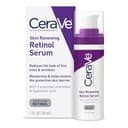
Buy the CeraVe Skin Renewing Retinol Serum. It is the only product here that puts hyaluronic acid on the front of the pack and then publishes the formula behind it, it adds three ceramides and niacinamide to the same bottle, the brand states “Free of Added Fragrance”, and it costs under twenty dollars. It suits the person treating fine lines and dullness who dries out on a bare serum — which is most people who search for this combination in the first place.

Two caveats before you spend anything. First, this is a formulation filter, in the same shape as our niacinamide roundup and our ceramide roundup: a product appears here only if the brand itself states hyaluronic acid, sodium hyaluronate or hydrolyzed hyaluronic acid. We do not infer it from “hydrating” marketing language.

Second, and more usefully: hyaluronic acid is a humectant, not a second active. In the standard pharmacology split, moisturizers work as humectants that hold water in the surface layer, occlusives that slow water leaving, and emollients that supply the lipids the barrier is built from. Hyaluronic acid is squarely in the first group. It replaces the water a retinoid costs you during the adjustment weeks. It does not make the retinoid stronger, faster or safer, and no brand on this page claims a measured reduction in irritation from it.

Six picks below, then the criteria, then the thing nobody prints, then what we left out and why.

How this is funded: we earn a commission if you buy through our links, at no extra cost to you. It never changes which product we recommend, and we’ll tell you when we’d skip one. Full disclosure.

Quick picks

Ranked on formulation, stated concentration and buyer fit. Select a row to jump to the full write-up. We have not tested these products — here is exactly what we do instead.

#ProductBest forPrice
1
CeraVe Retinol Serum with Niacinamide & Hyaluronic Acid

CeraVe Retinol Serum with Niacinamide & Hyaluronic Acid

CeraVe's other retinol serum, and the one people buy by accident when they meant the Resurfacing one. This is the anti-aging version — retinol with niacinamide, hyaluronic acid and ceramides in a fluid base, aimed at fine lines and dullness rather than post-acne marks.

Best overall
$18.79 · View on Amazon

$24.9925% off

Price as of October 10, 2026. #ad How we’re funded

2
CeraVe Resurfacing Retinol Serum

CeraVe Resurfacing Retinol Serum

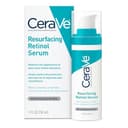
Encapsulated retinol with ceramides and licorice root, aimed squarely at post-acne marks and texture rather than deep wrinkles. Gentle, barrier-friendly and cheap — but the strength is unstated, so set expectations by what it's for.

Best budget, and best for marks and texture
$16.49 · View on Amazon

$21.9925% off

Price as of October 10, 2026. #ad How we’re funded

3
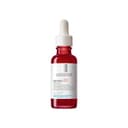
La Roche-Posay Pure Retinol Face Serum (B3 + HA)

La Roche-Posay Pure Retinol Face Serum (B3 + HA)

Pairs pure retinol with niacinamide and hyaluronic acid, so the buffering that reduces flaking is built into the formula rather than something you layer yourself. The gentlest 'serious' retinol here — for skin that dries out on plainer options.

Best for dry, reactive skin
$33.73 · View on Amazon

$44.9925% off

Price as of October 10, 2026. #ad How we’re funded

4
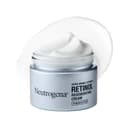
Neutrogena Rapid Wrinkle Repair Retinol Moisturizer (Fragrance-Free)

Neutrogena Rapid Wrinkle Repair Retinol Moisturizer (Fragrance-Free)

A retinol-plus-moisturizer in one step, in a genuinely fragrance-free version that's kinder to reactive skin than the original. Uses Neutrogena's accelerated-retinol blend with hyaluronic acid — convenient, if you accept the undisclosed strength.

Best retinol and moisturizer in one step
$24.97 · View on Amazon

Price as of October 10, 2026. #ad How we’re funded

5
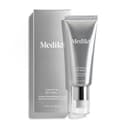
Medik8 Crystal Retinal 1 Night Serum

Medik8 Crystal Retinal 1 Night Serum

The entry rung of the best-known retinal ladder in skincare — and, unlike most of the shelf, one that publishes the figure behind every rung. Medik8 numbers the range 1, 3, 6, 10, 20 and 24 and prints the matching percentage (0.01% to 0.24%), which is a structurally honest way to sell a potent active. You just pay premium prices at every rung.

Best retinal with a hydrating base
$56.00 · View on Amazon

Price as of October 10, 2026. #ad How we’re funded

6
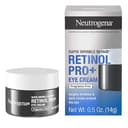
Neutrogena Rapid Wrinkle Repair Pro+ Retinol Eye Cream

Neutrogena Rapid Wrinkle Repair Pro+ Retinol Eye Cream

The 'Pro+' step-up in Neutrogena's eye line, positioned as a higher-potency retinol eye cream for more advanced wrinkles. Useful if the standard version stopped delivering — though, as ever at the drugstore, the actual strength is not disclosed.

Best for the eye area
$24.00 · View on Amazon

Price as of October 10, 2026. #ad How we’re funded

The picks in full

#1Best overall

CeraVe Retinol Serum with Niacinamide & Hyaluronic Acid

CeraVe's other retinol serum, and the one people buy by accident when they meant the Resurfacing one. This is the anti-aging version — retinol with niacinamide, hyaluronic acid and ceramides in a fluid base, aimed at fine lines and dullness rather than post-acne marks.

Strengths

  • Niacinamide, hyaluronic acid and ceramides do real buffering work
  • Fluid, lightweight texture that layers under a moisturizer easily
  • Drugstore price from a brand with a strong barrier-formulation record

Trade-offs

  • Retinol concentration is not published
  • Easy to confuse with CeraVe's Resurfacing serum, which is a different product for a different job
Key activeRetinol + niacinamide + hyaluronic acid
Stated concentrationNot published
FormatFluid serum
Fragrance-freeNot published
Best forNormal, Dry, Sensitive

Formulation note. Retinol paired with niacinamide, hyaluronic acid and CeraVe's ceramide complex. The supporting cast is the point: the barrier ingredients are what let a retinol sit comfortably on skin that reacts. The retinol figure itself is undisclosed.

Ingredients and claims read from the product listing, on August 11, 2026. “Not published” means the brand does not state that figure.

#2Best budget, and best for marks and texture

CeraVe Resurfacing Retinol Serum

Encapsulated retinol with ceramides and licorice root, aimed squarely at post-acne marks and texture rather than deep wrinkles. Gentle, barrier-friendly and cheap — but the strength is unstated, so set expectations by what it's for.

Strengths

  • Ceramides + niacinamide support the barrier while the retinol works
  • Encapsulated delivery is gentler on reactive skin
  • One of the least expensive 'real' retinol serums

Trade-offs

  • Concentration is not published
  • Marketed for marks, not deep wrinkles — set expectations accordingly
Key activeEncapsulated retinol
Stated concentrationNot published
FormatFluid lotion-serum
Fragrance-freeYes
Best forAcne-prone, Normal, Sensitive

Formulation note. Encapsulated retinol + 3 essential ceramides + niacinamide + licorice root extract. The ceramide payload is why it stays tolerable; the retinol strength is not disclosed.

Ingredients and claims read from the product listing, on July 18, 2026. “Not published” means the brand does not state that figure.

#3Best for dry, reactive skin

La Roche-Posay Pure Retinol Face Serum (B3 + HA)

Pairs pure retinol with niacinamide and hyaluronic acid, so the buffering that reduces flaking is built into the formula rather than something you layer yourself. The gentlest 'serious' retinol here — for skin that dries out on plainer options.

Strengths

  • Niacinamide + glycerin + hyaluronic acid buffer the retinol's dryness
  • Fragrance-free, from a brand built around reactive skin
  • Well-tolerated texture that layers cleanly under moisturizer

Trade-offs

  • Does NOT publish the retinol percentage — you're trusting the brand
  • Among the pricier options for an unstated strength
Key activeRetinol
Stated concentrationNot published
FormatSilky lotion-serum
Fragrance-freeYes
Best forSensitive, Dry, Normal

Formulation note. Pure retinol + niacinamide (vitamin B3) + hyaluronic acid. The support actives are the selling point; the retinol strength itself is not disclosed, which we flag rather than guess.

Ingredients and claims read from the product listing, on July 18, 2026. “Not published” means the brand does not state that figure.

#4Best retinol and moisturizer in one step

Neutrogena Rapid Wrinkle Repair Retinol Moisturizer (Fragrance-Free)

A retinol-plus-moisturizer in one step, in a genuinely fragrance-free version that's kinder to reactive skin than the original. Uses Neutrogena's accelerated-retinol blend with hyaluronic acid — convenient, if you accept the undisclosed strength.

Strengths

  • Fragrance-free version, unlike the classic
  • Hyaluronic acid + glucose complex buffer dryness
  • Combines the treatment and moisturizer steps

Trade-offs

  • Retinol strength is not published
  • One-step formulas give you less control over layering
Key activeRetinol (accelerated retinol SA blend)
Stated concentrationNot published
FormatLight moisturizing cream
Fragrance-freeYes
Best forNormal, Combination, Dry

Formulation note. Neutrogena's retinol SA blend + hyaluronic acid + glucose complex in a moisturizer base. Convenient one-step format; the trade-off is an unstated strength and less layering control.

Ingredients and claims read from the product listing, on July 18, 2026. “Not published” means the brand does not state that figure.

#5Best retinal with a hydrating base

Medik8 Crystal Retinal 1 Night Serum

The entry rung of the best-known retinal ladder in skincare — and, unlike most of the shelf, one that publishes the figure behind every rung. Medik8 numbers the range 1, 3, 6, 10, 20 and 24 and prints the matching percentage (0.01% to 0.24%), which is a structurally honest way to sell a potent active. You just pay premium prices at every rung.

Strengths

  • Publishes an exact 0.01% retinaldehyde, and a stated figure for every rung above it
  • Part of an explicit 1 / 3 / 6 / 10 / 20 / 24 ladder, so progression is planned rather than improvised
  • Hyaluronic acid and vitamin E in the base, per the listing

Trade-offs

  • Premium pricing, and the ladder above it costs more at every rung
  • The rung number is not the percentage — 1 means 0.01%, so it cannot be read against a retinol figure directly
Key activeRetinaldehyde (retinal)
Stated concentration0.01%
FormatNight serum
Fragrance-freeNot published
Best forSensitive, Normal, Beginner-to-retinal

Formulation note. Sold as Crystal Retinal 1, the lowest rung of a numbered range that also includes 3, 6, 10, 20 and 24. The number is the rung, not the dose — but Medik8 publishes the dose behind each one on its own Crystal Retinal range page (read 2026-09-01), where rung 1 is stated as 0.01% twin-encapsulated retinaldehyde and rung 24 as 0.24%. The base carries hyaluronic acid and vitamin E, per the listing.

Ingredients and claims read from the product listing, on August 11, 2026. “Not published” means the brand does not state that figure.

#6Best for the eye area

Neutrogena Rapid Wrinkle Repair Pro+ Retinol Eye Cream

The 'Pro+' step-up in Neutrogena's eye line, positioned as a higher-potency retinol eye cream for more advanced wrinkles. Useful if the standard version stopped delivering — though, as ever at the drugstore, the actual strength is not disclosed.

Strengths

  • Positioned as a higher-potency eye formula
  • Hyaluronic acid for hydration around the eyes
  • Still drugstore-priced

Trade-offs

  • Strength not published — 'Pro+' is branding, not a number
  • Higher potency near the eye means introduce it slowly
Key activeRetinol (Pro+ accelerated retinol)
Stated concentrationNot published
FormatLight eye cream
Fragrance-freeNo
Best forNormal, Mature

Formulation note. Neutrogena's higher-potency 'Pro+' retinol dosed for the eye area, with hyaluronic acid. 'Pro+' denotes a stronger formula than the standard eye cream, but no percentage is published.

Ingredients and claims read from the product listing, on July 18, 2026. “Not published” means the brand does not state that figure.

What hyaluronic acid is doing next to a retinoid

Retinoids accelerate how quickly the epidermis turns over. The published histology on prescription tretinoin describes epidermal hyperplasia, compaction of the stratum corneum and new collagen fibrils in the papillary dermis, with the visible effect peaking at around ten months and no further gain out to twenty-two. That is the result people want. The cost of getting there is a surface layer that holds water less well for a while, and dryness, tightness and flaking are what that feels like.

A humectant addresses exactly that symptom and nothing else. It binds water in the outer layer so the skin reads as plumper and more comfortable while the remodeling underneath carries on. The escalating-dose study that compared retinol serums against tretinoin is a useful calibration here: the two arms were at parity on transepidermal water loss at week twelve, and the retinol arm improved measured skin dryness significantly — the formulation around the active was doing visible work.

What a humectant cannot do is hold water that has nothing above it. Hyaluronic acid needs either an occlusive layer or an already-intact barrier to work against, which is why the picks here that are moisturizers rather than bare serums tend to feel better on genuinely dry skin. If you are flaking right now, the fix is a cream on top, not more hyaluronic acid. Our sandwich method guide is the deliberate version of that.

The thing nobody prints

Five of the six products here publish no retinol percentage, and not one publishes how much hyaluronic acid it contains. Both omissions are legal. The federal rule on cosmetic ingredient lists orders ingredients by predominance only above one percent; below that, a brand may list them in any order it likes. Every cosmetic retinoid, and the hyaluronic acid in practically every serum, sits under that line.

That cuts in a specific direction worth knowing. On CeraVe’s own published list for the Skin Renewing serum, retinol is twenty-third and hydrolyzed hyaluronic acid is thirty-second — near the end of a long formula. On the Resurfacing serum, retinol is nineteenth and sodium hyaluronate twentieth. Those positions do not mean the ingredients are absent or token. They mean the position tells you nothing about the amount, so a page ranking these products on “how much HA” would be inventing a figure. We rank on what is published instead: retinol form, stated strength where one exists, base, fragrance status and size.

The criteria, in order

  1. Hyaluronic acid stated by the brand.On the pack, the listing or the published ingredient list, named as hyaluronic acid, sodium hyaluronate or hydrolyzed hyaluronic acid. No inference from “hydrating complex”.
  2. A real, named retinoid.Retinol or retinaldehyde the brand names. A product whose only vitamin A is an unidentified “complex” does not qualify.
  3. A stated strength wins where one exists. Exactly one product here publishes a figure, which tells you how this category behaves.
  4. The base has to suit skin that needs a humectant. Dry or mid-adjustment skin does not want an astringent finish, and a humectant in a thin water gel on dry skin is the one combination that can feel worse rather than better.
  5. Fragrance-free beats fragrancedat the same formulation quality. Fragrance is among the most common causes of allergic contact dermatitis and the rash can take hours or days to appear — which is the window in which people blame the retinol.

Which one, by what you are actually treating

Fine lines and dullness: the Skin Renewing serum. Post-acne marks, texture and the look of pores:the Resurfacing serum. People buy the wrong one of the two CeraVes constantly — they are not the same product and are not sold for the same thing, which our Skin Renewing review works through in full.

Skin that dries out on everything:La Roche-Posay’s Pure Retinol serum, which pairs pure retinol with niacinamide and hyaluronic acid and is the gentlest serious retinol here. One step, no layering: the fragrance-free Neutrogena Rapid Wrinkle Repair moisturizer. A faster-acting retinoid: Medik8’s Crystal Retinal 1, the only pick that publishes a number — 0.01% retinaldehyde, the bottom rung of a numbered range, with hyaluronic acid and vitamin E in the base. Crow’s feet and the eye area: the Rapid Wrinkle Repair Pro+ eye cream, with the dosing cautions on our under-eye page applying in full.

What we left out, and why

CeraVe’s retinol cream with SPF 30states ceramides and hyaluronic acid and would otherwise qualify. It is excluded because it is a daytime product, and retinol is fundamentally a PM active — putting it in a retinol roundup invites people to treat it as their treatment, which it is not.

Brickell’s men’s retinol night cream states hyaluronic acid and vitamin E and is fragrance-free, so it passes the filter. It is left off on value: nothing about the formula is men-specific beyond the marketing, and it costs several times the CeraVe. It is ranked properly, in context, on our retinol for men roundup.

Body lotions are out as a class, as on the ceramide page: the hydration question on a 237 ml body lotion is a different cost calculation and it belongs in the body lotion roundup. Products whose hyaluronic acid we could not verifyare not here however well they would have ranked, and the same goes for serums that market “multi-weight HA” without naming it in a published list.

How to use one of these

Exactly as you would use the same retinol without the hyaluronic acid: two nights a week for the first month, after cleansing, a pea-sized amount for the whole face, moisturizer over the top, sunscreen every morning without exception. The humectant changes how the adjustment feels. It does not change the dose, and it is not a reason to start nightly. If you are new to this, our beginner roundup and starter guide set the schedule properly.

One ordering note, because it is the most common question people bring to this pairing: if you use a separate hyaluronic acid serum as well, apply it to damp skin before the retinol rather than after it. The full logic is on our retinol vs hyaluronic acid page, which exists because the two are not competing treatments in the first place.
Frequently asked questions

Can you use retinol and hyaluronic acid together?

Yes, and there is nothing to work around. A retinoid is a treatment that changes how skin cells behave; hyaluronic acid is a humectant that holds water in the surface layer. They act on different things and have no interaction to manage, which is why so many brands put them in one bottle. The products on this page are the pre-combined version of a pairing you could also do in two steps.

Does hyaluronic acid make retinol less irritating?

It makes the dryness side of the adjustment more comfortable, which is a narrower claim. No brand here publishes a measured reduction in irritation, so treat it as a sound formulation choice rather than a quantified benefit. Frequency is still the lever that actually controls irritation — most flaking is a schedule problem, not a formula problem.

How much hyaluronic acid should a retinol contain?

Nobody publishes it, so there is no honest answer. The federal rule orders a cosmetic ingredient list by predominance only above one percent, and both the retinoid and the hyaluronic acid in these products sit below that line — so the list confirms presence and nothing more. That is why this page ranks on retinol form, stated strength, base, fragrance status and size instead.

Should I apply hyaluronic acid before or after retinol?

Before, on damp skin, if you are using a separate HA serum. Thin water-based layers go on first and a humectant wants something to hold onto. If your retinol already contains hyaluronic acid you do not need a second one, though a plain moisturizer on top is still a good idea during the first month.

Which of these states its retinol strength?

One: Medik8's Crystal Retinal 1, at 0.01% retinaldehyde — and that is retinal rather than retinol. The other five publish no figure, which is normal for the category rather than unusual for these products. If a printed number matters more to you than the hyaluronic acid does, start from our stated-strength picks instead.

Is hyaluronic acid or ceramides better alongside a retinoid?

They do different jobs and the better answer is often both. Hyaluronic acid holds water; ceramides are one of the lipid classes the barrier is actually built from, so they replace something that is missing rather than topping up something that is leaving. Four of the six picks here appear on our ceramide roundup as well, which is a reasonable place to start if you cannot decide.

Can hyaluronic acid dry my skin out?

On its own, in very dry air, a humectant with no occlusive over it is the one case where a hydrating layer can feel worse rather than better — it holds water at the surface where there is nothing to stop that water leaving. The practical fix is not to skip it but to put a moisturizer on top, which is also why the cream and moisturizer picks on this page suit dry skin better than the bare serums do.

Sources

  • Moisturizers — StatPearls (NCBI Bookshelf) — Reference on humectants (hyaluronic acid), occlusives and emollients (accessed July 17, 2026)
  • American Academy of Dermatology — How to pick the right moisturizer for your skin — AAD guidance by skin type, including the dermatologist quoted on the page saying 'I tell some people never put moisturizer on the center of your face' — the published statement of the zone-by-zone approach combination skin needs. It also names ceramides and hyaluronic acid as ingredients to look for, recommends creams or ointments over lotions for dry skin and a lighter gel for oily skin, and advises fragrance-free products labeled non-comedogenic (accessed September 18, 2026)
  • American Academy of Dermatology — Retinoid or retinol? — AAD on the difference between prescription retinoids and OTC retinol (accessed July 17, 2026)
  • U.S. FDA — 21 CFR 701.3, Designation of ingredients (eCFR) — The federal rule governing how a cosmetic ingredient list is ordered. Paragraph (a): 'The label on each package of a cosmetic shall bear a declaration of the name of each ingredient in descending order of predominance, except that fragrance or flavor may be listed as fragrance or flavor.' Paragraph (f) allows an alternative: ingredients 'present at a concentration greater than 1 percent, in descending order of predominance', followed by ingredients 'present at a concentration of not more than 1 percent, without respect to order of predominance', followed by color additives 'without respect to order of predominance'. Cited for the exact limit of what an ingredient's POSITION can tell a reader: late placement indicates the 1-percent-or-less group, but within that group the order carries no information about quantity (accessed September 26, 2026)
  • CeraVe — Skin Renewing Retinol Serum (brand product page) — The brand's own page for CeraVe's OTHER retinol serum — the anti-aging one, routinely confused with the Resurfacing serum. Publishes the full INCI, in which ceramides NP, AP and EOP are 11th to 13th, niacinamide 15th, RETINOL 23rd and hydrolyzed hyaluronic acid 32nd. States 'Free of Added Fragrance'. Marketed for the appearance of fine lines, wrinkles, texture and radiance across all skin types; directions are to apply in the evening after cleansing and 'gradually increase to daily use as skin adapts'. NO retinol percentage is stated, and no efficacy figure, sample size or study design is published. Cited for what the brand publishes about its own formula, never as evidence of efficacy (accessed October 10, 2026)
  • CeraVe — Resurfacing Retinol Serum (brand product page) — The brand's own page for the product. Publishes the full INCI, in which niacinamide is 5th, dipotassium glycyrrhizate 8th, hydrogenated lecithin 9th, ceramides NP, AP and EOP 10th to 12th, RETINOL 19th and sodium hyaluronate 20th. States 'Free of Added Fragrance' and 'Won't clog pores'. Directions: 'Apply evenly to face daily' in the PM, avoiding eyes and lips, with sunscreen used alongside. The product is marketed for post-acne marks, pore appearance, texture and brightness. NO retinol percentage is stated anywhere on the page, and the page publishes no efficacy figure, sample size or study design. Cited for what the brand publishes about its own formula, never as evidence of efficacy (accessed October 10, 2026)
  • Voorhees JJ — Clinical effects of long-term therapy with topical tretinoin and cellular mode of action (J Int Med Res, 1990) — Double-blind, placebo-controlled study: 0.1% topical tretinoin reduced the effects of photoageing maximally after 10 months, with no further improvement between 10 and 22 months. Histologically it induced 'epidermal hyperplasia, compaction of the stratum corneum and the deposition of ultrastructurally visible collagen fibrils in the papillary dermis', reduced the number and activity of melanocytes, and significantly increased mitoses (accessed September 18, 2026)
  • Draelos ZD, Peterson RS — Newly formulated retinol serums vs tretinoin cream in escalating doses (J Drugs Dermatol, 2020) — Twelve-week double-blind study in 45 photoaged women aged 35 to 65 (Fitzpatrick I-IV) using a STEP-UP protocol: retinol serum escalated 0.25% then 0.5% then 1.0%, or tretinoin cream 0.025% then 0.05% then 0.1%, each with a moisturizer. The two were at parity on investigator and subject assessment and on TEWL at week 12; retinol improved visual smoothness more than tretinoin at week 4 (P = 0.031) and skin dryness significantly (P < 0.001); week-12 punch biopsies showed newly formed collagen and GREATER epidermal thickening in the retinol group. Industry-adjacent cosmetic research, not an independent trial — cited for the escalation method and the direction of the histology (accessed September 18, 2026)
  • American Academy of Dermatology — Eczema types: Contact dermatitis causes — AAD names fragrance among the most common causes of allergic contact dermatitis, and notes the rash can take hours or days to appear (accessed August 19, 2026)

Keep reading