The Retinol Sandwich Method
Moisturizer, retinol, moisturizer. It is the most useful trick in retinoid tolerance — the difference between quitting in week two and still using it in year three — and it costs you a small amount of potency to get there.
How this is funded: we earn a commission if you buy through our links, at no extra cost to you. It never changes which product we recommend, and we’ll tell you when we’d skip one. Full disclosure.
The retinol sandwich is the most useful piece of practical technique in this whole category, and it is almost entirely absent from the instructions that come with the products. The idea is simple: apply a layer of plain moisturizer, then your retinol, then another layer of moisturizer. The retinoid is sandwiched between two buffering layers, and the fortnight of flaking that makes most people quit either does not happen or happens much more mildly.
It is not a hack in the sense of getting something for nothing. You are deliberately moderating how much retinoid reaches the skin, and that is a real trade. It is just a very favorable one, because the thing that determines whether retinol works for you is not the intensity of any single night — it is whether you are still doing it in six months.
Why it works
Two mechanisms, both straightforward. The first layer of moisturizer partially occupies the surface, so the retinol that follows penetrates more slowly and less completely. That blunts the peak concentration reaching the living layers of the skin, and peak concentration is what drives irritation.
The second layer does something different: it supports the barrier overnight while the retinoid is doing its work. Moisturizers combine humectants that draw water in with occlusives that stop it leaving, and a barrier holding water is a barrier that recovers rather than one that cracks. Since the dryness and flaking of early retinoid use is fundamentally a barrier problem, addressing it directly is the obvious move.
There is a third, less technical reason it works: it makes the whole thing feel comfortable, and comfortable routines get repeated. The AAD’s general advice on anti-aging products is to introduce one thing at a time and give it long enough — the sandwich method is a way of buying that time.
How to do it
- Cleanse, then dry completely. Not towel-blotted-and-good-enough. Fully dry, which usually means waiting a few minutes. Damp skin increases penetration significantly, and applying a retinoid to it is the fastest way to a stinging face.
- Thin layer of plain moisturizer.Fragrance-free, no actives, across the whole face. Thin and even — you are creating a buffer, not sealing the skin off.
- Pea-sized amount of retinol on top. One pea for the entire face. More is not better and never has been. Avoid the immediate eye area and the creases beside the nose, where product pools.
- Wait a couple of minutes.
- Second, more generous layer of moisturizer. This is the one doing the overnight work.
- Sunscreen in the morning, always.Buffering reduces irritation, not photosensitivity — see our retinol and sunscreen guide.
What to sandwich with
The dullest moisturizer you own. You want humectants and occlusives and nothing else — no exfoliating acids, no vitamin C, no additional retinoid, no fragrance if you can avoid it. The layers are supposed to be inert; a moisturizer with its own actives turns a buffering technique into a layering problem.
The same product works for both layers. There is no need to buy two things, and a plain ceramide cream is close to ideal because ceramides are part of what the barrier is made from in the first place.
Bread for the sandwich
One cream does both layers. The ointment is not a sandwich layer — it goes on top, on the patches that are already flaking, and never under the retinol.
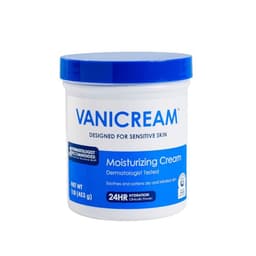
The sandwich layer
Vanicream Moisturizing Cream, 16 oz tub
The dull, no-actives cream the sandwich method asks for — the listing's own pitch is that it is formulated without common irritants, which is the whole specification here. The tub size is the point: buffering only works if you are generous with it.
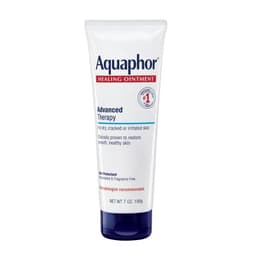
For the flaky patches
Aquaphor Advanced Therapy Healing Ointment, 7 oz
A skin protectant ointment for the places a retinoid peels first — the creases beside the nose, the corners of the mouth, the patch where you used too much. It seals rather than treats, which is exactly what an over-worked barrier needs, and it is the wrong thing to put under a retinol layer.
None of these are retinols — they are the supporting products this page already recommends, listed so you can act on the advice. Product images supplied by Amazon; prices are live and dated on each button.
When to use it — and when not to
Use it
- For your first four to eight weeks on any retinoid.
- Whenever you step up a strength — a new rung resets your tolerance.
- On the neck and chest as standard. That skin is thinner and flakes more visibly, and the area needs the help.
- In winter, or any time your skin is drier than usual.
- On dry, mature or reactive skin, potentially forever.
- At the first sign of flaking, before you consider dropping frequency or changing product.
Skip it
- If you are oily, tolerating your retinoid comfortably, and the extra layers feel heavy. There is no virtue in buffering skin that does not need it.
- If you are already at a very low strength and low frequency and still seeing no progress — buffering further may leave you doing nothing at all. In that case, our timeline guide is the better read.
The variations
The half sandwich.Moisturizer only on top, not underneath. This is the default for most people once tolerance is established, and it is what “moisturize after your retinol” already means.
Targeted buffering.Moisturizer underneath only on the areas that actually react — typically around the nose, the corners of the mouth and the neck — with the retinol applied directly everywhere else. A sensible compromise once you know your own map.
The short-contact method. A different technique that is sometimes confused with sandwiching: applying the retinoid, leaving it for twenty or thirty minutes, then washing it off. It is mostly used with stronger prescription retinoids, and it is a blunter instrument than sandwiching. If you are considering it, that is a conversation for whoever prescribed the retinoid.
What it does not fix
Sandwiching moderates irritation. It does not make a retinoid safe to use nightly from day one, it does not remove the need to ramp up, and it does not make a product suitable for skin that is genuinely reacting rather than adjusting. If you are getting spreading redness, burning on application, or a reaction still escalating after several weeks, that is not something a moisturizer solves — stop and reassess. Our safety guide covers the signs that mean stop rather than adjust.
General guidance, not medical advice. Retinol Room is written by an enthusiast, not a dermatologist. For a diagnosis, a reaction, or a prescription active like tretinoin, see a qualified professional. Introduce any new active slowly and patch-test first.
Frequently asked questions
What is the retinol sandwich method?
Applying moisturizer before your retinol and again after it, so the retinoid sits between two buffering layers. The moisturizer underneath slows and moderates penetration; the one on top supports the barrier overnight. It's the standard technique for making a retinoid tolerable on reactive or dry skin.
Does moisturizing before retinol stop it working?
It reduces how much gets through, which is the entire point — you're trading a slice of intensity for the ability to keep using it. In practice that's a good trade: consistent use at slightly lower intensity beats intense use you abandon after a fortnight. Once your skin has adjusted, you can drop the first layer and keep the second.
Who should use the sandwich method?
Anyone with dry, reactive or mature skin; anyone starting a retinoid for the first time; anyone stepping up a strength; and anyone treating thinner areas like the neck, chest or around the eyes. It's also the right first response to early flaking, before you consider reducing frequency or changing product.
What moisturizer should I use for a retinol sandwich?
A simple, fragrance-free one with humectants and occlusives — a plain barrier-repair cream is ideal. Avoid anything containing exfoliating acids, vitamin C or its own active ingredients; the layers are supposed to be inert. The same moisturizer works for both layers.
How long should I wait between layers?
A few minutes is enough — long enough that you're not immediately smearing the retinol around, short enough that you'll actually do it. The much more important wait is before the first layer: skin must be completely dry after cleansing, because damp skin increases penetration and undoes the buffering.
When can I stop sandwiching?
When you've had several weeks at your current frequency with no dryness, tightness or flaking. Drop the first layer, keep the moisturizer on top, and see how the next fortnight goes. Plenty of people with drier skin never stop entirely — and there's nothing wrong with treating it as a permanent setup rather than training wheels.
Sources
- Moisturizers — StatPearls (NCBI Bookshelf) — Reference on humectants (hyaluronic acid), occlusives and emollients (accessed July 17, 2026)
- American Academy of Dermatology — Retinoid or retinol? — AAD on the difference between prescription retinoids and OTC retinol (accessed July 17, 2026)
- American Academy of Dermatology — Dermatologists' top tips for relieving dry skin — AAD on moisturizing damp skin and choosing a cream for dry skin (accessed July 17, 2026)
- American Academy of Dermatology — How to maximize results from anti-aging skin care products — AAD on introducing one product at a time and giving it long enough to work (accessed August 11, 2026)
- American Academy of Dermatology — How to apply sunscreen — AAD on how much sunscreen to use (about a teaspoon for the face) and reapplying every two hours (accessed August 11, 2026)
Keep reading
How to stop retinol peeling
The full troubleshooting sequence when flaking has already started.
Read the guideBest retinol for sensitive skin
If sandwiching isn't enough, the formulations built to be tolerable in the first place.
See the picksHow often to use retinol
The other lever worth pulling before you reach for a buffering technique.
Read the guideRetinol mistakes to avoid
The ten errors that make people quit — most of them made in the first month.
Read the guideSlugging with retinol
The technique this one gets confused with — and it turns the intensity up, not down.
Read the guide