First: did you buy it for the wrong job?
This is the most common reason people search for a Differin alternative, and it is not really an alternatives question at all. Adapalene 0.1% is approved and formulated for acne— the clogged follicles, the comedones, the inflammatory papules. It is excellent at that.
What it was never sold as is a treatment for the flat marks acne leaves behind. The AAD is explicit about the distinction: a true acne scar is a permanent collagen deficit or excess, while the flat brown or red patch left when a spot clears is post-inflammatory pigment or erythema, and that is what most people actually mean when they say “acne scars”. Only the second is something a cosmetic retinoid can work on. If your acne is controlled and what is bothering you is the leftover marks, the honest answer is a formula built around pigment rather than a stronger acne drug — which is exactly what the top pick is. Our acne scars page draws that line properly and our dark spots page covers the published timeline, which the AAD puts at six to twelve months for a mark a few shades darker than natural tone.
The other wrong-job case is anti-aging. People buy adapalene because they have read that it is “prescription strength” and then wonder why nothing is happening to their lines. There is genuinely encouraging published work on adapalene and atrophic acne scarring, but the ten-to-twelve-month photoaging histology that the whole category leans on — collagen I formation rising by about 80% on daily 0.1% tretinoin against a 14% fall on vehicle — is tretinoin’s file, not adapalene’s. If lines are the goal, a stated retinaldehyde is the better-matched purchase. That is the third pick.
Second: did the purge drive you off it?
Then the problem is almost certainly not the molecule, and swapping brands will reproduce it. Acne frequently worsens in the first weeks of any retinoid as follicles clear out, which is the single most common reason people abandon adapalene in week four — our purge guide covers what to expect and how long it should last.
If you want to keep going but with less drama, there are two legitimate routes.
Change nothing but the dose and the frequency.This is free and it works more often than a new product does. Adapalene’s own directions are a thin layer once daily; most people apply far more than a thin layer. The fingertip-unit figures put the whole face and neck at about 2.5 units, which is less product than most people think. Two or three nights a week, moisturizer over the top, is a perfectly reasonable way to run a retinoid for the first month, and the sandwich method slows the arrival rate further.
Step sideways to a gentler molecule.The Ordinary’s Granactive Retinoid 2% Emulsion is hydroxypinacolone retinoate — a synthetic ester of 9-cis-retinoic acid on a different chain, with a gentler reputation and a thinner file. Its own evidence is a single open pilot of a fixed combination containing 0.1% HPR plus 1% encapsulated retinol: a 41% mean reduction in acne grade, mild-to-moderate local side effects in 15.3% of users, and the authors asking for a controlled trial. That is relevant to acne specifically, which is why it is the pick for this situation rather than a general consolation prize. The “2%” refers to the complex, not 2% retinol.
And if your skin reacted to everything, including that, PURITO’s retinol-plus-retinal serum is the lowest-commitment thing on this page — with the page’s biggest caveat attached, which is that it publishes neither figure and “for sensitive skin” on a label is positioning rather than a specification. Our gentle roundup ranks all of these by the mechanism that makes each one gentle.
Third: if you cannot get it or must not use it
If it is unavailable where you are— and several of the autocomplete variants for this query are people in other countries asking exactly that — the closest cosmetic substitutes for acne are the encapsulated retinol serums and the stated low-dose retinol creams on this page. They are precursors rather than receptor-binding retinoids, so expect a slower start and a slower finish. A stated 0.1% retinol in a cream, with a 0.3% above it in the same base, is the most controllable way to run one.
If you are pregnant, nothing on this page is an alternative, and we will not nominate one. Topical retinoids as a class are avoided in pregnancy, and swapping a drug-regulated adapalene for a cosmetic retinol does not change the class. The AAD’s own guidance on acne in pregnancy is the starting point and the person to ask is the clinician managing your pregnancy. Our pregnancy guide carries no product links at all, deliberately.
If benzoyl peroxide is the thing you are weighing it against, that is a different mechanism rather than an alternative retinoid, and there is published work on using adapalene and benzoyl peroxide together for scar prevention rather than choosing between them. Our benzoyl peroxide comparison is the page for that.
What each swap keeps, and what it gives up
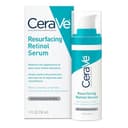
CeraVe Resurfacing Retinol Serum keeps the acne-adjacent job and changes the target: encapsulated retinol, licorice root extract, niacinamide and three ceramides, fragrance-free, in a base that does not dry skin out the way a gel does. It gives up receptor binding and any published percentage. It is the best buy here for marks and texture on skin that has had acne.
The Ordinary Retinol 0.5% in Squalanekeeps the information — it is the only swap that prints a figure, and it sits mid-ladder with a rung either side. It gives up every form of buffering. Two conversion steps back from retinoic acid.
The Ordinary Retinal 0.2% Emulsionkeeps the potency argument: one conversion step rather than two, at a stated figure, for very little money. It gives up the acne-specific evidence entirely — this is the pick if lines matter as much as breakouts.
The Ordinary Granactive Retinoid 2% Emulsion keeps the acne context and drops the irritation, at the cost of the evidence base.
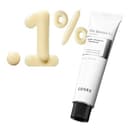
COSRX Retinol 0.1% Cream keeps controllability: the lowest stated dose on the site, in a 20 ml tube, with a 0.3% directly above it in the same base. It gives up the gel texture, which some oily skin will miss.
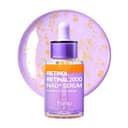
PURITO Retinol + Retinal Serumkeeps the lowest barrier to trying again. It publishes neither figure, which is the page’s biggest information gap and is stated rather than glossed.
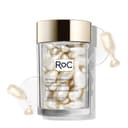
RoC Retinol Correxion Night Serum Capsuleskeep the one-dose-per-night discipline, which matters if over-application is what went wrong — and RoC publishes the complete eight-item formula, which is rarer than a percentage. Its “97% in 1 night” marketing claim is unsourced and we are not standing behind it.
What no alternative gives you
A Drug Facts panel. Adapalene is the only product in this conversation sold as an over-the-counter drug, which means a stated active concentration, defined directions and a regulatory review behind it. Every pick on this page is a cosmetic. Nothing requires a cosmetic to state a concentration, and the federal rule that orders ingredient lists does not help: everything at one percent or less may be listed without respect to order of predominance, and every cosmetic retinoid sits in that group. So three of these seven publish no figure at all and a fourth prints a complex percentage rather than a retinoid dose, and that is the real price of leaving adapalene.
Also worth knowing before you switch: the StatPearls monograph credits adapalene with relative photostability, which is a practical advantage. Cosmetic retinoids degrade measurably — a validated study across twelve commercial products found losses of 0% to 80% after six months at 25 °C and 40% to 100% at 40 °C, with light worse than heat and some products testing below their declared content, and the FDA does not require a cosmetic to carry an expiration date at all. Buy a size you will finish.
How to switch without a second bad month
Stop the adapalene, wait until your skin is calm, then start the new product at two nights a week — not at the frequency you had worked up to. These are different molecules at different doses, four of them unstated, so the tolerance you built does not transfer. Moisturizer over the top, sunscreen every morning without exception, four weeks before you judge anything. And give it longer than feels reasonable: the published improvement curve for a retinoid rises for roughly ten months before it plateaus, so the product you will still be using next autumn matters more than the one that sounds strongest today. Our routine guide has the order of operations and the mistakes guide covers the errors that cost people months.