Retinol Room.

Best Retinol with Niacinamide

Niacinamide is the ingredient retinol is most often formulated alongside, and buying the pair pre-combined removes a step, a decision and a chance to get the order wrong. The retinols whose own listing states it is in there — and what the pairing does and does not do.

By Stephen V.Last updated How we pick

Almost everyone who stays on a retinoid long enough ends up buying niacinamide too. It is the ingredient most often named as the thing that made retinol survivable — the barrier support that turns a fortnight of flaking into a manageable adjustment. So a reasonable question follows: why buy two bottles when plenty of retinols already have it in them?

That is the filter this page applies, and it is a hard one rather than a preference. A product only appears below if the formula it is sold with states niacinamide— on the product name, in the listed ingredients, or in the brand’s own description of what is in the bottle. Where a brand does not say, the product is not here, in exactly the same way our fragrance-free roundup excludes anything that will not confirm its fragrance status. Guessing at an ingredient list is not research.

What we do not do is pretend the pairing is magic. Niacinamide has a solid, published record for barrier support and for the appearance of aging skin, and there is laboratory work suggesting it does not fight a vitamin A ester in the way the internet once claimed. What almost no brand publishes is how much of either ingredient you are getting. That is the honest limit of this category and we say so on every pick.

If you are still deciding whether you need a retinoid at all, or whether niacinamide alone would do, our retinol vs niacinamide comparison answers that question first. This page assumes you have decided on the retinoid and want the version that arrives with its buffering already attached.

How this is funded: we earn a commission if you buy through our links, at no extra cost to you. It never changes which product we recommend, and we’ll tell you when we’d skip one. Full disclosure.

Quick picks

Ranked on formulation, stated concentration and buyer fit. Select a row to jump to the full write-up. We have not tested these products — here is exactly what we do instead.

#ProductBest forPrice
1
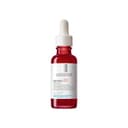
La Roche-Posay Pure Retinol Face Serum (B3 + HA)

La Roche-Posay Pure Retinol Face Serum (B3 + HA)

Pairs pure retinol with niacinamide and hyaluronic acid, so the buffering that reduces flaking is built into the formula rather than something you layer yourself. The gentlest 'serious' retinol here — for skin that dries out on plainer options.

Best overall
$44.99 · View on Amazon

Price as of August 31, 2026. #ad How we’re funded

2
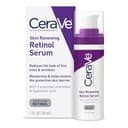
CeraVe Retinol Serum with Niacinamide & Hyaluronic Acid

CeraVe Retinol Serum with Niacinamide & Hyaluronic Acid

CeraVe's other retinol serum, and the one people buy by accident when they meant the Resurfacing one. This is the anti-aging version — retinol with niacinamide, hyaluronic acid and ceramides in a fluid base, aimed at fine lines and dullness rather than post-acne marks.

Best value
$20.44 · View on Amazon

$24.9918% off

Price as of August 31, 2026. #ad How we’re funded

3
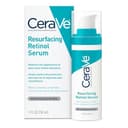
CeraVe Resurfacing Retinol Serum

CeraVe Resurfacing Retinol Serum

Encapsulated retinol with ceramides and licorice root, aimed squarely at post-acne marks and texture rather than deep wrinkles. Gentle, barrier-friendly and cheap — but the strength is unstated, so set expectations by what it's for.

Best for post-acne marks
$16.49 · View on Amazon

$21.9925% off

Price as of August 31, 2026. #ad How we’re funded

4
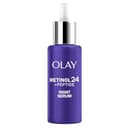
Olay Retinol 24 MAX Night Smoothing Serum

Olay Retinol 24 MAX Night Smoothing Serum

The serum version of Olay's Retinol 24 line, in a fragrance-free formula and a pump bottle rather than a jar — which is a meaningful upgrade for an ingredient that degrades in light and air. A sensible drugstore serum for people who want retinol without a heavy cream.

Best fragrance-free pick
$21.17 · View on Amazon

$29.9929% off

Price as of August 31, 2026. #ad How we’re funded

5
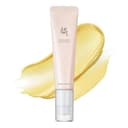
Beauty of Joseon Revive Eye Serum with Retinal & Niacinamide

Beauty of Joseon Revive Eye Serum with Retinal & Niacinamide

The cheapest retinal-containing product we have found anywhere, in a 30 ml bottle sold for the eye area — which in practice means most people use it as a face serum too. Retinal plus niacinamide is a sound pairing: the potent form of vitamin A with the barrier ingredient that makes it tolerable.

Best for the eye area
$15.30 · View on Amazon

$17.0010% off

Price as of August 31, 2026. #ad How we’re funded

6
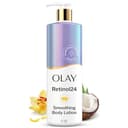
Olay Smoothing Body Lotion with Retinol Serum

Olay Smoothing Body Lotion with Retinol Serum

Effectively a everyday body moisturizer with retinol and Olay's vitamin B3 complex folded in, in a 17 oz bottle. Judge it as a moisturizer that treats a little rather than a treatment that moisturizes — which, for most people who just want smoother arms without a new routine, is the honest and useful framing.

Best for the body
$10.97 · View on Amazon

Price as of August 31, 2026. #ad How we’re funded

The picks in full

#1Best overall

La Roche-Posay Pure Retinol Face Serum (B3 + HA)

Pairs pure retinol with niacinamide and hyaluronic acid, so the buffering that reduces flaking is built into the formula rather than something you layer yourself. The gentlest 'serious' retinol here — for skin that dries out on plainer options.

Strengths

  • Niacinamide + glycerin + hyaluronic acid buffer the retinol's dryness
  • Fragrance-free, from a brand built around reactive skin
  • Well-tolerated texture that layers cleanly under moisturizer

Trade-offs

  • Does NOT publish the retinol percentage — you're trusting the brand
  • Among the pricier options for an unstated strength
Key activeRetinol
Stated concentrationNot published
FormatSilky lotion-serum
Fragrance-freeYes
Best forSensitive, Dry, Normal

Formulation note. Pure retinol + niacinamide (vitamin B3) + hyaluronic acid. The support actives are the selling point; the retinol strength itself is not disclosed, which we flag rather than guess.

Ingredients and claims read from the product listing, on July 18, 2026. “Not published” means the brand does not state that figure.

#2Best value

CeraVe Retinol Serum with Niacinamide & Hyaluronic Acid

CeraVe's other retinol serum, and the one people buy by accident when they meant the Resurfacing one. This is the anti-aging version — retinol with niacinamide, hyaluronic acid and ceramides in a fluid base, aimed at fine lines and dullness rather than post-acne marks.

Strengths

  • Niacinamide, hyaluronic acid and ceramides do real buffering work
  • Fluid, lightweight texture that layers under a moisturizer easily
  • Drugstore price from a brand with a strong barrier-formulation record

Trade-offs

  • Retinol concentration is not published
  • Easy to confuse with CeraVe's Resurfacing serum, which is a different product for a different job
Key activeRetinol + niacinamide + hyaluronic acid
Stated concentrationNot published
FormatFluid serum
Fragrance-freeNot published
Best forNormal, Dry, Sensitive

Formulation note. Retinol paired with niacinamide, hyaluronic acid and CeraVe's ceramide complex. The supporting cast is the point: the barrier ingredients are what let a retinol sit comfortably on skin that reacts. The retinol figure itself is undisclosed.

Ingredients and claims read from the product listing, on August 11, 2026. “Not published” means the brand does not state that figure.

#3Best for post-acne marks

CeraVe Resurfacing Retinol Serum

Encapsulated retinol with ceramides and licorice root, aimed squarely at post-acne marks and texture rather than deep wrinkles. Gentle, barrier-friendly and cheap — but the strength is unstated, so set expectations by what it's for.

Strengths

  • Ceramides + niacinamide support the barrier while the retinol works
  • Encapsulated delivery is gentler on reactive skin
  • One of the least expensive 'real' retinol serums

Trade-offs

  • Concentration is not published
  • Marketed for marks, not deep wrinkles — set expectations accordingly
Key activeEncapsulated retinol
Stated concentrationNot published
FormatFluid lotion-serum
Fragrance-freeYes
Best forAcne-prone, Normal, Sensitive

Formulation note. Encapsulated retinol + 3 essential ceramides + niacinamide + licorice root extract. The ceramide payload is why it stays tolerable; the retinol strength is not disclosed.

Ingredients and claims read from the product listing, on July 18, 2026. “Not published” means the brand does not state that figure.

#4Best fragrance-free pick

Olay Retinol 24 MAX Night Smoothing Serum

The serum version of Olay's Retinol 24 line, in a fragrance-free formula and a pump bottle rather than a jar — which is a meaningful upgrade for an ingredient that degrades in light and air. A sensible drugstore serum for people who want retinol without a heavy cream.

Strengths

  • Fragrance-free, per the listing
  • Pump bottle protects the retinol better than the jar the night cream comes in
  • Lighter finish than a retinol night cream for skin that dislikes heavy textures

Trade-offs

  • 'MAX' is a marketing tier, not a stated strength — the percentage is undisclosed
  • Niacinamide is doing a lot of the visible work here, as with the rest of the range
Key activeRetinol + retinyl propionate + niacinamide
Stated concentrationNot published
FormatLightweight night serum
Fragrance-freeYes
Best forNormal, Oily, Combination

Formulation note. The same retinol + retinyl propionate + niacinamide approach as the Retinol 24 night cream, in a lighter serum base and a pump. 'MAX' denotes a position in Olay's range rather than a published concentration.

Ingredients and claims read from the product listing, on August 11, 2026. “Not published” means the brand does not state that figure.

#5Best for the eye area

Beauty of Joseon Revive Eye Serum with Retinal & Niacinamide

The cheapest retinal-containing product we have found anywhere, in a 30 ml bottle sold for the eye area — which in practice means most people use it as a face serum too. Retinal plus niacinamide is a sound pairing: the potent form of vitamin A with the barrier ingredient that makes it tolerable.

Strengths

  • Retinal paired with niacinamide, which is the buffering combination that actually works
  • 30 ml for eye-area use is a lot of product for the price
  • Light serum texture rather than a heavy eye cream

Trade-offs

  • Retinal concentration is not published
  • Sold for the eye area, so it is dosed conservatively — not a substitute for a face retinoid
Key activeRetinal (retinaldehyde) + niacinamide
Stated concentrationNot published
FormatLight eye serum
Fragrance-freeNot published
Best forNormal, Sensitive, Dry

Formulation note. Retinaldehyde with niacinamide in an eye serum. Eye-area products are intentionally milder than face formulas; the figure itself is undisclosed, so treat it as a gentle introduction to retinal rather than a rung you can place.

Ingredients and claims read from the product listing, on August 13, 2026. “Not published” means the brand does not state that figure.

#6Best for the body

Olay Smoothing Body Lotion with Retinol Serum

Effectively a everyday body moisturizer with retinol and Olay's vitamin B3 complex folded in, in a 17 oz bottle. Judge it as a moisturizer that treats a little rather than a treatment that moisturizes — which, for most people who just want smoother arms without a new routine, is the honest and useful framing.

Strengths

  • Vitamin B3 (niacinamide) complex alongside the retinol
  • 17 oz at a drugstore price — genuinely generous
  • Fast-absorbing lotion texture that works as a daily moisturizer

Trade-offs

  • Lightest treatment intent of this list — a moisturizer first
  • Retinol strength is not published
Key activeRetinol + vitamin B3 complex
Stated concentrationNot published
FormatFast-absorbing body lotion
Fragrance-freeNot published
Best forNormal, Dry

Formulation note. Retinol with Olay's vitamin B3 (niacinamide) complex in a 17 oz fast-absorbing body lotion, per the listing. The niacinamide is the reason it stays comfortable daily; the retinol dose is undisclosed and, given the positioning, modest.

Ingredients and claims read from the product listing, on August 11, 2026. “Not published” means the brand does not state that figure.

What niacinamide is actually doing next to a retinoid

Niacinamide is a form of vitamin B3. In skin it is best characterized as a barrier ingredient: the published reviews describe effects on stratum corneum lipid production, on water loss through the skin, and on pigmentation. It is not an exfoliant, it does not speed cell turnover, and it is not a weaker retinol. It works on a different part of the problem.

That matters because of what a retinoid does to a barrier in the first weeks. Turnover accelerates, the stratum corneum is briefly less competent than it was, and water leaves faster than it is replaced — which is the flaking, tightness and stinging almost everyone reports at the start. An ingredient that supports the barrier is therefore working on precisely the side-effect that makes people abandon the retinoid before it has had time to do anything.

There is direct evidence for the barrier half of that claim. Two randomized, controlled 35-day studies of body moisturizers found the two niacinamide-containing formulas improved stratum corneum integrity — measured by transepidermal water loss and hydration — faster and for longer than six other moisturizers and a no-treatment control. That study was about dryness rather than retinoids, and we are not going to overstate it. But barrier support is the mechanism the pairing rests on, and it is measurable.

The more interesting study for this page compared a cosmetic regimen built around 5% niacinamide, peptides and 0.3% retinyl propionate against prescription 0.02% tretinoin in 196 women over eight weeks. The cosmetic regimen improved wrinkle appearance significantly more than tretinoin at eight weeks, with comparable results by twenty-four weeks, and it was significantly better tolerated throughout. Read that carefully: it is a regimen comparison, three products against two, using a retinyl ester rather than retinol, funded by the kind of company that sells the cosmetic regimen. It does not prove that niacinamide makes retinol work better. It does support the more modest claim that a well-buffered cosmetic retinoid routine is a real option rather than a consolation prize.

The criteria

The ranking is argued, not scored. In order of weight:

  • The listing states niacinamide. The entry requirement. Two of the picks below put it in the product name; the rest state it in the formula description. Nothing is included on the basis of “probably has some.”
  • The retinoid is doing real work. A niacinamide product with a token amount of vitamin A stapled on is a niacinamide product. We want the retinoid to be the reason the product exists, with the niacinamide supporting it — which is why the body lotion, the one pick where that balance genuinely tips the other way, is described as a moisturizer that treats a little rather than the reverse.
  • The rest of the base earns its place. Ceramides, glycerin and hyaluronic acid all pull in the same direction as niacinamide here. A formula that combines them is doing more for tolerance than one that relies on the B3 alone.
  • Format matched to where you are applying it. Face, eye area and body are three different jobs with three different tolerances, and this list covers all three rather than pretending a face serum can do the lot.
  • Fragrance-free where the brand confirms it. A tiebreak rather than a requirement on this page, but a meaningful one on skin that is already being asked to tolerate a retinoid.

What we deliberately do not rank on is stated strength, for the simple reason that not one product on this list publishes a retinol percentage. That is not an oversight on our part — it is the state of the category, and every spec table on this page prints “Not published” rather than an estimate. If a printed number is what you want, our high-strength roundup only admits products that publish one, and none of them include niacinamide.

Does niacinamide cancel out retinol?

No, and it is worth killing this one properly because it still circulates. The claim descends from an old concern about pH compatibility between actives, and it has never had much practical support. The most direct answer is commercial rather than theoretical: formulators put the two in the same bottle constantly, including at La Roche-Posay and CeraVe, and they would not build a product line around an ingredient pair where one neutralizes the other.

The laboratory evidence points the other way, if anything. In a retinoid-response reporter cell line, combining a vitamin A ester with niacinamide produced a 56% to 95% larger signal than the ester alone, and the authors hypothesize the niacinamide raises NAD levels and so influences conversion toward retinoic acid. That is a cell model, not a face — it shows the pairing is not antagonistic in a dish, and it does not show a measured benefit on human skin. We would rather tell you the limit of the evidence than round it up into a claim.

The practical upshot: if you already own both, use both. Our layering guide covers the order and the pairings that genuinely do cause avoidable irritation — and niacinamide is not one of them.

Pre-combined or layered: which should you actually buy?

Both work. They suit different people, and the honest answer depends on how much control you want.

Buy it pre-combined if you want fewer steps, fewer bottles and fewer decisions at eleven at night. One product means the ratio has been settled for you and there is no order to get wrong. For most people starting out, this is the version of the routine they will actually keep doing, and a routine you keep doing beats a better routine you abandon.

Layer them separately if you want to change one variable at a time. That is a real advantage: if your skin reacts, a separate niacinamide serum lets you keep the buffering and step the retinoid down, or hold the retinoid and drop everything else. With a combined product your only lever is frequency. It is also the cheaper route at higher strengths, because a plain niacinamide serum costs very little and the retinols that publish a percentage mostly do not include one.

There is a third option people forget, which is to leave the retinoid alone entirely and put the niacinamide in the moisturizer step, where it will be on your skin every night regardless of whether it is a retinoid night. That is the arrangement the sandwich technique already creates — see our sandwich method guide — and it is a perfectly good way to get the pairing without buying anything on this page.

The number nobody prints

Here is the category’s real weakness. The niacinamide research that gets quoted in marketing was mostly run at a stated concentration — the best-known facial-aging work used 5%. Not one product on this list tells you what percentage of niacinamide it contains, and not one tells you its retinol percentage either. You are buying two undisclosed numbers in a fixed, undisclosed ratio.

That is not a reason to avoid these products. It is a reason to be realistic about what you can conclude from them. Specifically:

  • You cannot compare two of these products on potency, because neither publishes the figure that would let you.
  • You cannot assume the niacinamide is at a level any study used. Ingredient lists are ordered by concentration down to 1%, which tells you something about position but nothing about dose.
  • You can judge them on everything else — base, format, fragrance status, size, cost per use, and the brand’s formulation record — which is what the picks above are ranked on.

We print “Not published” in the spec table rather than filling the gap with a plausible-looking number, because a brand’s silence is information and an invented figure is not. Our strength and percentage guide explains how to shop when the number is missing, which on this shelf is always.

What we left out, and why

Retinol night creams. This turned out to be the biggest gap and it is worth being straight about it: the pre-combined field is dominated by serums. There is no retinol-plus-niacinamide face cream we can recommend here without leaning on a listing that has been rewritten since we last read it, so we have left the format out rather than pad the list. If a cream base is what your skin wants, buy from our retinol creams roundup and add niacinamide at the serum step underneath.

Products that only imply it. A meaningful number of retinols describe a “barrier complex,” a “vitamin blend” or a “soothing matrix” without naming what is in it. Those are excluded on the same rule that excludes an unverified fragrance claim.

The stated-percentage retinols. The Ordinary, Paula’s Choice and the retinal serums publish real numbers, and we rate several of them very highly — but they are largely single-active formulas without niacinamide, so they do not qualify here. If a printed strength matters more to you than pre-combined buffering, start with our serums roundup instead and layer the B3 yourself.

A second eye-area pick. RoC’s Derm Correxion eye cream also pairs retinol with niacinamide and would have qualified; we kept one eye pick so the list stays a shortlist rather than a catalog. Our eye creams roundup ranks that field properly.

How to use one of these

  1. Treat it as a retinoid, not as a niacinamide serum. The buffering does not change the schedule. Two nights a week to start, at night only, on completely dry skin.
  2. Still use a moisturizer. Niacinamide in the formula is support, not a substitute for the step that follows. On drier skin, sandwich it.
  3. Do not double up without a reason. Adding a separate niacinamide serum on top is not harmful, but if you are going to add something, a plain moisturizer will do more for comfort than a second dose of the same active.
  4. Wear sunscreen the next morning. Non-negotiable with any retinoid. Our sunscreen guide covers why, and what to use in the flaky phase.
  5. Give it three months before you judge it. Barrier comfort improves in weeks; the changes you bought the retinoid for take considerably longer, and no supporting ingredient shortens that.
Frequently asked questions

Is retinol with niacinamide better than retinol on its own?

Better tolerated, most likely; more effective, not proven. Niacinamide has published evidence for supporting the skin barrier, which is exactly what a retinoid stresses in the adjustment period — so a buffered formula tends to be easier to stay on. Whether the retinol itself does more because the niacinamide is there has been shown in a cell model, not on human faces, and we are not going to present that as more than it is.

Does niacinamide cancel out or deactivate retinol?

No. The claim comes from an old, largely theoretical concern about pH compatibility and has not held up in practice. Formulators combine the two in a single bottle routinely, which they would not do if one neutralized the other, and laboratory work on a vitamin A ester plus niacinamide found a larger retinoid response from the combination, not a smaller one.

How much niacinamide should a retinol contain?

No product on this list publishes the figure, so this cannot be answered honestly for any specific bottle. The best-known facial-aging research used a stated 5%. An ingredient list orders components by concentration down to 1%, so a niacinamide listed high up is present at a meaningful level — but that is a position, not a dose, and we print "Not published" rather than estimate.

Can I use a separate niacinamide serum with a retinol that already has it?

You can, and it is very unlikely to cause a problem, but there is little reason to. If the combined product is still irritating, the more useful additions are a heavier moisturizer, a lower frequency, or the sandwich technique — none of which involve buying another bottle of the same active.

Which comes first, niacinamide or retinol?

If you are layering two separate products, niacinamide first — it is usually the lighter, more water-based of the two, and thinner goes under thicker. If you are using a product that contains both, the question does not arise, which is one of the practical arguments for buying them pre-combined.

Is niacinamide enough on its own if retinol irritates my skin?

It is a legitimate fallback, but it is not the same job. Niacinamide has evidence for barrier support, tone and the appearance of fine lines; it does not accelerate turnover the way a retinoid does, and the retinoid evidence base for photoaging is considerably deeper. If retinol is genuinely intolerable, dropping to a lower frequency or a gentler retinoid form usually beats abandoning the category — see our comparison of the two ingredients.

Do any retinols with niacinamide state their strength?

None of the ones we would recommend. Every pick on this page prints "Not published" for retinol concentration, which is normal for CeraVe, La Roche-Posay and Olay across their whole ranges. The retinols that do publish an exact percentage — The Ordinary, Paula's Choice, the retinal serums — are mostly single-active formulas without added niacinamide.

Can I use a retinol with niacinamide around my eyes?

Only if it is sold for the eye area, and even then start at one night a week. Eye-area products are dosed more conservatively than face formulas for good reason — the skin is thinner and the margin for error is smaller. Applying a face serum to the orbital area is how most people get a stinging fortnight they did not need.

Sources

Keep reading