Retinol Room.

The Ordinary vs La Roche-Posay Retinol

One prints the percentage and leaves the formula bare. The other prints nothing and buffers it heavily. At roughly a 3x price gap, the decision is not about strength — it is about whether you want to control the dose or hand that job to the formula.

By Stephen V.Last updated How we pick

For most people the answer is The Ordinary Retinol 0.5% in Squalane, and the reason is not that it is cheaper — though it is, by a wide margin. It is that The Ordinary tells you the number. You know what you applied, you know what a step up looks like, and if your skin reacts you can attribute the reaction to something specific. That is worth more over a year than any single formulation advantage on this page.

Buy the La Roche-Posay Pure Retinol Face Serum instead if your skin is dry, reactive, or has already failed at plain retinol once. Its retinol strength is unpublished, which is a real cost, but the formula is doing deliberate buffering work with niacinamide and hyaluronic acid in a cushioned lotion-serum base, and a retinoid you tolerate beats a retinoid you abandon.

Those are the two honest positions, and the rest of this page is why the usual framing — cheap versus good, or budget versus pharmacy — gets the decision wrong. These are not the same product at two prices. They are two different answers to the question of who manages your tolerance: you, with a known dose, or the formula, with an unknown one.

One thing to clear up first, because it changes how you read the price. La Roche-Posay is one of L’Oreal’s own Dermatological Beauty brands, listed alongside CeraVe, Vichy and SkinCeuticals. The pharmacy positioning is positioning. It tells you about the channel, not the chemistry.

How this is funded: we earn a commission if you buy through our links, at no extra cost to you. It never changes which product we recommend, and we’ll tell you when we’d skip one. Full disclosure.

Quick picks

Ranked on formulation, stated concentration and buyer fit. Select a row to jump to the full write-up. We have not tested these products — here is exactly what we do instead.

#ProductBest forPrice
1
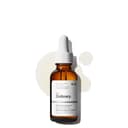
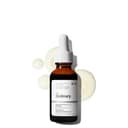
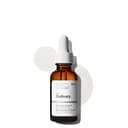
The Ordinary Retinol 0.5% in Squalane

The Ordinary Retinol 0.5% in Squalane

The clearest-labeled retinol you can buy: an exact 0.5% pure retinol in a squalane base, at a price that makes 'start low and go slow' painless. For most people ready to move up from a starter strength, this is the sensible middle rung.

Best overall, and the one with a number
$9.30 · View on Amazon

Price as of October 5, 2026. #ad How we’re funded

2
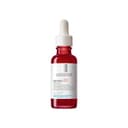
La Roche-Posay Pure Retinol Face Serum (B3 + HA)

La Roche-Posay Pure Retinol Face Serum (B3 + HA)

Pairs pure retinol with niacinamide and hyaluronic acid, so the buffering that reduces flaking is built into the formula rather than something you layer yourself. The gentlest 'serious' retinol here — for skin that dries out on plainer options.

Best for dry or reactive skin
$33.73 · View on Amazon

$44.9925% off

Price as of October 5, 2026. #ad How we’re funded

3
The Ordinary Retinol 0.2% in Squalane

The Ordinary Retinol 0.2% in Squalane

The gentlest true-retinol starting point on the shelf: a stated 0.2% in the same cushioning squalane base. If you have never used a retinoid, this is where to begin before touching anything stronger.

Best first rung on the ladder
$8.10 · View on Amazon

Price as of October 5, 2026. #ad How we’re funded

4
The Ordinary Granactive Retinoid 2% Emulsion

The Ordinary Granactive Retinoid 2% Emulsion

Not retinol at all, but a retinoid ester (hydroxypinacolone retinoate) marketed as gentler. A reasonable option for skin that flakes on plain retinol — with the honest caveat that its evidence base is thinner than retinol's.

If plain retinol stings
$12.10 · View on Amazon

Price as of October 5, 2026. #ad How we’re funded

The picks in full

#1Best overall, and the one with a number

The Ordinary Retinol 0.5% in Squalane

The clearest-labeled retinol you can buy: an exact 0.5% pure retinol in a squalane base, at a price that makes 'start low and go slow' painless. For most people ready to move up from a starter strength, this is the sensible middle rung.

Strengths

  • Publishes the exact strength — 0.5% — which almost no drugstore retinol does
  • Squalane base is lightly occlusive and cushions irritation
  • Sold in 0.2% / 0.5% / 1% so you can step up deliberately

Trade-offs

  • Pure retinol in an anhydrous oil — no added niacinamide or soothing actives
  • Squalane finish can feel heavy layered over other oils
Key activeRetinol
Stated concentration0.5%
FormatLightweight oil serum
Fragrance-freeYes
Best forNormal, Dry, Not-too-sensitive

Formulation note. Pure retinol dispersed in squalane; no water phase, so none of the pH and packaging fuss vitamin C needs. The strength is printed on the label, which is the exception in this category, not the rule.

Ingredients and claims read from the product listing, on July 18, 2026. “Not published” means the brand does not state that figure.

#2Best for dry or reactive skin

La Roche-Posay Pure Retinol Face Serum (B3 + HA)

Pairs pure retinol with niacinamide and hyaluronic acid, so the buffering that reduces flaking is built into the formula rather than something you layer yourself. The gentlest 'serious' retinol here — for skin that dries out on plainer options.

Strengths

  • Niacinamide + glycerin + hyaluronic acid buffer the retinol's dryness
  • Fragrance-free, from a brand built around reactive skin
  • Well-tolerated texture that layers cleanly under moisturizer

Trade-offs

  • Does NOT publish the retinol percentage — you're trusting the brand
  • Among the pricier options for an unstated strength
Key activeRetinol
Stated concentrationNot published
FormatSilky lotion-serum
Fragrance-freeYes
Best forSensitive, Dry, Normal

Formulation note. Pure retinol + niacinamide (vitamin B3) + hyaluronic acid. The support actives are the selling point; the retinol strength itself is not disclosed, which we flag rather than guess.

Ingredients and claims read from the product listing, on July 18, 2026. “Not published” means the brand does not state that figure.

#3Best first rung on the ladder

The Ordinary Retinol 0.2% in Squalane

The gentlest true-retinol starting point on the shelf: a stated 0.2% in the same cushioning squalane base. If you have never used a retinoid, this is where to begin before touching anything stronger.

Strengths

  • Stated 0.2% — a genuine beginner strength, plainly labeled
  • Squalane base softens the early dryness
  • About as cheap as effective retinol gets

Trade-offs

  • Too gentle to be anyone's long-term destination — you'll want to step up
  • Still pure retinol, so introduce it slowly regardless of the low number
Key activeRetinol
Stated concentration0.2%
FormatLightweight oil serum
Fragrance-freeYes
Best forSensitive, Beginner, Normal

Formulation note. 0.2% pure retinol in squalane — the entry rung of The Ordinary's three-strength ladder. Starting here and moving to 0.5% only once nightly use is comfortable is the textbook way to build tolerance.

Ingredients and claims read from the product listing, on July 18, 2026. “Not published” means the brand does not state that figure.

#4If plain retinol stings

The Ordinary Granactive Retinoid 2% Emulsion

Not retinol at all, but a retinoid ester (hydroxypinacolone retinoate) marketed as gentler. A reasonable option for skin that flakes on plain retinol — with the honest caveat that its evidence base is thinner than retinol's.

Strengths

  • Retinoid ester is widely reported as less irritating than pure retinol
  • Stated 2% of the Granactive Retinoid complex — a labeled figure
  • Light emulsion texture layers easily

Trade-offs

  • Hydroxypinacolone retinoate has far less published evidence than retinol
  • The '2%' is the complex, not 2% retinol — don't read it as high-strength
Key activeGranactive Retinoid (hydroxypinacolone retinoate)
Stated concentration2% Granactive Retinoid complex
FormatLight emulsion
Fragrance-freeYes
Best forSensitive, Retinol-reactive

Formulation note. The active is hydroxypinacolone retinoate, a retinoic-acid ester — not free retinol. The '2%' refers to the solubilized complex, not a retinol percentage. We present it as a gentler alternative with a smaller evidence base, not an equal to retinol.

Ingredients and claims read from the product listing, on July 18, 2026. “Not published” means the brand does not state that figure.

The core difference: a number, or a buffer

The Ordinary publishes 0.5% retinol, sells 0.2% and 1% versions of the same thing, and puts all three in squalane with almost nothing else in the bottle. La Roche-Posay publishes no retinol figure at all and fills the formula with supporting ingredients whose job is to make the retinoid liveable.

Both are coherent product philosophies. One sells you a dose and expects you to manage it. The other sells you an outcome and manages the dose on your behalf, without telling you what it is.

Why the unpublished number is a real cost, not a technicality

US labeling rules require ingredients above 1% to be listed in descending order of predominance, and allow anything at 1% or below to be listed in any order. Every retinol in every cosmetic sits in that second group. So La Roche-Posay is not hiding the figure through some loophole — there is simply no requirement to publish it, and almost nobody does.

The practical consequence is that you cannot step up deliberately. The published escalation approach for retinoids is to start low, establish tolerance, then increase — and you cannot increase from a number you do not have. With The Ordinary the ladder is printed on the box: 0.2%, then 0.5%, then 1%. Our guide to stepping up is genuinely usable with one of these and largely theoretical with the other.

Why the bare base is a real cost too

Squalane is an emollient and a good one, but a retinol in squalane and nothing else has no humectant drawing water in and no occlusive holding it there. On dry or mid-adjustment skin that is a product you have to build a routine around rather than drop into one. The Ordinary’s formula is also anhydrous, which helps the retinol’s stability and does nothing for your comfort.

La Roche-Posay’s serum has niacinamide and hyaluronic acid doing two different jobs — barrier-directed support and water-binding — in a base with noticeably more slip. If the last retinol you tried left your cheeks flaking by week two, this is the formula that addresses that directly, and the one The Ordinary asks you to solve with a separate moisturizer.

Where they are the same

  • Both are fragrance-free per their listings, which matters more than most of the differences above if your skin is reactive.
  • Both are 30 ml. Neither is sized for the neck and chest, and neither will stretch if you try.
  • Both are night products. Retinoids are light-sensitive and raise sun sensitivity; neither brand suggests otherwise.
  • Neither has been tested by us, and neither brand publishes a controlled trial on the finished product. The evidence for retinoids as a class is strong; the evidence for either of these specific bottles is a formulation argument.

The price gap, honestly

The gap is large enough to change the decision rather than just the receipt. At the prices showing on this page, the La Roche-Posay costs several times what The Ordinary does for the same 30 ml, and you can buy The Ordinary’s 0.2%, 0.5% and1% — the entire ladder — for less than one bottle of the pharmacy serum.

That is the single strongest argument in this comparison, and it is an argument about experimentation rather than value. Retinol is a product you will get wrong at least once. Getting it wrong cheaply, with a printed number telling you what you got wrong, is a better first year than getting it wrong expensively with no number to adjust.

The counter-argument is adherence, and it is not weak. If the cushioned base is the difference between using a retinoid four nights a week for a year and quitting in March, the expensive bottle is the better purchase, because consistency beats formulation and beats price.

Which one for which problem

Fine lines and general photoaging

Either. This is the job retinoids as a class are best evidenced for, and both products are retinol. Pick on base and budget, not on positioning. Our page on retinol for wrinkles sets out what to expect and when.

Dry, flaky or sensitized skin

La Roche-Posay, or The Ordinary’s Granactive Retinoid if you would rather change the molecule than the base. The sensitive skin roundup ranks this properly, on irritation risk rather than strength.

Acne and post-acne marks

Neither, as a first choice. La Roche-Posay’s retinol serum is not sold as an acne product, and The Ordinary’s is a general retinol. An over-the-counter adapalene is a stronger tool for active breakouts, and our retinol vs adapalene comparisonexplains why. For the marks left behind, CeraVe’s resurfacing serum is the cheaper, better-aimed product — see The Ordinary vs CeraVe.

A first-ever retinol

The Ordinary 0.2%. It is the cheapest honest way to find out how your skin responds, and it is the bottom rung of a ladder you can actually climb. The beginner roundup has the full set.

The verdict

Buy The Ordinary unless you have a specific reason not to, and treat the printed percentage as the feature you are paying for — or rather, not paying for. Buy the La Roche-Posay if dryness or past irritation is the thing standing between you and a retinoid habit, and accept the unpublished number as the price of a formula that handles tolerance for you.

What you should not do is buy the La Roche-Posay because it costs more and assume that means it is stronger. The strength is unpublished on one side and printed on the other, and on the only evidence either brand supplies, the cheap one is the one you can be sure contains 0.5% retinol.
Frequently asked questions

Is La Roche-Posay retinol stronger than The Ordinary's?

Nobody can say, because La Roche-Posay does not publish a concentration and The Ordinary does. Comparing a printed 0.5% against an unknown is not a comparison of strengths, and any article giving you a number for the La Roche-Posay has invented it. Choose on base, buffering and price instead.

Which is better for sensitive skin?

La Roche-Posay, on formulation reasoning: niacinamide and hyaluronic acid in a cushioned base is a deliberate tolerability design, whereas retinol in squalane is a dose with nothing around it. If you would rather change the molecule than the base, The Ordinary's Granactive Retinoid emulsion is the gentler option within The Ordinary's own range.

Is The Ordinary retinol too harsh?

The 1% can be, and the 0.5% can be if you start nightly. The strength itself is not the problem — the frequency is. Two nights a week for the first month, a pea for the whole face, and a moisturizer over the top handles almost all of it. If it still stings, the 0.2% exists for exactly this reason.

Can I use both?

There is no reason to and one good reason not to. Two retinoids in one routine means two adjustment periods running at once and no way to tell which product caused either the improvement or the irritation. Pick one, give it three months, and change one variable at a time.

Are The Ordinary and La Roche-Posay owned by the same company?

No. L'Oreal's own brand portfolio lists La Roche-Posay under its Dermatological Beauty Division alongside CeraVe, Vichy and SkinCeuticals. The Ordinary is not in that portfolio. Either way, ownership tells you about distribution and pricing strategy, not about what is in the bottle.

Is the La Roche-Posay worth three times the price?

Only if the base is what gets you to use it. Adherence beats formulation, so a more comfortable serum you apply four nights a week genuinely outperforms a cheaper one sitting unused. If you are buying it because the price implies a higher retinol concentration, that assumption is unsupported — the figure is unpublished.

Which should I buy for my neck and chest?

Neither, as your main product. Both are 30 ml, which is sized for a face and will be gone in weeks if you extend it downward. Our neck and chest roundup ranks on size and cost per ounce for exactly this reason.

Sources

  • L'Oreal Groupe — Our brands — L'Oreal's own brand portfolio page lists BOTH CeraVe and La Roche-Posay under its Dermatological Beauty Division, alongside Vichy, SkinCeuticals and Skinbetter Science. Cited only for who owns what; it says nothing about either product's formulation (accessed September 18, 2026)
  • U.S. FDA — 21 CFR 701.3, Designation of ingredients (eCFR) — The federal rule governing how a cosmetic ingredient list is ordered. Paragraph (a): 'The label on each package of a cosmetic shall bear a declaration of the name of each ingredient in descending order of predominance, except that fragrance or flavor may be listed as fragrance or flavor.' Paragraph (f) allows an alternative: ingredients 'present at a concentration greater than 1 percent, in descending order of predominance', followed by ingredients 'present at a concentration of not more than 1 percent, without respect to order of predominance', followed by color additives 'without respect to order of predominance'. Cited for the exact limit of what an ingredient's POSITION can tell a reader: late placement indicates the 1-percent-or-less group, but within that group the order carries no information about quantity (accessed September 26, 2026)
  • American Academy of Dermatology — Retinoid or retinol? — AAD on the difference between prescription retinoids and OTC retinol (accessed July 17, 2026)
  • Draelos ZD, Peterson RS — Newly formulated retinol serums vs tretinoin cream in escalating doses (J Drugs Dermatol, 2020) — Twelve-week double-blind study in 45 photoaged women aged 35 to 65 (Fitzpatrick I-IV) using a STEP-UP protocol: retinol serum escalated 0.25% then 0.5% then 1.0%, or tretinoin cream 0.025% then 0.05% then 0.1%, each with a moisturizer. The two were at parity on investigator and subject assessment and on TEWL at week 12; retinol improved visual smoothness more than tretinoin at week 4 (P = 0.031) and skin dryness significantly (P < 0.001); week-12 punch biopsies showed newly formed collagen and GREATER epidermal thickening in the retinol group. Industry-adjacent cosmetic research, not an independent trial — cited for the escalation method and the direction of the histology (accessed September 18, 2026)
  • Mechanistic Basis and Clinical Evidence for Nicotinamide (Niacinamide) in Skin (PMC) — Review of niacinamide's barrier, ceramide and pigmentation effects (accessed July 17, 2026)
  • Moisturizers — StatPearls (NCBI Bookshelf) — Reference on humectants (hyaluronic acid), occlusives and emollients (accessed July 17, 2026)

Keep reading