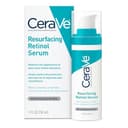
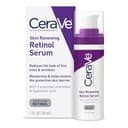
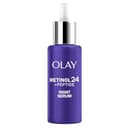
Why the base matters more than the number here
For most of this site, our first question about a retinol is what strength the brand publishes. That question does not change, but on oily skin it shares top billing with the delivery format, for a practical reason: adherence.
A retinoid needs months of consistent use to do anything for texture, tone or lines. A product that leaves your face shiny, that pills under sunscreen, or that makes your makeup slide is a product you will find reasons to skip. On oily skin the format is not a comfort preference, it is a predictor of whether you will still be using the bottle in twelve weeks.
The practical filter: water-based serums and light emulsions over anhydrous oil serums and rich creams. Our serum vs cream comparison covers the wider trade-off, and this page sits firmly on the serum side of it.
One qualifier before you use this list. If only your forehead, nose and chin are oily and your cheeks are dry or tight, you are shopping for a different problem — one bottle asked to behave differently in two zones. Our combination-skin roundup ranks for that case and sets out how to apply a single product two ways.
What oily skin actually gets from a retinoid
Not oil control, which is worth saying up front because it is the assumption behind a lot of the search traffic to pages like this one. Retinoids do not durably reduce sebum production; that is not the mechanism. What they do is change how readily the follicle clogs, which is why they are the backbone of comedonal acne treatment.
- Fewer blackheads and closed comedones, because the plug forms more slowly. Our blackheads page covers this specifically.
- Pores that look smaller, which is a visibility change rather than a size change — see retinol for large pores.
- Smoother texture and more even tone over months, which is the same benefit everyone else is buying it for.
- Fading of post-acne marks, the flat brown or red marks left behind after a breakout resolves.
If oil itself is your primary complaint, a retinoid is not the answer and no product on this page will be. Blotting papers, an oil-free moisturizer and a gentle foaming cleanser are the AAD’s own suggestions, and they are more honest than a serum promising to control shine.
The adapalene question
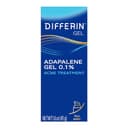
One pick above is not a retinol at all. Adapalene is a third-generation retinoid sold over the counter at a stated 0.1%, and for oily, congested, acne-prone skin it has direct clinical evidence that no cosmetic retinol can match.
It belongs on this page for the same reason it belongs on our acne-prone roundup: if your complaint is congestion rather than aging, buying a cosmetic retinol when a regulated drug is on the same shelf at a similar price is a decision worth making deliberately rather than by default. Our retinol vs adapalene comparison lays out where each one wins, and our Differin review covers the product itself.
The gel base is also, incidentally, the lightest texture in this entire category.
Moisturizer is not optional
The most common mistake on oily skin is treating moisturizer as the enemy. It is not, and on a retinoid it is the thing standing between you and the flaking that makes people quit. The AAD is explicit that oily skin still needs moisturizing.
What changes is the texture, not the presence. A light, oil-free, noncomedogenic gel or lotion over the retinoid does the job without adding to the shine. Skipping it does not make your skin less oily — it makes it dehydrated and oily, which is a worse combination and one that frequently prompts more oil production, not less.
Building the routine
- Gentle cleanse at night. Not a scrub, not a brush, not twice. The AAD warns specifically that scrubbing irritates skin and can make oiliness look worse.
- Wait until completely dry. Several minutes. Damp skin absorbs more and irritates more — see our timing guide.
- Retinoid, pea-sized, twice a week to start. Build from there using the schedule in our frequency guide.
- Light oil-free moisturizer over the top. Every retinoid night, without negotiating with yourself about it.
- Broad-spectrum sunscreen every morning. Fluid or gel textures exist specifically for this skin type. Our sunscreen guide covers the dose.
What to leave out while you adjust: exfoliating acids, clay masks used more than occasionally, cleansing brushes, and anything marketed as resurfacing. A retinoid plus a salicylic toner is a barrier problem regardless of how well your skin usually copes — our salicylic acid comparison covers how to run both once you are established.
What we left out
We left out the anhydrous squalane retinols, not because they are bad — The Ordinary’s stated 0.5% is the best-value retinol on this site and wins its award on several other pages — but because the format fights this skin type. If you want a stated percentage above all else and you do not mind the finish, it remains an excellent buy; our serum roundup ranks it first.
We left out rich night creams and treatment moisturizers for the same reason, and we left out anything whose listing suggested a heavy occlusive base. And we left out products marketed as “mattifying retinol” where the mattifying comes from silica or clay rather than anything the retinoid is doing — that is a finish, sold as a mechanism.