The four things people mean by “texture”
1. Surface roughness and dullness
Dead corneocytes sitting longer than they should, giving skin a matte, slightly papery quality that no amount of moisturizer fixes for more than an hour. This is the cleanest retinoid win on the list. Accelerated turnover plus a compacted stratum corneum is precisely the mechanism, and it is the change most people notice first, usually in the second or third month.
2. Congestion — closed comedones and small bumps
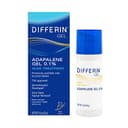
Tiny flesh-colored bumps, most often across the forehead and along the jaw, that are not inflamed and do not come to a head. These are follicles plugged with keratin and sebum. Retinoids are genuinely good at this, and an over-the-counter adapalene is better at it than a cosmetic retinol, because it is a drug with a stated strength regulated for exactly this purpose. If your texture is mostly this, start there. Our blackheads page covers the open-comedone version of the same problem.
3. Post-acne marks and shallow irregularity
Skin that has healed unevenly — flat discoloration, or slight dips and rises where breakouts were. The flat marks fade and a retinoid speeds that up. Genuine indented scars are a different matter with a much weaker cosmetic-retinol evidence base, and our acne scars page is honest about where that line falls.
4. Bumps that are not texture at all
Keratosis pilaris on the arms, milia around the eyes, sebaceous filaments on the nose, and raised or changing lesions anywhere. Milia do not respond to a topical retinoid in any reliable way — they are extracted. Sebaceous filaments are normal anatomy and cannot be removed permanently by anything. Keratosis pilaris has its own page with its own advice. And anything raised, growing or changing is a dermatologist’s question before it is a skincare one.
The criteria
Picks are ranked on how directly they address the two causes a retinoid actually fixes, then on the usual site-wide filters:
- Turnover with a barrier that survives it. Texture work means pushing turnover, and pushing turnover on an unsupported barrier produces rough, flaking skin — which is worse texture, not better. Formulas that arrive with ceramides or niacinamide do half of that work for you.
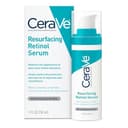
- The right tool for congestion specifically. Where the texture is plugged follicles, a regulated adapalene outranks a cosmetic retinol on evidence, and we rank it accordingly rather than defaulting to the prettier bottle.
- Enough product for the area. Texture is rarely confined to the face. Chest, neck, upper arms and backs of hands all get it, and a 30 ml face serum is the wrong size for any of them.
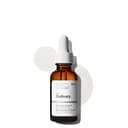
- A published strength where one exists. Three picks below state a number. Three do not, and their spec tables say “Not published”.
- No exfoliation stacking. The instinct with rough skin is to scrub it. Every pick here is a formula you can use without adding an acid, because adding an acid is how most texture routines go wrong.
What makes texture worse while you are treating it
Three things, in rough order of how often we see them named:
- Physical scrubs. Rough skin invites scrubbing and scrubbing damages the barrier, which produces more roughness. The AAD lists scrubbing among the habits that worsen skin rather than help it. A retinoid and an abrasive are working against each other.
- Stacking acids on top. A glycolic toner plus a retinoid plus a weekly peel is not three times the result; it is one compromised barrier. If you want to keep an acid, put it on a different night. Our layering guide covers what safely shares a routine.
- Quitting in week three. The retinoid adjustment period makes texture temporarily worsebefore it improves — flaking is by definition rough. Stopping at the worst point is the most common way this goes wrong. Our peeling guide is the fix list.
What we left out, and why
Chemical exfoliants. AHAs and BHAs genuinely do work on surface texture, and this is a retinol site, so they are not ranked here. The point worth making is that they are an alternative route, not an addition — running both hard at once is the error above. Our retinol vs glycolic acid and retinol vs salicylic acid comparisons set out when each is the better tool.
Anything sold as a “resurfacing” treatment without a retinoid. The word is marketing, not a category. Nothing was included here because the box said resurfacing; every pick is in the registry with a published retinoid and a dated listing behind it.
Professional resurfacing. Lasers, microneedling and in-office peels work on texture more quickly and more expensively than anything on this page, and indented scarring in particular is largely their territory. That is a clinic conversation and we are not going to pretend a $20 serum substitutes for it.
Setting expectations
Roughness and dullness: real improvement is reasonable by the second or third month, and it is usually the change that convinces people to keep going.
Congestion: slower, and it commonly gets worse first as plugged follicles clear. Our purge guide covers how to tell that apart from a formula that simply does not suit you.
Post-acne marks: months, not weeks, and the fading is gradual enough that photographs are more reliable than memory.
Indented scars, milia, sebaceous filaments: manage your expectations down to approximately zero from a cosmetic retinol alone, and get the raised or changing ones looked at.