The three brand-level facts worth knowing
1. Disclosure is a policy, not an accident.The Ordinary, COSRX and Paula’s Choice print exact figures across their retinoid ranges. Naturium prints one for its retinaldehyde line and none for its retinol. CeraVe, RoC, Neutrogena and La Roche-Posay publish no percentage for any retinol they sell. None of that is illegal or even unusual — nothing requires a cosmetic to state a concentration, and the federal rule that orders ingredient lists stops being useful exactly here, because ingredients at one percent or less may be listed without respect to order of predominance, and every cosmetic retinoid sits in that group. Position proves presence. Only a published figure proves amount.
2. Range shape decides whether you can escalate. The Ordinary sells 0.2%, 0.5% and 1% retinol in an identical squalane base plus a 0.2% retinal beside it. COSRX sells 0.1% and 0.3% in the same cream. Naturium sells 0.05%, 0.10% and 0.15% retinaldehyde cream-serums. In each case you can move up a rung without changing the base your skin has already proved it tolerates, which removes the variable people most often change by accident. A brand that sells one unnamed strength gives you nowhere to go but out of the brand.
3. House style is real and it is predictable.CeraVe puts ceramides and niacinamide in essentially everything; La Roche-Posay builds around reactive skin; RoC has sold retinol longer than almost anyone and formulates for dry, mature facial skin in heavier bases; The Ordinary strips everything out on purpose. Knowing a brand’s habit is how you predict whether a product you have not read about yet will suit you.
The eight, and what each one is actually for
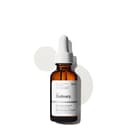
The Ordinary wins on all three axes at once and costs the least. The trade is honest and worth stating: these are bare formulas. The squalane retinols are retinol in an oil, with no niacinamide, no ceramide and nothing soothing, so the cushioning has to come from a moisturizer you already own. If you want a brand to do that work for you, buy a different brand. Our full range roundup ranks all five of its retinoids, and the 1% rung has its own review.
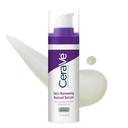
CeraVeis the best brand to buy from if you do not want to think about buffering. The Skin Renewing serum carries retinol with niacinamide, hyaluronic acid and the brand’s three ceramides in one fragrance-free bottle, which is the most formula-per-dollar on this page. What you will never get from CeraVe is a number — the company publishes none for any retinol it sells. Its range roundup has the detail.
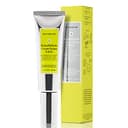
Naturiumis here for one specific reason: its retinaldehyde line is the only range on this page that sells a stated retinal as a three-rung ladder. Retinal is one oxidation step from retinoic acid where retinol is two, and the published tolerance work groups retinaldehyde with retinol rather than with tretinoin. The brand’s cheaper Retinol Complex publishes nothing, which is why the retinal is the pick rather than the bestseller.
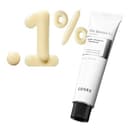
COSRX is the best Korean brand on this shelf and the cleanest first rung anywhere: a stated 0.1% retinol in a small cream, with a 0.3% directly above it in the same base. Korean retinol brands as a group are unusually willing to print figures, which is why they do disproportionately well on a site that ranks disclosure. The Korean roundup covers the rest.
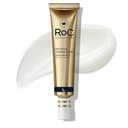
RoChas been selling retinol since before most of this list existed and formulates it the way a dermatology brand of its era would — heavier night creams, eye creams, sealed capsules. If your skin is dry and mature and you want a cream rather than a serum, this is the brand with the deepest bench. It publishes no percentage anywhere. Its range roundup ranks four of its products.
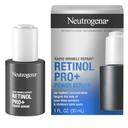
Neutrogenahas the widest range here by count — serums, a moisturizer and two eye creams across standard and “Pro+” tiers — and the least consistency. “Pro+” is a tier name inside the brand’s own line, not a dose, and the brand is inconsistent even about fragrance: two products in the line carry a fragrance-free claim and the Pro+ serum makes no claim in either direction, which we record as not published rather than inferring from a sibling. The range roundup goes through that in detail.
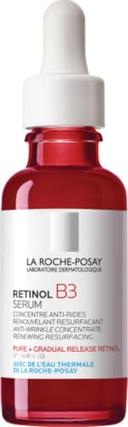
La Roche-Posayis the brand to buy if your skin reacts to things. The Pure Retinol serum pairs retinol with niacinamide, glycerin and hyaluronic acid, fragrance-free, from a company whose entire identity is reactive skin — and it is the most expensive unstated dose on this page. You are paying for the formula and the dermatology distribution record, not for information.
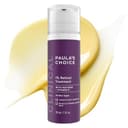
Paula’s Choice publishes its figures and sells the top of the over-the-counter ladder: a stated 1% retinol with peptides and antioxidants around it. The honest caveat is that The Ordinary states the same 1% for a fraction of the price, so what you are buying here is the supporting cast, not the headline number.
Which brands are not on this page, and why
We rank one product per brand, so a brand needs a range we have verified and at least one product we would actually recommend to appear at all. Olay is the instructive omission: its Retinol24 collection page names the active “Pro-Retinol”, publishes no definition of what that blend contains and no concentration for any product in the line, and its single figure is a relative one — “Pro Retinol 19% more”, footnoted against another Olay product. A comparison to an unpublished baseline is not a dose. Avene, Medik8, Versed, PURITO, SKIN1004, Beauty of Joseon, Prequel, Gold Bond, Medix, Elizabeth Arden, Brickell, LilyAna and Soft Services all appear elsewhere on this site, and several are excellent, but each is represented in our registry by too narrow a range to rank as a brand.
Does the brand actually matter?
Less than the category wants you to believe, and more than the cynics do. The published record this whole shelf leans on is prescription tretinoin, not any brand’s retinol: in photodamaged skin, collagen I formation rose by about 80% on ten to twelve months of daily 0.1% tretinoin against a 14% fall on vehicle, with the improvement curve rising for roughly ten months and then plateauing. No cosmetic retinol inherits those numbers at any price or from any company. What brands share is a mechanism and a timescale.
Which has one blunt consequence for brand choice. The brand you should buy is the one whose product you will still be using in ten months. That is usually the one that is cheap enough not to ration, pleasant enough to apply, and honest enough that you know what to do next when it stops being interesting. Stopping is the real failure mode, which is the whole argument of our value roundup. A brand also cannot protect a molecule that degrades: a validated study across twelve commercial cosmetic products measured retinoid losses of 0% to 80% after six months at 25 °C and 40% to 100% at 40 °C, with light doing more damage than heat and some products testing below their declared content. Buy a size you will finish.
How to start, whichever brand you pick
At night, on dry skin, two or three nights a week, moisturizer over the top, sunscreen every morning without exception. Hold that for four weeks before you change anything, and change one thing at a time. If you are switching brands rather than starting, match the frequency you were already using rather than the number on the new label — and if either product publishes no figure, assume you are moving between unknowns and go back to two nights a week for a fortnight. Our routine guide has the order of operations, our mistakes guide covers the errors that cost people months, and the gentle roundup ranks the options for skin that has reacted to a retinoid before.