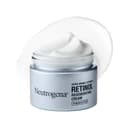
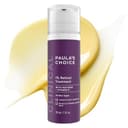
Why fragrance is worth avoiding here specifically
The AAD names fragrance among the most common causes of allergic contact dermatitis, alongside nickel, and notes that the rash can take hours or days to appear — which is what makes it so hard to trace. That delay matters a great deal on a retinoid routine, because you already have a product that reliably produces redness and flaking in the first weeks.
Picture the diagnostic problem. Your face is irritated. Is it the retinoid dose? The frequency? The damp-skin application? Or a fragrance allergy that surfaced two days after you started? A fragrance-free formula removes one of those variables permanently, and on a routine built around changing one thing at a time, that is worth more than it sounds.
This is not a claim that fragrance is dangerous or that fragranced products are unusable. Plenty of people use a fragranced retinol happily for years. It is a claim about risk management on a product category that is already testing your barrier.
What “fragrance-free” does and does not guarantee
It means no fragrance has been added — including the masking fragrances that make an “unscented” product smell of nothing. It does not mean the product has no smell: raw materials have their own odor, and an anhydrous oil serum in particular can smell faintly of its base.
It also does not mean hypoallergenic, and it does not guarantee your skin will get on with it. Preservatives, botanical extracts and essential oils are separate categories of potential irritant, and essential oils in particular are often used as fragrance while being listed by their plant names. If a product is heavy on botanical extracts, read the ingredient list properly rather than trusting the front of the box.
The retinols that are not on this page
The absences are informative, so here they are explicitly.
- RoC Retinol Correxion Night Cream contains fragrance. It is still a product we rate — our review is broadly positive and it wins its award on our serum vs cream comparison— but it cannot appear here.
- L’Oreal Revitalift 0.3% Retinol Serum is one of the very few drugstore serums that publishes an exact strength, and it is fragranced. That is a genuinely annoying trade-off: transparency on the number, a red flag on the ingredient list. Our review covers it.
- Most retinol eye creams. The drugstore eye-cream field is largely fragranced, which is unfortunate given the skin it is applied to. Our eye cream roundup flags it product by product.
- Anything whose listing simply does not say. A large share of the category, including several K-beauty products we otherwise like. Our Korean roundup covers those on their own merits.
How to choose between the picks
The fragrance filter narrows the field but does not make the decision. Within this shortlist:
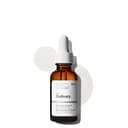
- If you want the number on the label, The Ordinary’s stated 0.5% and Paula’s Choice’s stated 1% are the two that tell you exactly what you are applying. Our strength guide explains why that matters more than it looks.
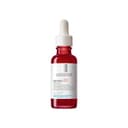
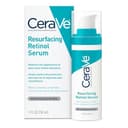
- If your skin is reactive, the CeraVe encapsulated serum and the La Roche-Posay formula both build buffering into the bottle — ceramides in one, niacinamide and hyaluronic acid in the other.
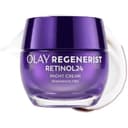
- If you want one step, the Neutrogena treatment and the Olay night cream are moisturizers with the retinoid in them, which removes a step and some intensity at the same time.
- If you are experienced and already comfortable nightly, the stated 1% is the top of the over-the-counter ladder. Our high-strength roundup covers that end properly.
What else to keep fragrance-free
A fragrance-free retinol next to a heavily perfumed moisturizer is a half-measure, particularly if you are using the sandwich method, where the moisturizer is in direct and prolonged contact with the same skin. If you are filtering on this at all, filter on the cleanser and the moisturizer too — they are cheaper to replace than the retinoid and they spend more time on your face.
Sunscreen is the harder one. Fragrance-free broad-spectrum options exist and are worth seeking out, and the sunscreen step is not optional on a retinoid routine regardless. Our sunscreen guide covers the dose problem, which is where most people fall short long before fragrance becomes their limiting factor.
How we filtered
Our product records carry fragrance-free as a three-state field: yes, no, or not published. It is filled in from the product listing we read, on a dated visit, and the date is printed on every review page. Nothing here is inferred from a brand’s reputation for gentleness, and nothing is inferred from an absence of the word “parfum” in a listing that did not print a full ingredient list.
That is a deliberately conservative approach, and it means this page is shorter than a competitor’s equivalent. It also means every product on it is here because a source said so. How we work is set out on how we review— we have not tested these products, and we do not pretend to.