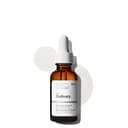
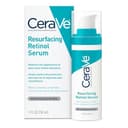
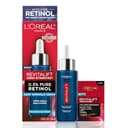
What actually changes in your thirties
Two processes are running at once, and they are not the same thing. Intrinsic ageing — the slow, genetically scheduled decline in collagen production — is happening to everyone at roughly the same rate, and there is not much any topical product does about it. Photoageing is cumulative ultraviolet damage, it varies enormously between people, and it is the part with the deepest published retinoid evidence behind it.
That distinction is why this decade is the useful one to start. The New England Journal of Medicine study that established the mechanism found collagen I formation was 56% lower in photodamaged forearm skin than in sun-protected skin from the same subjects, and that ten to twelve months of daily 0.1% tretinoin produced an 80% increase in collagen I formation against a 14% decrease on vehicle. That was prescription tretinoin on damaged skin, and we are not going to dress it up as a cosmetic-retinol result. What it establishes is the direction: the deficit is real, and a retinoid works on it.
The practical version is unglamorous. Starting a retinoid at thirty-two rather than forty-two does not accelerate anything; it just means the slow process has been running for ten more years by the time you care most about the result. That is the entire prevention argument, and it is an argument for consistency rather than for strength.
The criteria
Ranked and argued, not scored. In order of weight:
- Cost per year, not cost per bottle. A 30 ml bottle used correctly is roughly a four-month supply at nightly use — see how much retinol to use for the arithmetic. Three bottles a year is the real number to compare, and it separates the picks below by a factor of more than five.
- A stated strength with somewhere to go. Products sold as a labeled ladder let you step up deliberately after a year or two instead of switching brands blind. Our guide to stepping up covers when that is actually warranted.
- A base you will not get bored of. Texture is the most underrated adherence factor in skincare. A finish you dislike is a product you skip, and a product you skip does nothing at all.
- Gentle enough to avoid the stop-start cycle. The single most common way a thirties retinol routine fails is an aggressive first month, a painful fortnight, and a bottle that goes in a drawer. Everything below is tolerable at a sensible frequency.
- Sold at a price you will re-buy without thinking. A premium product bought once and mourned is worse than a budget one bought twelve times.
The routine that actually survives a decade
- Two nights a week for the first month. Then three. Then judge. Nobody has ever regretted ramping slowly, and the published escalation protocols move in months, not days.
- A pea for the whole face, on dry skin, at night. Our how to use retinol guide covers the five steps in order.
- Daily sunscreen, permanently. This is the part of the routine that does the prevention. A retinoid works on damage already done; sunscreen is what stops more of it arriving. If you only do one of the two, do this one.
- Change one thing at a time. The AAD’s own advice on anti-aging products is to introduce one and give it long enough to work. Three new actives in a month means you will never know which one caused either the improvement or the rash.
- Re-buy before you run out. Sounds trivial. It is the single most common reason a retinoid routine quietly stops after eighteen months.
What we left out, and why
High-strength retinols. A stated 1% is a real product and a poor starting point. Nothing about being thirty-four rather than fifty-four makes a high dose more appropriate, and the fastest route to abandoning a retinoid is starting above your tolerance. Our high-strength roundup is there for when you have earned it.
Rich anti-aging night creams. Excellent products, mostly aimed at skin that is drier than a typical thirties face. If you like the format, our creams roundup ranks them properly — we left them off here because the ones we would recommend are two to three times the cost per year of the picks above.
Anything marketed on an age. No product on this list was chosen because a brand put a decade on the box. There is no formulation difference between a “30+” retinol and any other one; the number is positioning. Every pick here earned its place on its published specs and its cost per year.
Prescription tretinoin. It is the better-evidenced molecule, and for some people in their thirties it is genuinely the right answer. It is also a conversation with a doctor rather than a purchase, which is why it is covered in our retinol vs tretinoin comparison instead of ranked here.
What to expect, and when
Weeks one to four: not much except possibly some dryness and flaking. That is the adjustment, it is normal, and our peeling guide is the fix list if it is uncomfortable.
Months two to three: texture. This is the first change most people actually notice and the one that keeps them going — skin that takes makeup better and catches light more evenly.
Months six to twelve: tone and pigment. Slower, less dramatic, more durable. Around here is where the ten-month plateau in the long-term tretinoin record sits, and where the honest answer becomes “keep going” rather than “buy something stronger”.
Beyond that: maintenance. The fine-line benefit is real and it is gradual, and the comparison that matters is not your face against a photograph from last year. It is your face against the version of it that did not use anything.