The Ordinary Granactive Retinoid 2% Review
The gentlest thing on The Ordinary's retinoid shelf, and the one whose number means the least. A light emulsion built around a retinoid ester rather than retinol — a reasonable answer to irritation, with a much thinner evidence base than the bottles beside it.
How this is funded: we earn a commission if you buy through our links, at no extra cost to you. It never changes which product we recommend, and we’ll tell you when we’d skip one. Full disclosure.
Not retinol at all, but a retinoid ester (hydroxypinacolone retinoate) marketed as gentler. A reasonable option for skin that flakes on plain retinol — with the honest caveat that its evidence base is thinner than retinol's.
Strengths
- Retinoid ester is widely reported as less irritating than pure retinol
- Stated 2% of the Granactive Retinoid complex — a labeled figure
- Light emulsion texture layers easily
Trade-offs
- Hydroxypinacolone retinoate has far less published evidence than retinol
- The '2%' is the complex, not 2% retinol — don't read it as high-strength
| Key active | Granactive Retinoid (hydroxypinacolone retinoate) |
|---|---|
| Stated concentration | 2% Granactive Retinoid complex |
| Format | Light emulsion |
| Fragrance-free | Yes |
| Best for | People who react badly to plain retinol |
Formulation note. The active is hydroxypinacolone retinoate, a retinoic-acid ester — not free retinol. The '2%' refers to the solubilized complex, not a retinol percentage. We present it as a gentler alternative with a smaller evidence base, not an equal to retinol.
Ingredients and claims read from the product listing, on July 18, 2026. “Not published” means the brand does not state that figure.
This bottle sits on the same shelf as The Ordinary’s retinols, at a similar price, with a much bigger number on the front. That combination has probably sold more of these than any marketing campaign, and it is exactly the confusion this review needs to clear up first.
The 2% is not 2% retinol
Granactive Retinoid is a trade name for a solubilized system whose active is hydroxypinacolone retinoate — HPR — described in the published literature as a synthetic ester of 9-cis-retinoic acid. The 2% on the label refers to that complex as a whole, not to the HPR content within it, and certainly not to anything comparable with a retinol figure.
So the shelf comparison people make — 2% versus 0.5%, therefore four times stronger — is meaningless. The two numbers are measuring different things. Our strength guide covers why a percentage is only useful when you know what it is a percentage of, and this product is the clearest example in the category.
To The Ordinary’s credit, none of this is hidden. The brand describes what the product contains and does not claim it is retinol. The confusion is a shelf-arrangement problem rather than a labeling one — but it is a real problem, and it leads people to skip a ramp-up they should not skip.
What the evidence actually supports
HPR’s published record is small and structurally awkward. The clearest example is an open pilot study of 98 patients using a fixed combination gel containing 0.1% hydroxypinacolone retinoate together with 1% encapsulated retinol and papain, for mild to moderate acne. It reported a 41% mean reduction in acne grade and 15.3% of patients experiencing mild-to-moderate local side effects, and the authors concluded that a controlled clinical study was necessary to confirm the data.
Read the composition of that formula again: it contained retinol as well as HPR. It is a study of a combination product, not a head-to-head. We are not aware of a controlled trial showing HPR matching retinol’s results at lower irritation, which is precisely the claim the ingredient is sold on.
Set that against retinol, which has decades of controlled work on photoaged skin behind it. That gap is the single most important fact about this bottle, and it is why we would not recommend it as anyone’s first retinoid.
The tolerability case, taken seriously
The counter-argument is stronger than a strict evidence ranking suggests. The most common reason people get nothing from a retinoid is that they stopped using it, and irritation in the first month is what stops them. A less-evidenced retinoid used for two years beats a better-evidenced one abandoned in three weeks.
Users do consistently report this as gentler than plain retinol, and the light emulsion base contributes — it is a more comfortable texture than an anhydrous squalane serum, absorbs quickly and layers cleanly under a moisturizer. If retinol has beaten you twice already, this is a defensible next move and a far better one than giving up on retinoids altogether.
Before switching, though, exhaust the free options. Lower frequency, application to completely dry skin, the sandwich method, and removing every other active for a month solve most tolerability problems without changing molecule. Our peeling guide works through them in order, and it is a cheaper experiment than a new bottle.
The base, and what is missing
A light emulsion — water-based rather than the anhydrous squalane The Ordinary uses for its retinols. It absorbs fast, sits well under other products, and is a considerably better texture for oily and combination skin, which is why it appears on our oily-skin roundup.
What it does not have is a supporting cast. No meaningful niacinamide payload, no ceramide complex, no soothing actives. That is the brand’s whole model — the active, described honestly, at close to cost — and it means any cushioning has to come from your own moisturizer. On a product bought specifically for gentleness, that is worth noticing: the gentleness is meant to come from the molecule rather than the formula.
It is also fragrance-free, which we can confirm from the listing rather than infer, and which puts it on our fragrance-free shortlist.
Who it suits
People whose skin has repeatedly reacted to plain retinol despite doing everything right on technique, and who would rather stay inside the retinoid family than move to bakuchiol or peptides. That is a real and reasonably common position, and this is a sensible, cheap answer to it.
It also suits oily and combination skin looking for a retinoid that does not feel like a second layer of oil, and anyone who wants to add a retinoid to an existing routine without changing the texture of the whole thing.
Who should skip it
Anyone new to retinoids. The evidence-backed default is retinol, it is available from the same brand at a stated 0.2% for beginners, and starting with the better-researched molecule is simply the more sensible order. Our beginner roundup is the place to start.
Anyone whose priority is fine lines and photoaging specifically. The HPR literature is in acne, on combination formulas, and there is no reason to accept a thinner evidence base for the concern where retinol’s record is strongest. Our sun damage page covers that properly.
And anyone buying it because 2% sounds like more. If that was the reasoning, re-read the first section — the decision should be about tolerability, not arithmetic.
How to use it
At night, on clean and completely dry skin, a pea-sized amount for the whole face. Twice a week to begin with, holding for at least a fortnight before adding a night, exactly as you would with a retinol. Moisturizer over the top every time.
Nothing else active in the same routine while you build tolerance — no exfoliating acids, no strong vitamin C, per the layering guide. Broad-spectrum sunscreen every morning; a retinoid ester raises sun sensitivity like any other member of the family. And do not run it alongside a second retinoid product to “get both” — that is two variables in one routine and no way to read a reaction.
The verdict
A well-made, honestly described, genuinely useful product with a marketing-adjacent number on the front and less research behind it than the bottles either side. As a second attempt after retinol has irritated you, it is one of the better options in the category and it costs very little to try.
As a first retinoid, it is the wrong choice — not because it will hurt you, but because you would be trading the best-evidenced active in over-the-counter skincare for one whose case currently rests on user reports. Buy it for the reason it is good at, and buy the retinol otherwise.
General guidance, not medical advice. Retinol Room is written by an enthusiast, not a dermatologist. For a diagnosis, a reaction, or a prescription active like tretinoin, see a qualified professional. Introduce any new active slowly and patch-test first.
If it’s not the one, consider these
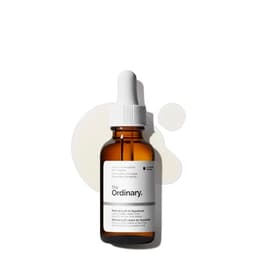
The Ordinary Retinol 0.2% in Squalane
The same brand's gentlest true retinol at a stated 0.2% — better evidenced, and the place to start if plain retinol has never actually irritated you.
$8.10 · View on AmazonPrice as of October 4, 2026. #ad How we’re funded
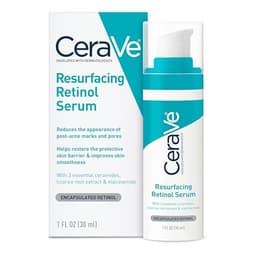
CeraVe Resurfacing Retinol Serum
Encapsulated retinol with ceramides and niacinamide — a different route to a gentler retinoid, with retinol's evidence base intact.
Read the full review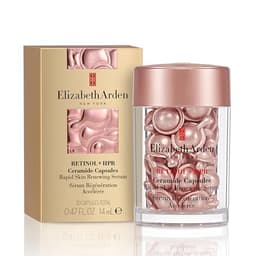
Elizabeth Arden Retinol + HPR Ceramide Capsules Skin Renewing Serum (30 ct)
Retinol and HPR together in a sealed single dose, if you want both molecules without layering two products.
$56.00 · View on AmazonRead the full reviewPrice as of October 4, 2026. #ad How we’re funded
Frequently asked questions
Is Granactive Retinoid 2% stronger than retinol 0.5%?
There is no way to answer that from the labels, and the numbers are not on the same scale. The 2% refers to the solubilized Granactive Retinoid complex, not to a retinoid concentration you can weigh against a retinol percentage. Treat it as a full-strength retinoid you need to ramp up to, not as a stronger or weaker version of a retinol you already use.
What is Granactive Retinoid?
A supplier's trade name for a delivery system containing hydroxypinacolone retinoate (HPR), described in the published literature as a synthetic ester of 9-cis-retinoic acid. It is a retinoid, but it is not retinol, and the two have very different amounts of research behind them.
Is it actually less irritating than retinol?
Users report so consistently, and the light emulsion base helps. What does not exist is a controlled head-to-head against retinol at a matched dose, so 'gentler' is a reputation rather than a measured finding. It is a reasonable thing to act on — it is not something we can cite a trial for.
Should I buy this or The Ordinary's retinol?
Buy the retinol unless plain retinol has repeatedly irritated you despite sensible technique. Retinol is better evidenced, states a real percentage you can place on a ladder, and costs about the same. This is the product for the second attempt, not the first.
Can I use it every night?
Eventually, and not from the start. Begin at two nights a week on completely dry skin with a moisturizer over the top, and add nights only once the current schedule is comfortable. A gentler reputation is not a reason to skip the ramp-up.
Is there a stronger version?
The Ordinary also sells a 5% Granactive Retinoid in squalane. It is a higher percentage of the same complex in an oil base rather than an emulsion — a different texture as well as a different figure, and still not comparable to any retinol percentage.
Is it safe during pregnancy?
It is a retinoid ester, so the standard precaution applies: retinoids are on the avoid list in pregnancy per AAD guidance, and a gentler tolerability profile is not a safety finding. See our pregnancy guide, and ask your obstetrician or dermatologist.
Sources
- Veraldi S et al. — Hydroxypinacolone retinoate with retinol glycospheres in mild to moderate acne (G Ital Dermatol Venereol, 2015) — Open pilot study of a fixed combination containing 0.1% hydroxypinacolone retinoate (a synthetic ester of 9-cis-retinoic acid) plus 1% encapsulated retinol: 41% mean reduction in acne grade, 15.3% mild-to-moderate local side effects, and the authors themselves call for a controlled trial (accessed August 19, 2026)
- American Academy of Dermatology — Retinoid or retinol? — AAD on the difference between prescription retinoids and OTC retinol (accessed July 17, 2026)
- Human Skin Aging and the Anti-Aging Properties of Retinol (PubMed) — Review of topical retinol's effect on collagen and photoaging (accessed July 17, 2026)
- The use of retinoids in the treatment of photoaging (PubMed) — Clinical-trial evidence for topical retinoids in photoaging (accessed July 17, 2026)
- Moisturizers — StatPearls (NCBI Bookshelf) — Reference on humectants (hyaluronic acid), occlusives and emollients (accessed July 17, 2026)
Keep reading
Retinol vs Granactive Retinoid
The full comparison — evidence, tolerability, and what the percentages are measuring.
Compare the twoThe Ordinary Retinol, reviewed
The 0.2% / 0.5% / 1% squalane ladder on the same shelf, and which rung to buy.
Read the reviewBest retinol for sensitive skin
The wider gentle field, if irritation is the reason you're reading this page.
See the picksRetinol strength & percentage guide
Why a percentage on one bottle isn't comparable to a percentage on another.
Decode the labels