Retinol Room.

Retinol Burn: What to Do

Skin that stings, feels scalded and looks angry is an irritant reaction rather than a chemical burn — and it is a different thing from peeling or purging. Here is the stop-and-repair protocol night by night, and how to restart without landing back here.

By Stephen V.Last updated How we pick

How this is funded: we earn a commission if you buy through our links, at no extra cost to you. It never changes which product we recommend, and we’ll tell you when we’d skip one. Full disclosure.

First, what this actually is

A “retinol burn” is not a burn. There is no heat involved and no chemical injury in the way the word implies. What people are describing is irritant contact dermatitis: an inflammatory response to an active applied faster or heavier than the skin barrier could absorb it. The sensation — heat, stinging, tightness, a face that feels scalded when water touches it — is real and unpleasant. The mechanism is dose-related irritation, and that matters, because dose-related problems have dose-related fixes.

It is also worth separating from the two things it gets confused with. This site has a separate page for each, because the right response is different:

  • Peeling is flaking and shedding, usually across the nose, chin and mouth corners. Irritating rather than painful. Expected in the first weeks. Our peeling guide is the fix list.
  • Purging is a temporary increase in breakouts as congestion clears faster than usual. Our purge guide covers how to tell it from a formula that simply does not suit you.
  • A burn is sensory and inflammatory: stinging, heat, redness, tightness, sometimes with no flaking at all. It means the dose was wrong, and it means stop rather than push through.

The protocol, night by night

Night one: stop everything

Not “reduce to twice a week”. Stop. No retinoid, no acids, no vitamin C, no exfoliating cleanser, no scrub, no new product of any kind, no fragranced anything. A barrier that has been overwhelmed repairs itself perfectly well as long as you stop adding to the load, and every extra ingredient is another variable you will not be able to attribute anything to.

Wash with lukewarm water and, if you need a cleanser at all, the mildest fragrance-free one you own. Apply a plain moisturizing cream generously. That is the whole routine for now.

Nights two to four: moisturize more than feels necessary

The goal is to give the stratum corneum the conditions to rebuild. The AAD’s general dry-skin guidance — thick creams or ointments rather than lotions, fragrance-free, applied repeatedly — is exactly right here. Reapply during the day whenever skin feels tight, not on a schedule.

On genuinely raw patches — nose creases, mouth corners, anywhere that has cracked — a skin-protectant ointment on top of the cream is the right move. It is an occlusive, so it goes last, over the moisturizer, never under an active.

Cold helps with the sensation and nothing else, which is a perfectly good reason to use it. An ice roller or a cool compress for a few minutes takes the edge off a bad evening.

Days two to seven: protect it from the sun properly

This is the step people skip because their face already hurts and sunscreen stings. Retinoid-adjusted skin is more sun-sensitive to begin with and compromised skin more so again. A mineral sunscreen is usually the more comfortable option on a face in this state. Our sunscreen guide covers what to use while your skin is in this phase.

Week two onward: only restart when you are genuinely comfortable

The test is not “it looks better”. The test is that skin has felt completely normal — no stinging when you wash, no tightness, no redness that was not there before — for at least a full week. Restarting on skin that is merely improved is how people land here twice.

What the repair phase actually needs

Two products, neither of them a retinol and neither expensive: the plain fragrance-free cream that does the repairing, and the ointment that goes on top of the patches that have cracked. These are the same two this site recommends for the flaky phase, because underneath it is the same problem.
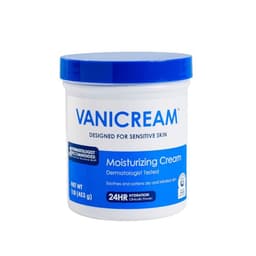
Vanicream Moisturizing Cream, 16 oz tub

The sandwich layer

Vanicream Moisturizing Cream, 16 oz tub

The dull, no-actives cream the sandwich method asks for — the listing's own pitch is that it is formulated without common irritants, which is the whole specification here. The tub size is the point: buffering only works if you are generous with it.
$13.19 · View on Amazon

$14.7711% off

Price as of September 19, 2026. #ad How we’re funded

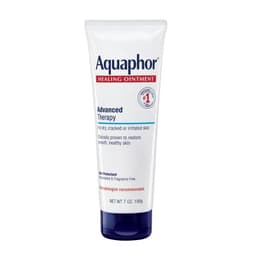
Aquaphor Advanced Therapy Healing Ointment, 7 oz

For the flaky patches

Aquaphor Advanced Therapy Healing Ointment, 7 oz

A skin protectant ointment for the places a retinoid peels first — the creases beside the nose, the corners of the mouth, the patch where you used too much. It seals rather than treats, which is exactly what an over-worked barrier needs, and it is the wrong thing to put under a retinol layer.

$12.97 · View on Amazon

Price as of September 19, 2026. #ad How we’re funded

None of these are retinols — they are the supporting products this page already recommends, listed so you can act on the advice. Product images supplied by Amazon; prices are live and dated on each button.

What not to put on it

  • Anything with an active in it. Acids, vitamin C, benzoyl peroxide, another retinoid. All of them extend the problem.
  • Fragranced products, including “natural” essential oils. The AAD names fragrance among the most common causes of allergic contact dermatitis, and a compromised barrier is exactly the wrong moment to introduce one.
  • A hydrocortisone cream, as a routine. A short course under advice is a medical decision; reaching for a steroid every time a retinoid stings is how people end up with a second problem. That drug class genuinely does thin skin with prolonged use, which is covered in our does retinol thin skin guide.
  • Exfoliation of any kind. Including a washcloth, a muslin cloth or a “gentle” scrub. The flakes will go on their own.
  • A hot shower on your face. Lukewarm, briefly.

What to look for when you restart

The restart matters more than the repair, because the repair happens on its own and the restart is where the decision is. Four things to look for:

  • A lower stated strength than you were on. If you cannot go lower because the product never published a number, that is itself a reason to switch to one that does.
  • Buffering actives in the base. Ceramides, niacinamide, panthenol. The published tolerance work puts retinol and retinaldehyde in a low-irritation band to begin with; a supportive base widens that margin further.
  • Fragrance-free. Not because fragrance caused the burn — it probably did not — but because you are about to test one variable and do not need a second.
  • A format you can apply thinly and evenly. Fluid serums and light lotion-serums spread from a pea. Thick creams encourage a heavier hand.

Then: one night a week. Buffered on both sides with moisturizer. For a month. There is a published technique for reducing retinoid contact deliberately — short-contact therapy, where the product is applied and then washed off after a set period — which was studied with prescription tretinoin for acne and produced far lower irritation rates than standard leave-on use. It is a reasonable thing to discuss with a professional if you have reacted badly twice, and it is covered in our how long to leave retinol on guide.

What to restart on

Once your skin is comfortable again, the restart should be on the gentlest thing you can find rather than on the product that caused the problem. These three are the picks from our registry for that: a stated beginner strength so you know exactly what you are going back in at, and two buffered formulas whose base does some of the work. If the product that burned you was one of these, the problem was almost certainly the frequency or the amount rather than the bottle. Prices are live and dated on each button.

#1Lowest stated strength to restart on

The Ordinary Retinol 0.2% in Squalane

The gentlest true-retinol starting point on the shelf: a stated 0.2% in the same cushioning squalane base. If you have never used a retinoid, this is where to begin before touching anything stronger.

Strengths

  • Stated 0.2% — a genuine beginner strength, plainly labeled
  • Squalane base softens the early dryness
  • About as cheap as effective retinol gets

Trade-offs

  • Too gentle to be anyone's long-term destination — you'll want to step up
  • Still pure retinol, so introduce it slowly regardless of the low number
Key activeRetinol
Stated concentration0.2%
FormatLightweight oil serum
Fragrance-freeYes
Best forSensitive, Beginner, Normal

Formulation note. 0.2% pure retinol in squalane — the entry rung of The Ordinary's three-strength ladder. Starting here and moving to 0.5% only once nightly use is comfortable is the textbook way to build tolerance.

Ingredients and claims read from the product listing, on July 18, 2026. “Not published” means the brand does not state that figure.

#2Best buffered restart

CeraVe Resurfacing Retinol Serum

Encapsulated retinol with ceramides and licorice root, aimed squarely at post-acne marks and texture rather than deep wrinkles. Gentle, barrier-friendly and cheap — but the strength is unstated, so set expectations by what it's for.

Strengths

  • Ceramides + niacinamide support the barrier while the retinol works
  • Encapsulated delivery is gentler on reactive skin
  • One of the least expensive 'real' retinol serums

Trade-offs

  • Concentration is not published
  • Marketed for marks, not deep wrinkles — set expectations accordingly
Key activeEncapsulated retinol
Stated concentrationNot published
FormatFluid lotion-serum
Fragrance-freeYes
Best forAcne-prone, Normal, Sensitive

Formulation note. Encapsulated retinol + 3 essential ceramides + niacinamide + licorice root extract. The ceramide payload is why it stays tolerable; the retinol strength is not disclosed.

Ingredients and claims read from the product listing, on July 18, 2026. “Not published” means the brand does not state that figure.

#3Gentlest stated strength in a cream base

COSRX Retinol 0.1% Cream

A stated 0.1% retinol in a cream base, sold in a two-rung range with a 0.3% above it. That is the K-beauty pattern this site likes: a real number on the box and a deliberate step to take next, at a price the US drugstore shelf charges for an unstated 'retinol complex'.

Strengths

  • States an exact 0.1% — one of the lowest labeled strengths you can buy
  • Sold alongside a 0.3%, so stepping up is a known quantity rather than a guess
  • Cream base and small size suit cautious use around the eye and neck area

Trade-offs

  • 0.1% is deliberately mild — experienced users will outgrow it quickly
  • 0.67 fl oz is a small tube for the money if you are treating the whole face
Key activeRetinol
Stated concentration0.1%
FormatLight cream
Fragrance-freeNot published
Best forBeginner, Sensitive, Normal

Formulation note. A stated 0.1% retinol in a cream, listed for the eye and neck area as well as the face. The published figure is what earns it a place: at this strength, knowing the number is the difference between a deliberate start and a guess.

Ingredients and claims read from the product listing, on August 13, 2026. “Not published” means the brand does not state that figure.

When it is not a retinol burn

Go to a doctor rather than a website if any of the following apply:

  • Blistering, weeping or crusting. That is beyond irritation and needs looking at.
  • It is spreading beyond where you applied the product, or it appeared a day or two after application rather than immediately. A delayed, spreading, intensely itchy rash points toward allergic contact dermatitis rather than irritation — the AAD notes that an allergic reaction can take hours or days to appear, and fragrance is among its most common causes.
  • Swelling of the eyelids or lips. Stop everything and get advice.
  • It is not improving after a week of the protocol above, or it is getting worse while you are using nothing but a plain cream.
  • You are using a prescription retinoid. The prescriber should be the one adjusting it.

Retinol Room is written by an enthusiast rather than a dermatologist, and a reaction is exactly the situation where that distinction matters.

How to not do this again

Almost every retinol burn traces back to one of five things, and all five are avoidable:

  1. Too much product. A pea is the whole face. Check the arithmetic on your own bottle — our dosing guide shows how.
  2. Too often, too early. Two nights a week for a month, then three. Our frequency guide covers the ramp.
  3. Applied to damp skin. Penetration rises sharply on wet skin. Dry completely first.
  4. Stacked with acids or a scrub. The single most common accelerant. Our layering guide covers what safely shares a routine.
  5. Started too strong. A stated 1% is not a starting point. Our guide to stepping up covers when a higher rung is actually warranted.

General guidance, not medical advice. Retinol Room is written by an enthusiast, not a dermatologist. For a diagnosis, a reaction, or a prescription active like tretinoin, see a qualified professional. Introduce any new active slowly and patch-test first.

Frequently asked questions

Is a retinol burn an actual burn?

No. It is irritant contact dermatitis — a dose-related inflammatory reaction to an active your barrier could not keep up with. It is not a thermal or chemical burn and it does not damage tissue the way one does. The word describes the sensation accurately and the mechanism not at all.

How long does a retinol burn last?

With the retinoid stopped and a plain moisturizer used generously, most people are substantially more comfortable within three to five days and back to normal within one to two weeks. If nothing is improving after a week of doing nothing but moisturizing, it is time to get it looked at rather than to wait longer.

What is the difference between a retinol burn, peeling and purging?

Peeling is flaking and shedding without much pain — annoying, cosmetic, expected. Purging is a temporary increase in breakouts as congestion clears faster. A burn is sensory: stinging, heat, tightness, a scalded feeling, usually with visible redness and often with no flaking at all. Peeling and purging you can generally work through; a burn means stop.

Should I stop using retinol if it burns?

Yes, completely, for as long as it takes to feel normal again. Pushing through a genuine burn does not build tolerance faster; it extends the barrier disruption and makes people quit the category altogether. Stopping for ten days costs you nothing on a timeline measured in months.

What should I put on a retinol burn?

As little as possible, and nothing active. A plain fragrance-free moisturizing cream, as often as it feels useful, and an ointment on any patches that are raw or cracked. No acids, no vitamin C, no scrubs, no fragranced products, no new serums, and no more retinoid. The barrier repairs itself if you stop interfering with it.

Can I use retinol again after a burn?

In most cases yes, once skin has been completely comfortable for at least a week. Restart at a lower strength and a lower frequency than before, buffer with moisturizer on both sides, and increase by one variable at a time. If a second careful attempt burns again, that formula is not for you and a gentler retinoid form is the sensible next move.

Why did retinol burn my neck and not my face?

Neck skin is thinner, has fewer sebaceous glands and is usually less accustomed to actives than facial skin, so a dose that is comfortable on cheeks can be too much there. The same applies to the eyelids and the chest. Treat those areas as lower-tolerance zones with their own, slower ramp.

Does a retinol burn cause permanent damage or scarring?

Irritant reactions from cosmetic retinol used topically resolve without scarring in the overwhelming majority of cases. The one genuine risk worth knowing about is post-inflammatory hyperpigmentation in deeper skin tones, where a strong inflammatory episode can leave a mark that outlasts what you were treating — which is exactly why our skin-of-color roundup ranks on how hard a product is to overdo rather than on strength.

Sources

Keep reading