Retinol Room.

Best Value Retinol

Value is not the lowest price on the shelf. The published improvement curve for a retinoid rises for about ten months, so the number that decides this is the cost of ten months of nightly use — and on that measure the cheapest bottle is not always the cheapest course.

By Stephen V.Last updated How we pick

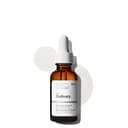
Buy The Ordinary Retinol 0.5% in Squalane. It is the best value retinol on this site for one reason that nothing else here matches: 30 ml of a stated0.5% retinol for a budget price. You know the dose, you know the volume, and you can therefore work out what the next ten months will cost you — which is the only value calculation that means anything with this molecule.

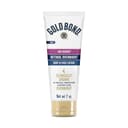
If you want the lowest total outlay and do not mind an undisclosed strength, buy Gold Bond Age Renew Retinol Overnight: 207 ml of fragrance-free lotion cleared by the brand for face as well as body, at the lowest entry price of anything we list. It is dosed conservatively because it has to suit both uses, and the volume means you will not ration it.

Now the part most “best cheap retinol” pages skip. We cannot tell you which of these is cheapest today, because prices move and we only publish the live ones you can see on each card below, with the date they were checked. What we can give you is the method — the two published numbers that turn a shelf price into a cost per month — and the sizes, which do not move. Run it yourself in ten seconds and the ranking often changes.

Six picks, then the arithmetic, then the three ways a cheap retinol turns out to be expensive.

How this is funded: we earn a commission if you buy through our links, at no extra cost to you. It never changes which product we recommend, and we’ll tell you when we’d skip one. Full disclosure.

Quick picks

Ranked on formulation, stated concentration and buyer fit. Select a row to jump to the full write-up. We have not tested these products — here is exactly what we do instead.

#ProductBest forPrice
1
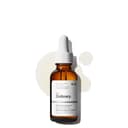
The Ordinary Retinol 0.5% in Squalane

The Ordinary Retinol 0.5% in Squalane

The clearest-labeled retinol you can buy: an exact 0.5% pure retinol in a squalane base, at a price that makes 'start low and go slow' painless. For most people ready to move up from a starter strength, this is the sensible middle rung.

Best value overall
$9.30 · View on Amazon

Price as of October 17, 2026. #ad How we’re funded

2
Gold Bond Age Renew Retinol Overnight Body & Face Lotion

Gold Bond Age Renew Retinol Overnight Body & Face Lotion

The drugstore default, and a better-built one than its price suggests: the brand's own list puts niacinamide seventh and adds a peptide, a ceramide and three humectants around the retinol, on a fragrance-free, hypoallergenic, dermatologist-tested label cleared for face as well as body. The cheapest sensible way to start treating body skin — just do not expect it to outperform a dedicated face retinol on your face.

Lowest cost for the most product
$11.97 · View on Amazon

Price as of October 17, 2026. #ad How we’re funded

3
The Ordinary Retinol 0.2% in Squalane

The Ordinary Retinol 0.2% in Squalane

The gentlest true-retinol starting point on the shelf: a stated 0.2% in the same cushioning squalane base. If you have never used a retinoid, this is where to begin before touching anything stronger.

Best value starter strength
$8.10 · View on Amazon

Price as of October 17, 2026. #ad How we’re funded

4
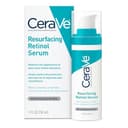
CeraVe Resurfacing Retinol Serum

CeraVe Resurfacing Retinol Serum

Encapsulated retinol with ceramides and licorice root, aimed squarely at post-acne marks and texture rather than deep wrinkles. Gentle, barrier-friendly and cheap — but the strength is unstated, so set expectations by what it's for.

Best value with a cushioned formula
$16.49 · View on Amazon

$21.9925% off

Price as of October 17, 2026. #ad How we’re funded

5
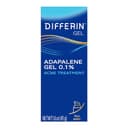
Differin Adapalene Gel 0.1% Acne Treatment (45 g pump)

Differin Adapalene Gel 0.1% Acne Treatment (45 g pump)

The only prescription-grade retinoid you can buy off the shelf, at a stated 0.1% adapalene. If your reason for wanting retinol is acne rather than lines, this is very likely the more appropriate product — and it is regulated as a drug, with the trial evidence that implies.

Best value for acne
$23.97 · View on Amazon

Price as of October 17, 2026. #ad How we’re funded

6
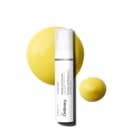
The Ordinary Retinal 0.2% Emulsion

The Ordinary Retinal 0.2% Emulsion

The cheapest way into retinaldehyde by a wide margin, and it states its strength — a labeled 0.2% retinal in a light emulsion. Retinal is a genuinely strong rung, so the low price should not be read as a low commitment.

Best value retinal, with a size caveat
$14.90 · View on Amazon

Price as of October 17, 2026. #ad How we’re funded

The picks in full

#1Best value overall

The Ordinary Retinol 0.5% in Squalane

The clearest-labeled retinol you can buy: an exact 0.5% pure retinol in a squalane base, at a price that makes 'start low and go slow' painless. For most people ready to move up from a starter strength, this is the sensible middle rung.

Strengths

  • Publishes the exact strength — 0.5% — which almost no drugstore retinol does
  • Squalane base is lightly occlusive and cushions irritation
  • Sold in 0.2% / 0.5% / 1% so you can step up deliberately

Trade-offs

  • Pure retinol in an anhydrous oil — no added niacinamide or soothing actives
  • Squalane finish can feel heavy layered over other oils
Key activeRetinol
Stated concentration0.5%
FormatLightweight oil serum
Fragrance-freeYes
Best forNormal, Dry, Not-too-sensitive

Formulation note. Pure retinol dispersed in squalane; no water phase, so none of the pH and packaging fuss vitamin C needs. The strength is printed on the label, which is the exception in this category, not the rule.

Ingredients and claims read from the product listing, on July 18, 2026. “Not published” means the brand does not state that figure.

#2Lowest cost for the most product

Gold Bond Age Renew Retinol Overnight Body & Face Lotion

The drugstore default, and a better-built one than its price suggests: the brand's own list puts niacinamide seventh and adds a peptide, a ceramide and three humectants around the retinol, on a fragrance-free, hypoallergenic, dermatologist-tested label cleared for face as well as body. The cheapest sensible way to start treating body skin — just do not expect it to outperform a dedicated face retinol on your face.

Strengths

  • Lowest barrier to entry of anything here
  • Niacinamide, a peptide and ceramide NG alongside the retinol, per the brand's published ingredient list
  • Fragrance-free, hypoallergenic and dermatologist-tested, per the brand page
  • Labeled for face and body, so one bottle covers both

Trade-offs

  • Retinol strength is not published
  • A face-and-body formula is dosed conservatively — it is not a substitute for a real face retinol
  • Its 'smoother looking skin overnight' claim carries no sample size, and describes the emollient base rather than the retinoid
Key activeRetinol + peptide complex
Stated concentrationNot published
FormatOvernight body lotion
Fragrance-freeYes
Best forDry, Normal

Formulation note. Retinol eighteenth in the brand's published 45-ingredient list, behind niacinamide (seventh) and an emollient stack of shea butter, jojoba esters, squalene and phytosterols, and followed by sodium ascorbate, palmitoyl hexapeptide-12 (the named 'Retinol & Peptide Complex') and ceramide NG. Under 21 CFR 701.3 that position only places the retinol in the sub-1% group, which is true of every cosmetic retinoid — it proves presence, not dose. Dual-purpose formulas are dosed for the more delicate application, so read this as a gentle body treatment rather than a strong one.

Ingredients and claims read from the product listing, on October 10, 2026. “Not published” means the brand does not state that figure.

#3Best value starter strength

The Ordinary Retinol 0.2% in Squalane

The gentlest true-retinol starting point on the shelf: a stated 0.2% in the same cushioning squalane base. If you have never used a retinoid, this is where to begin before touching anything stronger.

Strengths

  • Stated 0.2% — a genuine beginner strength, plainly labeled
  • Squalane base softens the early dryness
  • About as cheap as effective retinol gets

Trade-offs

  • Too gentle to be anyone's long-term destination — you'll want to step up
  • Still pure retinol, so introduce it slowly regardless of the low number
Key activeRetinol
Stated concentration0.2%
FormatLightweight oil serum
Fragrance-freeYes
Best forSensitive, Beginner, Normal

Formulation note. 0.2% pure retinol in squalane — the entry rung of The Ordinary's three-strength ladder. Starting here and moving to 0.5% only once nightly use is comfortable is the textbook way to build tolerance.

Ingredients and claims read from the product listing, on July 18, 2026. “Not published” means the brand does not state that figure.

#4Best value with a cushioned formula

CeraVe Resurfacing Retinol Serum

Encapsulated retinol with ceramides and licorice root, aimed squarely at post-acne marks and texture rather than deep wrinkles. Gentle, barrier-friendly and cheap — but the strength is unstated, so set expectations by what it's for.

Strengths

  • Ceramides + niacinamide support the barrier while the retinol works
  • Encapsulated delivery is gentler on reactive skin
  • One of the least expensive 'real' retinol serums

Trade-offs

  • Concentration is not published
  • Marketed for marks, not deep wrinkles — set expectations accordingly
Key activeEncapsulated retinol
Stated concentrationNot published
FormatFluid lotion-serum
Fragrance-freeYes
Best forAcne-prone, Normal, Sensitive

Formulation note. Encapsulated retinol + 3 essential ceramides + niacinamide + licorice root extract. The ceramide payload is why it stays tolerable; the retinol strength is not disclosed.

Ingredients and claims read from the product listing, on July 18, 2026. “Not published” means the brand does not state that figure.

#5Best value for acne

Differin Adapalene Gel 0.1% Acne Treatment (45 g pump)

The only prescription-grade retinoid you can buy off the shelf, at a stated 0.1% adapalene. If your reason for wanting retinol is acne rather than lines, this is very likely the more appropriate product — and it is regulated as a drug, with the trial evidence that implies.

Strengths

  • States an exact 0.1% adapalene — a regulated over-the-counter drug, not a cosmetic
  • Backed by randomized trials against tretinoin, with comparable efficacy and better tolerability
  • 45 g pump lasts a long time at a pea-sized nightly dose

Trade-offs

  • It is an acne treatment first — the anti-aging evidence base belongs to other retinoids
  • Expect a genuine adjustment period of dryness and peeling in the first weeks
  • Not the right tool if your only concern is fine lines
Key activeAdapalene (a third-generation retinoid)
Stated concentration0.1%
FormatGel
Fragrance-freeNot published
Best forAcne-prone, Oily, Normal

Formulation note. Adapalene is a synthetic retinoid that binds retinoic acid receptors directly, so unlike retinol it needs no conversion in the skin. It is sold in the US as an over-the-counter acne drug at 0.1%, which is why the strength is on the box — drug labeling requires it.

Ingredients and claims read from the product listing, on August 11, 2026. “Not published” means the brand does not state that figure.

#6Best value retinal, with a size caveat

The Ordinary Retinal 0.2% Emulsion

The cheapest way into retinaldehyde by a wide margin, and it states its strength — a labeled 0.2% retinal in a light emulsion. Retinal is a genuinely strong rung, so the low price should not be read as a low commitment.

Strengths

  • States an exact 0.2% retinal, which most retinal products do not
  • Dramatically cheaper than every other retinal on this page
  • Light emulsion base layers easily under a moisturizer

Trade-offs

  • 0.2% retinal is a high rung, not a starter — it is not where a beginner should begin
  • Small 0.5 fl oz bottle, so it does not last as long as the price suggests
Key activeRetinaldehyde (retinal)
Stated concentration0.2%
FormatLight emulsion
Fragrance-freeNot published
Best forRetinol-experienced, Normal

Formulation note. Retinaldehyde sits one conversion step from retinoic acid, where retinol sits two. That is why a 0.2% retinal is not comparable to a 0.2% retinol — the numbers look similar and the potency is not.

Ingredients and claims read from the product listing, on August 11, 2026. “Not published” means the brand does not state that figure.

The arithmetic, in three lines

There are only two numbers you need, and one of them is on this page already.

  1. Size.From each listing: 30 ml for The Ordinary’s retinols and the CeraVe serum, 15 ml for The Ordinary’s retinal emulsion, 207 ml for the Gold Bond lotion, a 45 g pump for the Differin gel.
  2. Today’s price, on the buy button of each pick, stamped with the date we checked it.
  3. Divide one by the other and you have cost per millilitre— the only cross-product comparison that holds when the pack sizes differ by a factor of fourteen.

Then multiply by the length of the course rather than the length of the bottle. The double-blind histology on prescription tretinoin showed the structural changes building and peaking at around ten months, with no further gain out to twenty-two; the collagen trial that found an 80% rise in collagen I formation ran for ten to twelve months. Whatever you buy, the honest planning horizon is most of a year.

Why we will not print a “lasts 3 months” figure

Because no brand on this page publishes one, and the published dosing work does not supply it either. The fingertip-unit paper — the standard dermatological way to reason about how much topical product an area takes — puts the face and neck together at 2.5 units, with one unit covering about 286 cm². That tells you a face is a small area and a leg is not. It does not convert into millilitres of a cosmetic serum per night, and anyone who gives you that number has made it up.

What you can do instead is measure your own: note the date you open a bottle and the date it runs out. One bottle of data beats every estimate on the internet, including ours.

Three ways a cheap retinol turns out expensive

  1. A small bottle with a low price tag.The Ordinary’s retinal emulsion is the clearest example on this page: it is the cheapest retinal anywhere we have looked, and it is a 15 ml bottle, so its cost per millilitre is nothing like as low as its cost per bottle suggests. It earns its place for people already high on the ladder, not for people shopping on price.
  2. Buying a volume you cannot finish before it degrades.The validated stability study of 16 retinoid derivatives across 12 commercial cosmetics found degradation ranging from nothing to total over six months at 25 °C, worse again at 40 °C, and light worse than heat. The FDA’s own cosmetic shelf-life guidance adds that no US law requires a cosmetic to carry an expiry date and that heat and dipping fingers into a product shorten its life. A 500 ml jar of retinol lotion you will use for a year is a worse deal than it looks.
  3. Paying for an undisclosed dose. This is the one this site cares about most. If the percentage is not published, you cannot know whether a cheaper bottle is cheaper per unit of retinoid or simply weaker. Three of the six picks here state a figure; the other three do not, and we flag it on every card. A premium price for an unstated strength is the worst value in the category, which is why no premium serum appears on this page at all.

The criteria, in order

  1. Cost per millilitre, not cost per bottle. Computed from the live price and the published size, by you, today.
  2. A stated strength wins a tie. Between two products at the same cost per millilitre, the one that prints its percentage is the better purchase every time.
  3. A volume you can finish in a few months. On the stability record, buying bigger past that point is buying degradation.
  4. Fragrance-free beats fragranced at the same price, because fragrance is among the commonest causes of allergic contact dermatitis and a product you abandon in week three has an infinite cost per result.
  5. No premium pricing for an unpublished dose. Every product on this page is in the budget or mid band.

Which to buy, by situation

You want the best retinol per pound, full stop:The Ordinary 0.5%. If you have never used a retinoid, the same brand’s 0.2% at the same size and price band is the sensible start — see our beginner picks.

You want face and body covered by one cheap bottle: Gold Bond. Our full reviewexplains what its “overnight” claim is really describing.

Your problem is acne, not lines: the Differin gel. A 45 g pump used at a pea a night is the longest-lasting pack on this page, and it is a regulated over-the-counter drug with a printed strength and trial evidence behind it, which no cosmetic here can claim.

You react to plain retinol: CeraVe Resurfacing, whose ceramides and niacinamide do the cushioning work that stops a cheap retinoid becoming an abandoned one.

You are shopping the drugstore aisle specifically: our drugstore roundup ranks by what is actually on the shelf in a pharmacy, which is a different question from value.

What we left out, and why

Every premium serum.Some of them are good products — they are on our other pages — and none of them is a value pick. Paying four times as much for an unstated strength is the opposite of this page’s argument.

Multi-buys, subscriptions and bundle maths. We publish one live price per product, from the price layer, with a date. We do not model deals, predict discounts or tell you to wait for an event. When real deals land, they land on our Black Friday page with the same live prices.

The two products in our registry without a live price today. A value page without a price is not a value page, so they are not here.
Frequently asked questions

What is the best cheap retinol that actually works?

The Ordinary Retinol 0.5% in Squalane, on the grounds that it is the cheapest product we list that tells you its strength — 30 ml of a stated 0.5% in the budget band. 'Works' is doing a lot of work in that question: the published retinoid improvement curve runs for about ten months, so the product that works is the one you can afford to keep buying for most of a year.

How do I work out cost per month?

Take today's price from the buy button, divide by the size we print for that product to get cost per millilitre, then measure your own usage: write the date on the bottle when you open it and see when it runs out. No brand publishes a nights-per-bottle figure and the published dosing literature does not provide one, so your own bottle is the only honest source.

Is expensive retinol better than cheap retinol?

Not reliably, and the public record cannot support the claim either way: almost no brand publishes its percentage, nobody publishes a head-to-head trial, and the retinoid evidence this site cites was produced with prescription tretinoin. What a higher price demonstrably buys is the base, the packaging and the brand. When the price difference is four-fold for an unstated dose, that is a bad trade.

Is a bigger bottle always better value?

No. The validated stability study of retinoid derivatives in commercial cosmetics found degradation of up to 100% over six months depending on formula and conditions, with light worse than heat, and the FDA notes that cosmetics are not required to carry expiry dates. Buy a size you will finish in a few months and store it in a drawer.

Why do you not just tell me the cheapest one?

Because the answer changes with the price, and the price changes without us. Every card above carries a live price with the date it was checked; if the daily check stops, the numbers disappear rather than going stale. Printing 'the cheapest' in prose would be a claim with a shelf life of about a day.

Does a drugstore retinol count as value?

Often yes, but it is a different question — drugstore is about where you buy it, value is about cost per millilitre of a known dose. Several drugstore retinols are expensive per millilitre and none of the big ones publishes a strength. Our drugstore roundup ranks that aisle on its own terms.

Sources

  • Voorhees JJ — Clinical effects of long-term therapy with topical tretinoin and cellular mode of action (J Int Med Res, 1990) — Double-blind, placebo-controlled study: 0.1% topical tretinoin reduced the effects of photoageing maximally after 10 months, with no further improvement between 10 and 22 months. Histologically it induced 'epidermal hyperplasia, compaction of the stratum corneum and the deposition of ultrastructurally visible collagen fibrils in the papillary dermis', reduced the number and activity of melanocytes, and significantly increased mitoses (accessed September 18, 2026)
  • Griffiths CE et al. — Restoration of collagen formation in photodamaged human skin by tretinoin (N Engl J Med, 1993) — Biopsies from 26 subjects plus 29 patients treated 10 to 12 months with daily 0.1% tretinoin cream (15 patients) or vehicle (14). Collagen I formation was 56% LOWER in photodamaged skin than in sun-protected buttock skin (P < 0.001); tretinoin produced an 80% INCREASE in collagen I formation against a 14% decrease on vehicle (P = 0.006). Prescription tretinoin, not cosmetic retinol — cited for the direction of the effect on dermal collagen (accessed September 18, 2026)
  • Long CC, Finlay AY — The finger-tip unit: a new practical measure (Clin Exp Dermatol, 1991) — The paper that defined the fingertip unit. Thirty adult patients treated various body regions; the number of FTUs required was face and neck 2.5, front of trunk 6.7, back of trunk 6.8, arm and forearm 3.3, hand 1.2, leg and thigh 5.8, foot 1.8. One FTU covers 286 cm2 (s.d. 80) — 312 cm2 in males, 257 cm2 in females. It is a dermatological DOSING measure for ointments, not a retinol instruction, and is cited here only as the published way to reason about how much topical product an area takes (accessed September 18, 2026)
  • Temova Rakuša Ž, Škufca P, Kristl A, Roškar R — Retinoid stability and degradation kinetics in commercial cosmetic products (J Cosmet Dermatol, 2021) — Validated HPLC-UV study of 16 retinoid derivatives (retinol, retinyl palmitate, beta-carotene and hydroxypinacolone retinoate) in 12 commercial cosmetics over 6 months of long-term and accelerated stability testing plus a one-week photostability study. Retinoid degradation followed first-order kinetics; the products showed a 0%-80% decline after 6 months at 25 °C and a 40%-100% decline at 40 °C; 'light degradation was more pronounced than temperature-induced degradation'; instabilities were 'formulation-dependent and associated with lower contents than declared in some cosmetics'. Cited for the size of the stability problem a sealed single-dose format is built to solve — the study did not test this product (accessed September 19, 2026)
  • U.S. FDA — Shelf Life and Expiration Dating of Cosmetics — FDA states no U.S. law requires cosmetics to carry an expiration date, that drugs (including sunscreens and acne treatments) must, and that heat and dipping fingers into a product shorten its usable life (accessed August 19, 2026)
  • U.S. FDA — 21 CFR 701.3, Designation of ingredients (eCFR) — The federal rule governing how a cosmetic ingredient list is ordered. Paragraph (a): 'The label on each package of a cosmetic shall bear a declaration of the name of each ingredient in descending order of predominance, except that fragrance or flavor may be listed as fragrance or flavor.' Paragraph (f) allows an alternative: ingredients 'present at a concentration greater than 1 percent, in descending order of predominance', followed by ingredients 'present at a concentration of not more than 1 percent, without respect to order of predominance', followed by color additives 'without respect to order of predominance'. Cited for the exact limit of what an ingredient's POSITION can tell a reader: late placement indicates the 1-percent-or-less group, but within that group the order carries no information about quantity (accessed September 26, 2026)
  • American Academy of Dermatology — Eczema types: Contact dermatitis causes — AAD names fragrance among the most common causes of allergic contact dermatitis, and notes the rash can take hours or days to appear (accessed August 19, 2026)
  • American Academy of Dermatology — Retinoid or retinol? — AAD on the difference between prescription retinoids and OTC retinol (accessed July 17, 2026)

Keep reading