Retinol Room.

Best The Ordinary Retinoid

Five retinoids, three molecules, one brand — and the cheapest range on the shelf that prints a real number on every bottle. Which of The Ordinary’s retinoids to buy first, which rung to move to, and the one whose percentage does not mean what it looks like.

By Stephen V.Last updated How we pick

If you are starting from nothing, buy Retinol 0.2% in Squalane. It is the lowest rung of the brand’s own ladder, it prints the figure on the label, and it is the cheapest product in our entire registry — which matters more than it sounds, because the main way a retinoid fails is that someone stops using it. It is also our budget pick on this page, and nothing cheaper on this site does the job.

If you have used a retinoid before and want the best thing the brand makes, buy Retinal 0.2% Emulsion. Retinaldehyde converts to retinoic acid in one step instead of two, the published tolerance work puts it alongside retinol rather than alongside tretinoin, and this is the cheapest way anywhere to buy a retinal that states its strength.

The reason this range is worth a page of its own: almost no brand on this site publishes a retinoid percentage. CeraVe does not. RoC does not. Neutrogena does not. Olay does not. La Roche-Posay does not. The Ordinary publishes one on every rung, and sells three strengths of the same formula so you can move up deliberately rather than by guesswork. That is the product, as much as the squalane is.

Five picks below, ranked. Then the ladder laid out as a ladder, the one number on it that is not what it appears to be, and which rung to be on.

How this is funded: we earn a commission if you buy through our links, at no extra cost to you. It never changes which product we recommend, and we’ll tell you when we’d skip one. Full disclosure.

Quick picks

Ranked on formulation, stated concentration and buyer fit. Select a row to jump to the full write-up. We have not tested these products — here is exactly what we do instead.

#ProductBest forPrice
1
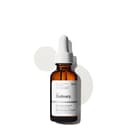
The Ordinary Retinol 0.2% in Squalane

The Ordinary Retinol 0.2% in Squalane

The gentlest true-retinol starting point on the shelf: a stated 0.2% in the same cushioning squalane base. If you have never used a retinoid, this is where to begin before touching anything stronger.

Best first bottle — and the budget pick
2
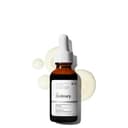
The Ordinary Retinal 0.2% Emulsion

The Ordinary Retinal 0.2% Emulsion

The cheapest way into retinaldehyde by a wide margin, and it states its strength — a labeled 0.2% retinal in a light emulsion. Retinal is a genuinely strong rung, so the low price should not be read as a low commitment.

Best overall, once you are tolerant
$14.90 · View on Amazon

Price as of November 21, 2026. #ad How we’re funded

3
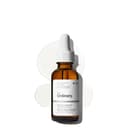
The Ordinary Retinol 0.5% in Squalane

The Ordinary Retinol 0.5% in Squalane

The clearest-labeled retinol you can buy: an exact 0.5% pure retinol in a squalane base, at a price that makes 'start low and go slow' painless. For most people ready to move up from a starter strength, this is the sensible middle rung.

Best middle rung for most people
$9.30 · View on Amazon

Price as of November 21, 2026. #ad How we’re funded

4
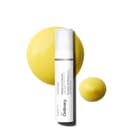
The Ordinary Granactive Retinoid 2% Emulsion

The Ordinary Granactive Retinoid 2% Emulsion

Not retinol at all, but a retinoid ester (hydroxypinacolone retinoate) marketed as gentler. A reasonable option for skin that flakes on plain retinol — with the honest caveat that its evidence base is thinner than retinol's.

Best for skin that reacts to retinol
$12.10 · View on Amazon

Price as of November 21, 2026. #ad How we’re funded

5
The Ordinary Retinol 1% in Squalane

The Ordinary Retinol 1% in Squalane

The top rung of the clearest-labeled retinol ladder on the shelf: a stated 1% pure retinol in the same squalane base, for a few dollars. It is genuinely strong — the right buy only once 0.5% is comfortable nightly, and the wrong one for anybody still building tolerance.

Best high strength, for experienced users only
$9.90 · View on Amazon

$11.9017% off

Price as of November 21, 2026. #ad How we’re funded

The picks in full

#1Best first bottle — and the budget pick

The Ordinary Retinol 0.2% in Squalane

The gentlest true-retinol starting point on the shelf: a stated 0.2% in the same cushioning squalane base. If you have never used a retinoid, this is where to begin before touching anything stronger.

Strengths

  • Stated 0.2% — a genuine beginner strength, plainly labeled
  • Squalane base softens the early dryness
  • About as cheap as effective retinol gets

Trade-offs

  • Too gentle to be anyone's long-term destination — you'll want to step up
  • Still pure retinol, so introduce it slowly regardless of the low number
Key activeRetinol
Stated concentration0.2%
FormatLightweight oil serum
Fragrance-freeYes
Best forSensitive, Beginner, Normal

Formulation note. 0.2% pure retinol in squalane — the entry rung of The Ordinary's three-strength ladder. Starting here and moving to 0.5% only once nightly use is comfortable is the textbook way to build tolerance.

Ingredients and claims read from the product listing, on July 18, 2026. “Not published” means the brand does not state that figure.

#2Best overall, once you are tolerant

The Ordinary Retinal 0.2% Emulsion

The cheapest way into retinaldehyde by a wide margin, and it states its strength — a labeled 0.2% retinal in a light emulsion. Retinal is a genuinely strong rung, so the low price should not be read as a low commitment.

Strengths

  • States an exact 0.2% retinal, which most retinal products do not
  • Dramatically cheaper than every other retinal on this page
  • Light emulsion base layers easily under a moisturizer

Trade-offs

  • 0.2% retinal is a high rung, not a starter — it is not where a beginner should begin
  • Small 0.5 fl oz bottle, so it does not last as long as the price suggests
Key activeRetinaldehyde (retinal)
Stated concentration0.2%
FormatLight emulsion
Fragrance-freeNot published
Best forRetinol-experienced, Normal

Formulation note. Retinaldehyde sits one conversion step from retinoic acid, where retinol sits two. That is why a 0.2% retinal is not comparable to a 0.2% retinol — the numbers look similar and the potency is not.

Ingredients and claims read from the product listing, on August 11, 2026. “Not published” means the brand does not state that figure.

#3Best middle rung for most people

The Ordinary Retinol 0.5% in Squalane

The clearest-labeled retinol you can buy: an exact 0.5% pure retinol in a squalane base, at a price that makes 'start low and go slow' painless. For most people ready to move up from a starter strength, this is the sensible middle rung.

Strengths

  • Publishes the exact strength — 0.5% — which almost no drugstore retinol does
  • Squalane base is lightly occlusive and cushions irritation
  • Sold in 0.2% / 0.5% / 1% so you can step up deliberately

Trade-offs

  • Pure retinol in an anhydrous oil — no added niacinamide or soothing actives
  • Squalane finish can feel heavy layered over other oils
Key activeRetinol
Stated concentration0.5%
FormatLightweight oil serum
Fragrance-freeYes
Best forNormal, Dry, Not-too-sensitive

Formulation note. Pure retinol dispersed in squalane; no water phase, so none of the pH and packaging fuss vitamin C needs. The strength is printed on the label, which is the exception in this category, not the rule.

Ingredients and claims read from the product listing, on July 18, 2026. “Not published” means the brand does not state that figure.

#4Best for skin that reacts to retinol

The Ordinary Granactive Retinoid 2% Emulsion

Not retinol at all, but a retinoid ester (hydroxypinacolone retinoate) marketed as gentler. A reasonable option for skin that flakes on plain retinol — with the honest caveat that its evidence base is thinner than retinol's.

Strengths

  • Retinoid ester is widely reported as less irritating than pure retinol
  • Stated 2% of the Granactive Retinoid complex — a labeled figure
  • Light emulsion texture layers easily

Trade-offs

  • Hydroxypinacolone retinoate has far less published evidence than retinol
  • The '2%' is the complex, not 2% retinol — don't read it as high-strength
Key activeGranactive Retinoid (hydroxypinacolone retinoate)
Stated concentration2% Granactive Retinoid complex
FormatLight emulsion
Fragrance-freeYes
Best forSensitive, Retinol-reactive

Formulation note. The active is hydroxypinacolone retinoate, a retinoic-acid ester — not free retinol. The '2%' refers to the solubilized complex, not a retinol percentage. We present it as a gentler alternative with a smaller evidence base, not an equal to retinol.

Ingredients and claims read from the product listing, on July 18, 2026. “Not published” means the brand does not state that figure.

#5Best high strength, for experienced users only

The Ordinary Retinol 1% in Squalane

The top rung of the clearest-labeled retinol ladder on the shelf: a stated 1% pure retinol in the same squalane base, for a few dollars. It is genuinely strong — the right buy only once 0.5% is comfortable nightly, and the wrong one for anybody still building tolerance.

Strengths

  • States an exact 1% — a genuinely high strength, printed on the label
  • Squalane base cushions a strength that would otherwise be harsh
  • The cheapest stated-1% retinol we've found

Trade-offs

  • 1% will over-strip skin that has not built tolerance — not a starter
  • Pure retinol in an oil base, with no niacinamide or soothing actives to buffer it
Key activeRetinol
Stated concentration1%
FormatLightweight oil serum
Fragrance-freeYes
Best forRetinol-experienced, Normal, Dry

Formulation note. 1% pure retinol dispersed in squalane — the same anhydrous base as the 0.2% and 0.5%, at the top of the three-strength ladder. The strength is printed on the label, which is what makes stepping up a deliberate decision rather than a guess.

Ingredients and claims read from the product listing, on August 11, 2026. “Not published” means the brand does not state that figure.

The range, laid out as a ladder

The brand sells three molecules. In increasing closeness to the only form that works in skin — retinoic acid — they are: retinol, which converts in two steps; hydroxypinacolone retinoate, an ester that binds receptors without converting; and retinaldehyde, which converts in one. The squalane retinols come in a stated 0.2%, 0.5% and 1%, which is the ladder proper. The Retinal 0.2% and the Granactive Retinoid 2% sit beside it rather than on it, because a percentage of one molecule is not comparable to the same percentage of another.

All three squalane rungs are the same formula at three doses: pure retinol dispersed in squalane, with no water phase. That has two consequences worth knowing. The good one is stability — an anhydrous oil avoids the pH and packaging problems a water-based formula creates, and a validated stability study of twelve commercial cosmetics found retinoid losses of 0% to 80% over six months at 25 °C, with light doing more damage than heat. The less good one is that there is nothing in the bottle to cushion the retinol: no niacinamide, no ceramides, no soothing actives. Everything that buffers it has to be something else you own.

The 2% that is not 2%

The Granactive Retinoid 2% Emulsion is the one product in the range whose number misleads people, and it is worth being precise about why. The 2% refers to the Granactive Retinoid complexin the formula, not to 2% of hydroxypinacolone retinoate. The citable evidence for HPR is a single open pilot study of a fixed combination containing 0.1% HPR plus 1% encapsulated retinol in mild to moderate acne — a 41% mean reduction in acne grade, 15.3% mild-to-moderate local side effects, and the authors themselves asking for a controlled trial. Promising, thin, and nowhere near a basis for treating “2%” as the strongest thing in the range. Our granactive retinoid comparison works through the chemistry properly.

What the brand publishes, and the one thing it does not

Disclosure is this range’s whole advantage, so it is worth recording where it stops. The brand’s own US page for the Retinal 0.2% Emulsion publishes a free-from list — alcohol-free yes, oil-free yes, silicone-free yes, vegan yes, cruelty-free yes, water-free no, pH 6.0–7.0 — and “fragrance-free” is not on it. The page makes no fragrance-free claim anywhere. So our spec table records that product’s fragrance status as “Not published” rather than assuming it matches the squalane rungs, which are fragrance-free. If you are avoiding fragrance, that difference decides between the top two picks on this page, and it is the kind of thing a brand roundup exists to catch.

The criteria, in order

  1. The right rung for the reader, not the highest one. A 1% bought too early is the classic way to lose three months. We rank the 0.2% first for that reason, not because it is the strongest thing here.
  2. Molecule before percentage. A stated 0.2% retinal is a different and generally stronger proposition than a stated 0.2% retinol, because of the conversion step rather than the number.
  3. What the base does and does not do. Squalane is lightly occlusive and cushions a little; the emulsions are lighter. Neither carries soothing actives.
  4. Published fragrance status.Fragrance is among the commonest causes of allergic contact dermatitis and the reaction can be delayed by days — the window in which people blame the retinoid and quit.
  5. Cost of a ten-month run. Every product here clears that bar more easily than anything else on this site, which is the honest reason this range is worth recommending at all.

Which rung you should be on

Never used a retinoid: 0.2% squalane, two nights a week, moisturizer over the top, sunscreen every morning. Give it eight weeks before judging anything.

Comfortable at 0.2% nightly for a month or more: 0.5%. This is where most people should settle and stay. Our step-up guide sets out the actual signal to move, which is not a date on a calendar.

Comfortable at 0.5% nightly and still want more:you have two routes, and sideways is usually better than up. Sideways is the Retinal 0.2% — a closer molecule at a comfortable dose. Up is the 1%, which is genuinely strong and is the right buy only once 0.5% is uneventful every single night. Our retinol vs retinal page for this brand compares the two routes directly.

Retinol has already failed you on tolerance:the Granactive Retinoid emulsion. Not because “2%” is more, but because changing the molecule is a real lever when changing the dose has not worked.

What this range does not give you

A buffered formula. If your skin needs niacinamide and ceramides in the same bottle as the retinol, this brand does not sell that; CeraVe does, and our CeraVe roundup ranks the three options.

An eye product or a body size. There is no eye formulation in the range and no 200 ml body bottle, so neck, chest and hands have to be served by the face products or by something else. Our body lotion roundup covers the second route.

Any clinical claim we can check.The brand is unusually quiet about efficacy claims, which we count in its favour. It also means the evidence for what these products will do comes from the retinoid literature generally — the tretinoin collagen record, the ten-month plateau — and not from a trial of these bottles. Nobody has run one.
Frequently asked questions

Which The Ordinary retinol should I start with?

Retinol 0.2% in Squalane, two nights a week. It is the lowest stated strength the brand makes, it is the cheapest product on this site, and starting low is the only reliable way to end up using a retinoid for the ten months the published record says it takes to plateau. If your skin is reactive or very dry, consider the Granactive Retinoid emulsion instead — different molecule, gentler reputation, same price range.

Is The Ordinary Retinal better than their Retinol 1%?

For most people, yes — and it is cheaper. Retinaldehyde is one conversion step from retinoic acid where retinol is two, so a stated 0.2% retinal is not the weaker product it looks like next to a stated 1% retinol. The 1% is the right buy only if you are already comfortable at 0.5% every night and specifically want the top of the retinol ladder.

Does The Ordinary's Granactive Retinoid 2% contain 2% retinoid?

No. The 2% describes the Granactive Retinoid complex in the formula, not 2% of hydroxypinacolone retinoate. The number on the front measures the delivery material rather than the active, which is the same pattern that catches people out elsewhere on this site. Treat it as a different molecule to try, not as the strongest product in the range.

Are The Ordinary retinols fragrance-free?

The squalane retinols are. The Retinal 0.2% Emulsion is recorded on this site as 'Not published', because the brand's own US product page publishes a free-from list for it — alcohol-free, oil-free, silicone-free, vegan, cruelty-free — and fragrance-free is not on that list, and no claim appears anywhere else on the page. We will not assume a claim a brand chose not to make, in either direction.

Can I use two The Ordinary retinoids together?

No. They all converge on the same receptor, so using two gets you the irritation of a higher dose without knowing what dose you took. Use one, give it eight weeks before judging, and change one thing at a time.

Is there anything wrong with a squalane base?

Nothing wrong, but it is a choice with trade-offs. The anhydrous oil avoids the pH and stability problems a water phase brings — relevant given that a validated study of twelve commercial cosmetics found retinoid losses of 0% to 80% over six months at room temperature. What it will not do is buffer. There is no niacinamide and no ceramide in the bottle, so the cushioning has to come from your moisturizer, and the finish can feel heavy if you layer it over other oils.

Sources

  • The Ordinary — Retinal 0.2% Emulsion product page (free-from list) — The brand's own US product page, fetched October 27, 2026. It publishes a free-from / highlights set for this product — alcohol-free Yes, oil-free Yes, silicone-free Yes, vegan Yes, gluten-free Yes, cruelty-free Yes, water-free No, pH 6.0-7.0 — and 'fragrance-free' is NOT among them. The page makes no fragrance-free claim anywhere. Cited as the reason this site records the Retinal 0.2% Emulsion's fragrance status as 'Not published' rather than assuming it matches the fragrance-free rungs of the same ladder (accessed October 27, 2026)
  • Tolerance profile of retinol, retinaldehyde and retinoic acid under maximized and long-term clinical conditions (PubMed) — Retinol and retinaldehyde share a low irritation potential; retinoic acid (tretinoin) is more irritating (accessed July 17, 2026)
  • Veraldi S et al. — Hydroxypinacolone retinoate with retinol glycospheres in mild to moderate acne (G Ital Dermatol Venereol, 2015) — Open pilot study of a fixed combination containing 0.1% hydroxypinacolone retinoate (a synthetic ester of 9-cis-retinoic acid) plus 1% encapsulated retinol: 41% mean reduction in acne grade, 15.3% mild-to-moderate local side effects, and the authors themselves call for a controlled trial (accessed August 19, 2026)
  • Temova Rakuša Ž, Škufca P, Kristl A, Roškar R — Retinoid stability and degradation kinetics in commercial cosmetic products (J Cosmet Dermatol, 2021) — Validated HPLC-UV study of 16 retinoid derivatives (retinol, retinyl palmitate, beta-carotene and hydroxypinacolone retinoate) in 12 commercial cosmetics over 6 months of long-term and accelerated stability testing plus a one-week photostability study. Retinoid degradation followed first-order kinetics; the products showed a 0%-80% decline after 6 months at 25 °C and a 40%-100% decline at 40 °C; 'light degradation was more pronounced than temperature-induced degradation'; instabilities were 'formulation-dependent and associated with lower contents than declared in some cosmetics'. Cited for the size of the stability problem a sealed single-dose format is built to solve — the study did not test this product (accessed September 19, 2026)
  • Draelos ZD, Peterson RS — Newly formulated retinol serums vs tretinoin cream in escalating doses (J Drugs Dermatol, 2020) — Twelve-week double-blind study in 45 photoaged women aged 35 to 65 (Fitzpatrick I-IV) using a STEP-UP protocol: retinol serum escalated 0.25% then 0.5% then 1.0%, or tretinoin cream 0.025% then 0.05% then 0.1%, each with a moisturizer. The two were at parity on investigator and subject assessment and on TEWL at week 12; retinol improved visual smoothness more than tretinoin at week 4 (P = 0.031) and skin dryness significantly (P < 0.001); week-12 punch biopsies showed newly formed collagen and GREATER epidermal thickening in the retinol group. Industry-adjacent cosmetic research, not an independent trial — cited for the escalation method and the direction of the histology (accessed September 18, 2026)
  • Griffiths CE et al. — Restoration of collagen formation in photodamaged human skin by tretinoin (N Engl J Med, 1993) — Biopsies from 26 subjects plus 29 patients treated 10 to 12 months with daily 0.1% tretinoin cream (15 patients) or vehicle (14). Collagen I formation was 56% LOWER in photodamaged skin than in sun-protected buttock skin (P < 0.001); tretinoin produced an 80% INCREASE in collagen I formation against a 14% decrease on vehicle (P = 0.006). Prescription tretinoin, not cosmetic retinol — cited for the direction of the effect on dermal collagen (accessed September 18, 2026)
  • Voorhees JJ — Clinical effects of long-term therapy with topical tretinoin and cellular mode of action (J Int Med Res, 1990) — Double-blind, placebo-controlled study: 0.1% topical tretinoin reduced the effects of photoageing maximally after 10 months, with no further improvement between 10 and 22 months. Histologically it induced 'epidermal hyperplasia, compaction of the stratum corneum and the deposition of ultrastructurally visible collagen fibrils in the papillary dermis', reduced the number and activity of melanocytes, and significantly increased mitoses (accessed September 18, 2026)
  • American Academy of Dermatology — Retinoid or retinol? — AAD on the difference between prescription retinoids and OTC retinol (accessed July 17, 2026)
  • American Academy of Dermatology — Eczema types: Contact dermatitis causes — AAD names fragrance among the most common causes of allergic contact dermatitis, and notes the rash can take hours or days to appear (accessed August 19, 2026)
  • U.S. FDA — 21 CFR 701.3, Designation of ingredients (eCFR) — The federal rule governing how a cosmetic ingredient list is ordered. Paragraph (a): 'The label on each package of a cosmetic shall bear a declaration of the name of each ingredient in descending order of predominance, except that fragrance or flavor may be listed as fragrance or flavor.' Paragraph (f) allows an alternative: ingredients 'present at a concentration greater than 1 percent, in descending order of predominance', followed by ingredients 'present at a concentration of not more than 1 percent, without respect to order of predominance', followed by color additives 'without respect to order of predominance'. Cited for the exact limit of what an ingredient's POSITION can tell a reader: late placement indicates the 1-percent-or-less group, but within that group the order carries no information about quantity (accessed September 26, 2026)

Keep reading