The three things that go wrong on a marketplace
1. The listing title drifts from the brand’s own name.This is the most common and the most misleading, because a title is written to be searched rather than to be accurate, and it changes without notice. Two cases from our own registry make the point. Olay’s body lotion currently reads “Smoothing with Retinol24” on Amazon where the brand page has called it other things, and Versed’s body lotion is sold as “Press Restart” on Amazon and on the brand’s own URL while the brand page now calls it “Gentle Retinol Body Lotion”. Neither is a scandal. Both mean the same thing for you: do not buy a model name you read in a roundup if the listing does not say it. We do not print a product name a live listing will not support, and that is why some of our entries read more plainly than the marketing does.
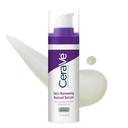
2. The listing is the only specification you will ever get.On a marketplace this cuts harder than in a shop, because there is no box to turn over. If the brand publishes no retinol percentage — and CeraVe, RoC, Neutrogena, La Roche-Posay and Olay all publish none, for any retinol they sell — then what you can know is the ingredient list and nothing else. And an ingredient list cannot answer the dose question, because the federal rule orders ingredients above one percent by predominance and allows everything at one percent or less to be listed without respect to order of predominance. Every cosmetic retinoid sits in that group. Position proves presence. Only a published figure proves amount.
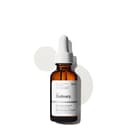
3. The offer disappears.An ASIN with no featured offer is the quiet failure mode of every “best on Amazon” list on the internet, and the reason this page prints a live count instead of a claim. We have watched specific listings in our own registry go dark and come back: one of The Ordinary’s squalane rungs stopped returning a price between two weekly checks, and a premium micro-dose serum came back after reading “Currently unavailable” the week before. That is normal marketplace behaviour, not a product problem — but it is why our buttons degrade to “Check price on Amazon” rather than showing you a number we cannot confirm.
How we ranked these
Three criteria, in this order, and all three are marketplace-specific.
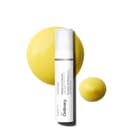
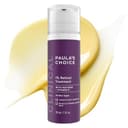
Can you verify it from what is published? Four of these seven carry an exact stated figure from the brand: 0.2% retinaldehyde, 0.5% retinol, 0.1% retinaldehyde and 1% retinol. That is unusually high for any retinol list and it is deliberate, because a published figure is the one specification a listing title cannot quietly change.
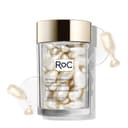
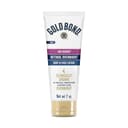
Does the brand publish the whole formula?RoC’s night serum capsules earn their slot on this specifically: the brand publishes the complete eight-item formula, which is rarer than a percentage and more useful than most listings manage. Gold Bond publishes a full 45-item list for its lotion, which is how we can tell you retinol sits eighteenth in it — and immediately tell you that the position proves presence, not dose.
Is it reliably purchasable? Every pick on this page had a live featured offer on our most recent dated check. Where one of them stops having one, the button will say so on its own rather than us having to remember to come back.
What we did not rank on: review counts, star ratings, “Amazon’s Choice” badges or bestseller ranks. We own none of these units, we run no trials and we have no way to audit a review corpus, so leaning on one would be dressing other people’s unverified impressions up as our assessment. Our editorial policy is explicit about that.
What to check before you tap buy
Check who is selling it.Retinoids are chemically fragile, and the supply chain is part of the product. A validated study of sixteen retinoid derivatives across twelve commercial cosmetic products measured losses of 0% to 80% after six months at 25 °C and 40% to 100% at 40 °C, with light doing more damage than heat and some products testing below their declared content. A bottle that spent a summer in a warm third-party warehouse is not the same bottle as one that did not, and nothing on the listing will tell you which you are getting. Prefer the brand’s own storefront or Amazon as the seller where you have the choice.
Check the size, not the price. Marketplace listings make cost-per-millilitre genuinely hard to see, and the trap is small bottles. A 15 ml emulsion and a 50 ml cream-serum are not comparable purchases even at the same price, and a 14 ml eye cream at twenty dollars is an expensive face cream by volume. Our value roundup does that arithmetic properly.
Check the expiry logic rather than the date. The FDA does not require a cosmetic to carry an expiration date at all and notes that shelf life depends on how the product is stored. So buy a size you will finish, prefer opaque packaging and a narrow neck over a wide open jar, and write the date you opened it on the bottle. Our guide to whether retinol expires has the detail.
Check that you are buying the right molecule.“Retinol” in a marketplace title regularly covers four chemically different things: retinol, retinal, a retinyl ester and hydroxypinacolone retinoate, with adapalene sold alongside them as an actual drug. Our over-the-counter retinoid roundup ranks across all of them and is the page to read if you have not settled that question yet.
Where to buy each kind of thing
For a first retinoid, the cheapest stated dose and nothing clever — see the beginner roundup. For skin that has reacted before, a buffered or encapsulated formula and the knowledge that you are trading a figure for a base — the gentle roundup ranks those by mechanism. For body, buy on volume rather than on brand: a 30 ml face serum is the wrong purchase for arms and legs, and the body-lotion roundup has the sizes. And if you are shopping a sale rather than a product, our deals page carries what the brands themselves have published about their own promotions and no price predictions of our own.
What none of this buys you
Faster results. The published record the whole category rests on is prescription tretinoin: collagen I formation rose by about 80% on ten to twelve months of daily 0.1% tretinoin against a 14% fall on vehicle, with the curve rising for roughly ten months before it plateaus. No cosmetic retinol inherits those numbers, at any price, from any marketplace. What they share is a mechanism and a timescale, which means the only purchase decision that reliably changes your outcome is buying something you will still be using in ten months.