Naturium Retinaldehyde 0.10% Review
Most retinals come in 1 oz bottles you end up rationing for the face alone. This one states its strength, comes in 1.7 oz, and is explicitly sold for face, neck and chest — which changes what you can realistically treat.
How this is funded: we earn a commission if you buy through our links, at no extra cost to you. It never changes which product we recommend, and we’ll tell you when we’d skip one. Full disclosure.
A stated 0.10% retinal in a cream-serum base, sold in a 1.7 oz size explicitly for face, neck and chest. That size-and-scope combination is unusual and genuinely useful: most retinals come in 1 oz bottles you end up rationing for the face alone.
Strengths
- States 0.10% retinal — a mid rung you can actually place on the ladder
- 1.7 oz is enough to cover neck and chest without rationing
- Cream-serum texture is more cushioning than a thin emulsion
Trade-offs
- Larger bottles take longer to finish, and retinal degrades once opened
- Still a real retinoid dose over a large area — introduce it slowly
| Key active | Retinaldehyde (retinal) |
|---|---|
| Stated concentration | 0.10% |
| Format | Cream serum |
| Fragrance-free | Not published |
| Best for | Treating face, neck and chest with one stated-strength retinal |
Formulation note. A stated 0.10% retinaldehyde in a cream-serum base, listed for face, neck and chest. Sold alongside a 0.05% and a 0.15% in the same line, so the range functions as a ladder in the same way The Ordinary's retinols do.
Ingredients and claims read from the product listing, on August 11, 2026. “Not published” means the brand does not state that figure.
The retinal category has a quiet practical problem that nobody markets against: the bottles are small. A 15 or 30 ml retinal at premium pricing is a face product, and it is a face product you use sparingly. Which is awkward, because the areas that most visibly show sun damage and crepiness — the neck, the chest, the forearms — are not the face.
This product is the exception. A stated 0.10% retinaldehyde in a 1.7 oz cream serum, listed for face, neck and chest. That combination of a published figure and a usable volume is rare enough to be the main reason to write about it.
The number, and what it means on the retinal scale
A stated 0.10% puts this in the middle of the retinal range. Read through a retinol lens that number looks negligible; read correctly it is a real dose. Retinal sits one enzymatic conversion from retinoic acid where retinol sits two, which is why the whole category uses much smaller figures. Our retinol vs retinal page sets out the chain.
Naturium also sells 0.05% and 0.15% versions in the same line, which turns it into a ladder rather than a single product — the same structural virtue we credit The Ordinary’s retinols and Avene’s Retrinal creams for. Getting comfortable on one rung and stepping to the next changes one variable, which is the only way to learn anything about your own tolerance.
There is reassurance in the tolerance literature — work comparing retinol, retinaldehyde and retinoic acid under maximized conditions found retinol and retinaldehyde to share a low irritation potential relative to retinoic acid. That is useful context and not a license to start at the top.
The size, and why it changes the plan
50 ml is roughly twice a standard face serum. Applied to a face alone that is a long time; a potential problem we come back to below. Applied to face, neck and chest it is a sensible few months, and it makes treating those areas affordable in a way the rest of the retinal shelf does not.
That matters because the neck and decolletage are where photoaging is most visible and least treated. Our neck and chest roundup is built around exactly this problem — thinner skin, more sun exposure, and far more surface area than a 30 ml bottle was sized for — and our crepey skin page covers the texture change that brings people to it.
One warning that should not be buried. The chest reacts sooner than the face, and applying a mid-strength retinal across it at the frequency your cheeks tolerate is a common way to end up with a mottled, flaking decolletage. Ramp up on each area separately, and treat the chest as if it were a different person’s skin.
The stability trade
Here is the counter-argument, and it is real. Retinaldehyde is generally regarded as the less stable of the two common cosmetic forms — light and air degrade it, and a larger bottle simply spends longer being opened.
If you are treating a face only, a 50 ml retinal may take the better part of a year to finish, and the last third will not be what you bought. A 15 ml bottle you get through in two months is arguably the better format for that buyer. Our shelf-life guide covers the packaging hierarchy and the signals that a product has oxidized.
The resolution is straightforward: buy this size if you are genuinely treating more than a face. If you are not, buy something smaller and cheaper per bottle even though it is dearer per ounce.
The base
A cream serum — thicker than a thin emulsion, lighter than a night cream. That is a good middle ground for body application, where a watery serum disappears and a heavy cream takes too long to absorb, and it is a comfortable texture for normal to dry skin.
For oily skin it will feel like more than you want on the face; our oily-skin roundup picks lighter formats. Fragrance status is not stated on the listing we read, so we record it as unknown rather than assuming either way.
Who it suits
People treating face, neck and chest together who want a published retinal figure and cannot justify pharmacy pricing across that much skin. That is the core case and it is a strong one — there is not much competition for it.
It also suits retinol users ready to move up a molecule, where the mid rung of a three-step line is a sensible landing point, and anyone whose main concern is sun damage on the chest, which is where this product is most obviously useful.
Who should skip it
Beginners. Retinal is a step up from retinol and this is the middle of its range — our beginner roundup is the right shelf, and a stated low-strength retinol is the right first purchase.
Face-only users who will take a year to finish it, for the stability reason above. And anyone with reactive skin who wants a formulated cushioning base — the Avene cream is the better-built product for that reader, at a price to match. Our Avene Retrinal review covers it.
How to use it
At night, on clean and completely dry skin. Start with the face only, twice a week for a month, and add nights using the schedule in our frequency guide. Introduce the neck a few weeks later, and the chest a few weeks after that — one area at a time, each with its own ramp-up.
Moisturizer over the top everywhere you applied it. No acids or strong vitamin C in the same routine while you are adjusting, per the layering guide. Store it closed and out of light. And sunscreen every morning on every area you are treating, chest included — which is precisely the area people skip, and precisely why it looks the way it does.
The verdict
The most practical retinal on this site for anyone treating more than a face. A published figure, a ladder above and below it, and a size that makes the neck and chest a realistic target rather than an aspiration.
Buy it for that job. If you only want a face retinal, the same stated strength exists in smaller, better-protected bottles, and a smaller bottle of an unstable active is not the false economy it looks like.
General guidance, not medical advice. Retinol Room is written by an enthusiast, not a dermatologist. For a diagnosis, a reaction, or a prescription active like tretinoin, see a qualified professional. Introduce any new active slowly and patch-test first.
If it’s not the one, consider these
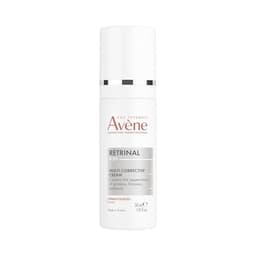
Avene Retrinal 0.05% Anti-Aging Retinaldehyde Cream
A stated 0.05% retinal in a cream base from a pharmacy brand — the gentler rung, if 0.10% over a large area sounds like too much.
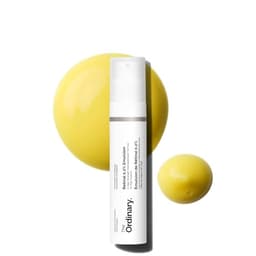
The Ordinary Retinal 0.2% Emulsion
A stated 0.2% retinal in a 15 ml bottle — the cheapest way to reach the top of the retinal range, for the face only.
Read the full review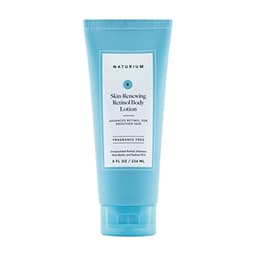
Naturium Skin-Renewing Retinol Body Lotion
If the chest and arms are the real target, a shea-butter retinol body lotion in a size that treats them properly.
Read the full review
Frequently asked questions
Is 0.10% retinaldehyde strong?
It sits in the middle of the retinal range, where 0.05% is an entry rung and 0.2% is near the commercial ceiling. Because retinal is one enzymatic conversion from retinoic acid where retinol is two, these small numbers are more potent than a retinol percentage of the same size. Treat it as a real dose, especially if you are applying it over a large area.
Can I use it on my neck and chest?
That is what the size is for, and the listing describes it for face, neck and chest. Ramp up on those areas separately though — the skin on the neck and decolletage is thinner and reacts sooner than the face, so a schedule that is comfortable on your cheeks can be too much on your chest.
Is a bigger bottle a bad idea for retinal?
It is a genuine trade. Retinaldehyde is the less stable of the two common cosmetic forms, so a bottle that takes eight months to finish spends eight months degrading. If you are only treating a face, a smaller bottle you finish quickly is arguably better. If you are treating face, neck and chest, you will get through this at a reasonable rate.
How does it compare to Avene Retrinal 0.1%?
Same stated figure, very different products. Avene is a cushioning cream in 30 ml at pharmacy pricing with a matched 0.05% below it; this is a cream serum in 50 ml at a fraction of the price per ounce with 0.05% and 0.15% versions in the same line. Both publish their number, which puts both ahead of most of the category.
Can I switch straight from retinol to this?
Move to it, but restart the ramp-up. Tolerance belongs to a specific molecule at a specific dose, and retinal is more potent per unit than retinol. Twice a week for a month, then build — even if you were comfortable on a nightly stated 0.5% retinol.
Is it fragrance-free?
The listing we read did not state it, so our spec table prints 'Not published'. That is an absence of confirmation, not a finding that it contains fragrance. Our fragrance-free roundup lists only products where a listing confirms it.
How should I store it?
Closed, out of direct light, away from heat. Retinal degrades faster than retinol, and a larger bottle magnifies the consequence. If it darkens noticeably or the smell changes, replace it — our shelf-life guide covers the signals and the packaging hierarchy.
Sources
- Tolerance profile of retinol, retinaldehyde and retinoic acid under maximized and long-term clinical conditions (PubMed) — Retinol and retinaldehyde share a low irritation potential; retinoic acid (tretinoin) is more irritating (accessed July 17, 2026)
- American Academy of Dermatology — Retinoid or retinol? — AAD on the difference between prescription retinoids and OTC retinol (accessed July 17, 2026)
- Human Skin Aging and the Anti-Aging Properties of Retinol (PubMed) — Review of topical retinol's effect on collagen and photoaging (accessed July 17, 2026)
- The use of retinoids in the treatment of photoaging (PubMed) — Clinical-trial evidence for topical retinoids in photoaging (accessed July 17, 2026)
- Moisturizers — StatPearls (NCBI Bookshelf) — Reference on humectants (hyaluronic acid), occlusives and emollients (accessed July 17, 2026)
Keep reading
Best retinal (retinaldehyde) serums
The whole retinal field, compared on stated strength, base and price.
See the picksBest retinol for neck & chest
The area this product is sized for, and how to ramp up on skin that reacts sooner.
See the picksRetinol vs retinal
Why one conversion step changes the potency, and how to read the smaller numbers.
Compare the twoRetinol for sun damage
The concern most often visible on the chest — and what a retinoid realistically changes.
See the picks