Differin Adapalene 0.1% Gel Review
The only prescription-grade retinoid you can buy off the shelf, at a stated 0.1%. It belongs on a retinol site for one reason: a lot of people buying retinol for acne should be buying this instead.
How this is funded: we earn a commission if you buy through our links, at no extra cost to you. It never changes which product we recommend, and we’ll tell you when we’d skip one. Full disclosure.
The only prescription-grade retinoid you can buy off the shelf, at a stated 0.1% adapalene. If your reason for wanting retinol is acne rather than lines, this is very likely the more appropriate product — and it is regulated as a drug, with the trial evidence that implies.
Strengths
- States an exact 0.1% adapalene — a regulated over-the-counter drug, not a cosmetic
- Backed by randomized trials against tretinoin, with comparable efficacy and better tolerability
- 45 g pump lasts a long time at a pea-sized nightly dose
Trade-offs
- It is an acne treatment first — the anti-aging evidence base belongs to other retinoids
- Expect a genuine adjustment period of dryness and peeling in the first weeks
- Not the right tool if your only concern is fine lines
| Key active | Adapalene (a third-generation retinoid) |
|---|---|
| Stated concentration | 0.1% |
| Format | Gel |
| Fragrance-free | Not published |
| Best for | Acne and clogged pores rather than fine lines |
Formulation note. Adapalene is a synthetic retinoid that binds retinoic acid receptors directly, so unlike retinol it needs no conversion in the skin. It is sold in the US as an over-the-counter acne drug at 0.1%, which is why the strength is on the box — drug labeling requires it.
Ingredients and claims read from the product listing, on August 11, 2026. “Not published” means the brand does not state that figure.
Why this is on a retinol site
Because a large share of the people shopping for retinol are shopping for it to treat acne, and for that job this is very likely the better product. Retinol Room exists to be honest about what works, and it would be a strange kind of honesty to leave out the only prescription-grade retinoid available without a prescription.
Adapalene is a synthetic third-generation retinoid. Unlike retinol, which needs two enzymatic conversions in the skin before it becomes active, adapalene binds retinoic acid receptors directly. In the US it is sold over the counter as an acne drug at a stated 0.1%, and the number is on the box because drug labeling requires it — which is already more than most of the retinol shelf will tell you.
The evidence, which is the point
This is the unusual part of reviewing a drug rather than a cosmetic: there is a trial dossier to read. A meta-analysis of five randomized trials found adapalene 0.1% gel had efficacy comparable to tretinoin 0.025% gel with better local tolerability — less erythema, dryness and desquamation. Individual trials found faster early reductions in inflammatory lesions, and a clear majority of patients preferring adapalene to tretinoin at study completion.
Nothing sold as a cosmetic retinol has that behind it. Retinol’s own literature is real and largely concerns photoaging rather than acne. So when someone with breakouts asks which retinoid to use, the honest answer is not the one with better marketing — it is the one with acne trials.
What using it is actually like
Not gentle, but not brutal either. Expect a genuine adjustment period: dryness and peeling over the first few weeks, and often a stretch where the skin looks worse as existing congestion surfaces faster. That phase typically settles somewhere between one and three months. It is the reason most people quit, and it is entirely predictable.
The 45 g pump is a lot of product at a pea-sized nightly dose, which makes the running cost low relative to almost anything in the retinol category. The gel texture suits oily and combination skin and can feel drying on already-dry skin — the fix there is a proper moisturizer over the top rather than less product.
One practical advantage over other retinoids: adapalene is comparatively photostable, which makes it more forgiving about storage than retinal or retinol. It does not make you immune to the sun-sensitivity issue — daily sunscreen still applies, per our sunscreen guide.
Who it suits
People with active acne: blackheads, whiteheads, congestion, inflamed spots. People whose acne is mostly controlled but who keep getting new congestion and want prevention rather than spot treatment. People who have tried a retinol for acne and found it did very little, which is a common and predictable outcome.
It also suits people who simply want a stated strength and a regulated product. If the thing that frustrates you about this category is that nobody will tell you what is in the bottle, adapalene is a refreshing purchase.
Who should skip it
Skip it if your only concerns are fine lines, tone and photoaging. You would be using an acne drug for a job that retinol has the better evidence for, in a gel format with none of the cushioning bases, eye formulations or body options that the retinol category offers. Our serum roundup is the better shelf.
Skip it if your skin is genuinely reactive and has struggled with even gentle retinols — a buffered, encapsulated formulais a more realistic starting point. Skip it if you are pregnant or breastfeeding, as with any retinoid. And skip it if what you actually have is rosacea rather than acne, which is a genuinely common confusion — see our rosacea page, because much of the acne toolkit makes rosacea worse.
How to use it
At night, on clean and completely dry skin, a pea-sized amount for the whole face — not spot-applied. Retinoids work preventively across an area; dabbing them on individual spots does very little. Start at two or three nights a week and build over several weeks. Moisturize on top, generously, especially in the first month.
Keep exfoliating acids out of the same routine. If you use benzoyl peroxide, move it to the morning while you build tolerance. Sunscreen daily. And be patient in a specific way: give it twelve weeks before you judge, because week four is the worst point and it is exactly when people quit. Our purge guide covers how to tell an adjustment period from genuine irritation.
The verdict
The best-evidenced retinoid you can buy without seeing a doctor, at a stated strength, in a size that lasts. For acne, it outclasses every retinol on this site, and we would be doing readers a disservice to pretend otherwise.
Its limits are equally clear. It is an acne treatment being borrowed for anti-aging when people use it that way, it comes in exactly one format, and the adjustment period is real enough that it needs planning for. If your problem is spots, buy this. If your problem is lines, the retinol shelf is where you belong — our full comparison sets out the fork.
General guidance, not medical advice. Retinol Room is written by an enthusiast, not a dermatologist. For a diagnosis, a reaction, or a prescription active like tretinoin, see a qualified professional. Introduce any new active slowly and patch-test first.
If it’s not the one, consider these
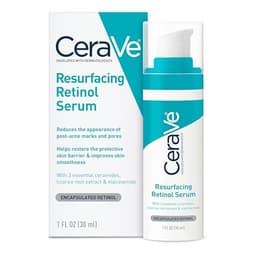
CeraVe Resurfacing Retinol Serum
A gentler retinol route if adapalene is more than your skin will tolerate, aimed at marks and texture.
Read the full review
The Ordinary Granactive Retinoid 2% Emulsion
A retinoid ester widely reported as gentler, for reactive skin that reacts badly to anything stronger.
$12.10 · View on AmazonRead the full reviewPrice as of September 25, 2026. #ad How we’re funded
The Ordinary Retinol 0.2% in Squalane
A stated beginner retinol if your concerns are lines and tone rather than breakouts.
$8.10 · View on AmazonPrice as of September 25, 2026. #ad How we’re funded
Frequently asked questions
Is adapalene better than retinol?
For acne, clearly — it's a regulated drug with randomized trial evidence, and a meta-analysis of five trials found adapalene 0.1% gel comparable to tretinoin on efficacy with better local tolerability. For fine lines and photoaging, retinol has the better-matched evidence base and far more formulation choice. They're not competing for the same job.
How long does adapalene take to work?
Expect an adjustment period of several weeks before improvement, and give it a full twelve weeks before judging. Skin often looks worse before better as existing congestion surfaces faster. Stopping at week four — which is when the dryness peaks and nothing good has happened yet — is the most common reason people abandon it.
Can I use adapalene for anti-aging?
It's a retinoid, so it contributes to turnover and texture, and many people use it that way. But the trial evidence behind adapalene is acne evidence, and the photoaging literature belongs to retinol and tretinoin. If lines are your only concern, a retinol gives you a better-matched evidence base plus cream, serum, eye and body formats that adapalene doesn't have.
Does adapalene cause purging?
Commonly. Dryness, peeling and possibly more spots in the first several weeks as congestion that was already forming reaches the surface sooner. It typically settles over one to three months. Start at two or three nights a week, use a pea-sized amount for the whole face, and moisturize on top.
Can I use adapalene with benzoyl peroxide?
Many acne regimens do combine them, but separate them by time of day when you're starting — benzoyl peroxide in the morning, adapalene at night — because using both at once increases dryness considerably. Adapalene is more stable alongside benzoyl peroxide than tretinoin is, but the tolerability issue is the real constraint.
Is Differin the same as generic adapalene?
The active and the strength are the same — adapalene 0.1% — because drug labeling standardizes it. Differin is the best-known brand; generics at the same concentration contain the same active. Base and packaging differ, and the gel and pump formats differ in how easy they are to dose, but the retinoid is the retinoid.
Sources
- Adapalene — StatPearls (NCBI Bookshelf) — Reference overview of adapalene's mechanism, indications and adverse effects (accessed August 11, 2026)
- Efficacy and tolerability of adapalene 0.1% gel versus tretinoin 0.025% gel: a meta-analysis of five randomized trials (PubMed) — Similar efficacy to tretinoin with better local tolerability across five RCTs (accessed August 11, 2026)
- American Academy of Dermatology — Acne: Diagnosis and treatment — AAD overview of benzoyl peroxide, retinoids, salicylic and azelaic acid for acne (accessed July 17, 2026)
- American Academy of Dermatology — Updated guidelines for the management of acne — AAD 2024 acne management guideline summary (accessed July 17, 2026)
- Guidelines of care for the management of acne vulgaris (PubMed) — 2024 AAD acne guideline of care (accessed July 17, 2026)
Keep reading
Retinol vs adapalene
A cosmetic against a regulated drug — the full comparison, and which your complaint calls for.
Compare the twoBest retinol for acne-prone skin
The retinol side of the same question, for skin that's mostly past active breakouts.
See the picksRetinol for acne & post-acne marks
Where retinol genuinely helps with acne, and where it doesn't.
Read the guideRetinol vs retinoid
The whole vitamin A family mapped — where adapalene sits between retinol and tretinoin.
Compare the family