The Ordinary Retinol 1% in Squalane Review
The cheapest stated 1% retinol you can buy, and the top rung of the clearest-labeled ladder on the shelf. The review is not whether it works. It is whether you are the person it is for — and for most people searching this, the answer is the rung below.
How this is funded: we earn a commission if you buy through our links, at no extra cost to you. It never changes which product we recommend, and we’ll tell you when we’d skip one. Full disclosure.
The top rung of the clearest-labeled retinol ladder on the shelf: a stated 1% pure retinol in the same squalane base, for a few dollars. It is genuinely strong — the right buy only once 0.5% is comfortable nightly, and the wrong one for anybody still building tolerance.
Strengths
- States an exact 1% — a genuinely high strength, printed on the label
- Squalane base cushions a strength that would otherwise be harsh
- The cheapest stated-1% retinol we've found
Trade-offs
- 1% will over-strip skin that has not built tolerance — not a starter
- Pure retinol in an oil base, with no niacinamide or soothing actives to buffer it
| Key active | Retinol |
|---|---|
| Stated concentration | 1% |
| Format | Lightweight oil serum |
| Fragrance-free | Yes |
| Best for | Experienced users stepping up to a high strength on a budget |
Formulation note. 1% pure retinol dispersed in squalane — the same anhydrous base as the 0.2% and 0.5%, at the top of the three-strength ladder. The strength is printed on the label, which is what makes stepping up a deliberate decision rather than a guess.
Ingredients and claims read from the product listing, on August 11, 2026. “Not published” means the brand does not state that figure.
This is the cheapest stated 1% retinol on the shelf, and most people reading this review should buy the 0.5% instead. Both halves of that sentence are the review. There is nothing wrong with the product — it is exactly what the label says, which is more than almost anything else in this category manages — and the figure on the front is the reason it keeps getting bought by people it is not for.
So the useful question is not whether a stated 1% retinol in squalane works. It is whether you are the person it is for, and that has a specific, testable answer.
What you are actually buying
A stated 1% pure retinol dispersed in squalane. Two ingredients doing the work, 30 ml, fragrance-free on the published label, and the top rung of a three-strength ladder — 0.2%, 0.5%, 1% — that all share the identical base.
That last point is the thing worth paying attention to, and almost nobody does. When you move between rungs of this ladder, the dose is the only variable that changes. Most people escalate a retinoid by buying a different product from a different brand in a different base with a different, usually unpublished, strength — and then cannot tell whether the reaction came from the dose, the base or the preservative system. Here you can. That makes this range more useful as a system than any individual bottle in it is as a product.
The other thing you are buying is information, which is rarer than it should be. Nothing requires a cosmetic brand to publish a concentration, and the federal rule that orders ingredient lists stops being useful exactly where this question starts: ingredients above one percent are declared in descending order of predominance, and everything at one percent or less may be listed without respect to order of predominance. Every cosmetic retinoid sits in that second group. So a label can list retinol accurately and still be anywhere from a token dusting to a serious dose. Position proves presence. Only a published figure proves amount — and this one prints it in the product name.
Is 1% actually a lot?
For an over-the-counter retinol, yes. It is the top of the ladder that is commercially available, and nothing we rank states a higher retinol figure.
But it is worth dismantling one comparison immediately, because it drives a lot of bad purchases. A 1% retinol is not ten times a 0.1% tretinoin. Tretinoin isretinoic acid — the form skin responds to — so it needs no conversion at all, which is why prescription figures are an order of magnitude lower. Retinol is two oxidation steps back. The numbers are not on the same scale and should never be read as though they are. Our retinol versus tretinoin comparison sets the two records side by side properly.
The published work that speaks most directly to this bottle is not a trial of this bottle. A twelve-week double-blind comparison in 45 photoaged women escalated a retinol serum through 0.25%, 0.5% and 1.0% against tretinoin cream escalated through 0.025%, 0.05% and 0.1%, each with a moisturizer. The two arms finished at parity on investigator and subject assessment and on water loss through the skin; the retinol arm improved visual smoothness faster at week four and dryness significantly, and week-twelve biopsies showed newly formed collagen with greater epidermal thickening in the retinol group. We cite that for the escalation methodand the direction of the histology, not as proof that retinol equals tretinoin — it is cosmetic-industry-adjacent research rather than an independent trial.
Note the shape of it, though, because it is the whole argument of this review: the study climbed to 1%. It did not start there.
Who this is for
Someone already comfortable on a stated 0.5% retinol four or five nights a week, with no dryness, no flaking and no stinging, who has been there for at least a month and has stopped seeing anything change. That is the readiness test, and it has two halves — tolerance and a plateau. If your 0.5% is still doing something, there is no reason to escalate.
It also suits someone switching down to it from a prescription for cost or access reasons, with the caveat in the next section about not matching your old frequency. And it suits anyone who wants the top of the ladder and is unwilling to pay five times as much for the same printed figure with peptides around it. Our high-strength roundup ranks this against that alternative and our guide on increasing strength has the full readiness test.
Who this is not for
Anyone who has not used a retinoid before.Starting at 1% in a bare oil base buys you a fortnight of raw, peeling skin and the urge to quit, and quitting is the only outcome that guarantees nothing happens. Buy the 0.2% or the 0.5% instead, or start on a stated 0.1% cream — the beginner roundup and the percentage ladder both cover the bottom rungs.
Anyone with reactive, flaking or barrier-compromised skin.There is nothing in this formula to soften the landing — no niacinamide, no ceramides, no glycerin, nothing soothing. A stated 1% with no buffering is the hardest version of this molecule to tolerate. Our gentle roundup ranks the alternatives by the mechanism that makes each one gentle.
Anyone using it on the eye area, neck or chest. Thin skin does not take the top rung regardless of what the rest of your face tolerates. Read our page on eyelids and the neck and chest roundup.
Anyone pregnant or breastfeeding. Topical retinoids as a class are avoided in pregnancy and this is not an exception. Our pregnancy guide carries no product links at all, deliberately.
The squalane base, honestly
Squalane is a lightweight non-fragrant oil, and because the formula is anhydrous — no water phase — retinol stays stable in it without the pH and packaging problems that water-based actives have. That is a genuine formulation advantage and it matters more at 1% than lower down, because there is more active to lose.
It is also the reason the product feels like it does. This is an oil. It sits on the skin rather than sinking in, it will not layer under some makeup comfortably, and oily or acne-prone skin may find it occlusive — our oily-skin roundupleans to water-light serums for that reason. The trade is real and we are not going to call an oil base “nourishing” and leave it there.
How to use it without losing a fortnight
Start at two nights a week even if you were comfortable on 0.5%. Twice the stated dose is twice the stated dose, and tolerance at one rung is not tolerance at the next.
Use less than you think.The fingertip-unit figures put the whole face and neck at about 2.5 units, which is considerably less product than most people apply. The dose reaching your skin is the percentage multiplied by the amount — a 1% applied generously is a different proposition from a 1% applied correctly, and this is where most 1% failures come from.
Moisturizer over the top, every time. This formula does none of that work for you. If you are flaking, put a plain moisturizer underneath it as well — the sandwich method slows how fast the retinoid arrives, which is the variable that drives irritation.
Sunscreen every morning, without exception. A retinoid can leave skin more sun-sensitive, and this is the step people skip precisely when their skin is already irritated. Our sunscreen page is the detail.
Do not stack it.If you own a retinol night cream that publishes no percentage and you add this, the printed 1% has stopped meaning anything — you no longer know what you are applying. Pick one. Our mistakes guide covers the rest, and the routine guide has the order of operations.
What it cannot do
The record this whole category leans on is prescription tretinoin, and the honest version is both more impressive and more limited than the marketing. In photodamaged skin, collagen I formation is substantially lower than in protected skin; on ten to twelve months of daily 0.1% tretinoin it rose by about 80% against a 14% fall on vehicle, with histology showing epidermal hyperplasia and a compacted stratum corneum, and the curve rising for roughly ten months before it plateaus.
No cosmetic retinol inherits those numbers, including this one.What it shares is a mechanism and a timescale, which has two consequences. Judging this bottle at six weeks is judging it too early. And it will not tighten skin that has genuinely lost its structure — our page on sagging is blunt about where that line sits. If you want more than a cosmetic retinoid can do, the answer is a prescription rather than a higher number on a cosmetic label, and our tretinoin alternatives page covers what is genuinely available without one.
The verdict
A very good product with a specific audience, sold at a price that makes it easy to buy by accident. If you are already comfortable on a stated 0.5% several nights a week and it has stopped doing anything, this is the cheapest and clearest way to take the next step, and the shared base means the step is a real experiment rather than a guess. If either of those conditions is untrue, the 0.5% is the same product at half the stated dose for about the same money, and it is the one we would put in your basket.
General guidance, not medical advice. Retinol Room is written by an enthusiast, not a dermatologist. For a diagnosis, a reaction, or a prescription active like tretinoin, see a qualified professional. Introduce any new active slowly and patch-test first.
If it’s not the one, consider these
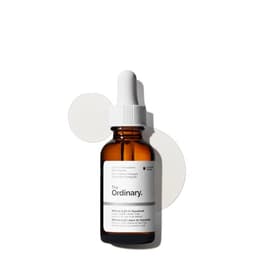
The Ordinary Retinol 0.5% in Squalane
The rung below, in the identical base — and the right buy for most people who land on this page. Half the stated strength, about the same price.
$9.30 · View on AmazonRead the full reviewPrice as of November 23, 2026. #ad How we’re funded
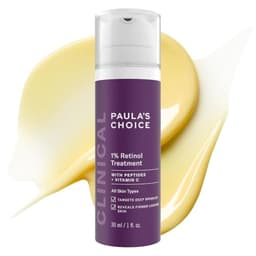
Paula's Choice CLINICAL 1% Retinol Treatment
The other stated 1% we rank. Same printed figure, several times the price, with peptides and antioxidants doing the cushioning this one leaves to your moisturizer.
Read the full review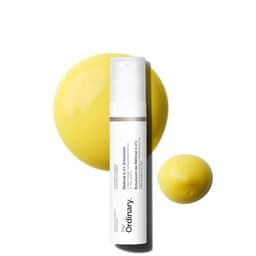
The Ordinary Retinal 0.2% Emulsion
A different molecule rather than a higher dose: a stated 0.2% retinaldehyde, one conversion step from retinoic acid instead of two.
$14.90 · View on AmazonRead the full reviewPrice as of November 23, 2026. #ad How we’re funded
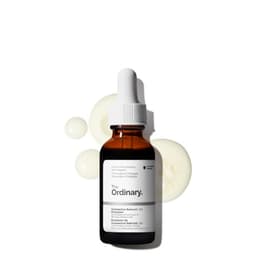
The Ordinary Granactive Retinoid 2% Emulsion
The step sideways if 1% has already proved too much — a gentler retinoid ester from the same brand, with a thinner evidence base.
$12.10 · View on AmazonRead the full reviewPrice as of November 23, 2026. #ad How we’re funded
Frequently asked questions
Is The Ordinary Retinol 1% too strong?
For most people who search for it, yes — not because 1% is dangerous, but because it is the top of the over-the-counter ladder in a base with nothing in it to soften the landing. The right readiness test is not “do I want results faster” but “am I using 0.5% four or five nights a week with no dryness, flaking or stinging, and has it stopped producing any change at all”. If either half of that is untrue, buy the 0.5%.
Is The Ordinary Retinol 1% the same as 1% tretinoin?
No, and they are not comparable numbers. Tretinoin is retinoic acid itself and is dispensed at figures like 0.025%, 0.05% and 0.1% — far lower, because no conversion step is needed. Retinol is two oxidation steps back, so a 1% retinol is not ten times a 0.1% tretinoin. Tretinoin is also prescription-only in the United States, and no cosmetic retinol inherits its published record.
How is this different from the 0.5% in squalane?
Twice the stated retinol, in an identical two-ingredient base, at close to the same price. That is the whole difference, and it is the point of the ladder: when you move up a rung, strength is the only variable that changed, so if your skin reacts you know exactly what caused it. Almost nobody takes advantage of that, and it is the most useful thing The Ordinary's range does.
Why does it have no niacinamide or soothing ingredients?
Because it is deliberately anhydrous — retinol dispersed in squalane with nothing else doing any work. That is a real formulation choice rather than a cost cut: an oil base with no water phase keeps retinol stable without the pH and packaging problems water-based actives have. The trade is that the cushioning has to come from a moisturizer you already own, and at a stated 1% you will want one.
Is Paula's Choice CLINICAL 1% better than this?
Not on the dose, because the printed figure is identical. What several times the price buys is the supporting formula — peptides and antioxidants doing buffering work that this bottle leaves to your moisturizer. That is a legitimate purchase for skin that struggles with a bare oil serum. It is not a higher strength, and it would be dishonest to imply otherwise.
How long does The Ordinary Retinol 1% take to work?
Months, and the high number does not shorten that. The published improvement curve for a retinoid rises for roughly ten months before it plateaus, so judging this at six weeks is judging it too early. The one thing a 1% reliably does faster is irritate, and irritation reduces the number of nights you apply anything — which is a lower cumulative dose no matter what the bottle says.
How much should I use, and how often?
Start at two nights a week even if you were comfortable on 0.5%, and use about 2.5 fingertip units for the whole face and neck — considerably less than most people apply. At night, on dry skin, moisturizer over the top, sunscreen every morning without exception. Build to three or four nights only once the previous frequency is uneventful for a full month.
Does the 30 ml bottle stay at 1% until I finish it?
Not necessarily, and that is worth planning around. A validated study of sixteen retinoid derivatives across twelve commercial cosmetic products measured losses of 0% to 80% after six months at 25 °C and 40% to 100% at 40 °C, with light doing more damage than heat and some products testing below their declared content. The FDA does not require a cosmetic to carry an expiration date and notes that shelf life depends on storage. The anhydrous squalane base helps here, but write the date you opened it on the bottle and keep it out of a steamy bathroom window.
Sources
- American Academy of Dermatology — Retinoid or retinol? — AAD on the difference between prescription retinoids and OTC retinol (accessed July 17, 2026)
- U.S. FDA — 21 CFR 701.3, Designation of ingredients (eCFR) — The federal rule governing how a cosmetic ingredient list is ordered. Paragraph (a): 'The label on each package of a cosmetic shall bear a declaration of the name of each ingredient in descending order of predominance, except that fragrance or flavor may be listed as fragrance or flavor.' Paragraph (f) allows an alternative: ingredients 'present at a concentration greater than 1 percent, in descending order of predominance', followed by ingredients 'present at a concentration of not more than 1 percent, without respect to order of predominance', followed by color additives 'without respect to order of predominance'. Cited for the exact limit of what an ingredient's POSITION can tell a reader: late placement indicates the 1-percent-or-less group, but within that group the order carries no information about quantity (accessed September 26, 2026)
- Human Skin Aging and the Anti-Aging Properties of Retinol (PubMed) — Review of topical retinol's effect on collagen and photoaging (accessed July 17, 2026)
- The use of retinoids in the treatment of photoaging (PubMed) — Clinical-trial evidence for topical retinoids in photoaging (accessed July 17, 2026)
- Draelos ZD, Peterson RS — Newly formulated retinol serums vs tretinoin cream in escalating doses (J Drugs Dermatol, 2020) — Twelve-week double-blind study in 45 photoaged women aged 35 to 65 (Fitzpatrick I-IV) using a STEP-UP protocol: retinol serum escalated 0.25% then 0.5% then 1.0%, or tretinoin cream 0.025% then 0.05% then 0.1%, each with a moisturizer. The two were at parity on investigator and subject assessment and on TEWL at week 12; retinol improved visual smoothness more than tretinoin at week 4 (P = 0.031) and skin dryness significantly (P < 0.001); week-12 punch biopsies showed newly formed collagen and GREATER epidermal thickening in the retinol group. Industry-adjacent cosmetic research, not an independent trial — cited for the escalation method and the direction of the histology (accessed September 18, 2026)
- Tolerance profile of retinol, retinaldehyde and retinoic acid under maximized and long-term clinical conditions (PubMed) — Retinol and retinaldehyde share a low irritation potential; retinoic acid (tretinoin) is more irritating (accessed July 17, 2026)
- Veraldi S et al. — Hydroxypinacolone retinoate with retinol glycospheres in mild to moderate acne (G Ital Dermatol Venereol, 2015) — Open pilot study of a fixed combination containing 0.1% hydroxypinacolone retinoate (a synthetic ester of 9-cis-retinoic acid) plus 1% encapsulated retinol: 41% mean reduction in acne grade, 15.3% mild-to-moderate local side effects, and the authors themselves call for a controlled trial (accessed August 19, 2026)
- Long CC, Finlay AY — The finger-tip unit: a new practical measure (Clin Exp Dermatol, 1991) — The paper that defined the fingertip unit. Thirty adult patients treated various body regions; the number of FTUs required was face and neck 2.5, front of trunk 6.7, back of trunk 6.8, arm and forearm 3.3, hand 1.2, leg and thigh 5.8, foot 1.8. One FTU covers 286 cm2 (s.d. 80) — 312 cm2 in males, 257 cm2 in females. It is a dermatological DOSING measure for ointments, not a retinol instruction, and is cited here only as the published way to reason about how much topical product an area takes (accessed September 18, 2026)
- Temova Rakuša Ž, Škufca P, Kristl A, Roškar R — Retinoid stability and degradation kinetics in commercial cosmetic products (J Cosmet Dermatol, 2021) — Validated HPLC-UV study of 16 retinoid derivatives (retinol, retinyl palmitate, beta-carotene and hydroxypinacolone retinoate) in 12 commercial cosmetics over 6 months of long-term and accelerated stability testing plus a one-week photostability study. Retinoid degradation followed first-order kinetics; the products showed a 0%-80% decline after 6 months at 25 °C and a 40%-100% decline at 40 °C; 'light degradation was more pronounced than temperature-induced degradation'; instabilities were 'formulation-dependent and associated with lower contents than declared in some cosmetics'. Cited for the size of the stability problem a sealed single-dose format is built to solve — the study did not test this product (accessed September 19, 2026)
- Griffiths CE et al. — Restoration of collagen formation in photodamaged human skin by tretinoin (N Engl J Med, 1993) — Biopsies from 26 subjects plus 29 patients treated 10 to 12 months with daily 0.1% tretinoin cream (15 patients) or vehicle (14). Collagen I formation was 56% LOWER in photodamaged skin than in sun-protected buttock skin (P < 0.001); tretinoin produced an 80% INCREASE in collagen I formation against a 14% decrease on vehicle (P = 0.006). Prescription tretinoin, not cosmetic retinol — cited for the direction of the effect on dermal collagen (accessed September 18, 2026)
- Voorhees JJ — Clinical effects of long-term therapy with topical tretinoin and cellular mode of action (J Int Med Res, 1990) — Double-blind, placebo-controlled study: 0.1% topical tretinoin reduced the effects of photoageing maximally after 10 months, with no further improvement between 10 and 22 months. Histologically it induced 'epidermal hyperplasia, compaction of the stratum corneum and the deposition of ultrastructurally visible collagen fibrils in the papillary dermis', reduced the number and activity of melanocytes, and significantly increased mitoses (accessed September 18, 2026)
- U.S. FDA — Shelf Life and Expiration Dating of Cosmetics — FDA states no U.S. law requires cosmetics to carry an expiration date, that drugs (including sunscreens and acne treatments) must, and that heat and dipping fingers into a product shorten its usable life (accessed August 19, 2026)
Keep reading
The Ordinary Retinol 0.5%, reviewed
The middle rung — the version most people should actually buy, in the identical base.
Read the reviewBest retinol by percentage
The whole published ladder from 0.1% to 1%, one pick per rung, so you can see where this sits.
See the picksBest high-strength retinol
The 0.5% and 1% rungs ranked against each other, and who should not be on either.
See the picksWhen to increase retinol strength
The practical test for whether you are ready for this bottle, and the signs you are not.
Read the guideBest The Ordinary retinoid
All five of the brand's retinoids ranked, including the two that are not on this squalane ladder.
See the picksBest pure retinol
Products whose only retinoid is retinol itself, ranked on whether you can read the dose.
See the picksRetinol strength and percentages
What a printed 1% actually promises, and why most brands print nothing at all.
Read the guideThe Ordinary retinol vs retinal
Where the squalane ladder stops and the retinal emulsion starts — the brand's molecules compared on printed figures.
Read the comparison